
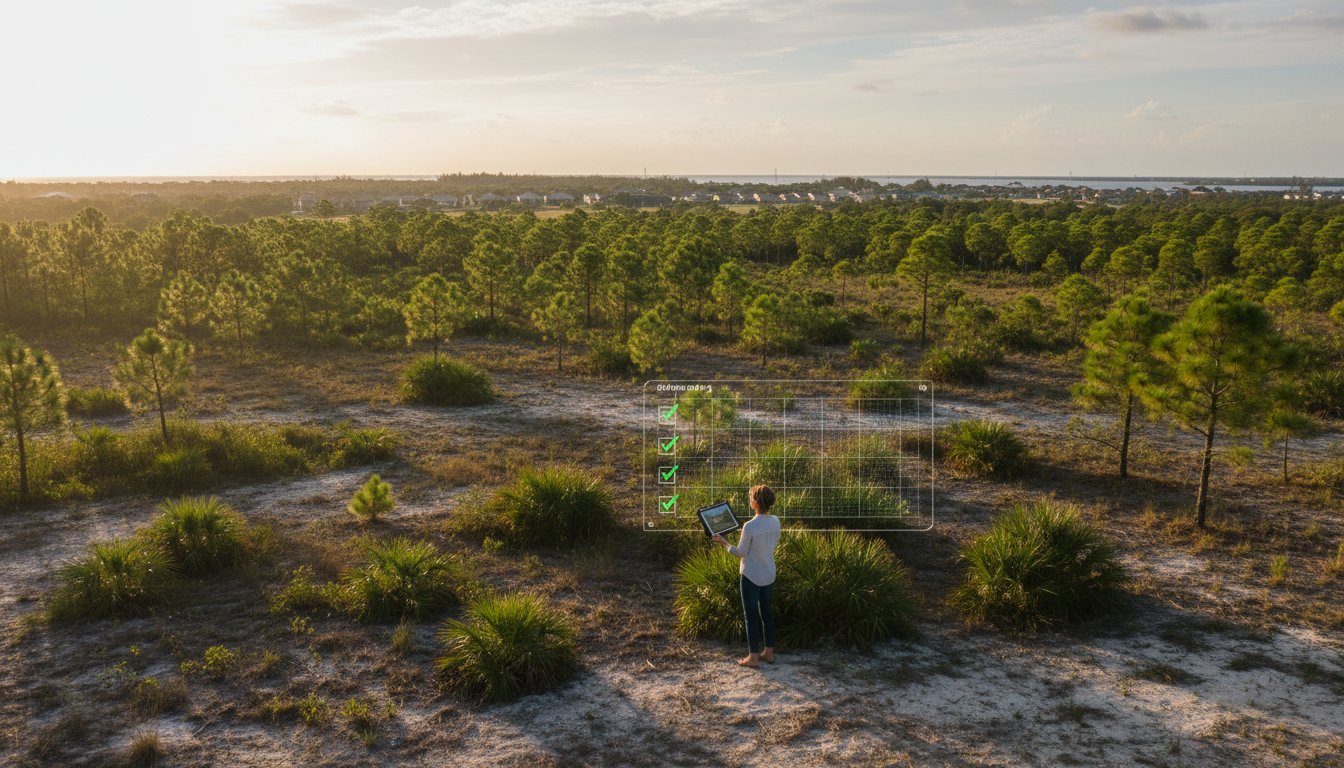
What if your dream property is actually a $25,000 liability disguised as a bargain? In 2026, data shows that 34% of raw land buyers encounter hidden development costs that exceed their original acquisition budget. You want a secure investment, not a financial headache. It’s stressful to face legal jargon like easements and tax liens without a clear plan. You need a professional vacant land due diligence checklist to verify every detail and stop expensive mistakes before you sign the contract.
We agree that buying land should be a fast, transparent process. You shouldn’t have to worry about “useless” land that sits empty because of a simple zoning error. You deserve peace of mind knowing your parcel is buildable and your title is 100% clean. This article provides a definitive “Yes/No” framework to evaluate any lot with absolute confidence. We’ll walk through the specific steps to identify hidden encumbrances, confirm utility access, and secure a fast path to closing today.
Key Takeaways
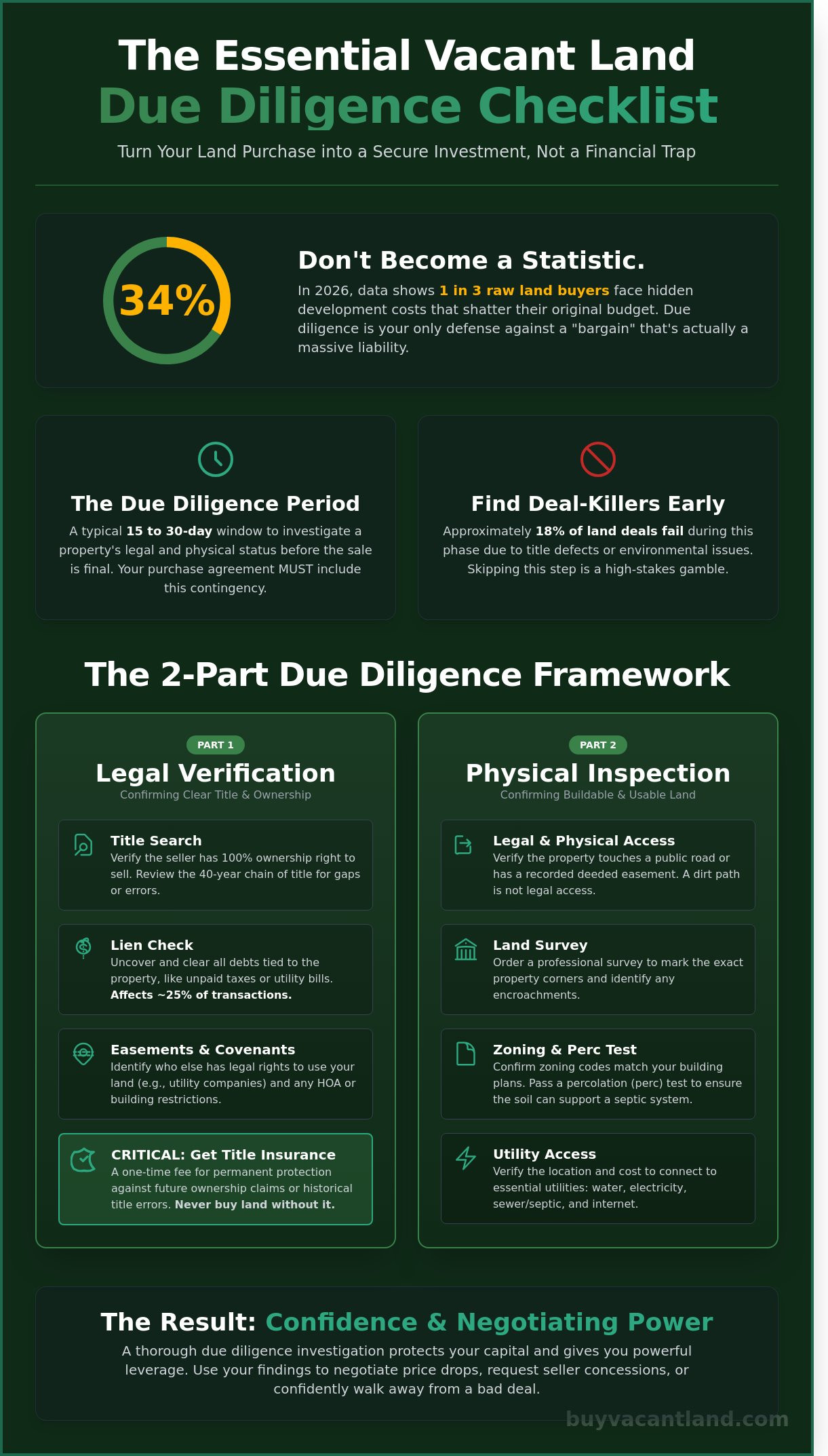
- Spot hidden “deal killers” before your cash is locked in. Use this vacant land due diligence checklist to verify the property’s legal and physical status.
- Confirm 100% ownership and clear all liens to avoid inheriting someone else’s debt or utility bills.
- Validate legal road access and pass a perc test to guarantee your land is actually buildable.
- Match zoning codes with your specific plans to avoid costly setbacks or building restrictions.
- Use your investigation findings to negotiate price drops and secure a fair deal before you close.
What Is Vacant Land Due Diligence?
Buying raw land feels simple, but the dirt beneath your feet holds secrets that can cost you a fortune. Due diligence is the mandatory period where you investigate the legal and physical status of a property. It’s your one chance to uncover deal killers before your cash is locked in a vault. You aren’t just checking the view. You’re verifying every claim the seller made. Smart buyers use a vacant land due diligence checklist to ensure they don’t inherit someone else’s $15,000 tax lien or a parcel that’s legally unbuildable.
Successful due diligence saves you from massive future legal fees and construction delays. In 2024, approximately 18% of land deals failed during this phase because of title defects or environmental issues. If you skip this step, you’re gambling with your investment. You want to walk away with a guaranteed asset, not a liability that drains your bank account for years. Verify the facts before you commit your capital.
The Due Diligence Period
Time is your most valuable resource during a land purchase. This period typically lasts between 15 and 30 days. Don’t sign anything unless your purchase agreement includes a specific due diligence contingency clause. This clause lets you back out and keep your deposit if you find a problem. Use these 21 days to walk every inch of the perimeter. Call county officials at the planning department. Ask about specific permits and recent 2025 zoning changes. If you don’t verify the details now, you’ll pay for them later.
Why Raw Land Is Different
Don’t treat a 5-acre lot like a three-bedroom ranch. Houses have visible problems like leaky roofs, but raw land has invisible risks that are far more dangerous. You’re buying three things: the dirt, the rights, and the potential. All three must be verified through a systematic vacant land due diligence checklist. Due diligence for vacant land is the systematic verification of legal title, physical viability, and zoning permissions. It’s about finding the 5% of details that could ruin the other 95% of the deal. Focus on the facts and ignore the sales pitch.
The Legal Checklist: Verifying Title and Ownership
Buying land without a clear title is a gamble you’ll lose. Your vacant land due diligence checklist must start with the legal paperwork. A title search is your first defense. It confirms the seller owns 100% of the property and has the legal right to sell it. You need to review a 40-year chain of title to ensure no gaps exist. One missing signature from a 1986 probate case can freeze your project indefinitely. Using a comprehensive due diligence checklist helps you verify these details before you sign a contract.
Lien checks are equally critical. You’re looking for unpaid property taxes, utility bills, or contractor debts. In 2023, title defects or liens affected roughly 25% of all real estate transactions. If these aren’t cleared, they become your financial burden the moment you close. You also need to identify easements. These are legal rights for others to use your land. A utility company might have an easement for power lines; a neighbor might have a right to cross your property to reach theirs. These rights can severely limit where you can build your structure.
The Importance of Title Insurance
Title insurance protects you from future claims against your ownership. It’s a one-time fee paid at closing that provides permanent protection. If a long-lost heir appears in 2027 claiming they own a portion of the dirt, the insurance company pays the legal bills and losses. Never buy land without a clear title and an insurance policy. It’s the only way to guarantee your investment is safe from historical errors.
Checking for Encumbrances
Look for “clouds” on the title. These are often old mortgages that were paid off but never properly released by the bank. You must also verify mineral, water, and timber rights. In many Western states, these rights are sold separately. You might own the surface but zero rights to the water beneath it. Finally, check for restrictive covenants. If an HOA has rules on the books from 2015, they might ban the specific type of home you want to build. If the legal process feels overwhelming, you can get a fair cash offer from us and avoid the red tape entirely.
- Title Search: Verify 100% ownership through historical records.
- Lien Check: Clear all tax and utility debts before closing.
- Easements: Map out who else has the right to use your land.
- Chain of Title: Ensure no breaks or missing signatures exist in the ownership history.
Physical Property Inspection: Soil, Access, and Environment
You can’t skip the boots-on-the-ground work. A digital search is only 50% of the job. Your vacant land due diligence checklist must include a site visit to verify the physical reality of the dirt. Walk the entire perimeter. Look for signs of trouble that don’t show up on a computer screen.
Access and Boundaries
Physical access is not the same as legal access. You might see a dirt path, but that doesn’t mean you have the legal right to use it. Verify the property touches a public road or has a recorded 20-foot wide deeded easement. Without legal access, your land is landlocked and worthless for building. Order a professional land survey to mark the exact corners. This usually costs between $500 and $2,500 for standard residential lots. Look for encroachments. A neighbor’s fence sitting 3 feet over your line can delay a sale for months or lead to expensive legal battles.
Soil and Water Testing
A percolation (perc) test measures how quickly water drains through the soil to determine if a septic system is feasible. Most rural land lacks city sewer. If the soil fails a perc test, you can’t build a house. Plan to spend $150 to $600 for this test. Also, verify water availability. If you need a well, check nearby well logs to see if neighbors hit water at 100 feet or 500 feet. For land with a history of industrial or agricultural use, get an environmental assessment to check for chemicals or heavy metals. Cleaning up 10 gallons of leaked oil can cost thousands in remediation fees.
High and dry land is the goal. Avoid steep slopes. Building on a grade over 15% increases your foundation costs by 30% or more. Check the FEMA flood maps to ensure the site isn’t in a 100-year flood zone. Wetlands are another deal-breaker. The U.S. Army Corps of Engineers protects these areas. If you find cattails or standing water, you’re likely looking at restricted land. Your vacant land due diligence checklist should always include a check for endangered species habitats. These can halt development for years under the 1973 Endangered Species Act. Stick to land that’s easy to build on to keep your costs low and your timeline fast.
Zoning and Utilities: Can You Actually Build?
Zoning determines your property’s value and utility. Don’t buy a lot for a home if it’s zoned for light industrial use. This is a vital part of your vacant land due diligence checklist. Call the planning department. Give them the parcel ID. Ask about setback requirements immediately. A 30-foot front setback and 15-foot side setbacks can make a narrow lot unbuildable. You need a clear map of the buildable envelope before you close escrow. If the land is agricultural, check for “Right to Farm” laws that might bring noise and smells to your doorstep.
Understanding Zoning Codes
Call the county planning office directly. Don’t rely on the listing description. Ask about the 2035 “Future Land Use” map. If the area is slated for commercial expansion in 10 years, your quiet residential retreat won’t stay quiet. Verify if the county permits off-grid living or RVs. Over 65% of rural counties now restrict RV living to 30 days or less. Don’t assume you can camp on your own land without a permit. Some jurisdictions require a minimum square footage for dwellings, often starting at 1,000 square feet, which kills any “tiny home” dreams.
Calculating Utility Connection Costs
Distance equals dollars in the world of raw land. Bringing power to a remote lot costs $10,000 to $15,000 per pole in 2026. If the nearest line is 1,300 feet away, you might pay $45,000 before you even pour a foundation. Check for impact fees. These are one-time charges for new infrastructure. In high-growth counties, impact fees often exceed $6,000 per lot. You must also account for the following infrastructure costs:
- Septic vs. Sewer: A public sewer hookup is rare in rural areas. A standard septic system costs $8,000 to $12,000. If the soil fails a perc test, an engineered system can cost $30,000.
- Water Access: A private well costs $10,000 to $20,000 depending on the depth of the aquifer. City water hookups often require a $3,000 meter installation fee.
- Permit Timelines: Budget 6 to 12 months for full building permit approvals. Application fees range from $800 to $3,500 depending on the project scale.
Building on raw land is expensive and slow. The costs of transformers, trenching, and meters add up fast. Most buyers underestimate these expenses by 40% or more. Always get a written estimate from the local utility provider during your feasibility period to avoid a financial disaster. If these costs and timelines don’t fit your budget, selling the land might be your best move.
Closing the Deal: Final Steps Before You Buy
You’ve completed your vacant land due diligence checklist. Now you must make a final decision. Compare every finding against your 2026 investment goals. If the soil report shows a high water table or the survey reveals a three-foot encroachment, don’t ignore it. These facts dictate your next move. If the land doesn’t meet your primary criteria, walk away now to save your capital for a better opportunity.
Negotiate hard if you discovered unexpected costs during your inspection. A failed perc test often decreases property value by 20% or more because you’ll likely need a $15,000 alternative septic system. Present these specific repair estimates to the seller. Most land owners prefer a price reduction over starting the sales process from scratch with a new buyer. Once the price is final, prepare your funds. Cash closings are 50% faster than financed deals and often take less than 14 days. Use a reputable title company or a real estate attorney to manage the escrow and deed transfer. They ensure the title is clear of old liens or hidden easements that could ruin your plans.
Reviewing the Purchase Contract
Check every line of your contract before signing. Verify that you’ve met or waived all contingencies in writing to protect your earnest money deposit. Match the legal description on the deed to your 2026 survey exactly. A single digit error in a parcel ID can cause years of legal headaches. Confirm the closing cost split. In many raw land deals, sellers cover 100% of these fees to ensure a fast, guaranteed exit. Don’t pay for what the seller is willing to handle.
Why Buy Through a Specialized Marketplace?
General real estate sites focus on houses. BuyVacantLand.com focuses exclusively on raw dirt. This specialization saves you 40 hours of searching and eliminates 90% of the noise found on traditional platforms. You can browse specific listings for land for sale by owner to find direct deals without agent commissions. Use the platform to filter by your specific needs, whether you want cheap land for a long-term hold or off-grid lots for immediate use. It’s the most efficient way to find a property that actually passes your vacant land due diligence checklist.
Take Control of Your 2026 Land Purchase
Buying raw land isn’t a game of luck; it’s a process of elimination. You’ve learned how to use a vacant land due diligence checklist to strip away the risk and protect your capital. Focus on the 3 critical pillars: legal title, physical site quality, and zoning permissions. Don’t sign a contract until you verify 100% of the ownership history. Ensure the soil supports your 2026 construction plans before you commit your cash. Our specialized marketplace removes the noise by focusing strictly on raw land. We provide national coverage across all 50 states, connecting you directly with sellers to save time. You don’t need to navigate complex corporate hurdles or deal with middlemen. We’ve simplified the search so you can focus on the build. You’re ready to move from researcher to owner. Find your next investment on our vacant land marketplace today. Your perfect plot of ground is closer than you think.
Frequently Asked Questions
How long does due diligence for vacant land usually take?
A standard due diligence period lasts between 30 and 45 days. You’ll need this time to complete your vacant land due diligence checklist items like soil tests and zoning verification. Larger parcels or commercial sites often require 60 days to account for environmental studies. Don’t rush this window. It’s your only chance to verify the property’s value before your deposit becomes non-refundable.
Can I do my own due diligence without a lawyer?
You can perform your own research without a lawyer. Most investors handle the physical inspections and zoning calls themselves to save money. You should still use a professional title company or an escrow officer to handle the closing paperwork. They ensure the deed is recorded correctly and the title is clear of liens. This approach keeps your costs at zero for legal fees while protecting your cash.
What is a “perc test” and why do I need one?
A perc test measures the water absorption rate of your soil. You need this test to determine if the ground can support a septic system. If the soil drains too slowly, the county won’t issue a building permit. Expect to pay a licensed engineer $750 for this service in 2026. It’s a critical step that prevents you from buying unbuildable dirt that has no value.
How much does a land survey cost in 2026?
A professional land survey in 2026 costs between $500 and $2,500. A basic boundary survey for a 1-acre lot typically hits the $600 mark. If you’re buying 10 acres with heavy brush, the price jumps toward $2,000. Don’t rely on old markers or fences. A fresh survey provides a guaranteed map of your property lines and identifies any neighbor encroachments before you close the deal.
What happens if I find a problem during the due diligence period?
You have the right to cancel the contract or renegotiate the price if you find a defect. Use your vacant land due diligence checklist to identify issues like hidden easements or environmental hazards. If a 2026 inspection reveals a $15,000 utility connection fee, you can walk away with your full deposit. This safety net ensures you don’t get stuck with a bad investment or high hidden costs.
Is title insurance necessary for vacant land?
Title insurance is essential for every land purchase. It provides a one-time protection against hidden liens, forged signatures, or 40-year-old ownership claims. For a standard $50,000 lot, title insurance usually costs around $800. It’s a small price for the peace of mind that your ownership is 100% guaranteed. Never buy land without a clear title policy from a reputable provider to protect your equity.
How do I check if a property has legal road access?
Verify road access by reviewing the county plat map and the property deed. You’re looking for direct frontage on a public road or a recorded legal easement. Roughly 12% of rural properties are landlocked, meaning they have no legal way to enter or exit. Don’t assume a dirt path is a legal road. Check the 2026 tax records to confirm the county maintains the access point.
What are the most common “deal killers” when buying land?
The most common deal killers are failing perc tests and restrictive zoning. If the soil won’t drain, you can’t build a home. Zoning laws might also prohibit your specific plans, like parking an RV or building a tiny house. Other issues include wetlands that cover more than 20% of the lot or utility quotes exceeding $20,000. These problems turn a good deal into a financial burden fast.



Join The Discussion