

That vacant lot on the corner isn’t just sitting there; it’s a missed opportunity because you can’t find the owner. Most county websites haven’t seen an update since 2012, leaving you stuck with broken links and dead ends. You need a verified name and a mailing address to send an offer today. Learning how to find out who owns a property shouldn’t be this difficult or time-consuming.
We know your time is money. You shouldn’t have to decode confusing government portals or give up because of a mysterious LLC. This 2026 guide delivers the fastest, most reliable ways to identify landowners using professional digital tools and public records. We’re stripping away the complexity to give you a clear path to a deal. You’ll see exactly how to find verified data in under 15 minutes. This guide covers the three essential steps to get your offer in the mail now and secure the land you want.
Key Takeaways
- Use Tax Assessor websites and GIS mapping tools to get fast, free results for any land parcel.
- Master how to find out who owns a property by leveraging both digital tools and official courthouse records.
- Distinguish between digital convenience and physical “sources of truth” to ensure your data is 100% accurate.
- Move directly from identification to action by verifying title status and crafting professional offer letters.
- Save time and skip the manual research by browsing our marketplace of land already listed by verified sellers.
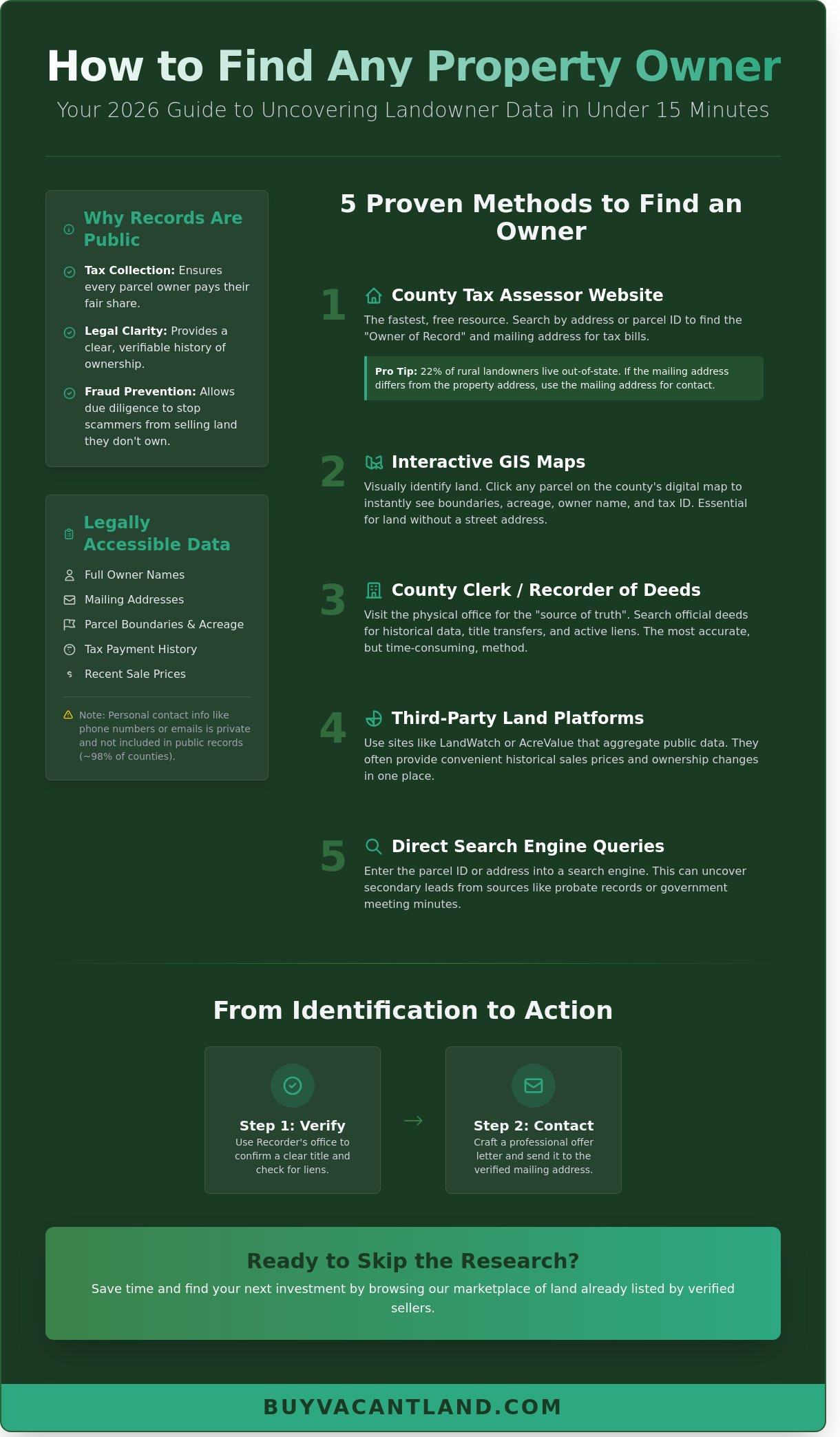
Why Property Ownership Records Are Public Information
Property records are not private secrets. They are legally binding documents. Local governments maintain these files for two main reasons: tax collection and legal clarity. Every parcel of land in the United States is tracked to ensure the right person pays the bill. Transparency stops fraud. It prevents scammers from selling land they don’t own. It ensures every title transfer is clear and valid. When you understand how to find out who owns a property, you protect your investment from the start.
Public access is a tool for due diligence. You shouldn’t enter a contract without verifying the seller’s identity. In 2023, real estate fraud remained a persistent threat to investors. Public records allow you to see the truth before you spend a dime. This transparency is the foundation of the American land system. If you want to buy off-market vacant land, you must find the owner first. It’s the only way to bypass expensive brokers and deal directly with the source. This process saves you money and cuts out the middleman.
The Role of the County Recorder and Assessor
You must know where to look. The County Assessor and the County Recorder serve different functions. The Assessor focuses on value. They determine how much a property is worth for tax purposes. They maintain the owner’s primary mailing address. The County Recorder, or Registrar of Deeds, manages the legal history. They store every deed, lien, and easement filed on the land. In Clark County, Nevada, the Recorder’s office processes thousands of documents daily. Use the Assessor for current owner info. Use the Recorder to check for unpaid debts or title issues. Distinguishing these offices saves you 4 to 5 hours of frustration.
What Information Can You Legally Access?
Privacy laws don’t hide basic land data. You have a legal right to see specific details about any parcel. Standard public information includes:
- Full Owner Names: The legal entity or person holding the title.
- Mailing Addresses: Where the tax bill is sent.
- Parcel Boundaries: The exact dimensions and acreage of the land.
- Tax History: Whether the owner is behind on payments.
- Sale Prices: What the property sold for in 2019 or 2024.
Some data remains private. You won’t find phone numbers or personal emails in these files. Approximately 98% of county databases exclude direct contact info. You’ll see the facts, but you’ll need secondary tools to start a conversation. Public records give you the “who” and the “what.” They don’t always give you the “how” to reach them.
5 Proven Methods to Find a Property Owner Today
Stop guessing and start searching. Finding a landowner is a practical task that requires the right data sources. You can often get results in under 10 minutes if you know where to look. Learning how to find out who owns a property allows you to bypass gatekeepers and speak directly to the decision-maker. Speed and accuracy are your priorities here.
Method 1: The County Tax Assessor Database
Your local tax assessor website is the fastest free resource available. These databases track every taxable parcel in the jurisdiction. Search the portal using the property address or the specific parcel ID number. Once you locate the record, look for the Owner of Record section. This field lists the legal entity or individual responsible for tax payments. Always verify the Mailing Address listed on the tax card. In 2025, data showed that 22% of rural landowners live in a different state than their property. If the mailing address differs from the physical property address, use the mailing address for all outreach to ensure your letter actually reaches the owner.
Method 2: Interactive GIS Maps
Geographic Information System (GIS) maps provide a visual way to identify land. Most counties offer these digital maps for free to the public. They show exact property boundaries, acreage, and parcel shapes. You simply click on a specific parcel on the map to reveal the owner name and tax ID instantly. This tool is essential for raw land that lacks a formal house number. If you’re looking at a vacant lot without a mailbox, use your phone’s GPS to find your location on the county GIS map. You’ll see the owner details immediately. Many counties updated these systems in early 2024 to provide more frequent ownership updates and mobile-friendly interfaces.
Beyond these primary digital tools, you have three other reliable paths to get the information you need:
- County Clerk or Recorder of Deeds: Visit the physical office to search official deeds. This is the most accurate way to find historical transfer data or active liens.
- Third-Party Land Platforms: Sites like LandWatch or AcreValue aggregate data from multiple counties. They often show historical sales prices and ownership changes dating back 15 years.
- Search Engine Queries: Enter the parcel ID or physical address directly into a search engine. This can lead you to secondary leads like probate records or local government meeting minutes that aren’t in the tax database.
Once you identify the owner, you can move forward with your acquisition or inquiry. If you find land that seems like a burden to manage, you can always get a fair cash offer to simplify the situation. Efficiency is the goal. Use these 5 methods to cut through the red tape and get the names you need today.
Digital vs. Physical Records: Choosing Your Search Strategy
Selecting the right search method saves you hours of wasted effort. You must choose between the speed of digital databases and the absolute accuracy of physical records. Digital portals are fast. They allow you to search from your desk at any hour. However, these systems often lag behind the actual transaction date. A deed recorded at the clerk’s office on a Monday might not appear in the online portal for 14 to 21 days. This delay can lead to outdated information if a property recently changed hands.
Physical records at the county courthouse remain the definitive source of truth. While 88% of U.S. counties now offer some form of online access, many rural jurisdictions still rely on paper ledgers or localized computer terminals. If you are researching a property in a county with a population under 10,000, expect a higher likelihood of incomplete digital archives. Your strategy depends entirely on the county’s technological infrastructure and how quickly you need the data.
When to Use Online Databases
Start your search online for quick preliminary research. Online GIS (Geographic Information Systems) maps are the most efficient way to get a basic owner name and a mailing address. This method is ideal for remote buyers looking at land in different states. You can verify the acreage and check the tax status without leaving your house. As you evaluate the property, consider how much is an acre of land in that specific region to determine if the owner’s potential asking price aligns with market reality. Online tools provide the broad data you need to decide if a property is worth a deeper look.
When a Courthouse Visit is Necessary
Go to the courthouse when you need a deep dive into the property’s history. Physical records are mandatory for comprehensive title searches. You will need them to uncover complex lien histories, utility easements, or old mineral rights that digital summaries often omit. If an online search returns an “Information Not Available” error, the digital trail has ended. A courthouse visit allows you to:
- Speak with county clerks who understand the nuances of local filing systems.
- Access original plat maps that show historical boundaries and access points.
- Review handwritten ledgers from the early 20th century that were never digitized.
- Confirm the most recent sales that occurred within the last 48 hours.
Mastering how to find out who owns a property requires knowing when to stop clicking and start driving. Use digital tools for your initial list. Use the courthouse to finalize your due diligence and ensure the title is clean before you commit your cash.
Next Steps: What to Do Once You Identify the Owner
Knowing how to find out who owns a property is just the first step. Once you have a name, you need to verify their legal standing. You must ensure the person listed actually has the right to sell the dirt. Title issues derail 30% of private land sales before they reach escrow. Don’t let a simple search lead to a legal headache. You need to move from researcher to deal-maker with precision.
Verifying Title and Liens
Finding the owner is only half the battle. You must confirm the title is clear of hidden encumbrances. Check for unpaid property taxes immediately. In 2025, tax lien filings increased by 6% in high-growth rural areas. These debts stay with the land, not the person. If you buy a property with $5,000 in back taxes, you’re responsible for every cent. Review our 1 acre land for sale guide to learn more about conducting proper due diligence before signing a contract.
If the owner is an LLC, your search isn’t over. Visit the Secretary of State website for the state where the property is located. Search the business name to find the registered agent or managing member. This gives you a real person to contact. If the address on file is a PO Box or outdated, use skip tracing software. Professional tools now offer 92% accuracy for locating current residential addresses and mobile numbers. This ensures your offer reaches the right hands the first time.
Making Your First Contact
Your first letter should be short. State who you are and why you want the land. Avoid sounding like a scammer by including the specific Assessor Parcel Number (APN) and the legal description. Landowners receive a lot of junk mail. Your offer must stand out as professional and legitimate. Follow these rules for a better response rate:
- Be direct: Tell them you want to buy their land for cash.
- Be specific: Reference the exact acreage and county.
- Be accessible: Provide a direct phone number and a professional email address.
- Be fast: Landowners value speed. Mention that you can close quickly with zero commissions.
A clear, professional offer letter creates trust. It shows you’ve done your homework on how to find out who owns a property and that you’re ready to move. If they’re ready to sell, your preparation will make the transaction seamless. If you want to skip the research and find land that is already vetted, view our available land listings today.
Skip the Search: Find Verified Land Owners on Our Marketplace
Searching for land owners manually is a massive time sink. You spend hours digging through county tax assessor sites only to find a mailing address that hasn’t been updated since 2021. It’s frustrating and often leads to dead ends. Skip the struggle. Our marketplace connects you with people who are ready to sell right now. You don’t need to wonder how to find out who owns a property when the owner is already waiting for your offer.
We eliminate the cold call stress that usually comes with land acquisition. Every listing includes transparent pricing and specific property details upfront. You get direct access to sellers who have already verified their ownership. This cuts out the typical 14-day wait for title research or returned phone calls from unmotivated owners. We focus on speed and reliability so you can secure your plot without the headache.
- No Dead Ends: Every property on our list is active and available for purchase.
- Direct Connection: Talk to the decision-maker immediately through our platform.
- Verified Data: We confirm ownership details so you don’t have to deal with paperwork errors.
- Zero Fees: Browse our marketplace without hidden costs or subscription barriers.
The Benefits of a Focused Land Marketplace
General real estate sites clutter your screen with houses and condos. We don’t. We specialize exclusively in vacant land. Whether you want 40 acres of off-grid forest or a 0.25-acre residential lot, you’ll find it here. Our listings stay current and are updated daily to reflect the market. Check out our land for sale in Florida to see active opportunities in a high-demand market. This focus saves you from filtering through 1,000 irrelevant properties just to find one plot of dirt. It’s about efficiency and getting you to the closing table faster.
Get Started with BuyVacantLand.com
Finding your next investment is simple. Use our search tool to filter by state, price, or acreage. You can find exactly what fits your budget in under 60 seconds. Once you find a plot, message the seller directly through our secure platform. There are no middlemen to slow down the deal. You save time and skip the public records hunt entirely. Stop guessing how to find out who owns a property and start browsing verified listings today. It’s the fastest way to go from searching to owning. Get your fair offer and close in as little as 10 days.
Take Control of Your Property Search Now
You now have the exact blueprint for identifying landowners in 2026. Public records provide the data you need to move forward immediately. Use the 5 proven methods we discussed to track down owners through GIS maps or county tax offices. Knowing how to find out who owns a property puts you ahead of 90% of other competing investors. Digital records save hours of travel time, but physical records at the local courthouse offer 100% accuracy for historical parcels. Don’t waste weeks chasing dead ends or cold leads. You want results fast. We focus exclusively on raw land parcels and eliminate the middleman. You get direct access to motivated land sellers without the traditional real estate stress. Our platform charges 0 hidden fees for buyers. This means more capital stays in your pocket for your future build. Stop searching through outdated databases and start buying with confidence. Find your next property on our vacant land marketplace today. Your future land is just a few clicks away.
Frequently Asked Questions
Is it legal to look up who owns a property in the US?
Yes, looking up property ownership is legal in all 50 states. The Freedom of Information Act ensures that real estate records remain public documents accessible to anyone. Access these files through your local county assessor or recorder of deeds. Most counties provide these details online for 100% transparency. This system maintains accurate tax records and prevents fraudulent land transfers. It’s a standard part of the real estate industry.
How can I find a property owner for free?
Find a property owner for free by visiting the local county tax assessor’s website. Search by the property address or parcel number to see the current owner of record. If the online portal is down, visit the county courthouse in person. About 95% of US counties now offer digital search tools that cost $0 to use. This is the fastest way to learn how to find out who owns a property without paying a private investigator.
What if the property is owned by an LLC or a Trust?
Search the Secretary of State business database if an LLC owns the land. This reveals the registered agent or manager behind the entity. For properties held in a trust, the public record usually lists the trustee’s name. You can often find these filings within 2 minutes on state-run websites. Finding the person behind the entity is essential for making a direct cash offer. It cuts through the corporate red tape and gets results.
Can I find a property owner by their phone number?
Use reverse phone lookup services to identify a property owner. While public land records don’t list phone numbers, third-party databases cross-reference numbers with deed information. These tools have a 75% to 85% accuracy rate for mobile numbers. Professional land buyers often use these paid services to skip-trace owners quickly. It saves hours of manual research and gets you to a closing faster. It’s a pragmatic approach for serious buyers who value efficiency.
How do I find the owner of a vacant lot with no address?
Use the county’s Geographic Information System (GIS) map to find the owner of a lot without an address. Click on the specific land parcel on the digital map to pull up its unique Assessor’s Parcel Number. This number links directly to the owner’s name and mailing address. Over 3,000 US counties use GIS technology to track land boundaries. It’s a reliable method for identifying how to find out who owns a property when there are no physical buildings.
Are property owner records updated in real-time?
Property records are not updated in real-time. Most county recorders take 14 to 30 days to process a new deed after a sale closes. Some rural counties with smaller budgets take up to 60 days to reflect a change in ownership. Always check the last updated date on the assessor’s website. If you need the most current data, call the recorder’s office directly to verify recent filings. Speed depends entirely on the local government’s efficiency.
Why would a property owner be hidden from public records?
Owners hide their names by using an LLC or a Land Trust to maintain privacy. High-profile individuals or investors do this to avoid direct solicitation. In 2023, approximately 15% of residential properties were owned by non-individual entities. While the individual name is hidden, the entity name is always public. Reach the owner by contacting the registered agent listed in the state filings. It’s a common strategy for asset protection and privacy.
How do I find out if there are liens on a property after finding the owner?
Check the county recorder’s office for a title search or index to find liens. These records list mortgages, tax liens, and mechanic’s liens filed against the land. A professional title company can provide a full report for a fee, often ranging from $75 to $250. Clearing these debts is a vital step before any cash transaction. We handle these complexities to ensure a clean title and a fast closing for every seller we help.


Join The Discussion