
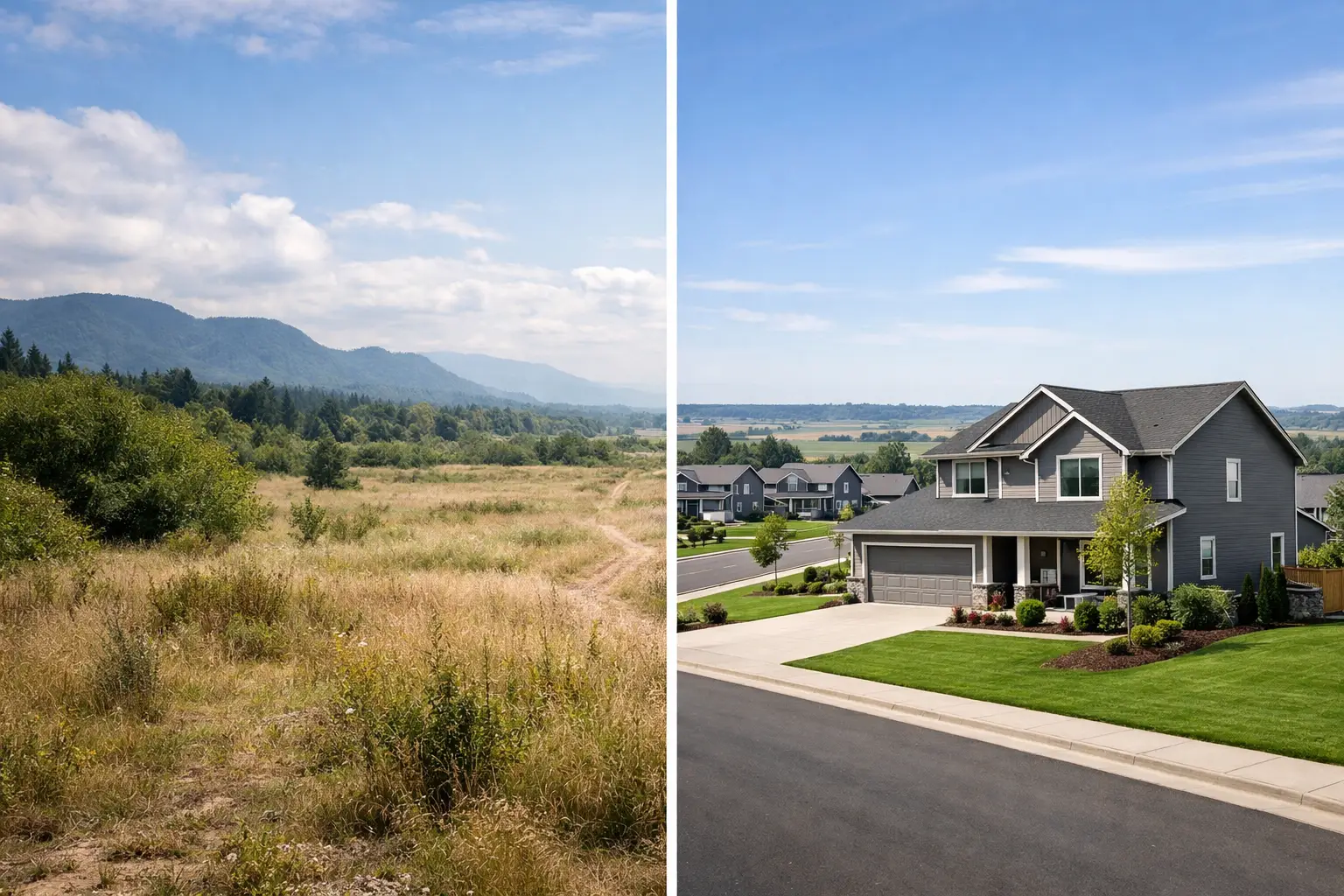
A cheap rural parcel can look like a steal until you price out a well, septic, driveway, and power. On the other hand, a lot with utilities already in place may cost more upfront but save you months of planning and surprise expenses. That is why raw land vs improved land is one of the first comparisons smart buyers should make before they put money down.
If you are buying for a homesite, a weekend retreat, a long-term investment, or a resale opportunity, the right choice depends less on what sounds better and more on what you actually want the land to do. Some buyers need a property they can use soon. Others are happy to trade convenience for a lower purchase price and more upside later. Both paths can make sense.
Raw land vs improved land: the basic difference
Raw land is generally land in its natural state with little to no added infrastructure. It may not have road access beyond a dirt track. It may not have utilities nearby. It may need surveying, clearing, grading, or testing before you can build or use it the way you want.
Improved land has had some level of work done to make it more usable. That can mean legal access, a cleared building site, installed utilities, a driveway, fencing, septic, a well, or other site prep. Improvement is not all-or-nothing. One parcel may only have electric at the road, while another may be nearly build-ready.
That gray area matters. A property can be marketed as improved and still require major work. The label is useful, but it is never enough on its own. Buyers need to know exactly which improvements exist, who installed them, whether permits were pulled, and what still needs to happen before the land fits their plans.
Why price alone does not tell the whole story
Raw land usually wins on sticker price. That is a big reason first-time buyers and small investors are drawn to it. Lower entry cost can mean more acreage for your budget or an easier way to start building a land portfolio.
But cheaper land is not always the cheaper deal. If you need immediate access, utility connections, soil work, and clearing, the total project cost can climb fast. In some counties, just getting a property ready for a home can take longer and cost more than buyers expect.
Improved land often carries a higher asking price because some of that work has already been done. That premium may be justified if the improvements are real, usable, and aligned with your intended use. Paying more upfront can be the smart move if it reduces uncertainty, shortens your timeline, and makes financing easier.
The right question is not just, Which parcel costs less today? It is, Which parcel gets me to my goal at the best overall value?
When raw land makes more sense
Raw land tends to appeal to buyers who want flexibility and are comfortable with a slower process. If your goal is to hold land for appreciation, use it recreationally, or improve it over time, raw land can create opportunity. You are often paying for potential rather than convenience.
This can be especially attractive in growing areas where development is expanding outward. A parcel that feels remote today may have stronger access and utility options a few years from now. Investors who buy early sometimes benefit from that shift.
Raw land can also be a fit for buyers who want a more private, off-grid, or custom setup. If you are planning a cabin, hunting retreat, homestead, or long-term land bank strategy, starting with untouched acreage may be exactly what you want.
The trade-off is that raw land asks more of the buyer. You may need to research zoning, flood risk, topography, water availability, easements, road maintenance, and buildability in greater detail. If you are not ready to do that homework, raw land can turn from affordable to frustrating in a hurry.
When improved land is worth the premium
Improved land is often the better fit for buyers who want a shorter path to use. If your goal is to build soon, park an RV where allowed, place a manufactured home, or market the parcel to future buyers who want ready-to-go property, improvements can make the transaction much more practical.
There is also a convenience factor that should not be ignored. A driveway, utility access, and a cleared site remove major unknowns. That saves time, but it also makes budgeting easier. Buyers who are managing a retirement move, a second-home plan, or a straightforward investment often value certainty more than a lower initial price.
Improved land may also have broader buyer appeal when it is time to sell. More usable land tends to attract more interest, especially from buyers who are new to land and want fewer moving parts. On a land-first marketplace like BuyVacantLand.com, that usability can stand out quickly because shoppers often search by intended use, not just acreage.
Still, paying extra only makes sense if the improvements truly match your needs. A parcel with partial utility work is not automatically better than raw land in the right location at the right price.
The due diligence that matters most
Whether you buy raw or improved land, the real decision happens in due diligence. The same county can have parcels with completely different access, zoning, flood exposure, and utility options. Two lots on the same road can have very different development costs.
Start with legal and physical access. A beautiful property is less attractive if you cannot reach it easily or do not have recorded access rights. Then look at zoning and land-use rules. A parcel that seems perfect for a homesite or RV use may not allow it.
For raw land, focus heavily on what it will take to make the property usable. Ask about utility availability, well depth trends in the area, septic feasibility, soil conditions, and site prep costs. For improved land, verify every claimed improvement. Is the septic installed and permitted? Is the well producing? Is power actually connected, or just nearby? Was the driveway engineered or simply cut in?
This is where many buyers save or lose money. Assumptions are expensive. Verification is not.
Financing can look different too
Another practical difference in raw land vs improved land is financing. Raw land can be harder to finance through traditional lenders because it is viewed as a riskier asset. Some banks want stronger down payments, shorter loan terms, or more proof of intended use.
Improved land may be easier to finance if the parcel is closer to being build-ready. Lenders tend to like reduced uncertainty. That does not mean every improved lot will qualify easily, but infrastructure can help.
This is also why owner financing gets so much attention in the land market. For buyers who want flexibility, especially on vacant land, seller financing can open doors that conventional lending may not. It is one more reason to think beyond the list price and look at the full buying path.
Which one is better for resale or investment?
There is no universal winner. Raw land can offer stronger upside if you buy well, improve strategically, or hold in an area with future demand. It can also appeal to buyers looking for lower carrying costs and long-term flexibility.
Improved land may be easier to market because more buyers can picture using it right away. That can shorten time on market and support a stronger resale price, especially in areas where build-ready or recreation-ready parcels are limited.
The best investment choice depends on your timeline, capital, and tolerance for uncertainty. If you want low entry cost and can wait, raw land may be the better play. If you want a more predictable asset with broader end-user appeal, improved land may deserve the premium.
How to choose based on your goal
If your priority is affordability and future potential, raw land may fit. If your priority is speed, convenience, and clearer costs, improved land usually has the edge.
A buyer planning to camp occasionally, hold for appreciation, or create an off-grid setup may be perfectly happy starting with raw acreage. A buyer planning to build within a year may save money and stress by choosing a parcel with key improvements already in place.
The smartest land buyers do not ask which category is best in general. They ask which property makes sense for their use case, timeline, and budget. That is the difference between buying land that looks good online and buying land that actually works in real life.
Land ownership can be simple, strategic, and full of potential, but only if the property matches the plan. Pick the parcel that supports what you want to do next, not just the one with the most tempting price tag.


Join The Discussion