
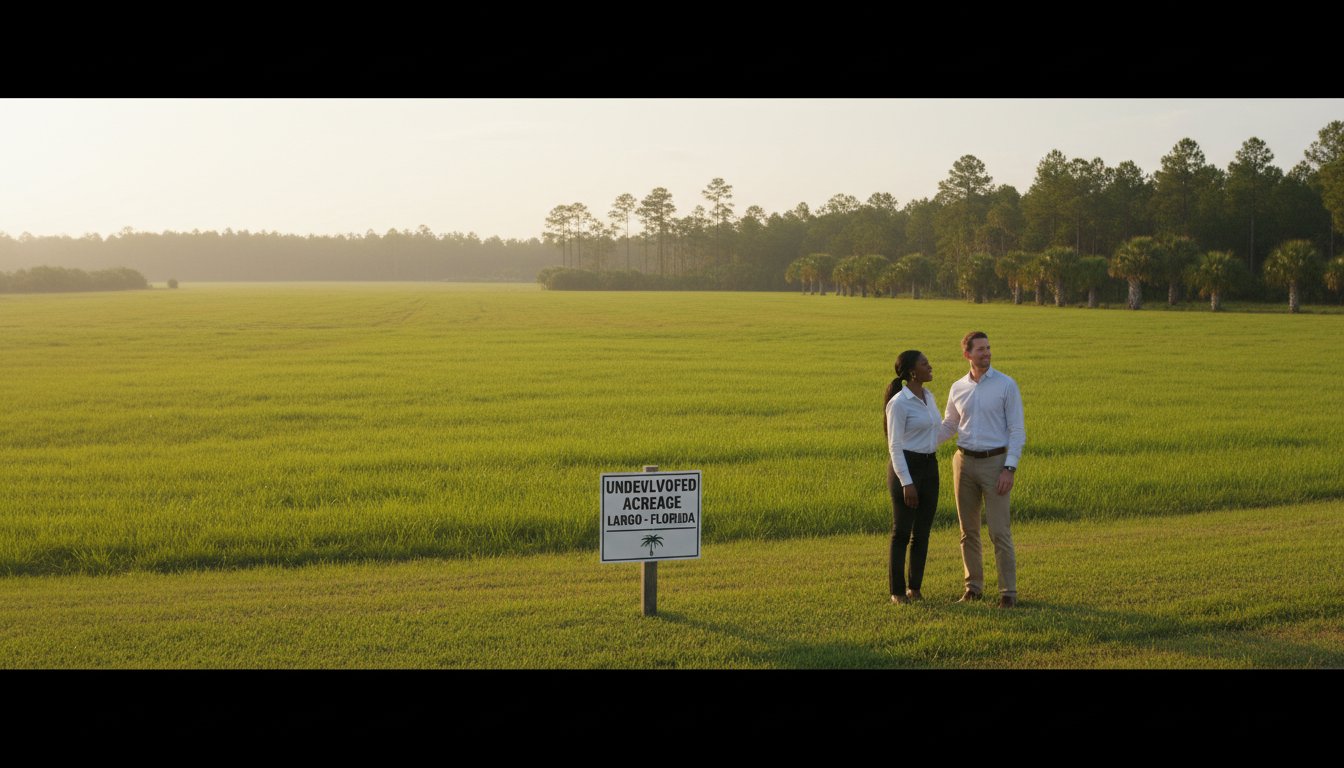
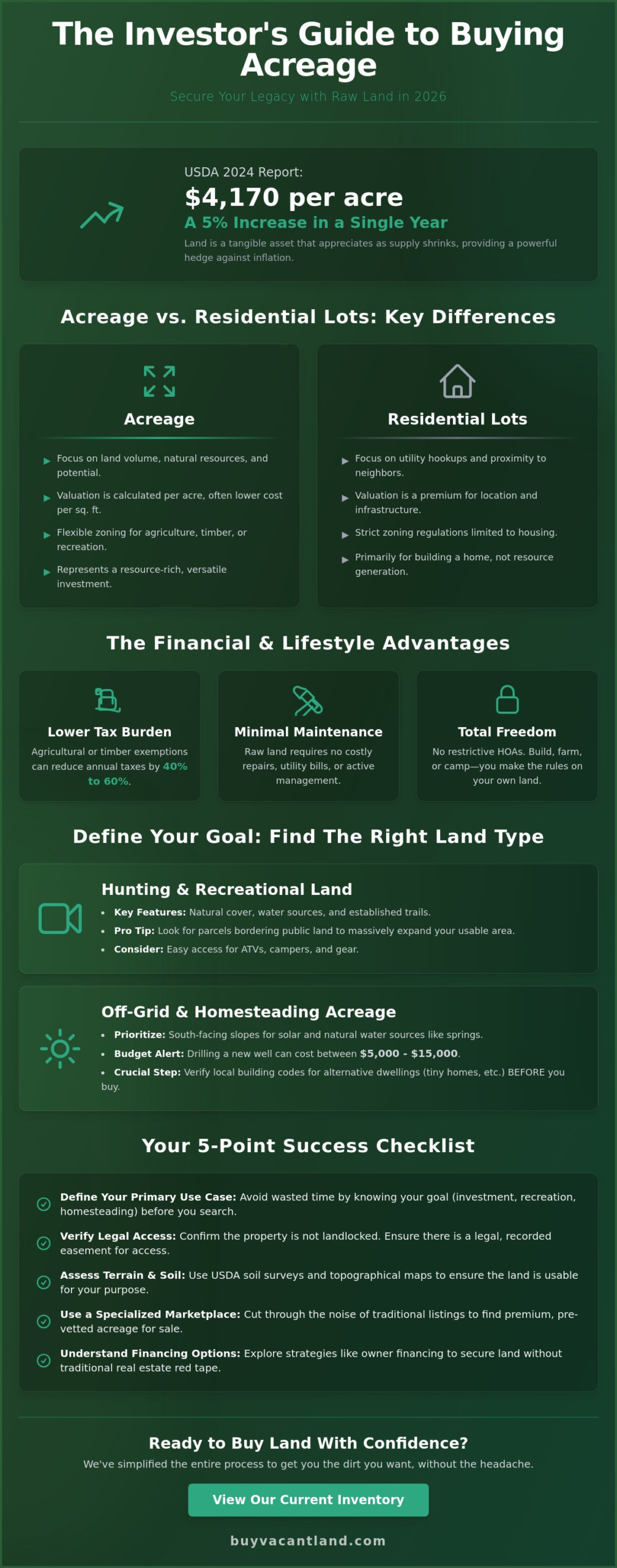
Most investors lose their chance at a legacy because they wait for the “perfect” moment while prices surge. In 2024, the USDA reported that the average value of farm real estate reached $4,170 per acre, marking a 5% increase in a single year. You know that finding the right acreage for sale is the best way to secure your wealth, but the process is often buried in jargon and red tape. You shouldn’t have to worry about unusable soil or hidden zoning traps that turn a dream into a liability.
We built this guide to give you the direct, no-nonsense tools you need to buy land with confidence. You’ll learn exactly how to evaluate a parcel’s potential and navigate easements without hiring a fleet of lawyers. We’ve simplified the entire transaction to eliminate the stress of traditional financing and the confusion of raw land legalities. It’s about getting you the dirt you want without the typical 60 day closing headache.
Our 2026 roadmap covers everything from spotting red flags in a listing to closing your deal in record time. We break down our signature three-step vetting process and show you how to find vacant lots that are ready for immediate use.
Key Takeaways
- Secure a tangible hedge against inflation by understanding the unique growth potential of raw land in 2026.
- Save time and avoid wasted effort by defining your land’s primary use case before you start browsing.
- Protect your investment with critical due diligence steps to avoid landlocked parcels and unusable terrain.
- Locate premium acreage for sale through a specialized marketplace designed to cut through the noise of traditional listings.
- Master the financing and pricing strategies required to secure large parcels without the typical real estate red tape.
What is Acreage for Sale and Why Invest in 2026?
Acreage for sale refers to large, undeveloped land parcels. These properties are measured in acres rather than square feet. In 2026, raw land stands as a powerful hedge against inflation. It’s a tangible asset you can see and touch. Unlike volatile digital assets, land doesn’t disappear. It offers long-term growth and security in an unpredictable economy. You’re buying a finite resource that history proves will appreciate as supply shrinks.
The 2026 market shows a clear shift toward rural self-sufficiency. More buyers are seeking off-grid living options to escape urban density. They value independence and personal security. Acreage for sale provides more versatility than standard residential lots. You can use it for farming, hunting, or future development. It’s a blank canvas for your specific goals. This land represents a smart move for those looking to diversify their portfolio with a physical, resource-rich asset.
Success in this market requires understanding land acquisition and the legal frameworks of property rights. You need to know how land transfers work before you sign a contract. This knowledge protects your investment from legal hurdles. It ensures you maintain full control over your property from the moment of closing. Being informed allows you to move fast when the right deal appears.
The Benefits of Owning Large Land Parcels
Owning large parcels saves you money. Property taxes on raw land are significantly lower than on developed real estate. You don’t pay for buildings or infrastructure you don’t use. Maintenance is minimal. You don’t have to mow a lawn every week or fix leaky roofs. You also gain total privacy. There are no restrictive Homeowners Associations (HOAs) telling you what to do. You own the land; you make the rules.
- Lower Tax Burden: Agricultural or timber exemptions can reduce annual taxes by 40% to 60% in many rural counties.
- Zero Maintenance: Raw land requires no utilities, constant repairs, or active management.
- Total Freedom: Build, camp, or farm without neighborhood committees or restrictive covenants.
Acreage vs. Residential Lots: Key Differences
Acreage focuses on land volume and natural resources. Residential lots focus on utility hookups and proximity to neighbors. You buy acreage for sale for the soil, timber, or water rights. Valuation is calculated per acre. This differs from residential lots where you pay a premium for the location and existing infrastructure. In many regions, buying 20 acres costs significantly less per square foot than buying a quarter-acre lot.
Zoning for acreage is usually flexible. It often allows for diverse uses like agriculture, livestock, or timber harvesting. Residential lots are strictly limited to housing. Choose acreage if you want a resource-rich asset rather than just a place to build a house. It gives you the space to grow and the freedom to change your plans as your needs evolve.
Identifying the Right Type of Acreage for Your Goals
Stop browsing listings without a clear plan. You’ll waste time and money. Define your primary goal before you search for acreage for sale. If you want a weekend getaway, focus on recreational features. If you need income, prioritize agricultural soil quality or timber density. Each goal requires a different set of criteria. Investors often buy land specifically for appreciation or future development. Your strategy dictates your search parameters. Don’t settle for a property that doesn’t align with your 10-year plan.
Agricultural acreage requires specific attention to soil classifications and water rights. Check the USDA soil surveys for the property. High-quality tillable land commands a premium but yields consistent returns. If you’re looking at investment-grade land, analyze the timber maturity. Timber harvesting provides a liquid asset you can tap into every 15 to 20 years. Perform thorough due diligence when buying land to ensure the property matches your vision. This includes checking zoning laws and legal access rights immediately.
Hunting and Recreational Land
Look for properties with natural cover and established water sources. These features attract wildlife and maintain a healthy ecosystem. Check for existing trails. Cleared paths save you thousands in excavation costs. Verify if the land borders public territory. This expands your usable footprint without increasing your tax bill. Focus on ease of access for your ATVs or campers. A property with 40 acres that borders a national forest often feels like 400 acres in practice.
Off-Grid and Homesteading Acreage
Self-sufficiency requires specific land traits. Prioritize raw undeveloped owner financed land to keep your initial costs low. You need maximum flexibility for your build. Assess the solar potential. Look for south-facing slopes. Verify natural water sources like existing wells or year-round springs. Drilling a new well can cost between $5,000 and $15,000 depending on depth. Know these numbers before you sign.
Check local regulations for alternative dwellings. Some counties have strict rules against tiny homes or shipping container builds. Don’t buy until you know the building codes. If you want a fast, hassle-free start to your project, view our current inventory of guaranteed land parcels today. We provide the transparency you need to make a quick, confident decision.
Critical Due Diligence for Acreage Buyers
Never buy land without verifying the legal and physical constraints of the parcel. Buying acreage for sale involves more than just a handshake and a deed transfer. You must protect yourself from landlocked parcels and unusable terrain that can turn a solid investment into a financial burden. A land survey is a legal document that establishes property boundaries and easements. This document is your first line of defense against encroachment and boundary disputes. The due diligence process is faster and cheaper when you use a specialized land marketplace. These platforms often provide preliminary data that cuts through the noise and saves you weeks of independent research.
You need to move quickly but carefully. Use a step-by-step guide to buying land to ensure you don’t skip vital inspections. Professionals focus on facts, not potential. If the dirt doesn’t meet your requirements on paper, it won’t meet them in person. Verify every claim made by a seller before you release your earnest money.
Zoning Laws and Land Use Restrictions
Contact the county planning department to confirm the land is zoned for your intended use. Don’t assume you can build a cabin or start a farm just because the lot is large. Zoning ordinances change, and 2026 regulations may be stricter than previous years. Identify any environmental protections or wetland designations that limit building. A single protected species or a seasonal creek can render a 40 acre lot completely unbuildable. Review the deed for any restrictive covenants or mineral rights issues. If a third party owns the mineral rights, they may have the legal right to enter your property and extract resources, regardless of your plans for the surface.
Access, Utilities, and Easements
Confirm legal access via a public road or a recorded easement. Never rely on a “gentleman’s agreement” to cross a neighbor’s property. Without a recorded easement, your land is legally landlocked, making it nearly impossible to finance or sell later. Evaluate the cost of bringing in power or drilling a well if utilities are absent. In many rural areas, drilling a well can cost $15,000 or more depending on the depth of the aquifer. If you plan to build immediately, look for land for sale with utilities to avoid the high costs of infrastructure development.
- Check for existing power poles at the property line.
- Verify if the soil can support a septic system through a perc test.
- Ensure the title is clear of any undisclosed utility easements that could bisect your building site.
Finding the right acreage for sale requires a pragmatic approach to these technical details. High-impact decisions depend on these numbers. If the utility quotes come back too high, walk away. There’s always another parcel that fits your budget and your goals.
Pricing, Costs, and Financing Your Acreage
Buying acreage for sale requires a sharp focus on the numbers. You cannot rely on the list price alone. Location, road access, and topography are the primary drivers of market value in 2026. A parcel with direct county road access always commands a higher price than a landlocked property. Topography also dictates your budget. Flat, buildable ground is more expensive than steep hillsides or wetlands that require extensive engineering. You must calculate the total cost of ownership before making an offer. This includes property taxes, land clearing, and the cost of bringing utilities to the site.
Traditional banks view raw land as a high-risk investment. Most lenders require a down payment between 35% and 50% for land loans. They want to see a significant equity stake from the buyer. Closing costs for land are typically lower than for houses since there are no structures to inspect. You won’t pay for termite reports or roof certifications. You should still budget 2% to 4% of the purchase price for title insurance, escrow fees, and government recording charges. These costs are essential for protecting your legal claim to the property.
- Location: Proximity to growing urban centers increases price.
- Access: Paved road frontage is a premium feature.
- Utilities: Existing power and water hookups save thousands in development costs.
- Zoning: Land zoned for residential use costs more than strictly agricultural tracts.
How Much is an Acre of Land Worth?
Land pricing follows an economy of scale. The price per acre decreases as the total size of the parcel increases. Buying a 40-acre tract results in a much lower per-acre cost than purchasing a 2-acre lot. Remote, undeveloped areas offer the best value for budget-conscious buyers in 2026. You can find deep discounts on parcels that lack immediate infrastructure. Check the 2026 data on how much is an acre of land to see current valuation trends across different regions. Buying large tracts is the fastest way to build immediate equity.
Leveraging Owner Financing for Land
Owner financing is the most efficient way to bypass strict bank requirements. You negotiate the terms directly with the seller. This method allows you to buy acreage with a low down payment and no credit check. It eliminates the months of waiting associated with traditional mortgage underwriting. This is the fastest way to buy land and start using the property immediately. You get a simple, transparent transaction without hidden bank fees or surprise commissions. It’s a pragmatic solution for buyers who value speed and simplicity.
Ready to secure your property without the bank hassle? Get your fair cash offer and start your land ownership journey today.
Finding Acreage for Sale on BuyVacantLand.com
Searching for the perfect lot shouldn’t feel like a full-time job. Most real estate websites bury land listings under thousands of suburban houses and condos. We changed that. Our marketplace is built exclusively for vacant land. You won’t waste time filtering out properties that don’t fit your vision. Whether you need 5 acres for a homestead or 50 acres for a timber investment, our platform delivers results instantly. You can search by price, acreage size, and specific land types like hunting, residential, or agricultural. We connect you directly with land owners and professional sellers across all 50 states. This direct access makes it easy to find cheap land for sale that fits any budget. We prioritize transparency so you can move from browsing to owning without the usual industry headaches.
How to Use Our Specialized Land Search
Finding acreage for sale is faster when you use the right tools. Our search engine allows you to filter results by “Owner Financing” to find bank-free deals with low down payments. Every listing includes detailed property descriptions, high-quality photos, and exact GPS coordinates. You can view the terrain from your phone before you ever drive to the site. Save your favorite listings to get instant alerts on price drops or new arrivals. Our system works 24/7 to keep you ahead of other buyers in a competitive market.
Closing the Deal Fast
Speed is vital when you find the right lot. We built a secure platform that lets you contact the seller directly to ask questions or request a copy of the deed. You can also ask for available surveys or soil tests before making an offer. You don’t have to wait for a middleman to call you back. Once you’re ready, follow our simplified three-step process to secure your new acreage today:
- Step 1: Select your property and verify the details directly with the seller.
- Step 2: Review the purchase agreement and any closing documents provided.
- Step 3: Finalize the transaction and receive your recorded deed.
We remove the red tape that slows down traditional real estate deals. There are no hidden commissions or surprise fees to worry about. You get a direct path to land ownership that saves you time and capital. Start your search now and see how simple buying acreage for sale can be when the clutter is removed.
Secure Your 2026 Land Investment Today
Buying large land parcels requires a sharp focus on due diligence and financing. You must verify property access and local zoning laws to protect your capital. Industry data shows that raw land often requires down payments of 30% or more through traditional lenders. You can simplify this process by connecting directly with sellers who understand the unique needs of land buyers. Our platform maintains a 100% focus on vacant land. This eliminates the clutter of residential listings and saves you time. We provide nationwide coverage across all 50 states to give you the widest selection of property types. You’ll find the best acreage for sale by using our direct seller connections. This approach cuts out unnecessary middlemen and reduces your overall transaction time. Don’t let the complexity of traditional real estate hold you back from owning your own piece of the country. Take the first step toward your property goals right now. Our system is built for speed and reliability. You can close your deal with confidence. Your future land legacy starts with a single click.
Browse thousands of acres for sale on BuyVacantLand.com
Frequently Asked Questions
Is buying acreage a good investment in 2026?
Buying acreage for sale is a strong investment choice in 2026 because land remains a finite asset that doesn’t require ongoing maintenance. The USDA 2024 Land Values Summary reported a 5% year-over-year increase in average farm real estate values across the country. You get a tangible asset that doesn’t depreciate like a building. It provides a hedge against inflation while offering future development potential or immediate recreational use for your family.
How many square feet are in one acre of land?
One acre of land contains exactly 43,560 square feet. For a visual comparison, this is roughly 90% of a standard American football field, which measures 48,000 square feet excluding end zones. Knowing this specific number helps you calculate your building footprint and required setbacks. It’s the standard unit of measurement for rural property transactions across the United States. Use this figure to compare prices per square foot when evaluating different parcels.
What is the cheapest way to buy acreage for sale?
The cheapest way to find acreage for sale is through direct-to-seller transactions or county tax auctions. Buying directly eliminates the 6% commission typically paid to brokers. Over 20% of land transactions now occur off-market to save on these costs. You can also target properties with delinquent taxes. According to the National Tax Lien Association, billions in property taxes go unpaid annually. These opportunities allow you to secure land at 30% below market value.
Can I build a house on any acreage I buy?
You cannot build a house on every piece of land because zoning laws and soil quality dictate buildability. Local zoning ordinances and environmental restrictions determine what’s allowed on a specific parcel. You must check the zoning code with the county planning department first. A perk test is also required to see if the soil can support a septic system. Without a passing test or access to municipal sewers, your land remains unbuildable for residential homes.
What does “unrestricted land” mean when looking at acreage?
Unrestricted land refers to property without private covenants, conditions, and restrictions or Homeowners Association oversight. You still must follow county zoning and state building codes. This type of land offers the most freedom for parking RVs, raising livestock, or building tiny homes. At least 35% of rural land inquiries focus specifically on these unrestricted parcels. It’s the best option for buyers who want zero interference from neighbors or associations on their own property.
How do I check for utilities on a vacant land parcel?
Contact the local electric cooperative and the county water district to verify service availability on your parcel. Ask for a will-serve letter to confirm they can connect your property to the grid. For sewer, check if a municipal line runs along the road. If not, you’ll need a septic permit. In 2023, the average cost to drill a well reached $5,500 according to industry data, so factor these specific expenses into your final budget before closing.
Do I need a real estate agent to buy acreage?
You don’t need a real estate agent to purchase land. Professional investors frequently work directly with sellers to avoid the standard 5% to 10% commission fees associated with traditional listings. You can handle the transaction through a reputable title company or real estate attorney to ensure a clean deed transfer. This direct approach speeds up the closing process and puts more cash back into your pocket. It removes the red tape and simplifies your path to ownership.
What are the typical property taxes on raw acreage?
Property taxes on raw land are typically 1% to 2% of the assessed value, though this varies by county. At least 40 states offer Agricultural Assessment programs that can reduce your tax bill by up to 90%. For example, Texas Tax Code Chapter 23 allows for productivity valuation based on agricultural use rather than market value. Always verify the current tax status with the local assessor’s office so you don’t face surprises after you close.



Join The Discussion