
Most land marketed as “unrestricted” is actually a legal minefield waiting to explode. You want the freedom to build a tiny home, park a mobile estate, or live off-grid without a permit inspector breathing down your neck. Finding genuine land with no building restrictions is harder than ever in 2026, especially with 75% of residential land in metro areas still locked into single-family zoning. You’ve likely felt the frustration of finding a perfect plot only to discover hidden deed restrictions or confusing local codes after it’s too late.
It’s time to cut through the red tape and reclaim your autonomy. You deserve a straightforward path to property ownership that doesn’t involve endless bureaucratic hurdles or surprise fees. This guide provides the exact steps to identify, verify, and purchase truly unrestricted acreage for your alternative dwelling. We’ll show you how to navigate the 2026 zoning landscape, distinguish between public laws and private contracts, and secure a plot where you make the rules. Stop guessing and start building your future on your own terms.
Key Takeaways
- Define what truly unrestricted property means to ensure total autonomy over your build.
- Distinguish between county zoning and private deed restrictions to avoid the most common legal traps.
- Master a two-step verification method to confirm land with no building restrictions before you sign any contract.
- Identify the best property types for tiny homes and barndominiums to maximize your investment’s potential.
- Use streamlined search filters to locate undeveloped vacant land and off-grid lots across the nation.
What is Land with No Building Restrictions?
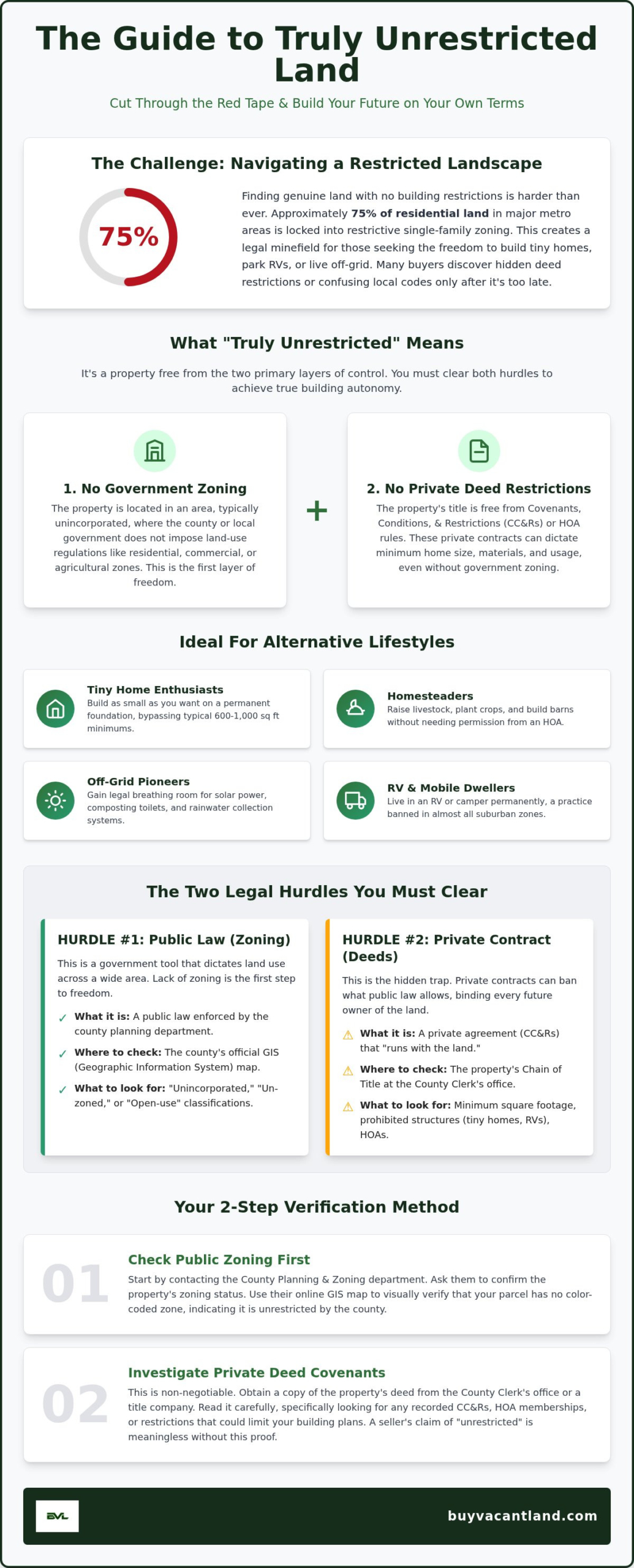
Truly unrestricted land is property that lacks both government Zoning and private deed restrictions. Most residential land in the United States is heavily regulated. In fact, research shows that approximately 75% of residential land in major metro areas is restricted exclusively to single-family homes. Finding land with no building restrictions means you bypass these rigid classifications. You avoid the need for traditional building permits, mandatory inspections, and the minimum square footage requirements that plague modern developments.
The appeal is straightforward. You want to own your land without a bureaucrat telling you what color to paint your door or how many windows you need. However, a common misconception is that unrestricted means no rules at all. This is rarely the case. While you might avoid local building codes, you’re still subject to state and federal laws. You can’t dump toxic waste or violate environmental protection acts. The goal is to find a balance where you have maximum autonomy over your structure while maintaining basic health and safety standards.
The Reality of Absolute Freedom
Don’t mistake a lack of zoning for a lack of law. Even on land with no building restrictions, you must address wastewater and access. Many states enforce strict septic and well regulations to protect the local water table. If you plan to live off-grid, you still need a legal way to manage waste. These aren’t building restrictions in the traditional sense; they’re environmental safeguards. Safety remains your responsibility. Always verify if the property falls under a city’s Extraterritorial Jurisdiction (ETJ). This status can trigger hidden regulations despite a no zoning label.
Who Benefits from Unrestricted Acreage?
This type of property is the gold standard for specific lifestyles that traditional real estate rejects. It provides the freedom to build what you want, how you want.
- Tiny Home Enthusiasts: Most counties require homes to be at least 600 to 1,000 square feet. Unrestricted land lets you build as small as you want on a permanent foundation.
- Homesteaders: You can raise livestock, plant crops, and build barns without asking for permission from a neighborhood association.
- Off-Grid Pioneers: If you want to use solar power, composting toilets, and rainwater collection, these lots provide the necessary legal breathing room.
- RV Dwellers: Many plots allow you to live in an RV or camper permanently. This practice is banned in almost all suburban zones.
Zoning vs. Deed Restrictions: The Critical Difference
You found a plot. The county says there is no zoning. You think you’re safe to build. You’re likely wrong. True land with no building restrictions requires clearing two separate legal hurdles. Public laws and private contracts work independently. One can ban exactly what the other allows. Understanding this distinction is the only way to avoid a costly legal mistake after you’ve already closed on the property.
Zoning is a government tool. It dictates how land is used across a broad area. Deed restrictions are private contracts between previous owners and developers. They “run with the land,” meaning they bind every future owner. A county might have zero building codes, but a deed restriction can still mandate a 2,000-square-foot minimum. It can ban shipping container homes. It can even require specific siding materials. Don’t let a lack of government oversight fool you into a false sense of security.
County Zoning and Land Use
Unincorporated areas often lack strict Zoning regulations. This is your first layer of freedom. In these regions, the county doesn’t dictate if a lot is strictly residential or agricultural. “Open-use” zoning is the target for most alternative builders. It offers the most flexibility. You can usually find these designations by checking the county planning department’s GIS map. If the map shows no color-coded zone for your parcel, you’ve cleared the government hurdle. However, this doesn’t mean you’re free of rules; it just means the government isn’t the one enforcing them.
The Power of Deed Covenants
Deed restrictions, or CC&Rs, are found in the property’s Chain of Title. You won’t find these on a government website or a zoning map. You must review the specific deed recorded at the County Clerk’s office. These documents often contain the “trap” restrictions that kill tiny home projects. Look for language regarding minimum square footage, prohibited structures, or mandatory Homeowners Associations (HOAs). Some old covenants expire after 25 or 30 years. Others remain in effect indefinitely. Always verify the status of these private agreements before you commit your capital. If you’re ready to start your search, look for undeveloped vacant land that specifically mentions a lack of CC&Rs.
A lack of building permits does not mean a lack of rules. Private neighbors or original developers can still sue to stop your build if it violates a recorded covenant. Efficiency in land buying comes from verifying both layers of restriction simultaneously. This pragmatic approach ensures your off-grid or tiny home project moves forward without a surprise injunction.
How to Verify Land Has No Building Restrictions
Verification is your only defense against a bad investment. A seller’s claim that a parcel is “unrestricted” is just talk until you see the documentation. You must follow a systematic process to confirm land with no building restrictions before you release your funds. This requires checking both government databases and private records. Use this five-step checklist to secure your autonomy.
- Step 1: Contact the County Planning and Zoning Department. Ask if the property is in an “unincorporated” area. Confirm if the county requires building permits or has a minimum square footage for dwellings.
- Step 2: Review the specific Deed and Title Report. This is where you look for private Deed restrictions. These rules can ban tiny homes even if the county doesn’t care.
- Step 3: Check Environmental and Health Department mandates. Even “unrestricted” land usually requires a septic permit. Verify the soil’s ability to “perk” or you won’t be able to build a permanent residence.
- Step 4: Verify Easements and Access Rights. Ensure you have a legal right to reach your land. Look for utility easements that might prevent you from building on specific parts of the lot.
- Step 5: Consult with a local land surveyor. If the boundaries are unclear, a survey is mandatory. Don’t build your homestead on a neighbor’s property by mistake.
Asking the Right Questions to Officials
Don’t ask vague questions when calling the county. Be specific. Ask, “Is this parcel located in an unincorporated area with no zoning?” Follow up by inquiring about “grandfathered” uses. Some lots are non-conforming, meaning they were legal once but wouldn’t be under new rules. You need to know if your plan fits current standards. Always request written confirmation of the land use status via email. This creates a paper trail that protects your interests if a local official changes their mind later.
Decoding the Title Commitment
The title commitment is the most important document in the transaction. It’s your window into the property’s past. Pay exclusive attention to “Schedule B.” This section lists the exceptions to your title insurance. It’s where legal traps hide. Look for phrases like “restrictive covenants,” “setback requirements,” or “easements of record.” If you see a long list of covenants, the land isn’t truly unrestricted. If the language is dense, spend the money for a quick review by a real estate attorney. A one-hour consultation can save you from a thirty-year mistake.
Top Uses for Unrestricted Land in 2026
The housing market in 2026 faces a massive 2.8 million unit shortage. This crisis forces buyers to look beyond traditional suburbs. Finding land with no building restrictions is the most efficient way to secure a home without massive debt. You can use shipping containers or steel barndominiums. These materials are durable and cost-effective. You avoid the 2026 building code shifts toward all-electric mandates. You choose your own energy path.
Off-grid homesteading is more viable than ever. Solar technology and wind power provide total energy independence. If your land has a creek or a well, you’ve secured a vital resource. USDA data from 2026 shows pastureland values increased by 4.2% over the last year. Investing in raw land is a pragmatic move for both lifestyle and asset growth. Common uses include:
- Hunting Camps: Establish a seasonal retreat without filing for temporary use permits.
- Barndominiums: Combine your living space and workshop into one efficient steel structure.
- Shipping Container Homes: Use recycled materials for a modern, industrial aesthetic.
- Seasonal RV Parking: Keep a basecamp for your travels without neighborhood complaints.
Tiny Homes and Alternative Dwellings
Unrestricted land is the “Holy Grail” for tiny house owners. Most metro areas zone 75% of land for single-family homes with high minimum square footage. You can’t legally live in 300 square feet in those locations. On an unrestricted plot, those rules don’t exist. You can build a small cabin on a foundation or keep a Tiny Home on Wheels. You decide if the structure is temporary or permanent. This flexibility is essential for anyone looking to downsize without legal stress.
Mobile Homesteading and RV Living
Standard residential zones ban long-term RV parking. They view it as a code violation. Truly unrestricted acreage allows you to park your camper indefinitely. This is perfect for pioneers building their estates in phases. You can also manage livestock without animal-count limits. Build your workshops and sheds immediately. There are no permit queues to wait in. If you want to start your homestead today, check our marketplace for off grid land that fits your needs.
Finding Unrestricted Land on Our Marketplace
Generic real estate websites waste your time. They bury raw parcels under thousands of residential listings and rental properties. BuyVacantLand.com is different. We focus exclusively on vacant land. This specialization allows you to find land with no building restrictions without digging through irrelevant data. Our platform connects you directly with sellers. You get the information you need immediately. You don’t have to wait for a middleman to relay basic zoning details.
To find the best opportunities, use our targeted filters. Select “Off Grid Land” or “Undeveloped Vacant Land” to see properties that typically bypass municipal building codes. General sites treat these as afterthoughts. We treat them as the primary goal. You can contact sellers directly to verify zoning status and ask about private deed restrictions. This direct line of communication cuts through traditional procedural hurdles. It saves you time and money. Our marketplace provides a clear path to ownership with these advantages:
- Exclusive Focus: We don’t list homes or rentals. You see only raw land.
- National Reach: Find unrestricted acreage across the United States in one location.
- Direct Connection: Speak to sellers immediately to confirm building status.
- Streamlined Discovery: Use focused filters to skip suburban residential lots.
Streamlined Discovery for Land Buyers
Your search should be efficient. We provide a national marketplace that ignores the clutter of the traditional housing market. You can quickly locate cheap land for sale in regions where restrictions are minimal. If you’re looking for flexible payment terms, our platform highlights owner financed land options for unrestricted lots. This allows you to secure property without a bank’s interference. You gain control over your asset faster than through conventional channels. It’s a pragmatic solution for a complex market.
Ready to Secure Your Freedom?
Unrestricted parcels are high-demand assets. They don’t stay on the market long. The current housing shortage of 2.8 million units means more buyers are competing for these rare opportunities. You need to act with speed and certainty. We provide the tools to buy land with total confidence in 2026. Our streamlined process eliminates the typical stress of real estate transactions. You identify the burden, we present the solution. It’s time to stop dreaming and start building. Browse current unrestricted land listings today to find your perfect plot.
Secure Your Independent Future Today
Finding land with no building restrictions is a strategic move for anyone seeking total property autonomy in 2026. You now understand the critical difference between public zoning and private deed covenants. You have the exact checklist needed to verify a parcel’s status and avoid legal traps. Whether you’re planning a tiny home, a barndominium, or a fully off-grid homestead, the right plot is your foundation for freedom. Owning land without permits or inspections isn’t a myth; it’s a practical reality for those who know how to navigate the market.
Don’t waste time on general real estate sites that don’t understand your specific needs. Our specialized vacant land marketplace offers national listings and direct seller contact to streamline your purchase. You can cut through the red tape and secure a property that fits your vision without the usual bureaucratic delays. Efficiency is the key to asset ownership. Take the first step toward your new lifestyle today and build the life you want on your own terms.
Find Unrestricted Land for Sale Now
Frequently Asked Questions
Can I build anything I want on unrestricted land?
No. While local zoning may be absent, state and federal laws still apply. Environmental regulations, septic requirements, and fire safety standards remain in effect. You cannot build structures that endanger public health or violate federal environmental acts. Always check for easements that might limit where you can place a building. Freedom from zoning doesn’t mean freedom from all legal liability or safety standards.
Do I still need a permit for a tiny home on unrestricted land?
Usually, yes, for specific systems like septic or electrical. While you might avoid traditional building permits for the structure itself, health departments still regulate waste disposal. If your tiny home is on a permanent foundation, it may trigger different rules than one on wheels. Finding land with no building restrictions helps you avoid minimum square footage laws, but it doesn’t always bypass safety inspections for utilities.
How do I find out if land has deed restrictions?
You must perform a title search at the county clerk’s office. Deed restrictions are private contracts, not public zoning laws. They are recorded in the property’s chain of title. Look for documents titled “Covenants, Conditions, and Restrictions” (CC&Rs). These documents follow the land regardless of the owner. A professional title company can provide a title commitment that lists these specific limitations in Schedule B before you buy.
What is the difference between unrestricted and unzoned land?
Unzoned land lacks government-mandated land-use regulations. Unrestricted land goes a step further by also lacking private deed restrictions or HOA rules. Property can be unzoned by the county but still have a deed restriction requiring a brick exterior. To find true land with no building restrictions, you must confirm the absence of both public zoning and private covenants. This dual verification is the only way to ensure total building freedom.
Can I live in an RV on unrestricted land permanently?
Often, yes, but you must verify local health codes first. Most residential zones ban long-term RV living because they view it as a code violation. On unrestricted parcels, you avoid these specific zoning bans. However, you still need a legal way to dispose of waste. If the county health department mandates a permitted septic system for any permanent dwelling, your RV setup must comply with those standards to remain legal.
Are there still taxes on unrestricted land?
Yes, all private property is subject to property taxes. The lack of building restrictions does not exempt you from financial obligations to the county. Tax rates vary across the United States and are typically based on the land’s assessed value. While the national average effective property tax rate is approximately 0.99 percent, your specific rate depends on the local assessment. Taxes are mandatory regardless of whether you build a structure or keep the land undeveloped.
What happens if I build something and it’s actually restricted?
You face legal action from the county or private parties. If you violate a government zoning law, the county can issue fines or a demolition order. If you violate a private deed restriction, neighbors or the original developer can sue you. Courts can force you to remove the structure at your own expense. This is why verifying the title and zoning status before starting any construction project is a critical step.
Does unrestricted land have to have access to utilities?
No, many unrestricted parcels are completely off-grid. Access to electricity, city water, and sewer is not a requirement for land to be sold. You’re responsible for bringing in your own utilities or setting up alternative systems like solar power and water wells. Land without utility access is often cheaper, but you must factor in the cost of installing these essential systems if you plan to build a permanent residence.


Join The Discussion