
Buying vacant land can be one of the smartest investments you’ll ever make—but only if you choose the right property.
Not all land is created equal. In fact, some parcels can turn into financial nightmares if you don’t do your due diligence. From legal restrictions to physical limitations, knowing what not to buy is just as important as knowing what to look for.
Here’s a breakdown of the types of land you should approach with extreme caution—or avoid altogether.
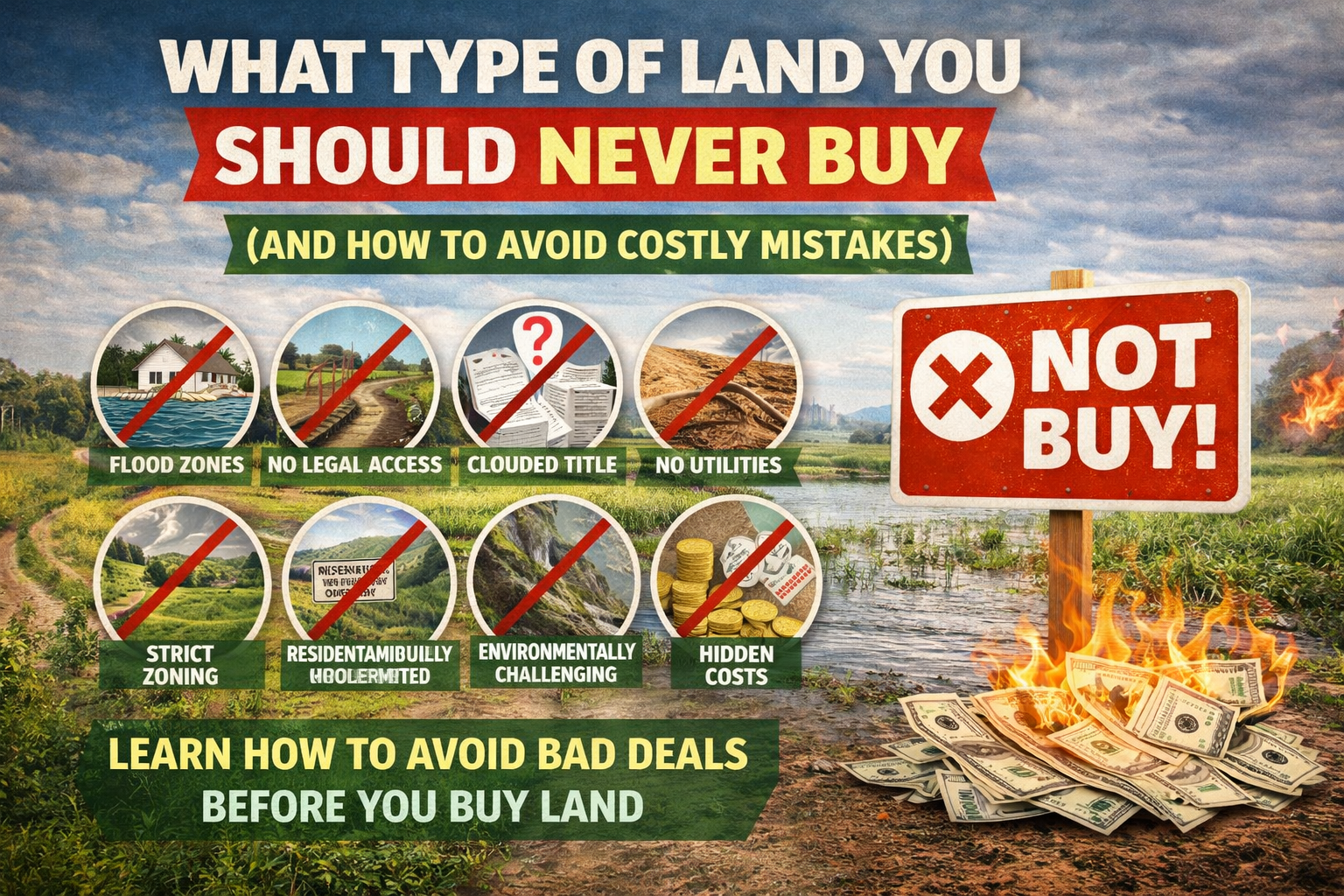
1. Land Without Legal Access
One of the most common (and costly) mistakes is buying land that has no legal access.
This means:
- No recorded easement
- No public road access
- Landlocked property
Even if you can physically reach the property, without legal access you may not have the right to use that route.
👉 Why it’s risky:
You may not be able to build, sell, or even use the land properly.
2. Property in Flood Zones or Wetlands
Land located in flood zones or designated wetlands can come with serious restrictions.
Issues include:
- Limited or prohibited building
- Expensive insurance requirements
- Seasonal flooding risks
👉 Why it’s risky:
You could end up owning land that is practically unusable.
3. Land With Unclear or Clouded Title
If ownership history is messy, walk away—or proceed very carefully.
Red flags:
- Multiple heirs or ownership disputes
- Liens or unpaid taxes
- Missing or incomplete records
👉 Why it’s risky:
You may not legally own the property even after paying for it.
4. Property With No Utilities (When You Need Them)
Raw land without utilities isn’t always bad—but it depends on your goals.
Potential issues:
- No water source
- No electricity nearby
- No septic approval
👉 Why it’s risky:
Bringing utilities to the property can cost tens of thousands of dollars—or may not be possible at all.
5. Land With Strict Zoning or Restrictions
Some properties look great on paper but come with heavy restrictions.
Examples:
- No residential building allowed
- HOA limitations
- Agricultural-only zoning
- Minimum build size requirements
👉 Why it’s risky:
You may not be able to use the land the way you intended.
6. Environmentally Challenging Land
Certain physical characteristics can make land difficult or impossible to develop:
- Steep slopes
- Poor soil (won’t support septic systems)
- Rocky or unstable terrain
- High wildfire risk zones
👉 Why it’s risky:
Development costs can skyrocket—or building may be denied altogether.
7. Land in Areas With No Demand
Even if the price is low, location still matters.
Warning signs:
- No nearby development
- No population growth
- No buyer interest
👉 Why it’s risky:
You could get stuck with land that’s hard to sell for years.
8. Properties With Hidden Costs
Some land deals seem cheap—but come with expensive surprises:
- Back taxes owed
- HOA fees
- Special assessments
- Required improvements
👉 Why it’s risky:
Your “cheap” land can quickly become an expensive liability.
How to Protect Yourself Before Buying
To avoid these pitfalls, always:
- Conduct a title search
- Verify zoning and land use
- Check access and utilities
- Review county records
- Visit the property (or hire someone to)
Doing proper due diligence can save you thousands—and a lot of stress.
Conclusion
Land investing can be incredibly rewarding—but only if you avoid the wrong deals.
By steering clear of problematic properties and doing your homework, you can confidently invest in land that holds real value and long-term potential.


Join The Discussion