
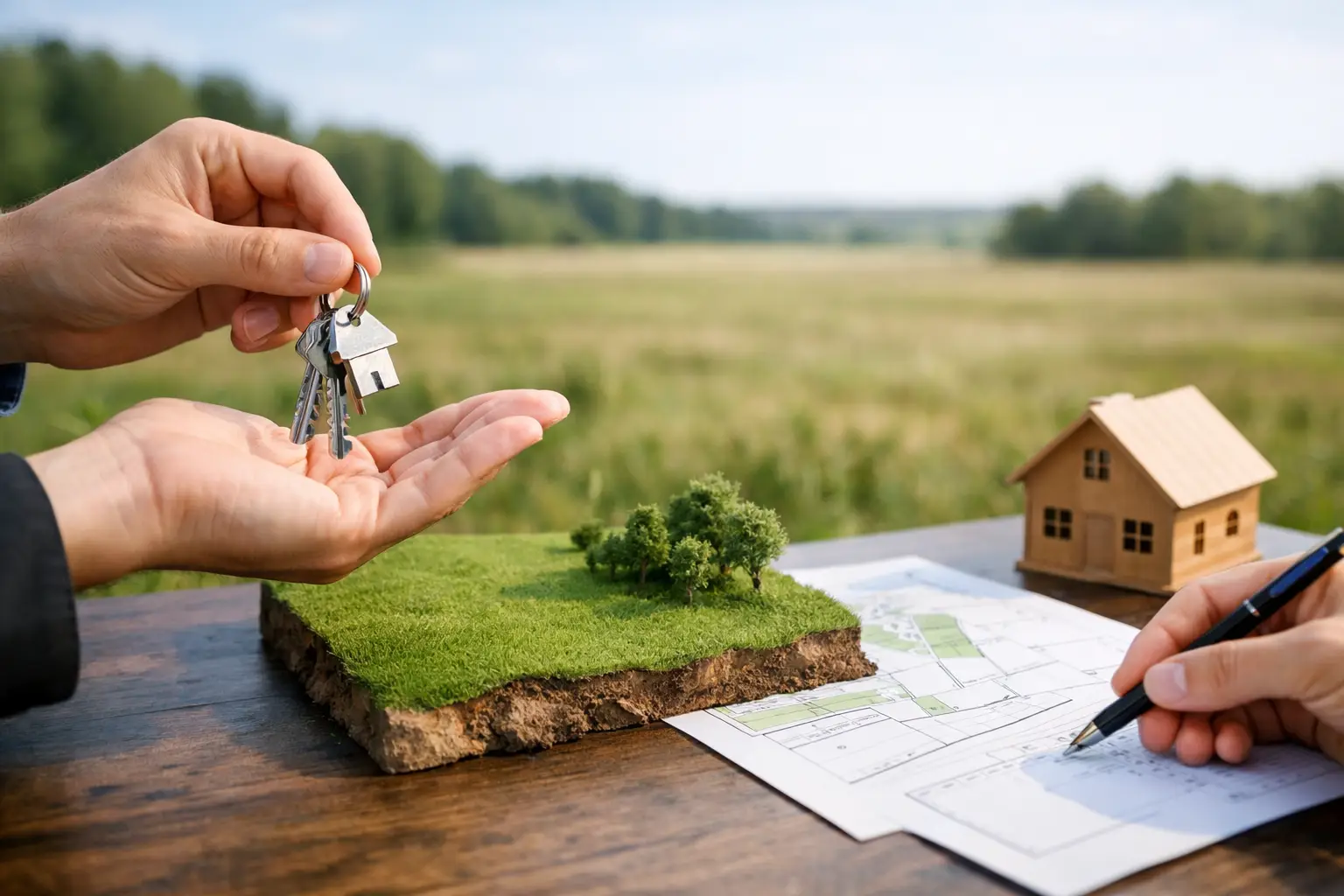
A cheap parcel can get expensive fast if you find out too late that you cannot build on it, reach it legally, or finance it on terms that make sense. That is why learning how to buy vacant land is less about chasing a low price and more about knowing what makes a property usable, valuable, and worth holding long term.
Vacant land gives you options that a house never will. You can build later, hold for appreciation, use it for recreation, place an RV where allowed, start a homestead, or add it to an investment portfolio. But land also asks more from the buyer. There is no kitchen to inspect, no tenants to review, and no finished square footage to compare. You have to judge potential.
How to buy vacant land with a clear plan
Start with the use case, not the map. A parcel that is perfect for hunting may be terrible for building a home. A residential lot inside a growing town may be a strong long-term play, while rural acreage with no utilities may be better for recreation, camping, or off-grid living.
Before you shop, decide what success looks like. Are you buying to build within a year, hold for five years, park an RV on weekends, or pick up affordable acreage with owner financing? That single decision affects where you look, how much risk you can take, and what details matter most.
Budgeting should also happen early. With land, the purchase price is only part of the picture. You may need money for surveys, perc tests, clearing, utility extensions, driveway installation, fencing, septic, well drilling, and carrying costs such as taxes or HOA dues. A low-cost parcel can still be the wrong deal if the improvement costs are too high.
Choose the right location, then the right parcel
Location still drives land value, but with vacant land you need to think beyond zip code. You want to understand the county rules, road access, terrain, flood risk, utility availability, and future development around the property.
If your goal is building, focus on areas with clear zoning, decent road access, and nearby utility infrastructure. If your goal is recreation or privacy, you may accept rougher access or a more remote setting. If you are investing, pay attention to population growth, road expansions, business activity, and demand for lots in that region.
This is where a land-focused marketplace makes a real difference. Searching by state, land type, and intended use is often much more efficient than sorting through house-heavy real estate sites. It helps you compare similar opportunities instead of guessing whether one random parcel is a bargain.
Once a location looks promising, zoom in on the parcel itself. Shape matters. Topography matters. A five-acre rectangle with road frontage can be far more useful than a narrow, oddly shaped five-acre strip. Flat, buildable land usually commands a premium, while steep terrain, wetlands, and irregular boundaries can limit what you can do.
Due diligence is where good land deals are made
If you want to know how to buy vacant land the smart way, this is the core of it. Due diligence is what separates a real opportunity from a future headache.
Start with legal access. A parcel can look great online and still be difficult to reach. You need to know whether access is from a public road, a private road, or an easement. If there is no recorded legal access, financing and future resale can both become harder.
Then check zoning and land use restrictions. Ask what the property is currently zoned for and what uses are allowed. If you plan to build, place a manufactured home, camp long term, keep livestock, subdivide, or use the property commercially, verify that directly with the local county or municipality. Deed restrictions and HOA rules can matter just as much as zoning.
Utilities are next. Some buyers assume utilities can always be added later, but that depends on distance, local infrastructure, and cost. Confirm whether power, water, sewer, natural gas, and internet are available nearby. If not, ask whether a well and septic are allowed. In many rural markets, a perc test is one of the most important checks because it helps determine whether the property can support a septic system.
You should also review flood maps, wetlands issues, and environmental concerns. Land in a flood zone is not automatically a bad purchase, but it can affect insurance, building plans, and value. Heavily wooded tracts, desert parcels, mountainous lots, and waterfront land all come with their own trade-offs. The right property depends on your goal.
A survey can be a smart investment if boundaries are unclear or if you plan to build soon. County parcel maps are useful, but they are not always enough when a fence line, driveway, or neighboring use raises questions.
Pricing vacant land takes a different mindset
Land pricing is less straightforward than home pricing because there are fewer direct comparables and more variation from one parcel to the next. Two lots on the same road can have very different values if one has utilities, paved access, and a clean build site while the other has drainage issues or limited frontage.
Look at recent sales of similar land in the same area, but stay realistic about differences. Acreage, location, zoning, utility access, road frontage, views, timber, water features, and development potential all affect price. Small residential lots are often priced differently from large recreational tracts or farm acreage.
This is also where buyers can get overly excited by a low asking price. Cheap land is not always undervalued. Sometimes it is priced low because access is poor, title issues exist, or the parcel has serious use limitations. A better question than Is it cheap? is Why is it priced this way?
Financing can shape the deal more than the price
Many first-time buyers are surprised that land financing is often stricter than home financing. Some banks avoid raw land loans altogether, and those that do offer them may require larger down payments, shorter terms, and stronger credit.
That does not mean financing is out of reach. It means you should know your options early. Traditional land loans can work well for strong borrowers buying higher-value parcels. Local banks and credit unions may be more comfortable with land in their market. Owner financing can be especially attractive for buyers who want a simpler path, more flexible approval, or lower upfront barriers.
Still, flexibility comes with trade-offs. Owner financing terms vary widely, so review interest rate, down payment, balloon payment risk, and late-fee structure carefully. The best financing is not just the one that gets you approved. It is the one that fits your timeline and keeps the property affordable to hold.
How to buy vacant land and close with confidence
Once you have chosen a parcel and completed your research, make an offer based on facts, not pressure. If the land has been listed for a while, there may be room to negotiate on price, closing costs, due diligence period, or financing terms. If it is a highly desirable parcel in a fast-moving area, speed may matter more.
A title search is essential before closing. You want to confirm ownership and identify liens, unpaid taxes, easements, encroachments, or title defects. Title insurance can add another layer of protection, especially if the parcel has a more complex history.
Read the purchase agreement closely. Make sure it reflects what matters to you, including contingencies for due diligence, financing, survey review, or perc approval when relevant. Land deals are often simpler than home purchases, but simple does not mean risk-free.
Before you sign final documents, step back and ask one practical question: if your plans changed tomorrow, would this still be a property someone else would want? That resale lens is useful whether you are buying your first lot or your tenth tract of acreage.
The strongest land buyers are not the ones who move the fastest. They are the ones who know exactly what they are buying, why it fits their goals, and what it may be worth to the next buyer down the road. If you keep that mindset, land becomes more than a purchase. It becomes an opportunity you can actually use.



Join The Discussion