
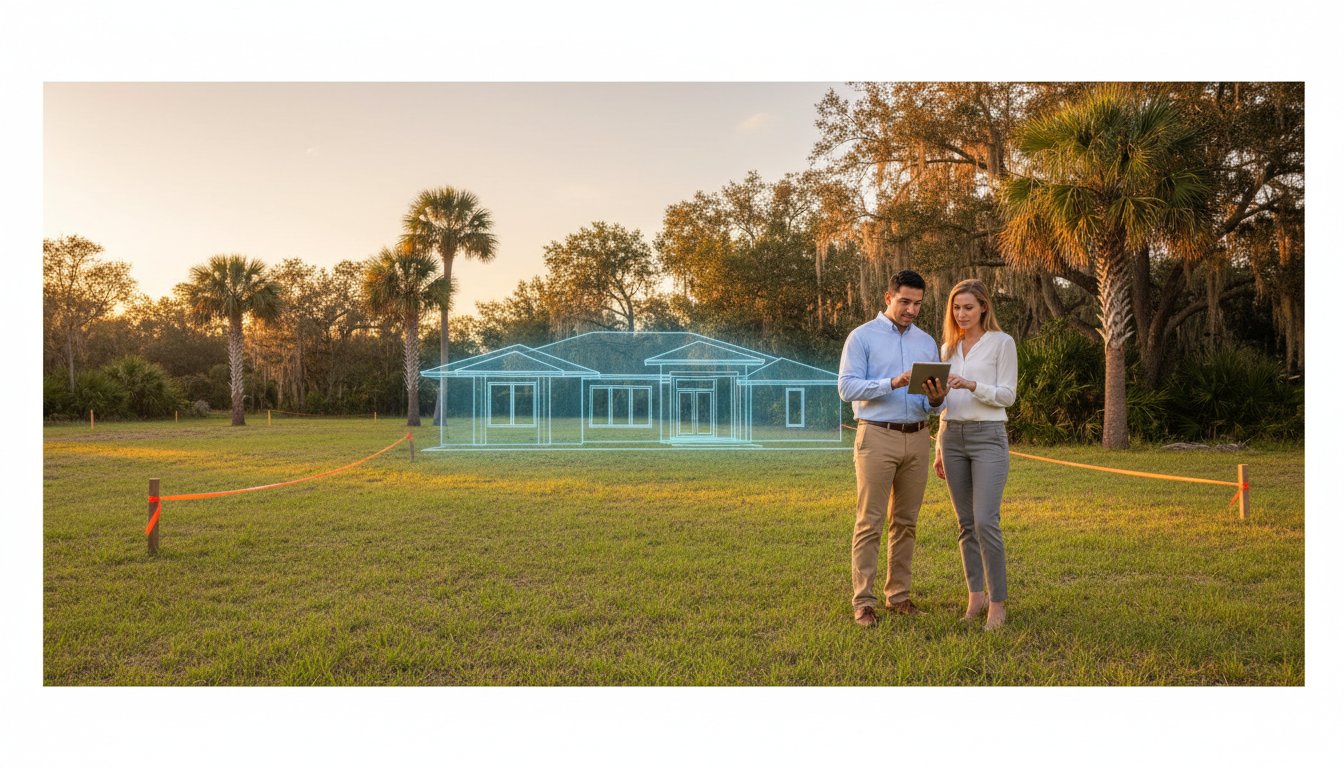
Buying a property you cannot actually use is a $40,000 mistake that happens to thousands of land buyers every year. Most people assume every vacant acre is ready for a foundation, but hidden zoning traps and utility gaps often turn these investments into expensive liabilities. You need a verified buildable lot for sale that is ready for construction today, not a legal project that takes years to settle. We cut through the red tape so you can start your project without the stress of hidden fees or surprises.
You want a straightforward path to ownership without the typical real estate headaches. It’s frustrating to find a perfect location only to discover it lacks legal access or sewer connectivity. This 2026 guide provides the exact steps to verify any site in under 48 hours. You will learn how to identify red flags, calculate utility costs, and secure land with total confidence. We provide a 7 point buildability checklist and a streamlined method to find residential lots that are 100% ready for your builder.
Key Takeaways
- Identify a genuine buildable lot for sale by mastering legal setbacks and physical requirements.
- Secure your investment by verifying the four essential pillars of zoning and site access.
- Compare raw land savings against the immediate construction speed of improved lots.
- Use professional surveys and perk tests to confirm site feasibility before you close.
- Eliminate middleman fees by finding vetted parcels directly on a specialized marketplace.
What defines a buildable lot for sale in 2026?
A buildable lot for sale is a parcel of land that is both legally and physically prepared for immediate construction. You can’t just buy any piece of dirt and expect to start digging. In 2026, the distinction between a “legal lot of record” and a “buildable parcel” is the difference between a smart investment and a costly mistake. A legal lot exists in county records, but it might lack the necessary permits or utility access to support a home. You need a lot that satisfies specific square footage requirements and strict setbacks. These rules dictate exactly how far your structure must sit from property lines and neighboring buildings.
Raw land is often a trap for the unprepared. It lacks infrastructure and basic services. You might spend $40,000 or more just to clear trees, grade the soil, or extend power lines to the site. Unless the land is already classified as buildable, it’s just an expensive liability. Real buildable lots have these hurdles cleared before the “for sale” sign goes up. They offer a clear path to a building permit without the headache of unexpected engineering costs.
Legal vs. Physical buildability
Legal buildability starts with Zoning regulations. These local laws decide if you can build a single-family home, a tiny house, or a multi-unit complex. You must also account for easements and deed restrictions that could permanently block your building plans. Physical buildability focuses on the actual ground. You need stable soil that passes a percolation test and a site located outside of high-risk flood zones. Steep topography can easily double your foundation costs or make a site entirely unconstructible. You need both legal clearance and physical stability to secure a building permit from the county.
The 2026 market for residential lots
The 2026 market shows a 14 percent increase in demand for custom-build sites compared to two years ago. Buyers want control over their living space and are moving away from cookie-cutter subdivisions. New technology makes due diligence faster than ever. Digital mapping tools and AI-driven soil analysis now provide instant data on parcel health and utility proximity. This speed allows you to move from a search to a closed deal in a matter of days. Identifying a buildable lot for sale involves looking past the grass and trees to see the underlying infrastructure. A buildable lot is the intersection of zoning, access, and utilities.
The 4 pillars of a buildable property
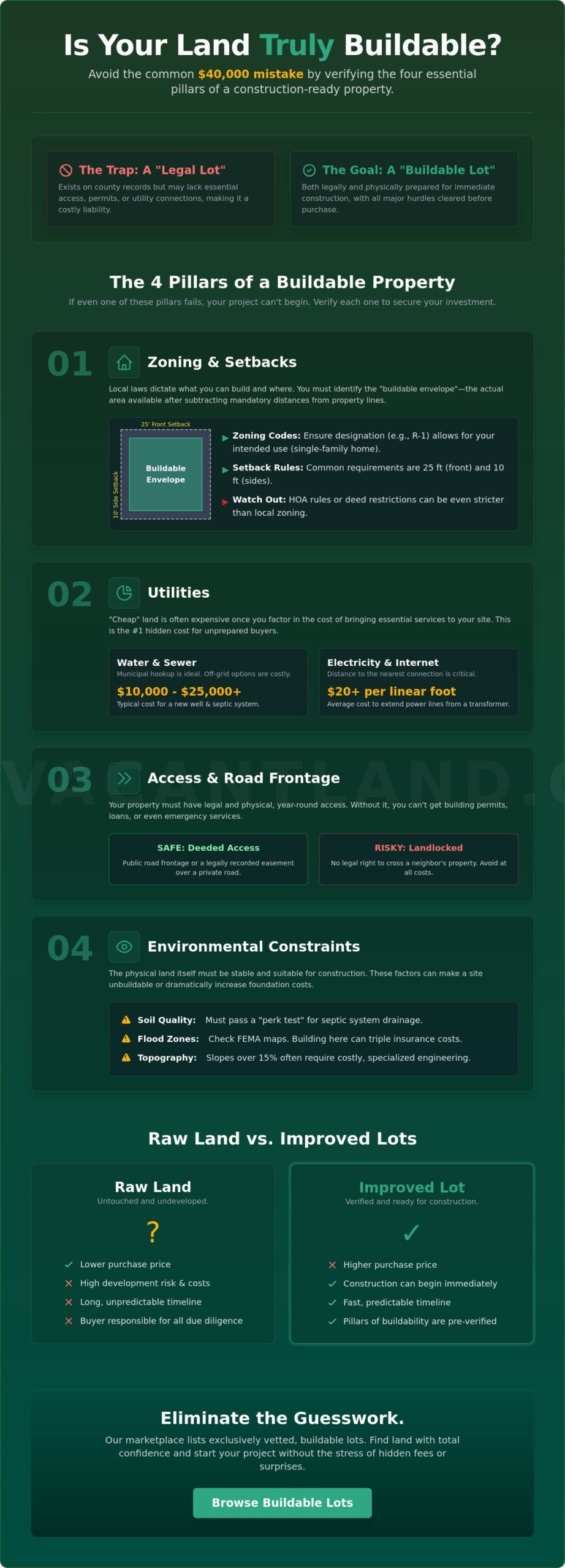
Finding a buildable lot for sale requires more than a visual inspection. You are looking for a property that meets four specific criteria. If one pillar fails, your construction project stops before it starts. Use this comprehensive land buying checklist to ensure your due diligence is airtight and your investment is protected.
Zoning and setbacks
Zoning laws dictate exactly what you can build. An R-1 designation typically limits the lot to a single-family residence. You cannot assume a large lot allows for a large house. You must identify the buildable envelope. This is the actual footprint available after subtracting mandatory setbacks. In many jurisdictions, front setbacks require 25 feet of clearance, while sides may require 10 feet. Private restrictions like HOAs or CC&Rs often override local zoning. They might mandate a minimum square footage or specific roof pitches that increase your construction costs.
Utilities: The hidden cost of “cheap” land
Utility access determines your total project budget. Municipal water and sewer connections are the gold standard for reliability. If these aren’t present, you must budget for a well and a septic system. A standard septic system can cost $10,000 to $25,000 depending on soil quality. Many listings for cheap land for sale are affordable because they lack power. Running electricity from the nearest transformer often costs $20 per linear foot. In 2026, high-speed internet availability is just as vital as electricity for property resale value.
Access and road frontage
Your property needs a legal and physical entrance. Public road frontage is the simplest path to a building permit. Private roads are common but require a recorded maintenance agreement among neighbors. Avoid landlocked parcels at all costs. Without a recorded easement, you have no legal right to cross someone else’s dirt. Lenders rarely approve construction loans for properties with “seasonal access” because emergency vehicles cannot reach the site year-round. Ensure your buildable lot for sale has direct, deeded access to a maintained thoroughfare.
Environmental constraints
The physical land must support a structure. Soil percolation tests are mandatory for septic approval. If the soil doesn’t drain, you can’t build. Check for wetlands or flood zones using FEMA maps. Building in a flood zone can triple your insurance premiums. Steep slopes also create issues. Any grade over 15% usually requires specialized engineering and expensive foundations. If you want a simpler path to ownership, browse our ready-to-build inventory for a faster, guaranteed transaction.
Raw land vs. Improved lots: Which should you buy?
Choosing the right buildable lot for sale depends on your budget, timeline, and tolerance for bureaucracy. Raw land is untouched acreage. It lacks water, sewer, and power connections. While the purchase price is significantly lower, the development risks are high. You are responsible for every step of the transformation process. This includes everything from soil testing to installing a septic system or connecting to municipal lines.
Improved lots, or “finished lots,” are ready for immediate construction. These parcels sit within established subdivisions or developed areas where the heavy lifting is done. Roads are paved. Utilities are at the curb. You pay a premium for this convenience, but you eliminate the uncertainty of hidden development costs. Investors often target raw land to manufacture equity through the entitlement process. Homeowners usually choose improved lots to avoid the two-year headache of site preparation.
To make a smart decision, calculate the Total Cost to Build for both options. Use this simple formula:
- Raw Land: Purchase Price + Perc Testing + Clearing + Grading + Utility Trenching + Impact Fees = Total Cost.
- Improved Lot: Purchase Price + Standard Permit Fees = Total Cost.
Often, a $50,000 raw lot ends up costing more than a $120,000 improved lot once the dust settles.
The true cost of development
Raw land carries hidden expenses that can sink your budget. Impact fees and permit costs vary wildly by county. In some high-growth areas, impact fees for a single-family home can reach $20,000 before you pour the foundation. You must also budget for site prep. Clearing and grading a heavily wooded acre typically costs between $3,000 and $5,000 depending on the terrain. Use a due diligence checklist for buying land to verify water rights and legal access before committing your cash. Building on an improved lot allows you to start framing in weeks, while raw land projects often spend 12 to 18 months in the permitting phase alone.
Financing differences
Banks view raw, unimproved land as a speculative investment. Most traditional lenders demand a 50% down payment and charge higher interest rates because there is no house to serve as collateral. If you don’t have a massive pile of cash, look for owner financed land to secure your buildable lot for sale. This strategy bypasses strict bank requirements and lets you start the development process faster.
Improved lots are much easier to finance through a construction-to-permanent loan. These products cover the land purchase and the home construction in a single closing. Once the builder finishes the house, the loan converts into a standard 30-year mortgage. This path offers more stability and lower out-of-pocket costs for the average buyer.
How to verify buildability before you close
A buildable lot for sale is only a smart investment if you can actually put a shovel in the ground. You must verify every claim the seller makes before you sign the closing papers. Don’t take their word for it. Follow these five steps to protect your capital and ensure your project is viable.
- Order a professional land survey: Confirm your boundaries and markers. A 2024 industry report found that 15 percent of rural property lines are inaccurately described in old deeds. Locate all easements that could restrict your building footprint.
- Conduct a Perk Test: If the lot lacks city sewer, a percolation test is mandatory. This test measures how quickly water drains through the soil. Without a passing grade, you cannot install a septic system.
- Review the Title Report: Look for hidden liens, unpaid taxes, or 1920s-era deed restrictions. These legal hurdles can stop a construction project before it starts.
- Schedule a Pre-Application meeting: Sit down with the local planning department. Ask about 2026 zoning updates and specific setback requirements. This 30-minute meeting can save you months of permit delays.
- Get utility fees in writing: Tap-in fees for water and electricity can range from 5,000 to 50,000 dollars depending on the location. Secure written quotes from utility providers to avoid budget-breaking surprises.
The Due Diligence Period
Structure your land contract with a 30-day feasibility contingency. This gives you a specific window to back out if the land fails a soil analysis. Never skip a professional geotechnical report. Soil that is too rocky or too sandy will double your foundation costs. Ask the zoning administrator if the buildable lot for sale sits in a flood zone or a protected wetland area. These designations often require expensive mitigation or prohibit building entirely.
Working with professionals
You need a team to navigate the technical details of how do you buy land safely. Hire a land surveyor to mark the corners; hire a civil engineer if you need to design complex drainage or grading plans. A specialized land agent understands these technical requirements better than a standard residential Realtor. Always purchase title insurance. It is a one-time fee that protects you from future claims against your ownership. Efficiency is key during this phase. Move fast, get the data, and make your decision based on facts.
Ready to skip the stress of traditional land buying? Get your fair cash offer on a verified property today.
Find your buildable lot on BuyVacantLand.com
Finding a buildable lot for sale shouldn’t be a complicated chore. Most big-name real estate platforms bury land listings under thousands of single-family homes and rental apartments. BuyVacantLand.com is different. We built a specialized marketplace that focuses 100 percent on vacant land parcels. This focus ensures you don’t waste time filtering out properties that don’t fit your vision. You want dirt, and we provide it without the clutter.
Our platform provides direct access to sellers. You won’t deal with middlemen who inflate prices or slow down the communication process. In a 2026 market where speed determines who gets the best deal, this direct connection is vital. We prioritize a straight shooter approach. You see a lot you like, you talk to the person who owns it, and you move forward. It’s a simple process designed for busy people.
- Zero commissions: We don’t charge buyer fees or hidden percentages that eat into your construction budget.
- Zero stress: Skip the high-pressure sales tactics used by traditional real estate agencies.
- Zero red tape: Our streamlined process cuts through the typical bureaucracy of land acquisition.
Why our marketplace is different
We don’t list homes or rentals. We only do land. This specialization allows us to build tools specifically for land buyers. While other sites use filters for the number of bedrooms, we use filters that actually matter for constructible land. You can find residential lots, off-grid acreage, or working farms with just a few clicks. Industry data shows that buyers save an average of 15 to 20 percent on transaction costs by working directly with sellers on our platform.
Direct-to-seller listings save you time and money. You get the facts about the property without the marketing fluff. If you need to know about road access or utility hookups, you get those answers from the source. This transparency builds trust and gets you to the closing table faster. We remove the barriers between you and your property.
Start your search today
Browse thousands of listings across the United States. Whether you want a small plot in a developed neighborhood or 40 acres in the wilderness, our inventory covers every need. We’ve simplified the search so you can find your buildable lot for sale without the usual headaches. Every listing is clear, concise, and actionable.
Get your fair deal on a parcel today. The land market moves fast, and the best lots don’t stay available for long. Take control of your future home site right now. Click the link below to see what’s available in your target area and start building your legacy.
Secure Your 2026 Building Site Today
Finding a buildable lot for sale in 2026 doesn’t have to be a multi-month struggle. Success depends on verifying the 4 pillars of constructibility before you sign any paperwork. Recent industry reports indicate that 30 percent of raw land buyers encounter zoning or utility hurdles that delay construction by over 12 months. You can avoid these setbacks by choosing a platform designed for efficiency. Focus on improved lots or verified raw land to keep your project on schedule and within budget.
BuyVacantLand.com offers a specialized land-only marketplace that cuts out the traditional noise. We connect you directly to sellers, which removes the need for expensive intermediaries. Our process features a zero commission structure, so you keep more of your capital for construction costs. We focus on transparency and speed. You get the land you want without the typical real estate runaround. It’s time to stop searching and start planning your build with a partner that values your time.
Find your buildable lot for sale today on BuyVacantLand.com
Your dream home begins with the right foundation. Take the first step toward ownership and secure your future property with total confidence.
Frequently Asked Questions
What is the difference between a lot and a parcel?
A parcel is the original, larger tract of land, while a lot is a specific piece surveyed for development. You’ll find a buildable lot for sale listed by its specific lot number on a recorded plat map. County records use parcel identification numbers for tax purposes before developers split the land into individual homesites. This distinction matters for legal descriptions and title insurance.
Can I build on a lot without road access?
You cannot legally build on land that lacks deeded road access or a recorded easement. Local 2026 building codes usually require a minimum of 30 to 50 feet of frontage on a maintained public road. If the land is landlocked, you must secure a legal right-of-way from a neighbor. Without this document, the county will deny your building permit every time.
How much does it cost to clear a lot for building?
Clearing costs usually range from $1,500 to $5,000 per acre for light vegetation, but heavily wooded lots can cost $15,000 or more. These figures come from 2024 industry averages for site preparation. You must factor in the cost of debris removal and professional grading. Always get a flat-fee quote to keep your budget predictable and avoid hidden surcharges.
What is a “perk test” and why do I need one?
A perk test measures the water absorption rate of the soil to see if it supports a septic system. This is mandatory because 20 percent of new construction projects require private waste disposal. If the soil fails, you cannot install a standard septic tank. This failure makes the land unbuildable for traditional homes, which can drop the property value by 50 percent.
Can I buy a buildable lot with owner financing?
You can buy a buildable lot for sale through owner financing to avoid the hassle of bank loans. The seller provides the credit and you sign a promissory note with specific monthly terms. Most sellers require a 15 percent down payment and offer a 5 to 10 year balloon. This process cuts out loan origination fees and lets you close in days.
How do I check the zoning of a property before buying?
Check the zoning by searching the county’s GIS map or visiting the local planning office. Look for specific codes like R-1 for residential or AR for agricultural-residential. These rules define what structures are allowed and how you can use the land. Confirm the 2026 land-use plan to ensure the area isn’t scheduled for commercial rezoning, which could ruin your quiet neighborhood.
What are setbacks and how do they affect my house size?
Setbacks are the required distances between your house and the property lines. A standard 25-foot front setback and 10-foot side setbacks create a building envelope that is much smaller than the total lot size. For example, a 100-foot wide lot with 10-foot side setbacks only allows an 80-foot wide house. Always calculate the buildable footprint before you finalize your floor plans.
Is it cheaper to buy land and build or buy an existing house?
Buying an existing home is usually 15 to 20 percent cheaper than building a new one from scratch. Data from 2023 shows the median cost of new construction is significantly higher than existing home sales. However, new builds save you money on long-term maintenance. You won’t face $10,000 roof replacements or $6,000 furnace repairs for at least 15 years after the move-in date.


Join The Discussion