
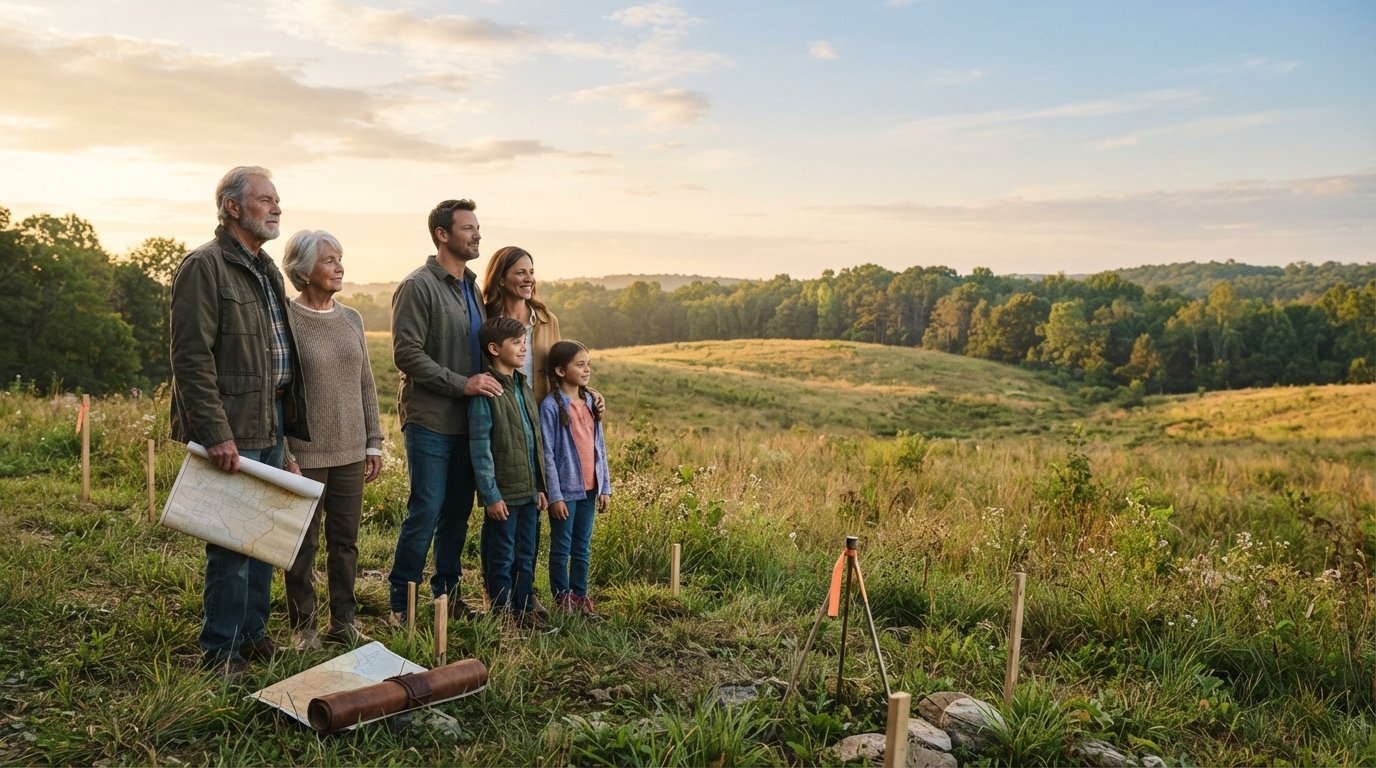
Your family’s financial future shouldn’t depend on a volatile stock market or a digital currency that could vanish overnight. Building a legacy with land ownership offers a physical, permanent foundation that developed real estate simply cannot match in 2026. You’re tired of watching savings fluctuate. You want something real. You want an asset that your grandchildren can walk on, build on, and pass down without the headache of traditional bank red tape.
Traditional financing for raw land is a hurdle, and developed property prices are out of reach. This guide provides the exact roadmap you need to secure multi-generational wealth through strategic vacant land acquisition. You’ll learn the specific tax benefits of raw land, how to find affordable entry points like owner-financed lots, and the simple steps to transfer this heritage to the next generation. We focus on transparent, direct transactions and equitable proposals that cut through the usual procedural noise. It’s time to stop chasing digital trends and start owning the earth beneath your feet.
Key Takeaways
- Secure your wealth in tangible assets that bypass the volatility of modern paper markets.
- Minimize overhead with vacant land that requires no maintenance, utility bills, or property management fees.
- Follow a pragmatic roadmap for building a legacy with land ownership by identifying high-value residential and off-grid parcels.
- Protect your investment by verifying zoning and land-use restrictions before you buy.
- Access a national marketplace to find affordable owner-financed land and diversify your family’s holdings across the US.
What is a Land Legacy in the 2026 Economy?
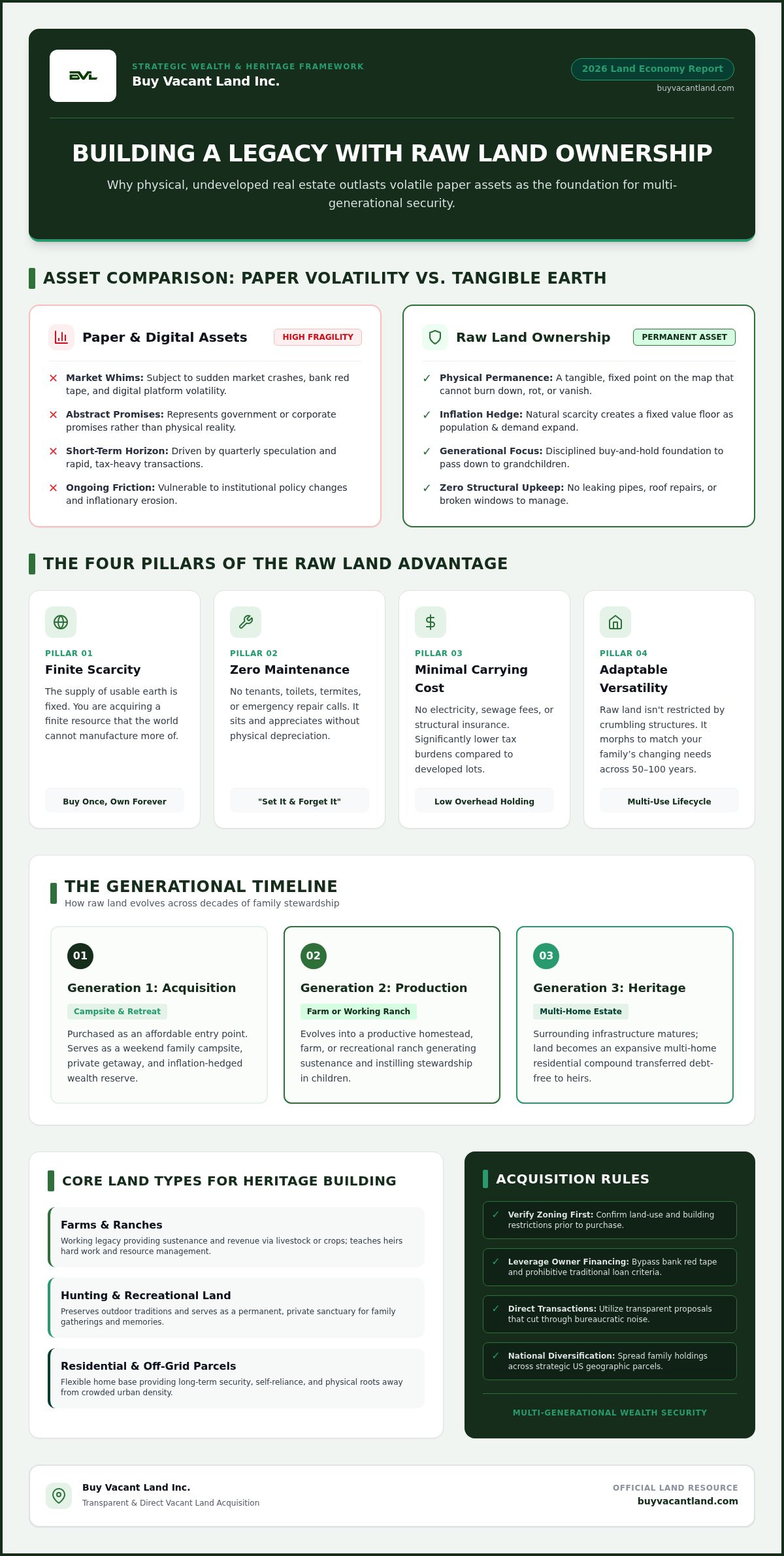
A land legacy is a permanent asset. It’s built for your heirs, not just your current bank account. In the 2026 economy, building a legacy with land ownership means securing a tangible piece of the world that won’t evaporate during a sudden market crash. Unlike stocks or digital currencies, raw land is physical. It stays exactly where it is. It provides a primary hedge against inflation because the supply of usable earth is fixed while the demand for space grows every year. You aren’t just buying dirt; you’re buying a finite resource that the world can’t make more of.
We’ve moved past the era of speculative flipping and high-risk gambles. Pragmatic buyers now focus on long-term stability. They want an asset that preserves its purchasing power over decades. Paper assets represent promises from corporations or governments; land represents physical reality. Gaining a clear understanding of land tenure and ownership rights is the first step toward this security. You’re not just buying property; you’re establishing a legal foundation for your family’s future that bank failures cannot touch. This shift from speculation to legacy building defines the modern land market.
The Tangibility Factor: Why Dirt Wins
Land is the only asset that doesn’t rot, rust, or require a roof replacement. You cannot manufacture more of it. This scarcity creates a natural floor for its value. It offers a psychological peace of mind that a digital brokerage statement simply cannot provide. It is a fixed point on the map that belongs to you. Best of all, undeveloped land requires zero maintenance. You won’t deal with leaking pipes, broken windows, or angry tenants. It sits there and appreciates while you focus on your daily life. It is the ultimate “set it and forget it” wealth builder.
Multi-Generational Wealth vs. Short-Term Profit
Stop thinking about fiscal quarters and start thinking about generations. Building a legacy with land ownership requires a disciplined buy-to-hold strategy. Short-term profit is often fleeting. It’s subject to high taxes and market whims. In contrast, long-term stability creates a lasting family identity. Your acquisition becomes the permanent family ranch or the future homestead site. It appreciates steadily as the surrounding infrastructure and population expand. This isn’t a speculative gamble. It’s a deliberate wealth-transfer mechanism. It bypasses the stress of traditional financial volatility and secures your name for years to come.
Why Vacant Land is the Ultimate Legacy Asset
Building a legacy with land ownership works because the overhead is minimal. You don’t pay for electricity, sewage, or structural insurance on a raw parcel. These low carrying costs ensure your wealth isn’t drained by monthly maintenance fees or property management commissions. You can hold the property for decades without the financial strain common in developed real estate. According to USDA land value and tenure data, land remains a foundational pillar of the American economy. It offers a physical versatility that buildings lack. Your acquisition might start as a weekend family campsite, evolve into a productive farm, and eventually serve as a multi-home residential estate. This natural flexibility allows the asset to adapt to your family’s changing needs over fifty or one hundred years.
Scarcity and the Finite Nature of US Land
The supply of usable land in the US is finite. As we move through 2026, population growth continues to drive demand for space, yet the amount of earth remains the same. Raw undeveloped land is the purest form of property ownership because it hasn’t been modified or restricted by crumbling structures. It represents a “buy once, own forever” opportunity. When you secure a parcel today, you’re claiming a piece of a shrinking resource. This scarcity naturally pushes valuations higher over the long term. If you want to start your search now, you can browse available land listings to see where the best opportunities remain.
Low Maintenance, High Security
Forget the stress of tenants, toilets, and termites. Improved real estate requires constant oversight and expensive repairs. Vacant land offers a “set it and forget it” solution. It’s passive legacy building at its finest. You don’t need to worry about property managers or midnight emergency calls. The security comes from the asset’s physical permanence. It can’t be stolen, burned down, or misplaced. Tax burdens on undeveloped property are also typically much lower than those on improved lots. This makes it easier to keep the land within the family for a century or more. Building a legacy with land ownership is about removing obstacles for your children. You’re securing a future without the day-to-day burdens of traditional landlording. It’s a pragmatic way to protect your capital while ensuring your heirs have a tangible inheritance they can actually use.
Identifying the Best Land Types for Your Family Heritage
Building a legacy with land ownership requires a specific match between the asset and your family’s future needs. You aren’t just buying space. You are choosing a foundation for a specific lifestyle. Farms and ranches create a working legacy. These properties provide sustenance and potential revenue through livestock or crop production. They teach the next generation the value of hard work and resource management. Hunting and recreational land preserves family traditions. These parcels serve as a permanent gathering place for outdoor memories, securing a private space for hobbies that public land cannot guarantee. Your choice today dictates how your family interacts with the world for the next century.
Residential Lots for Future Development
Residential lots provide a strategic path for families looking to secure future home sites in high-growth corridors. You can “bank” these lots today while prices are still manageable. This strategy ensures your children or grandchildren have a guaranteed place to build without facing the hyper-inflated prices of future decades. Smart buyers look for land near expanding utility lines and infrastructure before the general public catches on. You can find cheap land for sale in emerging markets by browsing a national marketplace. This allows you to acquire multiple lots in different states, spreading your risk across various economic zones.
Off-Grid and Recreational Holdings
Off-grid land serves as a self-sufficient “escape hatch” for your family heritage. These parcels are increasingly valuable as “unplugged” retreats become a luxury in a hyper-connected world. When evaluating these holdings, look for more than just a view. Securing water rights and timber resources is a vital step in building a resilient legacy. According to USDA land value and ownership data, the demand for non-urban land continues to evolve as buyers prioritize privacy and resource security. Many lands of america offer diverse recreational opportunities that can support a family for a century. Whether it’s a mountain lot or a desert parcel with solar potential, your choice should reflect a 50-year vision. Don’t settle for land that only serves a short-term purpose. Buy the land that your great-grandchildren will thank you for owning.
A Pragmatic Roadmap to Acquiring Legacy Property
Building a legacy with land ownership requires a disciplined, four-step approach. You can’t rely on luck when securing assets for future generations. Building a legacy with land ownership isn’t just about the purchase; it’s about the process. First, define your specific legacy goal. Are you looking for a recreational retreat, a working farm, or a future residential site? Second, research zoning and land use restrictions. You must ensure the property remains viable for your intended purpose fifty years from now. Third, secure your financing. Prioritize cash or owner-financing to avoid the red tape and high interest rates of traditional bank loans. Finally, execute a clean transaction. Always perform a clear title search to protect your family’s future rights. This logical progression ensures you avoid common procedural hurdles and secure a permanent asset.
Bypassing Banks with Owner Financing
Traditional banks hate raw land. They often demand massive down payments and impose strict credit requirements. Choosing owner financed land is the fastest path to starting your legacy. You negotiate terms directly with the seller on a marketplace. This bank-free buying process allows for flexible down payments and quicker closings. It’s an efficient strategy for multi-parcel acquisition. You can secure several legacy assets across different states without the burden of multiple mortgage applications. This method cuts through traditional red tape. It provides a simplified, numbered sequence to ownership that favors the buyer’s timeline.
Essential Due Diligence for Forever Land
Your legacy depends on the quality of your due diligence. You must verify legal access and utility availability before signing any contracts. Environmental factors like flood zones or soil stability can impact long-term viability. A professional survey is a non-negotiable step. It confirms the exact boundaries your heirs will inherit. You don’t want a boundary dispute to ruin a century of ownership. For a detailed checklist of these steps, consult the how do you buy land guide. This research phase is about certainty. It eliminates the stress of asset ownership by identifying potential issues early. You’re buying peace of mind for your family.
Ready to take the first step? Explore our vacant land listings to find a parcel that fits your family’s vision.
Scaling Your Legacy via a National Land Marketplace
Don’t limit your family’s future to a single county or state. Building a legacy with land ownership is most effective when you adopt a national perspective. A centralized listing platform provides a massive advantage for discovery. You can compare properties across different time zones and economic climates from one dashboard. This tool allows you to find specialized assets like industrial lots or off-grid retreats that might be scarce in your immediate area. Using a marketplace like BuyVacantLand.com ensures you connect directly with motivated sellers. This direct access removes the traditional procedural hurdles that slow down acquisition. It turns a complex national search into a simple, manageable process.
Diversification: The Key to a Robust Legacy
Spreading your holdings across multiple states protects your family legacy from regional risks. Economic shifts or local zoning changes can impact property values in one area while another thrives. A robust portfolio balances various land types for maximum security. You should consider mixing agricultural land with residential lots. This strategy creates a mixed portfolio that offers both utility and appreciation potential. Your heirs might use one parcel for a future home site and another for a working ranch. A national marketplace makes this scaling efficient. You can identify high-growth zones and secure parcels before local prices peak. This proactive approach ensures your legacy is not just large, but resilient.
Direct Seller Connections
Every middleman in a real estate deal reduces your purchasing power. Broker commissions and service fees eat into the total acreage you can pass down. Building a legacy with land ownership requires maximizing your “legacy per dollar” ratio. You achieve this by cutting out unnecessary intermediaries. A focused, vacant-land-only environment allows for pragmatism and speed. You don’t have to sift through houses or rental listings to find what you need. You can take immediate action on opportunities like land for sale in florida and compare them to properties in other states instantly. This streamlined path to ownership provides the relief of a swift, assured transaction. You spend less time negotiating with agents and more time securing your family’s physical heritage.
Secure Your Family’s Physical Future
Building a legacy with land ownership requires a shift from volatile paper assets to the physical certainty of the earth. You now have the roadmap to move beyond short term speculation. Vacant land provides the lowest carrying costs and the highest versatility for your heirs. By identifying the right parcel type and bypassing bank hurdles through owner financing, you secure an asset that won’t rust or rot. A national strategy ensures your family heritage remains resilient against regional economic shifts.
The path forward is direct. You don’t need a local broker for every deal when you use a national US marketplace. Our platform focuses exclusively on vacant land parcels; it provides a streamlined environment for your search. This efficiency removes the stress of asset ownership and puts you in direct contact with land sellers. Stop waiting for a better market window. The supply of usable land is finite and decreasing every single day. Start building your family legacy; browse our national land listings today. Take control of your heritage with a swift, assured transaction. Your family’s future starts with the dirt beneath your feet.
Frequently Asked Questions
Is building a legacy with land ownership better than a 401k?
Building a legacy with land ownership offers a physical hedge against inflation that paper assets like a 401k cannot provide. While a 401k depends on corporate performance and market whims, raw land is a finite resource. It doesn’t disappear during a stock market crash. You can walk on land and use it for recreation or agriculture. It serves as a tangible foundation for your family’s heritage rather than just a number on a digital screen.
How much land do I need to start a family legacy?
There is no minimum acreage required to start. A single residential lot in a high-growth corridor can be just as valuable for a legacy as a hundred-acre ranch. Your goal determines the size. If you want a self-sufficient homestead, you might look for five to ten acres. If you simply want to bank land for a future building site, a quarter-acre lot suffices. Focus on the quality and location of the parcel rather than the total size.
What are the hidden costs of owning vacant land for decades?
Carrying costs for vacant land are significantly lower than developed property, but they aren’t zero. You must account for annual property taxes and potential association fees if the land is in a planned community. Liability insurance is also a pragmatic choice to protect your asset. You should also factor in the cost of occasional brush clearing or fencing to maintain the property’s boundaries. These costs are predictable and manageable compared to structural maintenance.
Can I use owner financing to buy multiple legacy parcels?
Yes, owner financing is an excellent tool for scaling your land portfolio across the United States. Unlike traditional banks that limit the number of active loans, individual sellers often have more flexible criteria. You can negotiate separate terms for each parcel directly with the owner. This allows you to diversify your legacy by holding residential lots in one state and off-grid land in another without the stress of multiple mortgage applications.
How do I ensure my land legacy is passed down correctly to my heirs?
You must establish a clear legal structure to ensure a smooth transition. This often involves placing the property into a family trust or a limited liability company. These structures help avoid the complexities of probate and can offer tax advantages for multi-generational transfers. Always maintain a clear title and keep your professional survey on file. Consult with a legal professional to align your land holdings with your broader estate planning goals.
What is the best type of land for long-term appreciation in 2026?
Residential lots located near expanding urban infrastructure typically offer the highest appreciation potential. As cities grow, the demand for buildable space increases while the supply stays fixed. Off-grid land with natural resources like water or timber is also seeing a surge in value as buyers prioritize self-sufficiency. Look for parcels that offer versatility. Land that can transition from recreation to a home site provides the most security for building a legacy with land ownership.
Do I need a lawyer to buy legacy land on a marketplace?
While you can complete a transaction without one, hiring a real estate attorney is a pragmatic step for long-term security. A lawyer can review the purchase agreement and ensure the title search is exhaustive. They verify that no hidden liens or easements threaten your future ownership rights. This professional oversight provides peace of mind. It ensures the foundation of your family heritage is legally sound from the very first day of ownership.
Is raw undeveloped land a safe asset during a recession?
Raw undeveloped land is one of the safest assets during economic downturns. It doesn’t require expensive upkeep or tenants to remain valuable. During a recession, paper assets often lose value rapidly, but land remains a physical, finite resource. It acts as a store of value that historically recovers and appreciates over time. Ownership is permanent. Even if the economy slows, your family still owns the physical earth, providing a stable base for future recovery.

Join The Discussion