
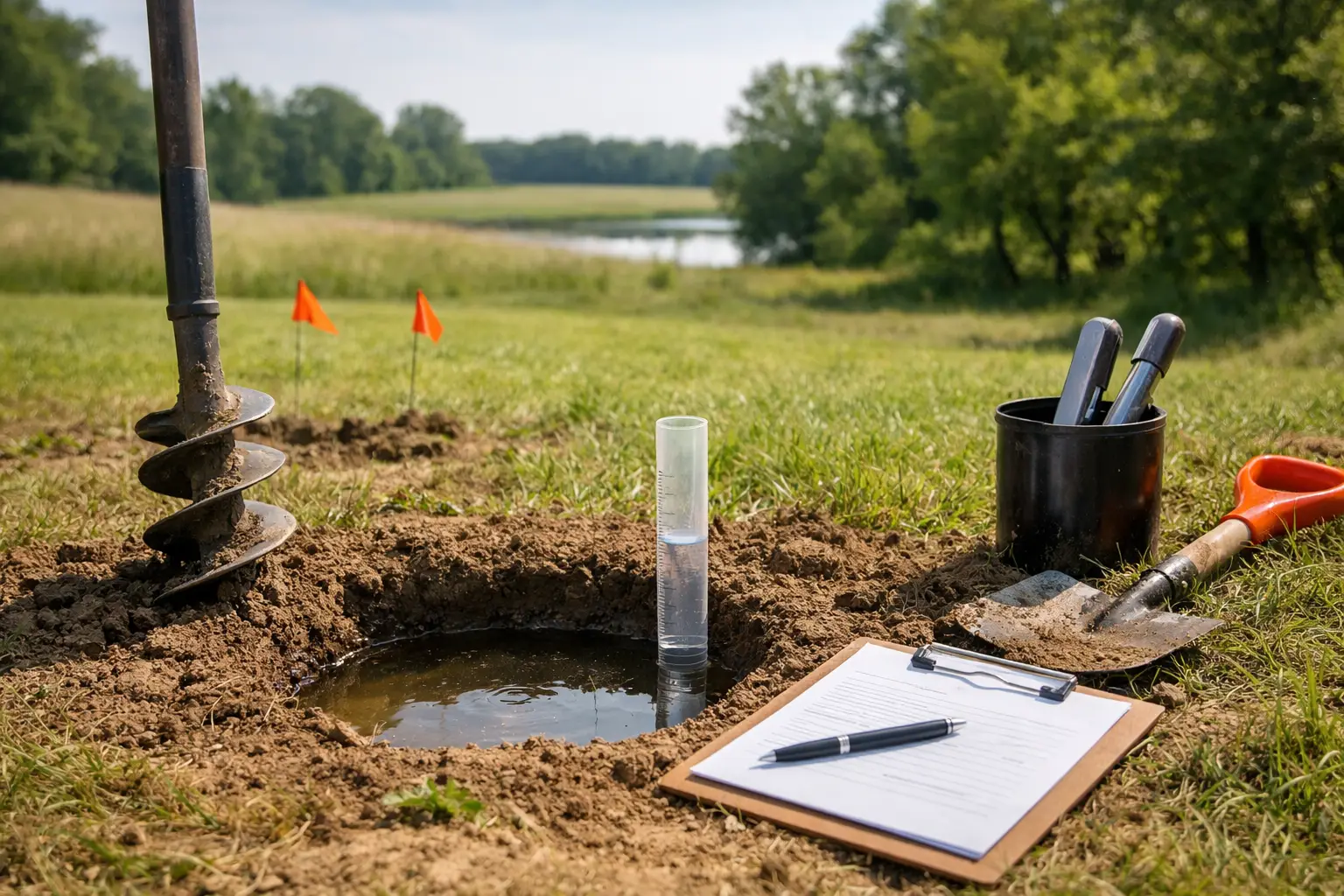
A parcel can look perfect on paper – great price, good road access, plenty of space – and still have one major problem underground. If you are asking what is land perc testing, you are really asking whether the soil can handle a septic system. For many rural and vacant lots, that answer can make or break the deal.
Perc testing is one of the most practical parts of land due diligence because it speaks directly to usability. If a property is not connected to city sewer, the soil usually needs to absorb and filter wastewater from a septic system. A perc test helps determine whether that can happen safely and legally.
What Is Land Perc Testing and Why Does It Matter?
Land perc testing, short for percolation testing, measures how quickly water drains through soil. Local health departments, septic designers, and buyers use it to evaluate whether a lot is suitable for a septic system.
That matters because many vacant properties are sold without utilities already in place. A seller may market a parcel as buildable, but if the lot cannot support septic, your plans may shrink fast. A home site, cabin, RV setup, or future homestead often depends on wastewater disposal approval.
A successful perc test does not guarantee every building plan will work exactly as imagined, but it is a strong sign that the property has real functional value. For buyers, that is the difference between owning land and owning usable land.
How a Perc Test Works
The process varies by county and state, but the basic idea is simple. Holes are dug in the proposed drain field area, and the soil is evaluated for drainage rate, texture, and seasonal water conditions. In some locations, a traditional perc test involves filling holes with water and timing how fast the water level drops. In others, a soil scientist, engineer, or licensed septic professional performs a more detailed site evaluation that includes soil layers and limiting conditions.
The testing is usually done in the area where a septic drain field would go, not just anywhere on the property. That distinction matters. A large parcel may have one section that performs well and another that does not.
Some jurisdictions also require a deep hole or soil boring to look for groundwater, rock layers, or restrictive clay. If the water table is too high or bedrock is too shallow, standard septic approval may be difficult even if surface drainage seems decent.
What the Results Can Tell You
A perc test is not just pass or fail in the simplest sense. The results may show that the lot supports a conventional septic system, or they may point to a need for an alternative or engineered system.
If water drains too slowly, the soil may stay too saturated for safe wastewater absorption. If it drains too quickly, the soil may not filter wastewater properly before it reaches groundwater. Both extremes can create problems.
A good result typically means the lot has a reasonable path to septic approval, subject to local design rules. A marginal result might still work, but with higher costs. A poor result can reduce the property’s usefulness for residential development unless a specialized system is allowed.
That is why experienced land buyers do not treat perc testing as a small technical detail. It affects budget, timeline, resale value, and future flexibility.
Who Orders the Test?
It depends on the stage of the transaction. Sellers sometimes complete a perc test before listing because it makes the property easier to market. A tested lot gives buyers more confidence and can support stronger pricing.
Buyers also order perc tests during due diligence, especially when purchasing raw land intended for building. If the listing does not include recent septic information, getting independent verification is usually the smart move.
In some counties, the health department manages or reviews the process directly. In others, you may need a licensed soil evaluator, septic installer, civil engineer, or excavator. The right contact depends on local rules, which is why county-level research matters.
How Much Does Land Perc Testing Cost?
Costs vary widely by location, lot conditions, and testing requirements. In many markets, a basic perc test may cost a few hundred dollars, while a more involved soil evaluation with engineered recommendations can run much higher.
The total can increase if the property is remote, heavily wooded, steep, or difficult to access with equipment. Permit fees may also apply. If you need a backhoe for test pits or a designer to prepare a septic layout, the price can move beyond what first-time buyers expect.
That said, the cost of testing is usually small compared with the cost of buying the wrong lot. Spending money upfront to confirm septic viability can save thousands later and protect your plans.
When Should You Get a Perc Test?
If you are buying vacant land for any use that may require a septic system, the best time is during your inspection or due diligence period, before the sale becomes final. Waiting until after closing can turn a promising purchase into a much more expensive lesson.
Timing also matters seasonally. Some jurisdictions prefer or require testing during certain months because groundwater conditions are easier to evaluate. Wet-season conditions may reveal problems that dry-season testing misses. Local officials and septic professionals can tell you when the site can be tested and whether prior results are still valid.
Older perc tests are not always enough. Soil conditions, regulations, and permit standards can change. If a seller mentions a test from years ago, ask whether it is still recognized by the county.
What Happens If a Lot Fails?
A failed perc test does not always mean the land is worthless. It means you need to slow down and understand the limits.
In some cases, the property may still support an alternative septic system, such as a mound system or another engineered design. Those systems can work well, but they usually cost more to install and maintain than a standard septic system. If affordability is part of your land strategy, that added cost matters.
In other cases, failure may mean the parcel is better suited for recreation, agriculture, storage, hunting, or long-term investment rather than immediate residential use. That is not necessarily bad, but the value should match the actual use potential.
This is where smart land buying becomes less about emotion and more about fit. A lot that fails for a homesite could still be a strong purchase for the right buyer at the right price.
What Buyers Should Ask Before Making an Offer
Before you commit to a vacant lot, ask whether the property has public sewer access. If not, ask whether a perc test has been completed, when it was done, who performed it, and whether the county accepted the results.
You should also ask about the intended building area, lot size requirements for septic approval, setbacks, topography, floodplain issues, and whether neighboring properties rely on conventional or alternative systems. These details help you see the real development picture instead of just the listing photos.
If you are buying through a land-focused marketplace such as BuyVacantLand.com, these are the practical questions that help separate a maybe from a real opportunity. Good land decisions usually come from clear use-case thinking: Can I build what I want here, within my budget, under local rules?
What Sellers Should Know About Perc Testing
For sellers, a recent perc test can make a vacant lot more marketable. Buyers are often hesitant with raw land because there are more unknowns than there are with homes. Septic viability removes one of the biggest unknowns.
A lot that has documented septic potential is easier to position as buildable, easier to compare against competing listings, and often easier to sell to first-time land buyers who want fewer surprises. Even if the lot requires an engineered system, being transparent about that can still help attract serious buyers.
The key is accuracy. Do not oversell a lot as ready to build if the testing is outdated, conditional, or incomplete. Clear information builds trust and speeds up better transactions.
Why Perc Testing Is Only One Part of Due Diligence
Even when the perc test looks good, you still need the broader picture. Access, zoning, deed restrictions, flood risk, wetlands, utilities, survey boundaries, and financing terms all affect whether the property truly fits your plans.
That is especially true for buyers chasing affordability in rural markets. Lower-priced land can offer real opportunity, but only if the lot supports the intended use. A good perc result is encouraging, not a free pass.
For many buyers, the best approach is simple: match the land to the goal. If you want a homesite, verify septic. If you want recreation land, septic may be less urgent. If you want flexibility and resale appeal, a lot with proven buildability usually gives you more options.
Land can be one of the most accessible ways to build long-term value, but the details matter. A perc test is one of those details that pays for itself in clarity. Before you picture the cabin, the barndominium, or the weekend getaway, make sure the ground underneath can support the future you are buying for.



Join The Discussion