

A standard residential contract won’t save you when you realize your new lot has no legal road access or sits on a protected wetland. Most buyers treat land deals like house deals. That’s a mistake that leads to expensive litigation. You need a vacant land purchase agreement designed for raw dirt, not drywall. You’re right to feel anxious about legal jargon and the fear of missing a critical clause. It’s a high-stakes transaction where speed matters, but precision matters more.
This guide cuts through procedural hurdles to give you total confidence. You’ll master the essential components needed to secure your property with legal clarity and zero guesswork. We’ll provide a clear checklist of contract essentials, explain the mechanics of owner-financed deals, and show you how to handle new 2026 regulations like the FinCEN reporting rules for cash transactions. You’ll learn how to execute a fast, clean transaction that protects your capital and ensures your peace of mind. Let’s simplify the process and get your deal closed.
Key Takeaways
- Identify the specific legal framework required to protect your capital in any undeveloped land transaction.
- Learn why a simple street address isn’t enough and how to secure your boundaries with a precise legal description.
- Compare the streamlined process of cash sales against the specific terms of a vacant land purchase agreement using owner financing.
- Master the feasibility period to ensure your land’s actually buildable before you finalize the deal.
- Follow a clear, multi-step path from the initial marketplace listing to a successful legal closing.
What is a Vacant Land Purchase Agreement?
A vacant land purchase agreement is the primary legal engine driving your property transaction. It isn’t just a preliminary offer form or a simple handshake. It’s a binding contract that dictates the price, terms, and specific conditions for transferring ownership of undeveloped dirt. In 2026, the land market has moved past pandemic-era speculation into a phase of stability. This means your contract needs to be tighter than ever. This guide covers the national standards required to finalize raw land deals with efficiency and legal certainty.
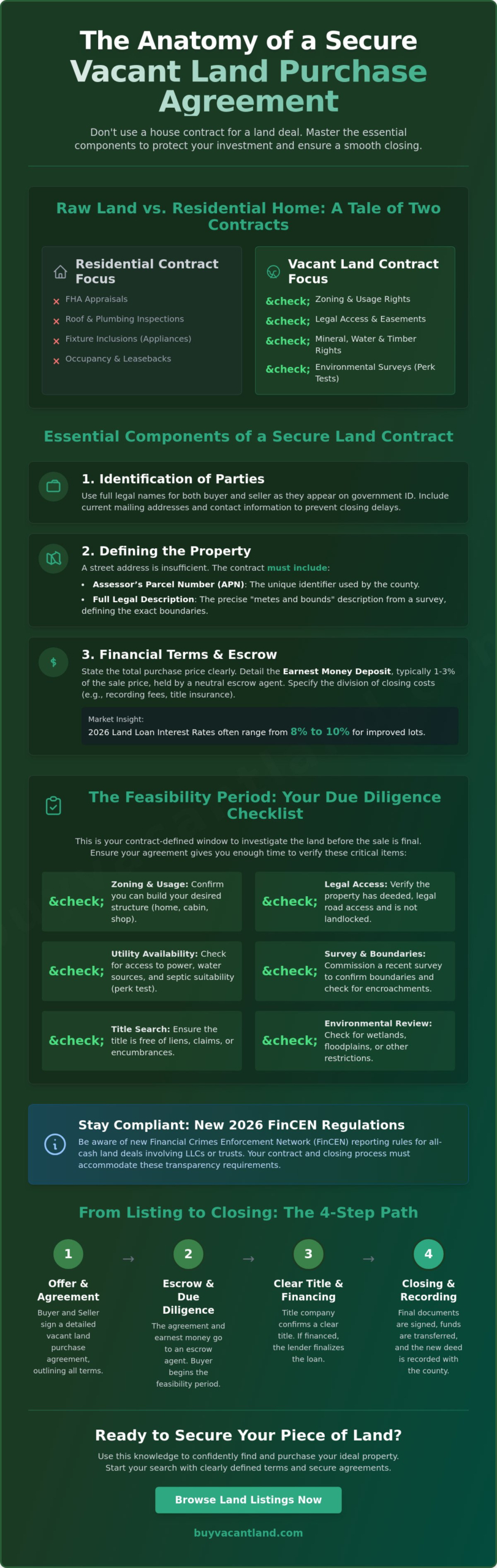
Unlike a residential home contract, you won’t find clauses for FHA appraisals or roof inspections here. Those documents focus on structures. Land deals focus on the dirt itself and the legal rights attached to it. If you use a generic residential form for raw land, you leave yourself exposed to massive risks regarding zoning, access, and environmental restrictions. This agreement serves as your shield against unforeseen liabilities and ensures an equitable financial proposal for both parties.
The Legal Purpose of the Agreement
This document establishes your clear intent to transfer the title from the seller to the buyer. Once signed, you enter the escrow period. During this phase, the buyer holds “equitable title.” This means you have a legal interest in the property even before the deed is officially recorded. The agreement also sets the stakes for a breach of contract. If the seller backs out or the buyer fails to perform, the contract defines the financial penalties and legal remedies. For those exploring seller-financed options, understanding What is a Land Contract? is essential for defining how the deed transfer actually happens over time. It creates a roadmap for the entire transaction, ensuring both parties understand their obligations from day one.
Why Raw Land Needs a Specialized Contract
Raw land is a unique asset class. When you buy a house, you care about the plumbing. When you buy land, you care about the “bundle of rights.” This includes mineral rights, water access, and easements. A specialized vacant land purchase agreement prioritizes these factors because they determine the land’s actual value. Generic real estate forms often fail to protect land buyers. They lack the specific language needed to address environmental tests or timber rights. Precise documentation is even more critical with new 2026 regulations, such as the FinCEN reporting rules for all-cash residential land deals involving LLCs or trusts.
- Zoning and Usage: The contract must allow you to verify if you can build a shop, a cabin, or a farm.
- Legal Access: It ensures the property has a deeded entrance so you aren’t landlocked.
- Utilities: It defines who is responsible for verifying power and water availability.
Using a contract tailored for dirt ensures you don’t inherit a legal nightmare. It provides the clarity needed to close the deal fast while keeping your investment secure. By cutting through traditional procedural hurdles, you can move from an initial offer to a secured asset with total peace of mind.
Essential Components of a Secure Land Contract
Every secure vacant land purchase agreement starts with absolute clarity regarding the parties involved. Don’t rely on nicknames or informal business aliases. Use full legal names as they appear on government identification. Include current mailing addresses and active email contacts for both the buyer and the seller. This ensures that title companies and legal representatives can deliver critical notices without delay. Accuracy here prevents identity errors that could stall your closing for weeks.
The purchase price must be stated in clear numerical and written formats. Alongside the price, define the earnest money deposit. This financial commitment acts as your “skin in the game.” In the 2026 market, earnest money typically ranges from 1% to 3% of the total sale price. Specify the exact date for closing and when possession occurs. For vacant land, possession usually transfers the moment the deed is recorded at the county office. If you’re still searching for the right parcel, you can browse residential lots and off-grid land to find properties with clear, ready-to-sign terms.
Defining the Property Boundaries
A simple street address is almost never enough for raw land. Many parcels don’t even have one yet. Your contract must include the Assessor’s Parcel Number (APN) and a full legal description. This description uses “metes and bounds” to trace the exact perimeter of the lot. A recent survey is your best tool for verification. It identifies physical markers and ensures no one has encroached on your boundaries. A precise legal description is the most critical part of a land contract because it defines the exact physical asset being transferred to your ownership.
Financial Terms and Escrow
Specify whether the transaction is a cash deal or involves financing. If you’re using a loan, be aware that 2026 land loan interest rates often sit between 8% and 10% for improved lots. Your agreement should state where the earnest money is held. A neutral third-party escrow agent or title company is the standard choice. Clearly define the conditions for a refund. If your due diligence reveals the land is unbuildable, you need a path to recover your deposit. Finally, clarify the division of closing costs. While buyers often pay for recording fees and title insurance, sellers typically cover any existing liens or back taxes. High-impact deals require high-impact clarity. Set these terms upfront to ensure a swift, assured transaction.
Cash Sales vs. Owner Financed Land Agreements
Cash transactions offer the fastest path to ownership. You sign the vacant land purchase agreement, wire the funds, and record the deed. It’s a clean break with no ongoing obligations. However, new 2026 FinCEN regulations now mandate reporting for all-cash deals involving LLCs or trusts. While cash is simple, many buyers on BuyVacantLand.com choose owner financing to preserve their liquid capital. Financing turns a large upfront cost into a manageable monthly expense.
In a financed deal, the legal structure changes. You might use an “Installment Land Contract.” In this scenario, the seller retains the legal deed until you pay the final dollar. Alternatively, you can use a Promissory Note and a Deed of Trust. This setup gives the buyer the deed immediately while the seller holds a security interest in the land. Both methods require a specific vacant land purchase agreement that outlines the repayment schedule and interest rates. In the current 2026 market, these rates typically range from 8% to 10% for improved lots and can be higher for raw land.
The Pros and Cons of Seller Financing
Buyers often choose seller financing because it bypasses strict bank credit checks. You can often secure a deal with a lower down payment than the 20% to 50% required by traditional lenders. Sellers benefit too. They gain a steady stream of passive income and can often negotiate a higher overall sale price. For a deeper dive into these mechanics, read our owner financed land guide. It provides the specific strategies needed for bank-free buying and helps you avoid traditional lending hurdles.
Structuring an Installment Sale
Clarity prevents conflict. Your contract must define the interest rate, the term length, and any balloon payments. A balloon payment requires the full remaining balance to be paid by a specific date. You must also include default clauses. These state exactly what happens if a buyer stops paying. Most secure agreements include a “Right to Cure” period. This gives the buyer a specific window to catch up on missed payments before the seller initiates forfeiture. This structure protects both parties and ensures the transaction remains professional and predictable. It creates a sense of momentum that pushes the deal toward completion without distraction.
Land-Specific Contingencies and Due Diligence
The feasibility period is your safety net. Don’t sign a vacant land purchase agreement without a clearly defined window for due diligence. This is the time to answer the most critical question: can you actually build what you want? While some standard contracts offer a generic 17-day window, raw land often requires more time for specialized testing. You need to verify the dirt’s capacity to support your plans before the earnest money becomes non-refundable.
Start with a percolation (perc) test. This determines if the soil can handle a septic system. Without a passing perc test, a residential lot might be worthless for building. Check the topography and soil quality to avoid massive excavation costs. You must also verify legal access. A property with no deeded easement is landlocked. This creates a massive legal hurdle that can prevent you from ever reaching your land. If you’re ready to start your search, find off-grid land and farms that fit your vision.
Zoning and Usage Verification
Confirm the land is zoned for your specific use. Agricultural zoning doesn’t always allow for commercial shops. Residential zoning might have strict minimum square footage requirements. Check for environmental restrictions or protected wetlands. These can halt a project immediately. For a step-by-step walkthrough, see our how do you buy land guide. It covers the nuances of zoning and local regulations in detail.
Utilities and Infrastructure
Include a Utility Availability clause in your vacant land purchase agreement. Don’t assume power or water is at the lot line just because a neighbor has it. Verify the distance to the nearest hookup for water, sewer, electric, and high-speed internet. The cost of running lines even a few hundred feet can reach five figures. Unrestricted land still requires a thorough utility check because no zoning doesn’t mean free infrastructure. Efficiency in this stage prevents financial ruin later.
Finalizing the Deal: From Marketplace to Closing
The final legal seal on your transaction is recording the deed at the county level. This public record proves you are the rightful owner. BuyVacantLand.com simplifies this entire process by connecting you with sellers who understand the need for a fast, clean transaction. By finding a property on a specialized marketplace, you skip the confusion of traditional residential platforms. You move from discovery to a signed contract with zero unnecessary friction.
Signing and Notarization
Digital signatures through platforms like DocuSign or eSign are the 2026 standard for speed. They allow you to execute the vacant land purchase agreement in minutes rather than days. While the contract itself often accepts electronic signatures, the actual deed usually requires a wet signature and a notary’s seal. Notarization provides the legal verification required by the county recorder’s office. Always keep a digital and physical “Master Copy” of the fully executed agreement. This ensures you have an undisputed record of the terms if any questions arise post-closing.
Next Steps for Buyers and Sellers
Preparation defines your success in the land market. If you own a parcel and want to move it quickly, you can learn how to sell land by organizing your legal description and utility data before listing. For those looking to expand their portfolio, start by browsing cheap land for sale to identify high-value opportunities in emerging regions. The path to ownership is direct and manageable when you have the right tools. List your land or find your next lot on BuyVacantLand.com today and secure your property with total confidence.
Secure Your Land Investment Now
Owning property starts with the right paperwork. You’ve learned how to identify the essential components of a secure deal and how to navigate land-specific contingencies like perc tests and utility access. Whether you choose the speed of a cash transaction or the accessibility of owner financing, your vacant land purchase agreement is the legal foundation of your success. It protects your capital and ensures your vision for the property remains viable. It’s about moving forward with precision and zero guesswork.
The process doesn’t have to be complex or intimidating. By focusing on clear legal descriptions and a thorough feasibility period, you cut through the traditional procedural hurdles that stall most buyers. You’re now equipped to move from an initial search to a recorded deed with total clarity. Efficiency is the key to securing the best lots before they disappear.
Our specialized platform focuses exclusively on raw land. We connect you directly with sellers to streamline your discovery phase and eliminate friction. Start your land journey today on BuyVacantLand.com and find the undeveloped property that fits your goals. Take the first step toward asset ownership with a partner that values your time. Your future property is waiting.
Frequently Asked Questions
Is a vacant land purchase agreement legally binding?
Yes, a vacant land purchase agreement is a legally binding contract once both the buyer and seller sign it. It creates a mandatory obligation for both parties to follow the specific terms of the sale. If one party fails to perform, the other can seek legal remedies like specific performance or financial damages. This legal certainty allows title companies to safely process the transfer of ownership.
Can I write my own land purchase agreement without a lawyer?
You can legally draft your own agreement, but it’s risky for complex transactions. Most states don’t require an attorney to write the initial contract. However, using a template that lacks land-specific clauses for zoning or access can lead to expensive litigation. It’s better to use a specialized form that addresses the unique requirements of raw land rather than a generic residential house template.
What is the difference between a land contract and a purchase agreement?
A purchase agreement is the contract used to close a sale, while a land contract is a specific financing tool where the seller keeps the deed until the final payment. The purchase agreement defines the price and terms for the entire deal. In contrast, a land contract acts more like a mortgage. This distinction is critical for understanding exactly when you receive the legal title to the property.
What happens if the buyer backs out of a land sale?
If a buyer backs out without a valid contingency, they usually forfeit their earnest money deposit to the seller. The contract defines these penalties clearly to protect the seller’s time. If the buyer cancels during the due diligence period for a covered reason, they can typically recover their deposit. Without a protective clause, the seller might also sue for damages if the breach causes a financial loss.
How long does the due diligence period typically last for vacant land?
Due diligence for vacant land typically lasts between 30 and 60 days. This is longer than a standard home inspection period because land requires specialized soil tests and zoning verifications. You need enough time to coordinate with surveyors and environmental engineers. You can negotiate an extension within your vacant land purchase agreement if tests are complex to ensure you have all the facts before closing.
Do I need a survey before signing a land purchase agreement?
You don’t need a survey before signing, but you should include a survey contingency in the contract. This allows you to verify the boundaries before the deal is final. A survey prevents you from buying a parcel that’s smaller than advertised or has encroachment issues. It’s a small upfront cost that protects you from inheriting a permanent boundary dispute with a neighbor or a utility company.
Who usually pays for the closing costs in a land transaction?
Closing costs are negotiable, but buyers typically pay for recording fees and title insurance. Sellers usually cover the costs of clearing existing liens and paying any back taxes. In the 2026 market, buyers can expect to pay 2% to 6% of the sale price in total closing costs. Always specify the exact division of these expenses in the contract to avoid last-minute financial surprises at the closing table.
What is a “Perc Test” and why should it be in my contract?
A “Perc Test” measures how quickly water drains through the soil to determine if a septic system can be installed. You must include this as a contingency if you plan to build on the land. If the soil fails the test, the lot may be unbuildable for residential use. This test is the only way to guarantee the land can support a home before you commit your capital.




Join The Discussion