
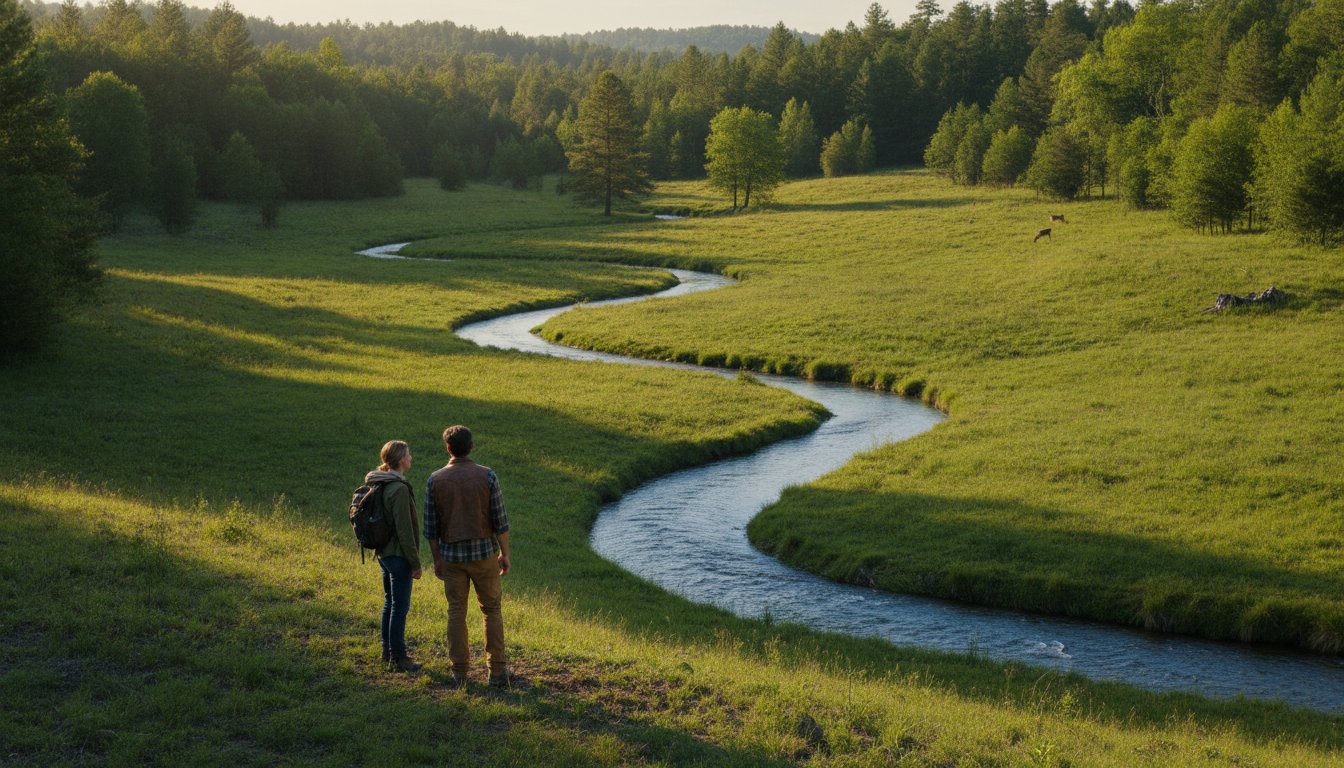
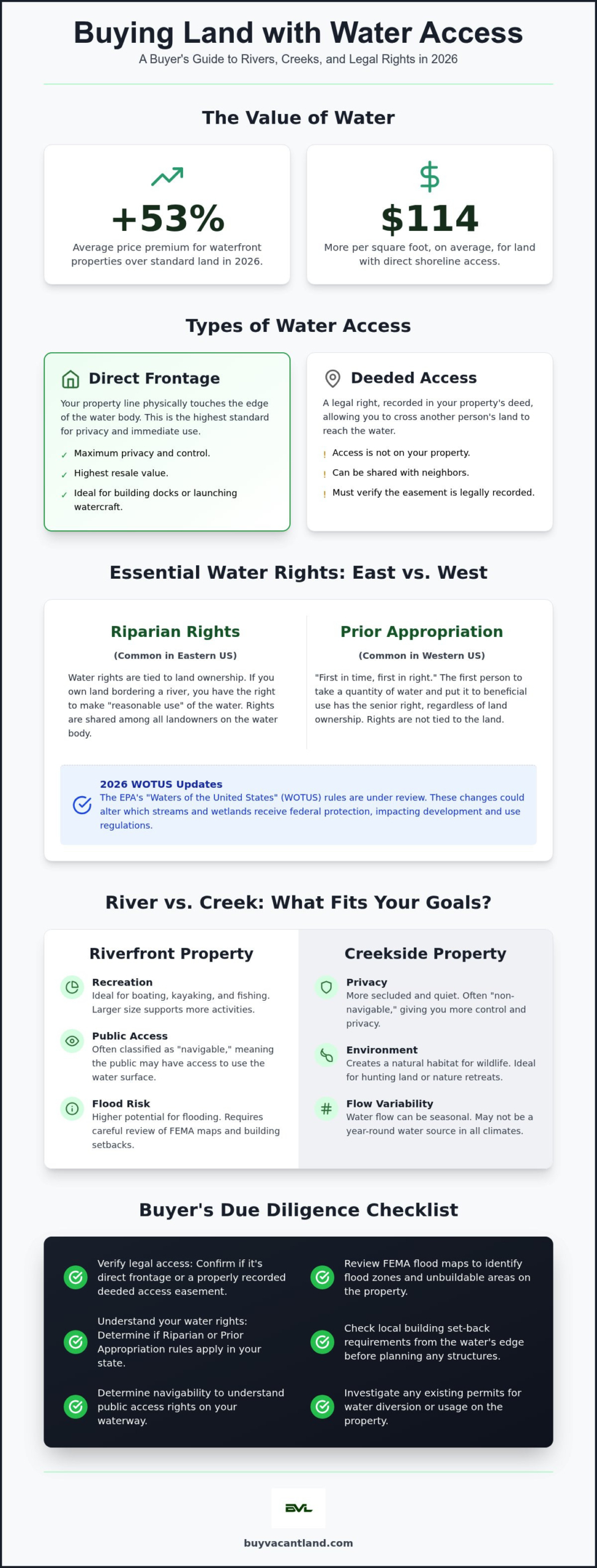
Waterfront properties in 2026 carry a 53% price premium over standard land. That is an average of $114 more per square foot for the right to own a shoreline. Finding land with river or creek access for sale is a goal for many, but the financial risk is high. You want a peaceful retreat, not a legal nightmare or a property that disappears during the spring thaw. It’s easy to feel overwhelmed by the technicalities of water rights and flood zone maps. You shouldn’t have to be a hydrologist to buy a piece of dirt.
This guide simplifies the process. You’ll learn how to verify legal access, identify unbuildable zones, and secure a property without paying unnecessary broker fees. We’ll break down the 2026 “Waters of the United States” (WOTUS) updates and explain the difference between riparian rights and prior appropriation. By the end of this article, you’ll have a clear checklist to evaluate any water-access listing with total confidence. Stop guessing and start buying with certainty.
Key Takeaways
- Identify the legal differences between direct frontage and deeded access to protect your property investment.
- Understand how Riparian Rights and waterway classifications impact your ability to use land with river or creek access for sale.
- Execute a 2026 due diligence plan by verifying FEMA flood maps and local building set-back requirements.
- Compare the recreational and environmental trade-offs between rivers and creeks to find the right water feature for your needs.
- Use specialized marketplace filters to locate affordable off-grid and hunting land with established water access.
Understanding Land with River or Creek Access
Owning a property with a water feature is a strategic move for any 2026 land buyer. It isn’t just about the scenery. It’s about utility, privacy, and asset appreciation. However, the term “access” is often misunderstood. Finding land with river or creek access for sale requires you to look past the listing photos and into the legal descriptions. You must distinguish between physical contact with the water and the legal right to use it.
Most buyers assume they own the water flowing through their lot. In reality, you typically only own the land beneath or beside it. Your rights to use that water are often governed by Riparian water rights, which vary significantly by state. These rights allow you to use the water for reasonable purposes like irrigation or domestic needs, but they don’t grant you absolute control over the flow. Clarifying these rights early ensures you can actually use the water for recreation, livestock, or off-grid utility as planned.
Frontage vs. Deeded Access
The type of access you secure determines how you can use the land. Frontage means your property line physically meets the water’s edge. This is the gold standard for privacy and immediate use. Shared access means you and several neighbors have a collective right to a specific point on the bank. This is common in residential developments but offers less seclusion.
Deeded access is a specific legal right recorded in your property’s deed. It allows you to cross another person’s land to reach the river or creek. Without this specific language, you are trespassing, regardless of how close the water looks on a map. Understanding these distinctions prevents expensive legal disputes after the sale is finalized.
The Value of Natural Water Features
Water features are a massive driver of resale value. Recent market data shows that waterfront properties consistently command a premium of over 50% compared to dry lots. This value holds steady because land with river or creek access for sale is a finite resource. It provides essential utility for livestock and creates a natural draw for local wildlife, making it a top choice for hunting land.
Beyond recreation and agriculture, water offers off-grid potential for micro-hydro power or simplified irrigation systems. A flowing river or established creek serves as a permanent, natural property boundary that simplifies land management. This physical barrier adds an extra layer of security and privacy that fences cannot match.
Essential Water Rights and Legal Considerations
Buying land with water access is a legal transaction, not just a lifestyle choice. You must understand how the law views the liquid asset on your property. In the United States, water rights are generally split into two main categories based on geography. Rights are invisible, but they dictate exactly what you can and cannot do with your shoreline. Finding land with river or creek access for sale requires you to look beyond the surface of the water.
Eastern states typically follow riparian doctrines, where rights are tied to land ownership. Western states often use the “prior appropriation” system. This “first in time, first in right” rule means the first person to use the water holds the senior right, regardless of who owns the land next to it. For a deeper dive into these complexities, consult this Water Law Overview to see how your state manages these resources. As of September 2026, the EPA is accepting public comments on new supplemental rules for the “Waters of the United States” (WOTUS) definition. These changes could alter which streams fall under federal protection, so staying current on federal rulemaking is essential.
Riparian vs. Littoral Rights
Riparian rights apply specifically to flowing bodies like rivers and creeks. Littoral rights apply to standing water like lakes or oceans. These definitions matter when you want to build a dock or a pier. Riparian owners usually have the right to access the water and build structures, provided they don’t obstruct the flow for others downstream. You don’t have the right to block the water, but you do have the right to enjoy its proximity.
Navigability and Public Access
Navigability determines who owns the ground beneath the water. If a river is “navigable,” the state often owns the riverbed, and the public has the right to use the surface for travel or fishing. Non-navigable streams are often private property to the center of the stream bed. However, the public trust doctrine may still allow people to float through your land. States like California updated their legal compilations in early 2026 to clarify these rights. Always verify if local laws permit public passage before assuming total privacy.
You cannot simply dam a creek or pump unlimited gallons for personal use without permits. State agencies regulate diversions to protect downstream users and ecosystems. Check your title report for existing utility or public easements that could grant strangers access to your shoreline. If you’re ready to browse verified listings, search for land with river or creek access for sale on our national marketplace. Direct access is a privilege that comes with specific legal responsibilities.
River vs. Creek: Which Water Feature Fits Your Goals?
Choosing between a river and a creek isn’t just about the volume of water. It’s a choice between high-intensity recreation and quiet, seasonal privacy. When you browse land with river or creek access for sale, you’re looking at two very different financial and environmental profiles. Rivers are powerful assets that provide year-round utility, while creeks offer a more subtle, often more affordable, connection to nature.
Your goals dictate the choice. If you want to launch a kayak from your backyard or fish for trout every morning, a river is the logical target. If you want a peaceful border for a cabin or a water source for local wildlife on hunting land, a creek is often sufficient. Regardless of the size, you must understand the Essential Water Rights and Legal Considerations that apply to your specific region before signing a contract.
Rivers: High Reward, High Regulation
Rivers are the heavyweights of the land market. They command a 53% price premium on average because they offer permanent, navigable water. This scale allows for boating, swimming, and consistent fishing. However, this utility comes with a higher regulatory burden. The Clean Water Act and the 2026 Water Resources Development Act (WRDA) often place riverfront property under federal scrutiny. You’ll face these challenges:
- Stricter Set-backs: Local zoning often requires you to build much farther from a riverbank than a creek bed to protect the ecosystem.
- Erosion Risk: High-volume flow causes significant bank erosion over time. You may need expensive stabilization projects.
- Insurance Costs: Flood insurance premiums are typically higher for riverfront lots due to the greater volume of water during storm events.
Creeks: Privacy and Seasonal Charm
Creeks are the smart choice for buyers seeking value and seclusion. They are frequently found on undeveloped vacant land or off-grid parcels. The entry price is lower, and the privacy is often higher because creeks don’t attract the same public float-through traffic that navigable rivers do. They are perfect for wading, aesthetics, and supporting livestock.
The main risk with a creek is its seasonal nature. Some creeks dry up completely during the summer months, which can ruin your plans for off-grid power or livestock watering. Bank stabilization and small bridges are generally easier and cheaper to permit on a creek than on a major waterway. If you don’t need a boat, a creek provides the water feature you want without the riverfront price tag.
Due Diligence Checklist for Waterfront Land Buyers
Buying land with river or creek access for sale requires more than a visual inspection. You are purchasing a dynamic environment that changes with the seasons. Failure to verify the buildable area or legal constraints can leave you with an expensive, unusable lot. Use this checklist to clear the procedural hurdles before you commit your capital. It’s the only way to ensure your investment is secure and buildable.
Start with the FEMA Flood Map Service Center. In 2026, these maps are more precise than ever, showing exactly which portions of a parcel sit in high-risk zones. Next, verify the local “set-back” requirements. Most counties mandate that structures be placed 50 to 100 feet away from the high water mark to protect water quality. If your lot is narrow, a strict set-back might leave you with no room to build. You should also review the title report for hidden easements. Utility companies or the public may have a legal right to cross your shoreline, which impacts your privacy and property value.
Navigating Flood Zones and Insurance
Understanding your zone is critical for financing. Zone A signifies a high risk of flooding and usually requires mandatory insurance. Zone X is preferred, as it indicates a lower risk area. If you’re building, get an elevation certificate. This document proves your structure’s height relative to the base flood elevation and can significantly lower your annual premiums. To see how these steps fit into the broader purchase process, read our guide on how do you buy land for a full step-by-step breakdown.
Environmental and Building Permits
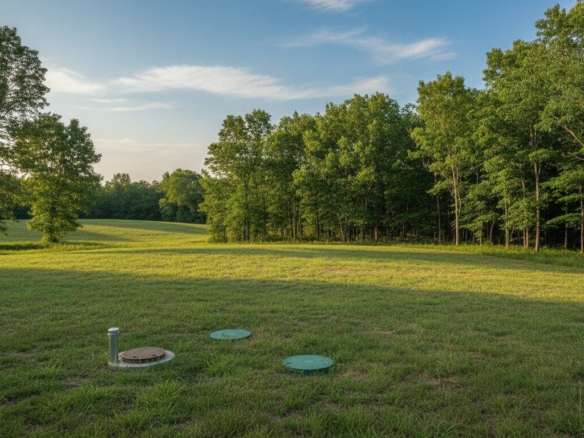
Soil quality near water is often poor for traditional construction. You must conduct a Perc Test to ensure the ground can handle a septic system. If the soil is too saturated, you might face expensive engineered alternatives. Additionally, any work on the riverbank usually requires approval from the Army Corps of Engineers. They regulate activities like dredging or filling to protect the “Waters of the United States.”
Check for state-level “Scenic River” designations. These protections can restrict everything from the color of your roof to the type of trees you can remove. Identify the high water mark early. This line determines your buildable area and your legal liability. If you want to skip the traditional headaches, browse land with river or creek access for sale on our marketplace to find sellers who have already cleared these hurdles. Secure your property with a clear understanding of its limits.
How to Find and Secure Water-Access Land in 2026
Speed is your primary advantage in the 2026 land market. High-quality water features don’t stay available for long. You need a streamlined search process that bypasses the noise of traditional residential listings. Use specialized filters on dedicated marketplaces to find land with river or creek access for sale. Instead of fighting for overpriced suburban lots, target “Off-Grid” or “Hunting Land” categories. These niche classifications often hide the best water-access deals because they attract fewer traditional developers.
Buying “For Sale By Owner” (FSBO) provides a distinct financial edge. You eliminate the high broker commissions that typically inflate land prices by 6% to 10%. This direct connection allows for faster communication and more transparent negotiations. When a high-value water property hits the market, you must move instantly. Have your proof of funds ready and your due diligence checklist completed. The most successful buyers in 2026 are those who act with analytic precision rather than hesitation.
Using BuyVacantLand.com for Your Search
Our platform provides direct access to sellers listing raw land with natural water features. We remove the procedural hurdles that slow down traditional real estate transactions. By using a specialized marketplace, you gain access to inventory that hasn’t been picked over by corporate buyers. If you’re searching for a budget-friendly entry point, refer to our guide on cheap land for sale to find the best values in the current market. We focus on simplicity and speed to save you time.
Finalizing the Transaction
Water-access properties require a land-specific purchase agreement. Standard residential contracts often fail to address critical issues like riparian rights or flood zone disclosures. In a competitive market, cash offers are the most effective way to win. If you prefer to keep your capital liquid, look for owner financed land to secure your property without a bank. This bank-free buying process is faster and requires less paperwork. Take the final step and buy your dream land with river or creek access for sale today.
Secure Your Waterfront Legacy Today
Owning water-access land is a significant financial commitment. Success depends on your ability to verify legal rights and environmental constraints before the closing date. You now have the tools to distinguish between riparian frontage and deeded access. You also have a practical checklist to navigate FEMA maps and local zoning laws with precision. These steps eliminate the risk of buying unbuildable land and protect your capital.
The 2026 market moves fast. Finding land with river or creek access for sale doesn’t have to involve high broker fees or complex corporate hurdles. Our direct seller-to-buyer marketplace offers national listings for all land types with no hidden service fees for buyers. This streamlined approach provides transparency and puts you in control of the transaction. You can find a peaceful property for recreation or building without the traditional stress of land ownership.
The right lot is out there. Browse land with river and creek access for sale now and take the first step toward your goal. Start your search today and secure a property that fits your vision.
Frequently Asked Questions
Is it better to have river or creek access on my land?
The choice depends on your specific goals for recreation or privacy. Rivers offer year-round, navigable water for boating and fishing but come with higher prices and stricter regulations. Creeks are often more affordable and private, making them ideal for wading or supporting livestock. However, creeks can be seasonal and may dry up during summer months. Choose based on your budget and intended land use. This decision impacts your long-term maintenance costs and total investment value.
Can I build a dock on a creek that runs through my property?
You must check local zoning laws and state environmental regulations before building any structure. While riparian rights generally allow for water access, building a dock often requires permits from the Army Corps of Engineers or state agencies. Smaller creeks may have stricter no-build zones to protect the bank from erosion. Always verify the high water mark and local set-back requirements to ensure your structure is legal. Failure to obtain permits can lead to mandatory removal and fines.
What are riparian rights and how do they affect my land use?
Riparian rights are legal entitlements granted to landowners whose property borders a flowing body of water. These rights allow you to make reasonable use of the water for domestic purposes, such as drinking or gardening. However, you don’t own the water itself and cannot obstruct its flow to downstream neighbors. When searching for land with river or creek access for sale, verify if your state follows riparian or prior appropriation doctrines. These laws dictate your daily water utility.
How do I know if the land I’m buying is in a flood zone?
You should consult the FEMA Flood Map Service Center to identify the property’s specific flood risk. In 2026, these digital maps provide high-resolution data on Zone A and Zone X areas. Buying land in a flood zone can impact your ability to get a mortgage and will likely increase your insurance premiums. Always request an elevation certificate from the seller to confirm the building site’s height relative to flood levels. This step is essential for accurate financial planning.
Can I pump water from a river on my land for irrigation?
Pumping water usually requires a specific permit or established water right, especially in Western states. Even in riparian states, your water use must be reasonable and cannot negatively impact the ecosystem or other users. State agencies regulate the volume of water you can divert to ensure sustainability. Check local regulations before installing any pumping equipment for agricultural use or off-grid living to avoid heavy fines. Unauthorized diversions are a significant legal risk that can stall your project.
Does the public have the right to use the creek on my private property?
Public access depends on whether the waterway is classified as navigable under state law. If a river or creek is navigable, the public often has the right to float, fish, or travel on the water’s surface. Non-navigable streams are generally private, meaning you own the land to the center of the stream bed. However, public trust doctrines in some states may still allow limited passage. Always verify local access laws to protect your privacy and property boundaries.
What is a setback requirement for waterfront building?
A setback is the minimum distance required between a structure and the high water mark of a river or creek. These rules are designed to prevent erosion and protect water quality from runoff. Setbacks typically range from 50 to 100 feet but can be stricter for Scenic Rivers or protected wetlands. When evaluating land with river or creek access for sale, ensure the lot has enough buildable area outside of these restricted zones. This prevents future permit denials.
How does water access affect the property taxes on vacant land?
Water access significantly increases the assessed value of a property, which leads to higher property taxes. Waterfront land often carries a 53% price premium, and local tax assessors use this market value to determine your annual bill. While the taxes are higher, the resale potential and utility of the land usually justify the cost. Verify the current tax rate with the county assessor’s office to include this expense in your long-term budget. Accurate tax projections ensure financial stability.


Join The Discussion