
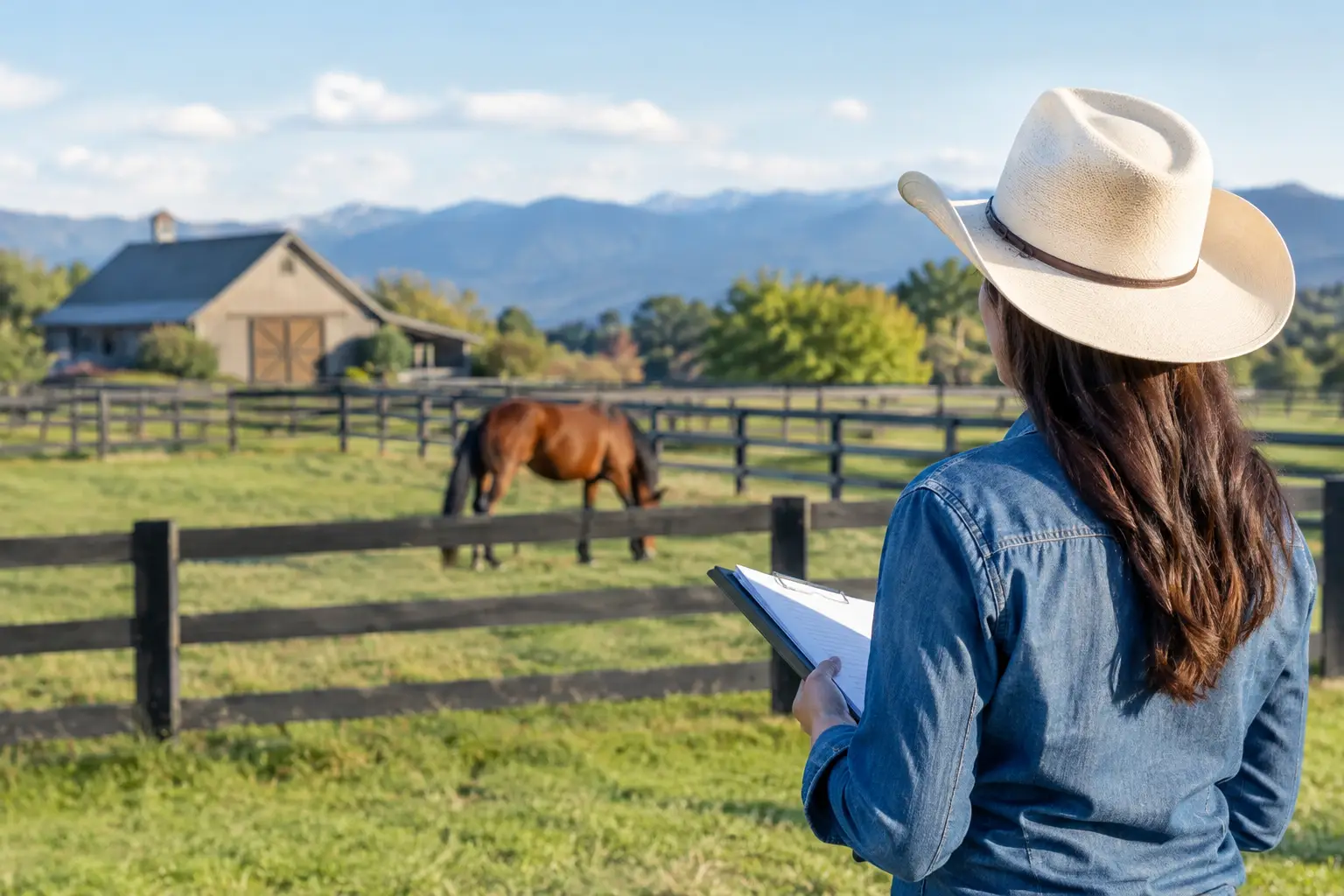
A pretty parcel with room to ride can still become an expensive disappointment if the water runs short, horse use is restricted, or a trailer cannot safely reach the building site. A successful horse property purchase starts with the land itself, not the house, barn, or listing photos. Before making an offer, make sure the property can support the number of horses, the riding style, and the daily routine you have in mind.
For some buyers, that means a quiet place for two personal horses and a modest shelter. For others, it means breeding, boarding, training, hay storage, an arena, and room for a growing operation. Those uses create very different land requirements. Getting specific early will help you compare parcels wisely and avoid paying for features that do not move you closer to your goal.
Define What the Property Must Do for You
Start with the intended use, then build your land criteria around it. Write down how many horses you plan to keep in the first year and how many you may have within five years. Consider whether you need turnout space, rotational pasture, direct trail access, an arena, a round pen, a run-in shed, or a full barn.
There is no universal acreage rule for horses. Climate, forage quality, soil, drainage, turnout practices, and whether you will buy hay all affect the answer. In a dry region, several acres may provide little meaningful grazing. In a wetter area with productive pasture, a smaller parcel may work well for a limited number of horses when managed carefully. Acreage is valuable, but usable acreage is what matters.
Your discipline should shape the search as well. A trail rider may prioritize access to public riding areas and quiet roads. A competitive rider may place higher value on a level arena site, trailer access, and proximity to trainers or show facilities. A buyer who plans to board horses needs a more rigorous look at regulations, insurance, customer access, parking, and manure management.
Verify Horse Property Purchase Rules Before You Fall in Love
Never assume rural zoning automatically allows horses. County and municipal rules can limit the number of animals, require a minimum lot size, set barn setbacks, or prohibit commercial horse activities. A parcel that works for personal use may not allow paid boarding, lessons, breeding, events, or outside trainers.
Contact the local planning or zoning office and ask direct questions about the parcel. Confirm the zoning designation, permitted animal uses, density limits, building setbacks, and whether a conditional-use permit is required. Ask how manure storage, pasture shelters, arenas, and new barns are regulated. If the answer affects your decision, request confirmation in writing or review the applicable code yourself.
Also investigate deed restrictions, homeowners association rules, and road agreements. Private restrictions can be more limiting than county zoning. They may regulate livestock, fencing materials, trailers, farm equipment, exterior lighting, or business activity. A low annual association fee does not make those restrictions less significant.
Put Water, Soil, and Drainage at the Top of the List
Horses need dependable water every day, and the land needs water management during every season. If the parcel relies on a well, review the well record, depth, yield, age, and any available water-quality tests. A well that serves a small cabin may not be adequate for horses, household use, irrigation, and future expansion.
Where water rights, shared wells, ponds, springs, or irrigation districts are involved, verify exactly what transfers with the property. Do not rely on a seller’s verbal description. Water availability can be a major value driver, especially in western states and dry rural markets.
Walk the property after rain if possible, or study the lay of the land closely during your inspection. Low spots, compacted ground, and poor drainage can turn sacrifice areas into mud pits. A seasonal creek may be attractive, but it can also limit usable land, affect access, or create flood concerns. Check flood maps, drainage routes, and any wetland indicators before choosing a barn or arena location.
Measure Usable Acreage, Not Just Total Acreage
A 15-acre tract with steep slopes, dense timber, wetlands, utility corridors, or a large floodplain will not function like 15 open acres. Ask where the practical horse areas would go: turnout, pasture, shelter, hay storage, riding space, parking, and manure handling.
Soil quality deserves attention too. Productive soils can support better forage, while rocky or shallow soils may make fencing, drainage work, and arena construction more costly. If pasture is central to your plan, consider having a local extension office, pasture professional, or qualified contractor help assess the ground before you commit.
Inspect Access and Infrastructure Like a Horse Owner
A narrow country lane may look charming from a passenger car. It is less charming when you need to bring in a horse trailer, hay delivery, gravel truck, veterinarian, or emergency vehicle. Drive the full route to the parcel and look for sharp turns, weak bridges, low branches, steep grades, seasonal washouts, and gates that are difficult to navigate with a trailer.
Confirm legal access through a recorded easement or public road frontage. Physical access without documented access can create financing, resale, and long-term use problems. If there is a shared private road, find out who maintains it, how costs are divided, and whether heavy vehicles are restricted.
Existing improvements can save time, but inspect them with a critical eye. Old fencing may need complete replacement. A barn can have structural, electrical, ventilation, or drainage issues that are not obvious from photos. Utility availability also matters. Bringing power to a remote building site, drilling a well, installing a septic system, or building an all-weather driveway can change the real cost of the property quickly.
Build a Budget Beyond the Purchase Price
Land can be an attainable entry point into horse ownership, but raw or lightly improved acreage often requires upfront work. Before you decide what you can afford, estimate the cost to make the parcel safe and functional. Your budget may need room for:
- Perimeter and cross-fencing, gates, and a safe loading area
- A well, water lines, troughs, pumps, or irrigation improvements
- Driveway upgrades, gravel, culverts, and trailer-friendly parking
- A barn, run-in shed, hay storage, arena base, or round pen
- Manure management, drainage improvements, and pasture renovation
Financing can also differ from a conventional home purchase. Vacant land loans often require a larger down payment and may have shorter terms or higher rates. Owner financing can create flexibility for qualified buyers, but review the interest rate, balloon payment, default terms, survey requirements, and deed transfer process with care. The right financing option depends on your timeline, available cash, and improvement plan.
Complete Due Diligence Before Your Offer Becomes Final
A survey, title review, and clear inspection period are practical safeguards for any horse property purchase. The survey helps confirm boundaries, acreage, easements, encroachments, and access. Title work can reveal restrictions, mineral rights issues, liens, or easements that affect where you can build and how you can use the land.
Walk the boundaries if you can. Do not assume an old fence marks the legal line. Look for neighboring livestock, loose dogs, incompatible commercial activity, dumping, or road noise that could affect horses and your enjoyment of the property. Talk with nearby owners when appropriate. They may provide useful insight on winter road conditions, water reliability, local contractors, and the area’s horse community.
If you are considering a homesite, investigate septic feasibility and building requirements before closing. A failed perc test or difficult site condition can turn a promising parcel into a far more limited asset. For a larger operation, consult local professionals about engineering, grading, arena construction, and environmental requirements early enough to adjust your offer or walk away.
Search With Your Non-Negotiables in Mind
The best search begins with filters that reflect how you will actually use the land. Set a target state or region, acreage range, price range, and access needs. Then review each listing for terrain, water, zoning clues, nearby services, and improvement potential rather than focusing only on the headline acreage.
BuyVacantLand.com can help buyers narrow the search across acreage, farms, ranches, and specialty rural properties, but every promising parcel still deserves property-specific research. A listing is the starting point for a decision, not the final answer.
The right property does not need to arrive with every feature already built. A well-located parcel with legal horse use, reliable water, solid access, and workable ground can give you room to create the setup you want over time. Choose land that supports your next practical step, then let the improvements grow with your plans.


Join The Discussion