
Your unwanted property is currently a liability, not an asset. Every year you hold onto raw land, you lose money to property taxes and maintenance costs. In 2026, the traditional market for undeveloped parcels remains slow, and many sellers wait over 210 days just to find a qualified lead. You likely want a way out that does not involve losing 10 percent of your equity to commissions. Learning how to sell vacant land should not require a law degree or a massive marketing budget.
You already know that the conventional real estate process is broken for land owners. We agree that waiting months for a buyer who might back out is a frustrating waste of your time. This guide promises to show you the exact, no-nonsense process to turn that dirt into cash without paying a single cent in fees or closing costs. We will walk through the simple three step path to secure a guaranteed transaction and get your property off your hands for good. It is time to get your fair cash offer and move on with your life.
Key Takeaways
- Identify why land buyers differ from home buyers and how to target investors directly for a faster sale.
- Master “Digital Curb Appeal” to grab a buyer’s attention instantly through high-impact data and professional presentation.
- Learn how to sell vacant land by using the “Comps” method to set a price that attracts cash offers without the wait.
- Stop wasting time on general real estate sites and discover the specialized marketplaces where land buyers actually congregate.
- Streamline your closing process using professional title companies to ensure a secure, commission-free transaction every time.
Understanding the Land Market: Why Selling Raw Land is Different
Selling raw land isn’t like selling a house. You aren’t pitching a dream kitchen or a finished basement. You’re selling potential. Vacant land is a distinct asset class. It requires a different strategy. Most real estate agents treat land like a house with the building missing. That’s a mistake. When you learn how to sell vacant land, you realize the rules change. You don’t need to paint walls. You don’t need to stage furniture. You don’t need to host open houses on your weekends. Selling land is about utility and data.
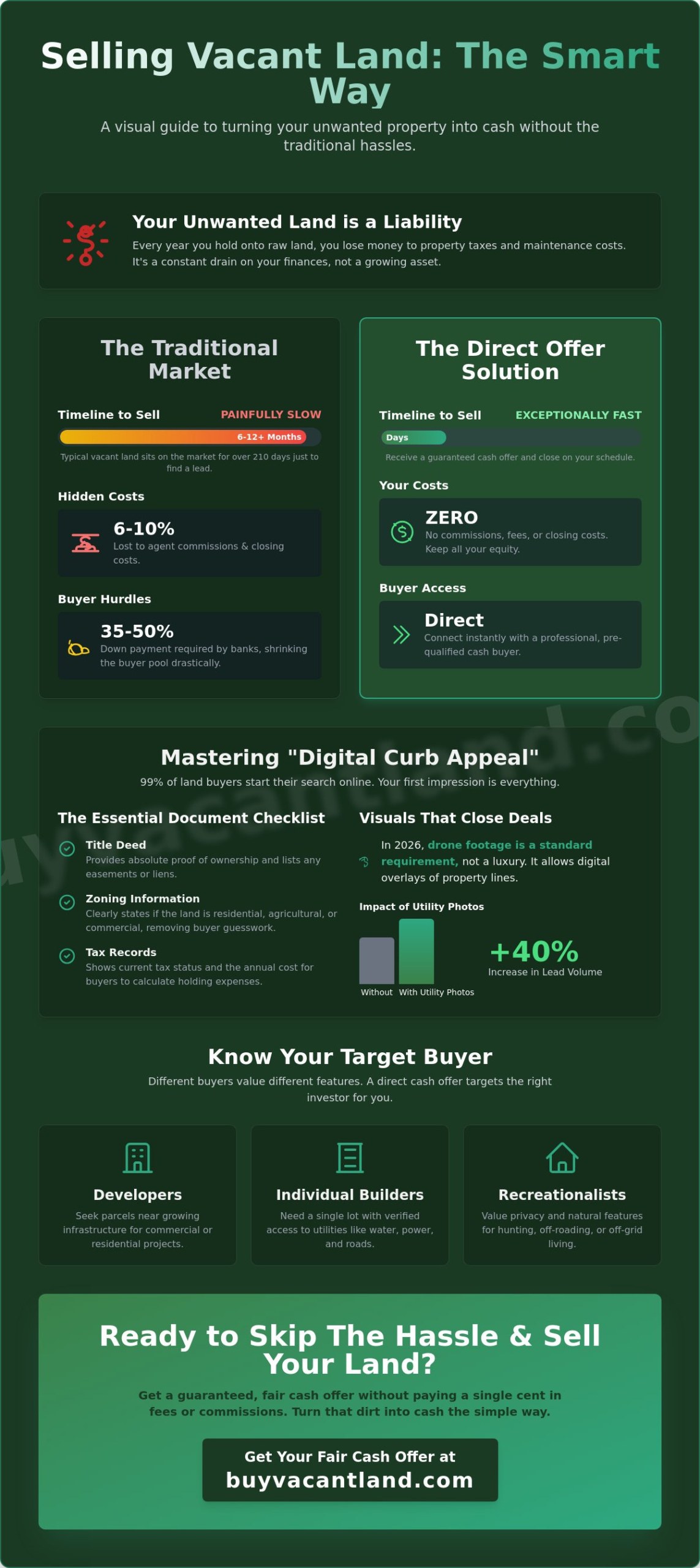
The traditional real estate market moves slowly for land. A typical residential home might sell in 30 to 45 days. In contrast, a vacant lot can sit on the market for 6 to 12 months. This delay happens because buyers can’t get traditional mortgages easily. You need a faster approach. A direct marketplace connects you with cash buyers immediately. This bypasses the long wait times and the high commissions of a standard listing. Before you list, understand what is a vacant lot and how its specific zoning affects its market value in 2026.
The Key Differences Between Selling Land and Houses
Houses sell on emotion. Land sells on math. Buyers focus on utility and potential ROI. A lack of structures means there’s nothing to “fix up.” You save money because there are zero repair costs. However, financing is the biggest hurdle. Traditional banks often require 35% to 50% down for raw land. This high barrier shrinks your buyer pool. Most successful land transactions in 2025 were cash deals. Your marketing must be data-heavy. Include GPS coordinates, soil quality reports, and utility availability. Aesthetic photos of a sunset don’t close land deals. Numbers do.
Identifying Your Target Buyer
You aren’t selling to a family looking for a move-in-ready home. You’re targeting specific professionals or enthusiasts. Understanding your buyer helps you tailor your message and sell faster. Each group has different priorities.
- Developers: They look for residential density or commercial potential. They prioritize parcels near growing infrastructure and city services.
- Recreationalists: These buyers want land for hunting, ATVs, or off-grid living. They value privacy, natural features, and distance from neighbors.
- Individual Builders: These people search for a single lot to build a custom home. They need verified access to water, power, and paved roads.
Focus on these groups to avoid wasting time. A direct cash offer simplifies this entire process. You skip the marketing, the showings, and the uncertainty. You get a guaranteed price and a fast closing date. It’s the most efficient way to turn unwanted dirt into liquid capital without the 6% agent fees. Efficiency is the goal. Speed is the result. This is how to sell vacant land in the modern market.
Preparing Your Property: Building Digital Curb Appeal for Vacant Lots
Digital curb appeal is the only impression that counts in 2026. Data shows that 99% of buyers find their next investment on a mobile screen before they ever set foot on the dirt. If your listing looks messy or lacks data, buyers will swipe past it in less than 3 seconds. You must present a clean, data-driven profile to capture attention. This is a vital part of learning how to sell vacant land for top dollar without waiting months for a bite.
A professional property survey is your most effective sales tool. It eliminates the guesswork that kills deals. When a buyer sees a recorded plat map, they see a safe investment. It defines your boundaries and identifies access points with 100% certainty. Following proven tips for selling land often starts with this level of transparency. It prevents legal disputes and speeds up the escrow process significantly.
The Essential Document Checklist
Organizing your paperwork is the fastest way to master how to sell vacant land efficiently. You need these three items ready before you post a single ad:
- Title Deed: This provides absolute proof of ownership. It lists any existing liens, easements, or encumbrances that might slow down the sale.
- Zoning Information: Don’t make the buyer guess. State clearly if the land is residential, agricultural, or industrial. Include the specific county zoning code.
- Tax Records: Buyers want to see that property taxes are current. Provide the exact annual tax burden so they can calculate their holding costs immediately.
Capturing the Right Photos and Drone Footage
High-quality visuals are non-negotiable. Use a wide-angle lens to capture the surrounding landscape and the road access. Buyers need to see how they’ll get in and out of the property. In 2026, drone footage is a standard requirement, not a luxury. A bird’s eye view allows you to overlay property lines digitally, showing the exact shape of the lot. Include shots of nearby landmarks or utility poles to provide context. If the land has power or water at the street, take a photo of the meter or the line. Physical evidence of utilities can increase your lead volume by 40% compared to listings without them.
Preparation takes time and money. If you want to skip the photos, the surveys, and the paperwork, you can get your fair cash offer from us right now. We buy land as-is, which means you pay zero commissions and zero closing costs.
Pricing Your Land: How to Determine Fair Market Value
Sentiment has no place in a real estate transaction. Many owners fail because they price land based on what they paid 10 years ago or an emotional attachment to the dirt. The market does not care about your history. It only cares about current data. If you want to learn how to sell vacant land effectively, you must start with a realistic number. Overpricing is the fastest way to ensure your property sits on the market for years while you continue to pay property taxes.
The “Comps” method is your most reliable tool. Look for similar parcels within a five-mile radius that sold within the last six months. They must share the same zoning and approximate acreage. A five-acre residential lot is not a valid comparison for a five-acre commercial lot. This Investor’s Guide to Vacant Land explains that professional buyers look specifically at buildability and local demand. If your land isn’t priced to match those metrics, investors will look elsewhere.
Infrastructure is the ultimate value multiplier. Access to city water, electricity, and sewer lines can double or triple the price of a lot. Raw land without these features requires significant capital to develop. Road access is another non-negotiable factor. A landlocked parcel might sell for 30% of the value of a lot with paved road frontage. Buyers prioritize convenience and ease of access above almost everything else.
Using Online Tools for Valuation
Start your research by looking at what cheap land for sale is currently listed for in your county. Do not rely solely on asking prices; they are often inflated. Visit your local county assessor’s website to find actual “sold” prices from the last quarter. This provides the ground truth. You should also consider the value of professional lot surveys. A verified boundary map removes buyer uncertainty and allows you to justify a higher asking price because the prep work is already done.
The “Fast Sale” Pricing Strategy
If you need cash quickly, price your property 10% to 20% below the current market average. This strategy generates immediate interest and often leads to multiple competing offers. You can also offer owner financed land options to attract a wider pool of buyers. Many people want land but cannot get a traditional bank loan. By acting as the bank, you increase your chances of a quick closing. The psychology of a “Fair Cash Offer” is powerful. It represents a clean break from the burden of ownership with zero commissions and zero stress.
Marketing Your Property: Where to List and How to Reach Cash Buyers
Marketing land requires a different strategy than selling a house. You’re selling potential, not property. To learn how to sell vacant land effectively in 2026, you must target the right audience with speed and precision. Most sellers waste months on the wrong platforms. Don’t make that mistake. Focus your energy where cash buyers actually look.
Why Specialized Marketplaces Win
General real estate sites like Zillow or Realtor.com are built for houses. Land listings often get buried under thousands of residential photos. Specialized platforms attract serious buyers who specifically want raw land. These users understand the value of dirt and don’t need to be convinced. You can reach lands of america style audiences without paying massive gatekeeper fees. Industry data from 2024 shows that land-specific sites lead to inquiries 30% faster than general marketplaces. You want buyers who are ready to close, not window shoppers looking for a kitchen remodel.
Writing a Listing That Sells
Buyers scan listings in seconds. Your headline must grab them immediately. Include the acreage and the primary use right away. Don’t just say “Land for Sale.” Say “5 Acres: Perfect for Off-Grid Homestead.” This tells the buyer exactly what they can do with the property. Focus on the “Big Three” in your description: Access, Utilities, and Zoning. If there’s a paved road, mention it. If power is 500 feet away, state it clearly. If the zoning allows for tiny homes or RVs, put that in bold.
Be transparent about challenges. If the property has steep slopes or 15% wetlands, say so. This prevents wasting time with the wrong buyers. Honesty builds trust and ensures that the people who call you are actually prepared to buy what you have.
Follow these five steps to maximize your reach and find a buyer quickly:
- Step 1: Select a specialized land marketplace to avoid residential noise and reach targeted investors.
- Step 2: Write a benefit-driven description that answers “What can I do with this land?” for the buyer.
- Step 3: Highlight key features like “Off Grid Potential” or “Industrial Zoning” in your main headline.
- Step 4: Post in local Facebook groups and community forums to find local cash buyers searching for deals.
- Step 5: Respond to every inquiry within 24 hours. Momentum is the most important part of a land sale.
Selling land on your own is a full-time job. If you don’t want to manage listings, answer endless emails, or pay for ads, take the fast route. Get your fair cash offer today and skip the marketing process entirely.
Closing the Sale: Navigating Paperwork and Securing Your Payment
Closing on a land deal is significantly faster than a residential home sale. You skip the 45 page inspection reports and the endless repair requests. It is a clean break. When you master how to sell vacant land, you realize the paperwork is straightforward. A title company or a real estate attorney acts as the neutral third party. They hold the funds in escrow and verify the legal title. This ensures the buyer gets the land and you get your money. Selling directly to a buyer or through a dedicated marketplace offers a massive “Zero Commission” advantage. You don’t lose 6% of your equity to an agent. You get the full amount of your fair cash offer without hidden subtractions.
The transition from an accepted offer to a closed deal follows a logical, efficient path. You can expect these final steps:
- The buyer signs the purchase agreement and submits earnest money.
- The title company performs a title search to ensure there are no liens or back taxes.
- You receive the closing package via email or overnight mail.
- You sign the deed in front of a notary.
- The title company records the deed and wires your funds.
The Purchase and Sale Agreement
Keep your contract lean. A two page document often suffices for vacant property. It must clearly state the purchase price and the closing date. Include any contingencies, such as a 15 day feasibility period for a soil test. Always require “Earnest Money.” This is a deposit that stays with the title company until closing. It locks the buyer into the deal and shows they are serious. If you want to see how a professional timeline looks, check out the land for sale in florida guide. It outlines the standard 2026 procedures for moving from an initial offer to a final signature in under 30 days.
Handling the Closing Costs
Closing costs include title insurance, recording fees, and transfer taxes. These are entirely negotiable. In a direct cash sale, the buyer frequently pays for 100% of these expenses. This saves you thousands of dollars at the finish line. Cash transactions are superior because they bypass the banking system. You don’t have to wait for a 3 week appraisal or a 45 day loan underwriting process. The relief is instant. Once you sign the deed, the property tax bills stop coming to your mailbox. You walk away with a cash wire or a certified check. It is the ultimate goal of how to sell vacant land: a fast, guaranteed exit that puts money in your pocket today.
Turn Your Raw Land Into Cash Today
Selling property in 2026 requires a strategy that cuts through the noise. You’ve seen why digital curb appeal matters and how accurate pricing determines your speed to close. Now it’s time to execute. You don’t need a middleman or expensive agents to figure out how to sell vacant land for a fair price. You need a direct path to the right buyers.
Market data shows that direct listings can reduce closing times by 30 days compared to traditional brokerage methods. Our platform is built for that level of speed and efficiency. We offer a simple, 3-step listing process that puts your property in front of a targeted audience of active land buyers. You won’t deal with hidden commissions or listing fees that eat into your profit. We focus on results so you can move on with your life. Stop paying taxes on a lot you don’t use and start your next chapter now.
List your vacant land for sale on our national marketplace today!
You’ve done the research and have the facts. Take the final step and get your land sold today.
Frequently Asked Questions
How long does it typically take to sell vacant land?
Traditional land sales often take 6 to 12 months on the open market. You can skip this long wait by selling directly to us. We close most transactions in 14 days or less. This eliminates the uncertainty of waiting for a retail buyer. You get your money fast and stop paying property taxes immediately. It’s the most efficient way to handle your unwanted property today.
Do I need a real estate agent to sell my land?
You don’t need an agent to sell your property. Listing with a broker often costs 6% to 10% in commissions. You can avoid these high fees by selling directly. This puts more money in your pocket at the end of the day. It’s the simplest way to learn how to sell vacant land without paying for expensive middleman services.
What paperwork is required to sell land by owner?
You need a signed purchase agreement and a clear deed to transfer ownership. Most states also require a property disclosure form and a current title report. We handle all the complex paperwork for you. You won’t have to navigate 20 pages of legal jargon alone. Our team ensures every document meets local 2026 regulations to guarantee a valid and legal sale.
Who pays the closing costs in a vacant land sale?
Sellers typically pay 2% to 5% of the sale price in closing costs during traditional transactions. We change that by paying 100% of the closing costs for you. This means you pay zero out of pocket. The price we offer is the exact amount you receive. There are no hidden fees or surprise deductions when you sign the final papers.
Can I sell land that has back taxes owed on it?
Yes, you can sell land with delinquent taxes. We settle any outstanding tax liens directly with the county at the time of closing. This amount is simply deducted from the final sale price. You don’t need to come up with the cash upfront. It’s a stress free way to clear your debt and walk away with a guaranteed profit.
What is the best month or season to list land for sale?
Spring is the peak season for traditional land buyers. Data from 2025 shows that 40% of land inquiries occur between March and May. Buyers prefer to walk the property in clear weather. However, we buy land 365 days a year. You don’t have to wait for the perfect season or better weather to get your fair cash offer.
How do I find out the exact boundaries of my property?
Hire a licensed surveyor to mark your exact property lines. You can also find a plat map at your local county assessor’s office for a small fee, usually under $15. Professional surveys provide 100% accuracy for legal purposes. If you sell to us, we often handle the boundary verification process. This saves you the time and expense of hiring outside contractors.
Is it better to sell land for cash or offer owner financing?
Cash is the superior option for sellers who want immediate liquidity and zero risk. Owner financing requires you to act as the bank for 5 to 10 years. You risk the buyer defaulting on payments. A cash sale provides total closure in days. It’s the most efficient method for how to sell vacant land without the long term headache of collecting checks.

Join The Discussion