
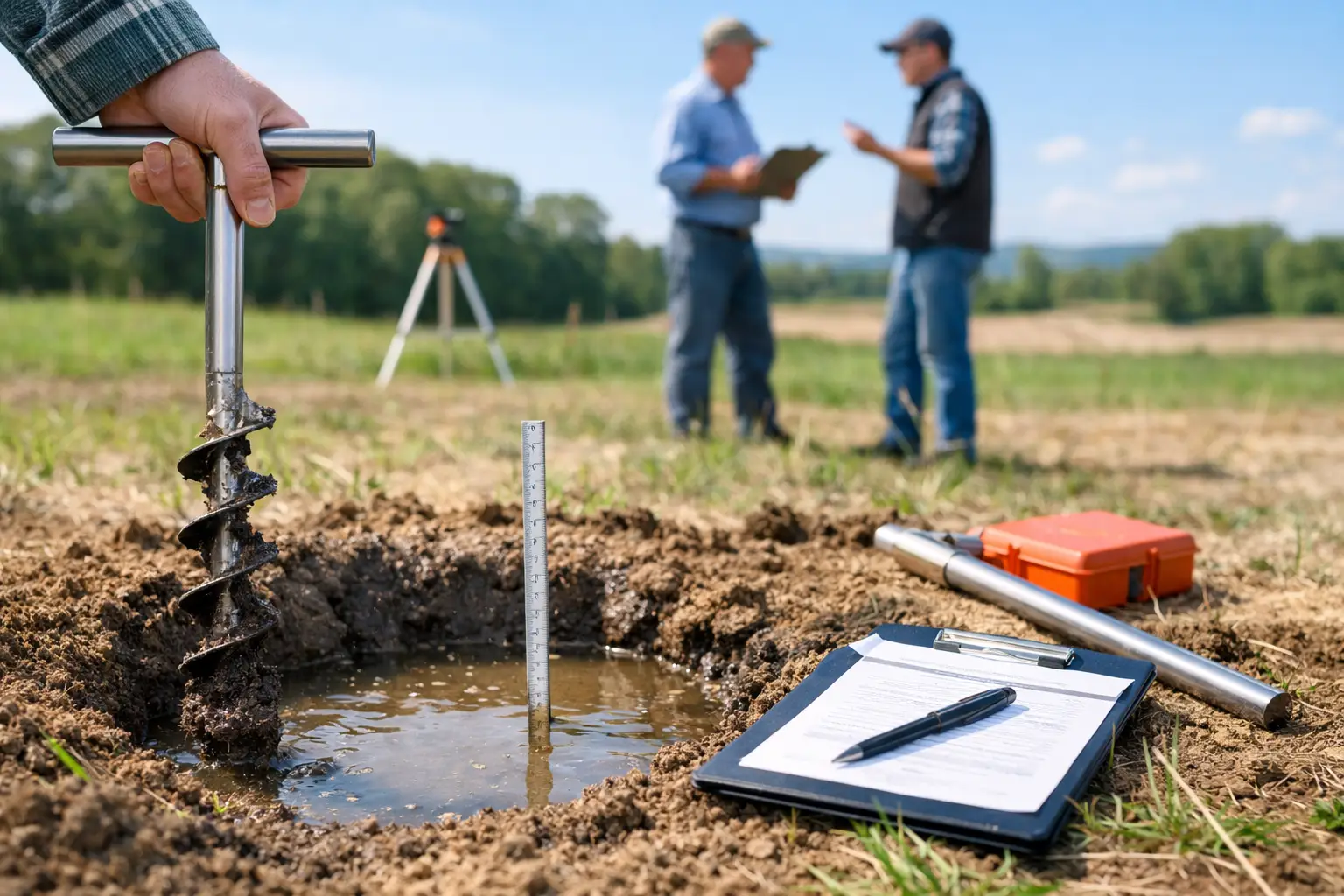
A cheap piece of rural land can stop looking cheap the moment you learn it will not support a septic system. That is why a perc test for land matters so much, especially if the property is outside city sewer service and you plan to build, camp long term, or place a manufactured home.
For many buyers, this is one of the biggest make-or-break items in land due diligence. A parcel can have great road access, attractive pricing, and the right amount of acreage, but if the soil will not absorb wastewater properly, your plans may need to change fast. The good news is that once you understand what a perc test does and how to read the result, you can make a smarter land decision with far more confidence.
What a perc test for land actually measures
A perc test, short for percolation test, checks how quickly water moves through the soil. Local health departments and septic professionals use it to help determine whether a property can support a septic system. In simple terms, the test helps answer a practical question: can the ground safely absorb and filter wastewater from a home or other approved use?
If the soil drains too slowly, wastewater may not disperse well enough. If it drains too fast, the soil may not filter waste effectively before it reaches groundwater. Either extreme can create problems. That is why a passing result is not just about drainage – it is about suitable drainage within the standards set by the county or state.
This matters most on raw land in rural areas where public sewer is not available. If you are buying land for a future house, cabin, or homestead, septic feasibility is often one of the first things to verify.
Why perc tests can affect land value
A parcel that has already passed a perc test is often easier to market and easier to finance because buyers can move forward with more certainty. A parcel that has failed, or has never been tested, carries more risk. That does not always make it a bad property, but it does change the buyer pool and usually changes the price.
For a buildable lot, wastewater disposal is not a minor detail. It directly affects whether the land can support the use you have in mind. If two similar properties are available and only one has documented septic approval, that property often has a stronger market position.
This is one reason experienced land buyers look beyond acreage and price per acre. Usability drives value. On a land-first marketplace like BuyVacantLand.com, that kind of practical detail can make the difference between a promising opportunity and an expensive surprise.
When you need a perc test for land
You typically need a perc test when the property will use a septic system and there is no municipal sewer connection available. That includes many rural residential lots, off-grid properties, recreational parcels with future cabin plans, and vacant acreage intended for homesteading.
You may also need one before applying for a building permit, before installing a septic system, or during a feasibility review in escrow. In some areas, an older perc test may not be enough if regulations have changed or if the report has expired. Counties vary a lot here, so local rules matter.
If you are buying land only for recreation, timber, hunting, or long-term hold purposes, a perc test may not be urgent. But even then, it can still affect resale value because future buyers may want build potential.
How the test process usually works
The exact process depends on the county, but the basic flow is similar in most places. A licensed soil scientist, engineer, septic installer, or county official may be involved. The site is inspected, test holes are dug, soil layers are examined, and water infiltration is measured.
In many cases, the evaluator is looking at more than one thing. They may assess soil texture, seasonal water table, depth to rock, slope, and available area for both the primary drain field and a reserve area. So while buyers often say, “Did it perc?” the real approval process can be broader than one simple hole-in-the-ground test.
Some lots pass easily with conventional septic. Others may qualify only with an engineered system. Some fail for the intended use but might work with a smaller structure or different layout. That is where nuance matters.
Who orders the test
Sometimes the seller orders it before listing to make the property more attractive. Sometimes the buyer orders it during due diligence. If you are under contract, make sure the agreement clearly states who pays, who schedules it, and what happens if the land does not qualify for the planned use.
How long it takes
The fieldwork itself may be quick, but scheduling can take time. County backlogs, weather conditions, and permit requirements can all slow the process. In busy markets or rural counties with limited staff, it is smart to plan ahead rather than assume you will get fast answers.
What a passing result really means
A passing perc test does not always mean you can build anything you want, anywhere you want, on the parcel. It usually means the site tested is suitable for a septic system under certain conditions. Those conditions may include home size limits, bedroom count, system design requirements, setbacks, or a specific building envelope.
That is why buyers should ask for the actual documentation, not just verbal reassurance. “Passed perc” sounds great, but you need to know when it passed, where it passed, what kind of system was approved, and whether the approval is still valid.
If a lot passed years ago, changes in regulations or site conditions may require updated testing. If the approved area is small or awkwardly placed, that can also affect where you can build.
What if the land fails?
A failed perc test is not always the end of the road, but it is definitely a signal to slow down and reassess. In some cases, the land may qualify for an alternative or engineered septic system. These systems can solve drainage issues, but they usually cost more to install and maintain than a conventional system.
In other cases, the best use of the property may simply be different from what you first imagined. A parcel that will not support a year-round residence may still work for recreation, storage, agriculture, or investment hold, depending on local rules.
The key is matching the land to the use. Trouble starts when buyers assume every vacant parcel is automatically buildable.
Cost and factors that change the price
The cost of a perc test varies by location, property conditions, and who performs the work. In some areas, you might pay a few hundred dollars. In others, especially where multiple evaluations or engineered designs are needed, the total can run much higher.
Terrain, access, soil complexity, permit fees, and county requirements all affect the number. If the lot is heavily wooded, steep, remote, or clearly challenging, expect more time and potentially more cost.
It is also worth thinking beyond the test itself. The real financial question is not just, “What does the perc test cost?” It is, “What does septic feasibility do to the total project budget?” A lot that requires a specialized septic system may still be worth buying, but only if the land price and your plans still make sense together.
Smart questions to ask before you buy
Before you close on vacant land, ask whether public sewer is available. If it is not, ask whether there is a recent perc test, a septic permit, or any prior site evaluation on file. Ask what type of system was approved and whether a reserve drain field area is identified.
You should also ask whether the parcel has any history of failed tests, whether neighboring lots have had septic challenges, and whether there are floodplain, slope, or groundwater issues that could affect approval. These questions are not overkill. They are basic land-buyer protection.
If the seller does not know, that does not automatically mean walk away. It means price in the uncertainty and make your offer accordingly.
The bottom line for buyers and sellers
A perc test is one of the clearest indicators of whether vacant land can support residential use in areas without public sewer. It affects buildability, development cost, resale appeal, and how confidently you can move forward.
For buyers, the goal is simple: do not confuse affordable land with ready-to-build land. For sellers, a current perc test can remove doubt and help your property stand out. The best land deals are not just about finding acreage at the right price – they are about finding land that actually fits your plan. Before you commit, make sure the ground works as hard as your vision does.



Join The Discussion