
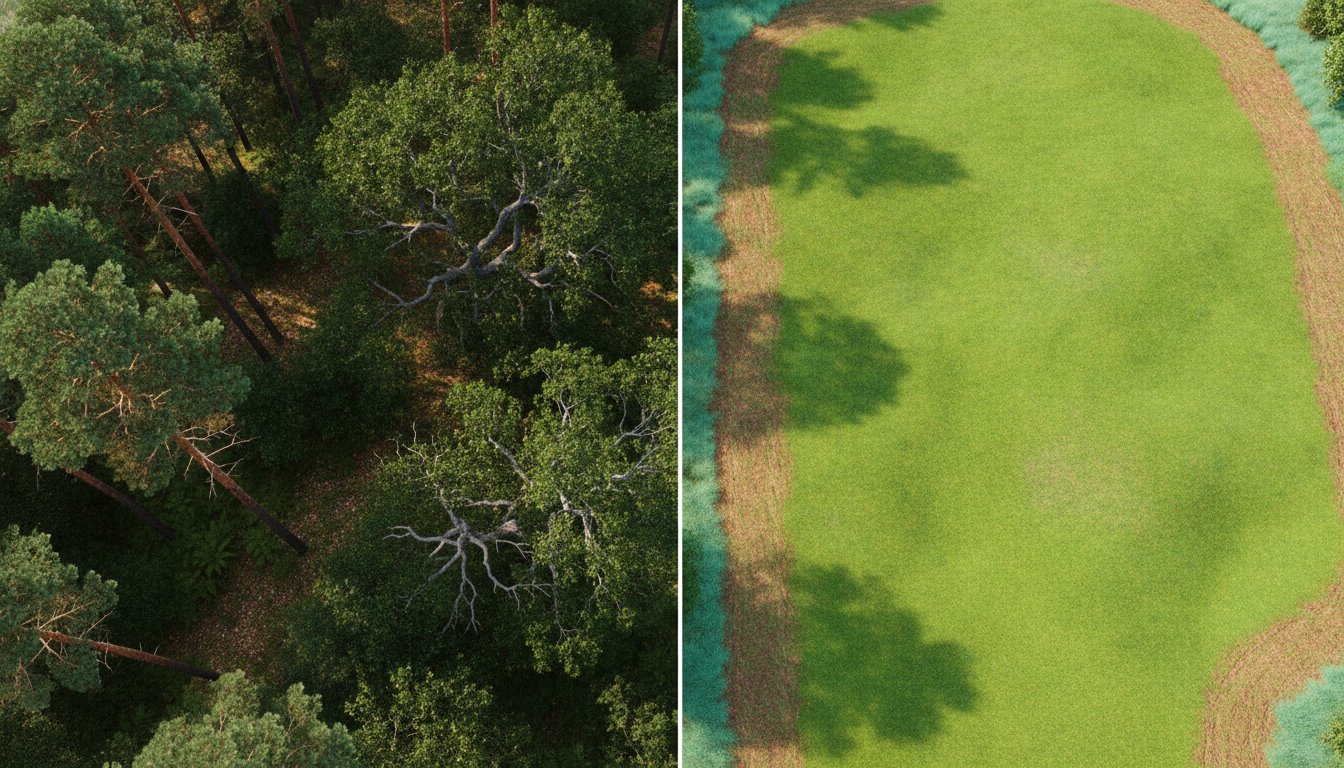
Choosing between a lush forest and a blank slate is not just an aesthetic decision. It is a high-stakes financial gamble that can swing your construction budget by thousands of dollars before the foundation is even poured. Most buyers realize too late that the “cheaper” lot often carries the heaviest price tag in hidden site preparation. Understanding the trade-offs of wooded land vs cleared land for building is the only way to protect your investment and avoid costly delays.
You want a property that offers both value and the lifestyle you envision. It is natural to feel torn between the immediate privacy of a wooded lot and the streamlined simplicity of a cleared parcel. You might fear that clearing trees will trigger a nightmare of permits and unexpected expenses, or that a cleared lot will leave you feeling exposed to the neighbors. These concerns are valid, but they should not paralyze your progress.
This guide provides the direct financial comparison and decision-making framework you need to move forward. You will discover the hidden hurdles of timber removal, the long-term value differences between lot types, and a practical checklist for evaluating raw land. We cut through the procedural noise to give you a clear path toward a confident purchase.
Key Takeaways
- Wooded land provides instant privacy but demands intensive site preparation and strict tree removal permits.
- Cleared parcels accelerate your construction timeline by removing the need for timber management and complex trenching.
- Analyze the total financial impact of wooded land vs cleared land for building by calculating the purchase price plus preparation costs.
- Use BuyVacantLand.com to compare different land types side-by-side and find parcels that fit your development goals.
- Follow a practical evaluation framework to identify hidden site hurdles like root systems or environmental restrictions before you buy.
Understanding the Core Trade-offs: Wooded vs. Cleared Lots
Every vacant land purchase begins with a fundamental decision. You must choose between raw, wooded land and pre-cleared parcels. Wooded land is property with significant tree cover. It requires active intervention, such as timber removal and stump grinding, before any construction begins. Cleared land is property that is already grubbed, graded, or naturally open. It is essentially a blank canvas for your foundation. It’s ready for an excavator the day you close the deal.
This choice creates a “Speed vs. Aesthetics” dilemma. Wooded lots offer immediate character but delay your move-in date. Cleared lots offer a fast track to building but may feel exposed initially. Your decision on wooded land vs cleared land for building will dictate your total project timeline more than almost any other factor. On BuyVacantLand.com, you can filter listings to compare these property types side-by-side. This allows you to see how different land types impact your local market options without the fluff of traditional sites.
The Aesthetic and Privacy Factor
Trees provide more than just a view. They serve as natural sound barriers that dampen road noise and provide a buffer from neighbors. A wooded lot offers “instant maturity” that a bare parcel lacks. You don’t have to wait twenty years for a landscape to fill in. Dense tree cover also creates a cooling microclimate. This natural shade can significantly reduce your future energy needs during hot months. It’s a built-in environmental benefit that a cleared field simply cannot match without decades of growth. If you are looking to enhance these shaded areas with specialized landscaping, you can find out more about selecting the right plants for your forest floor.
Cleared land is the pragmatic choice for those on a tight schedule. It allows for faster soil testing and more accurate surveying. You don’t have to worry about the “unknowns” hiding under dense vegetation, such as hidden rock outcroppings or drainage issues. The Land clearing process is often the most unpredictable phase of a build. On a cleared lot, heavy machinery has immediate access to the site. This accessibility streamlines the delivery of materials and keeps your contractors on schedule from day one. You see exactly what you’re buying without the guesswork of what lies beneath the canopy.
The Reality of Building on Wooded Land: Privacy and Preparation
Privacy is the top reason buyers choose wooded lots. However, maintaining that privacy through “selective clearing” is complex. You cannot simply drop a house in the middle of a forest. You must clear a building envelope, a driveway, and utility paths. This requires a surgical approach to avoid killing the very trees you want to keep. Selective clearing costs more than clear-cutting because it demands precision and specialized equipment.
Don’t assume you own the right to every tree on your deed. Local zoning laws and environmental restrictions often dictate what you can cut. Some areas protect specific species or require a permit for any tree over a certain diameter. Violating these rules results in heavy fines or a full construction halt. It’s vital to start by Evaluating What You Have before you sign a contract. Knowing the rules upfront prevents expensive legal surprises later.
High-quality timber can occasionally offset clearing costs. If your lot has mature hardwoods like oak or walnut, a timber buyer might pay to harvest them. Most residential lots don’t have enough acreage or quality to make this profitable, but it’s a detail worth checking with a local forester. Even if the wood isn’t worth selling, you can often have it mulched on-site to use for erosion control during the build.
The Hidden Hurdles of Tree Removal
Tree ordinances are a common barrier. Many municipalities require a professional tree survey before issuing a building permit. You must identify “specimen trees” and create a protection plan for their root zones. Heavy equipment compacts the soil. This compaction suffocates roots and kills trees years after the home is finished. Root systems also pose a direct threat to your future infrastructure. Large roots can crack foundation walls or infiltrate septic lines if you don’t clear a wide enough buffer. When weighing wooded land vs cleared land for building, remember that trees are living assets that require active management.
Site Preparation and Soil Health
Cutting the tree is only half the job. Real site preparation involves grubbing, which is the removal of stumps and roots. Leaving stumps to rot is a recipe for disaster. Decaying wood creates underground voids that eventually collapse into sinkholes. This can destabilize your driveway or patio years down the line. Dense forest floors also hide drainage issues. Once you remove the leaf litter and canopy, you may find “wet feet” or standing water that requires a grading plan. Root systems create a complex network that binds soil together, and their removal significantly alters the ground’s natural stability for foundations. If you want to skip these headaches, you can use BuyVacantLand.com to find pre-cleared lots that are ready for immediate development.
Why Cleared Land Is the Fast Track to Construction
Cleared land eliminates the most unpredictable phase of a construction project. You bypass the weeks spent waiting for tree removal crews and stump grinders. This immediate access allows your builder to move straight to excavation. When comparing wooded land vs cleared land for building, the time savings alone can prevent significant carrying costs on construction loans. You see the topography exactly as it is. There are no hidden ravines or rock outcroppings masked by dense brush. This transparency reduces the risk of expensive change orders once the digging begins.
Installing infrastructure is significantly more efficient on open ground. Utility contractors can trench for power, water, and septic lines without battling massive root systems. Root-heavy soil often requires specialized equipment or manual labor to clear paths for pipes. On a cleared lot, the process is mechanical and fast. Drainage patterns are also visible from day one. You can identify low spots or natural runoff paths immediately. This allows for a more accurate grading plan before the first shovel hits the dirt.
Streamlining the Building Process
A cleared lot reduces mobilization costs for your heavy equipment contractors. Excavators and foundation crews can move freely across the site without navigating narrow “save zones” for trees. This accessibility speeds up every early phase of the build. Land surveying and boundary marking become simple tasks when line-of-sight is not blocked by timber. You can also conduct soil perk tests and finalize your septic design immediately after purchase. This eliminates the “wait and see” period that often plagues wooded property owners who must clear land just to see if it’s buildable.
The Long-Term Landscaping Canvas
While cleared land lacks immediate shade, it offers a blank slate for strategic landscaping. You aren’t stuck with the trees nature provided. You can plant for specific privacy goals and solar orientation. Be prepared to manage invasive species. Cleared ground often invites aggressive weeds that thrive in disturbed soil. However, the lack of canopy allows for immediate agricultural use or garden development. You can start your homestead or orchard the same year you build your home. When evaluating wooded land vs cleared land for building, consider that adding the right trees is often easier than removing the wrong ones.
Financial Breakdown: Clearing Costs vs. Property Premiums
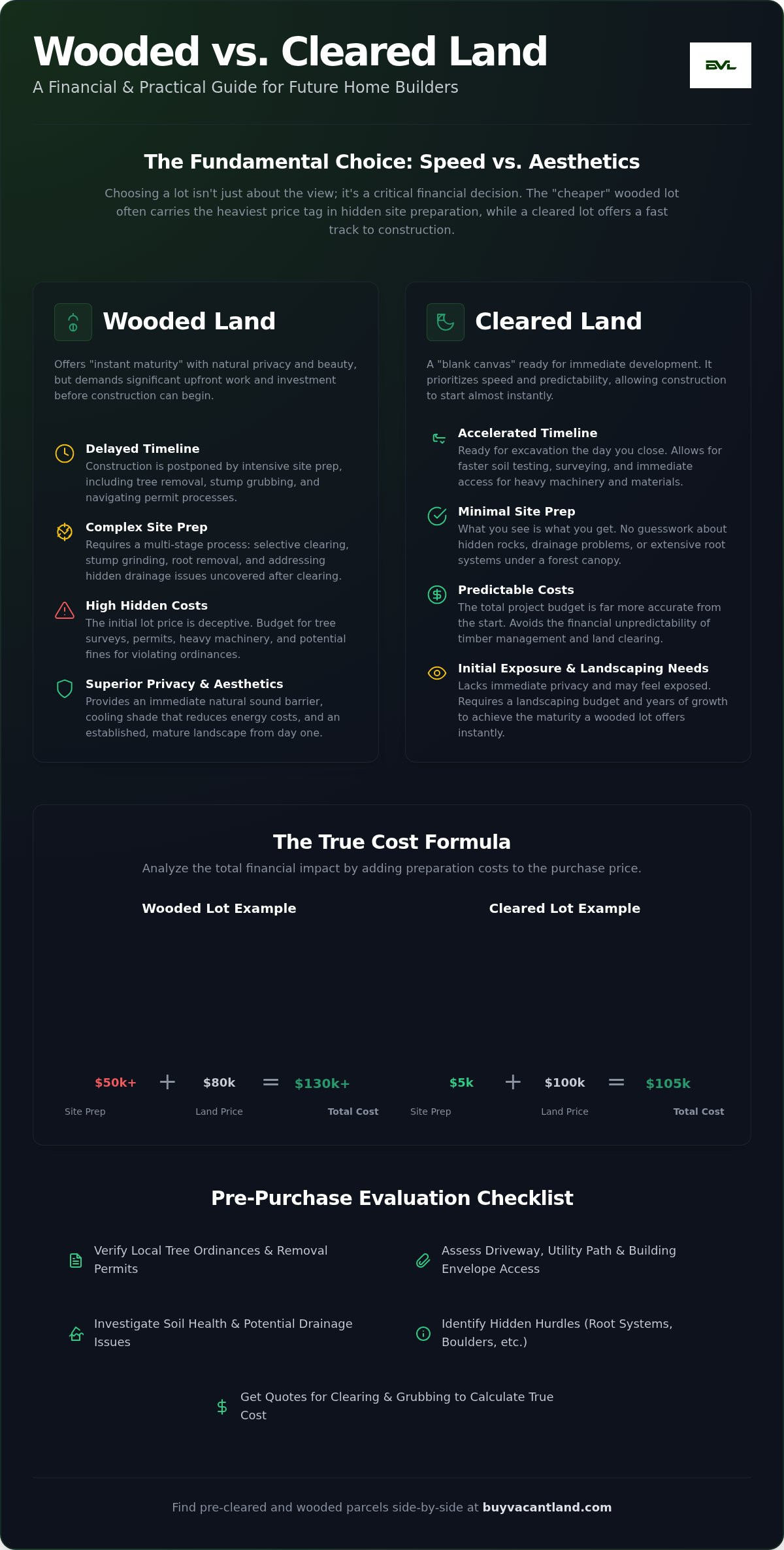
Wooded land usually carries a lower initial purchase price than cleared land. This discount reflects the heavy labor required to make the site buildable. Cleared lots carry a premium because the seller has already absorbed the risk and expense of site preparation. When evaluating wooded land vs cleared land for building, you must look past the listing price. The true cost includes every dollar spent before the foundation is poured. Buyers often find that a “cheap” wooded lot becomes more expensive than a cleared one once the clearing bills arrive.
Resale value also shifts based on land type. Turnkey lots sell faster and often command higher prices because they appeal to a broader range of buyers. While a specific niche of buyers will pay for the privacy of old-growth trees, most people want to start building immediately. A cleared lot offers a transparent value proposition. It removes the guesswork for future buyers who might be intimidated by the prospect of managing a forest. If your goal is immediate equity and a fast exit strategy, cleared land is the superior financial choice.
Evaluating the Investment Delta
Tree density and trunk diameter are your primary cost drivers. Heavy timber requires larger machinery and more man-hours than light brush. Debris disposal is another significant expense that many buyers overlook. Hauling logs or mulching stumps on-site adds substantial costs to your pre-construction budget; for those looking to understand the machinery involved in these projects, you can visit Simple Lend Marketplace to see the types of Class 8 dump trucks used for hauling. Many “cheap land” listings are priced low specifically because the preparation costs are so high. The Total Cost of Development for a raw lot is the sum of the purchase price, professional clearing, stump removal, and finish grading.
Appraisers value cleared lots as “ready-to-build” assets. This often results in a higher appraised value, which improves your loan-to-value ratio for a construction loan. Wooded acreage is harder to value because the buildable area is obscured by vegetation. Banks are notoriously hesitant to finance land clearing as a standalone project. They prefer to bundle it into a comprehensive construction package. Understanding how do you buy land is essential for navigating these early financing hurdles. You need a clear financial plan before you commit to a lot that requires extensive work.
Ready to start your search? Use our marketplace to find residential lots for sale and compare wooded and cleared properties side-by-side.
How to Evaluate Raw Land Before You Buy
Evaluating a potential lot requires more than a digital map. You must get your boots on the ground to confirm the site’s reality. Use BuyVacantLand.com to narrow your search by land type. Our national marketplace lets you filter for residential lots, off-grid land, or farms. This transparency helps you weigh wooded land vs cleared land for building before you spend time on a site visit. Once you find a parcel that fits your budget, you need a systematic approach to verify its buildability.
The 5-Point Land Inspection
A thorough site walk reveals the hidden details that listings often miss. Follow this checklist to ensure your investment is sound:
- Wetlands and Drainage: Look for standing water or moisture-loving vegetation in wooded areas. These spots often indicate restricted building zones.
- Utility Access: Locate the nearest power lines and water mains. On cleared parcels, these are easier to spot, but you must still verify connection fees.
- Topography: Identify steep slopes that require expensive retaining walls. Cleared land makes these elevation changes obvious.
- Soil Composition: Look for large rock outcroppings that might interfere with basement excavation or septic tanks.
- Boundary Markers: Search for existing survey pins to understand your actual buildable area.
For more tips on identifying value in the current market, review our guide on cheap land for sale.
Making the Final Call
Your decision depends on your specific goals and timeline. If you need to break ground in three months, cleared land is the only logical choice. Wooded land is better for those with a three-year horizon who value privacy over speed. Assess your DIY capacity honestly. Removing brush yourself saves money, but clearing massive hardwoods requires professional crews and heavy equipment. Bring in a builder to estimate site prep costs and an arborist to evaluate tree health. A builder can spot potential grading issues that might require extra fill dirt. An arborist can identify diseased trees that may become future hazards. This professional team will help you finalize your choice between wooded land vs cleared land for building based on hard data rather than emotion. Find your perfect wooded or cleared lot on BuyVacantLand.com today.
Secure Your Investment with the Right Parcel
Your choice between wooded land vs cleared land for building defines your entire construction experience. Wooded lots provide immediate seclusion but demand rigorous site preparation and permit management. Cleared land offers a streamlined path with transparent topography and faster utility installation. Success requires looking past the initial listing price to calculate the total cost of development. This pragmatic approach prevents budget overruns and ensures your project stays on schedule from the first day of excavation.
Efficiency is the key to a successful land purchase. We provide a national database of residential and off-grid lots focused exclusively on vacant land. Our platform offers direct access to raw land sellers to simplify your discovery process. You can compare property types side-by-side without the distractions of traditional real estate sites. This clarity allows you to move from searching to building with total confidence and peace of mind.
Ready to find your ideal building site? Browse thousands of vacant land listings on BuyVacantLand.com today and take the first step toward your new home with absolute certainty.
Frequently Asked Questions
Is it cheaper to buy wooded land or cleared land?
Wooded land usually has a lower purchase price, but cleared land is often cheaper when considering total development costs. You must factor in the expense of tree removal, stump grinding, and grading. Cleared lots eliminate these early financial burdens. When weighing wooded land vs cleared land for building, the ready-to-build status of cleared land often saves you more in the long run by avoiding unpredictable site preparation surprises.
How much of a wooded lot should I clear for a house?
You should clear at least 20 to 30 feet beyond your home’s footprint to ensure foundation safety and equipment access. This buffer prevents root damage to your foundation and septic lines. It also provides a defensible space against fire and falling limbs. Always check local zoning laws before you start. Some areas require specific setbacks or tree preservation zones that limit how much of your acreage you can legally clear.
Does clearing land increase its property value?
Yes, clearing land generally increases its marketability and appraisal value. Most buyers want a turnkey experience and are intimidated by raw, dense forest. A cleared lot allows them to visualize the build site and driveway immediately. It removes the unknown factors that drive down offers on wooded parcels. By preparing the site, you appeal to a wider range of residential buyers who prioritize speed and simplicity over the DIY clearing process.
Can I clear my own land to save money?
You can clear small brush and saplings yourself, but removing large timber and stumps requires professional heavy machinery. DIY clearing often takes significantly longer than expected and carries high equipment rental costs. Professional crews handle debris disposal and stump removal efficiently. Improper clearing can lead to soil instability or future sinkholes from rotting roots. Evaluate your time and physical capacity before choosing the DIY route over a specialized clearing contractor.
What happens to the trees after they are cleared?
Cleared trees are typically handled in one of three ways: mulching, hauling, or selling as timber. Forestry mulching is the fastest method and keeps organic material on-site for erosion control. Hauling debris away is the most expensive option due to trucking and disposal fees. If your lot contains high-quality hardwoods like oak or walnut, you might sell the logs to a local mill to offset a small portion of your clearing costs.
Are there tax benefits to keeping land wooded?
Some areas offer lower property tax assessments for land designated as managed forest or timberland. These programs usually require a minimum acreage and a professional forest management plan. Keeping your land wooded can qualify you for agricultural or conservation easements that significantly reduce your annual tax burden. You should consult a local tax professional or your county assessor to see if your specific parcel meets the criteria for these specialized tax classifications.
How do I know if a wooded lot has buildable soil?
You must conduct a soil percolation test and a geotechnical evaluation to confirm buildability. Dense vegetation often hides wet spots, clay pockets, or shallow bedrock that can complicate foundation work. A professional engineer will drill several test holes across the building envelope to analyze soil stability and drainage capacity. Never assume a lot is buildable just because neighboring parcels have homes. Hidden soil issues are the most common reason for project delays.
Can I build a house in the middle of the woods?
You can build in a forest, but you must create a clear building envelope and a safe access road. This requires clearing enough space for your home, septic system, and utility lines while maintaining a safe distance from large trees. When comparing wooded land vs cleared land for building, remember that a wooded site requires ongoing maintenance. You must actively manage the surrounding forest to prevent limbs from damaging your roof or roots from cracking your pipes.




Join The Discussion