
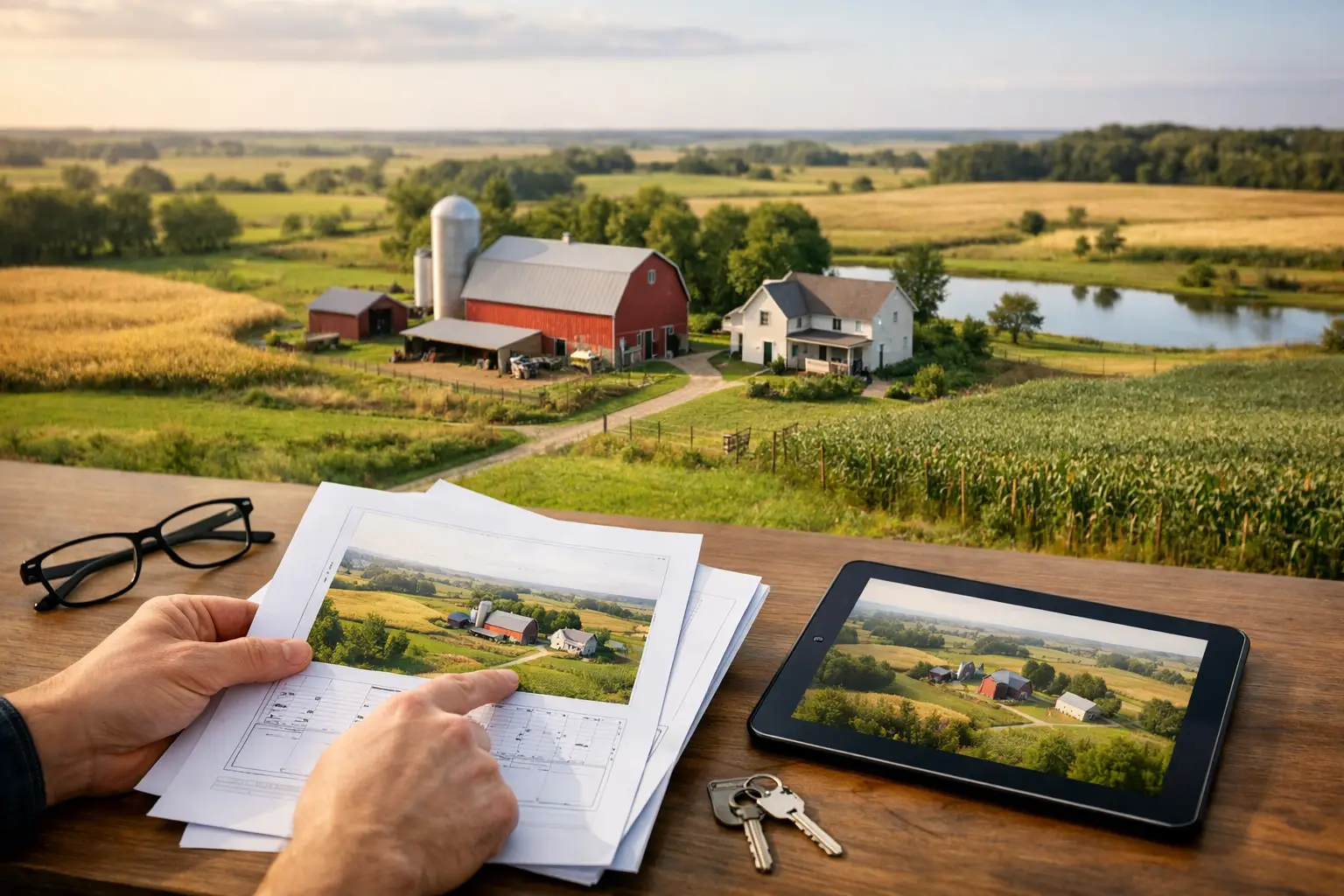
A farm can look perfect from the road and still be a poor fit for your plans. The field may hold water after every hard rain, the best ground may be leased through the next growing season, or the only access may cross a neighbor’s property. This guide to buying farm acreage helps you look past the listing photos and focus on the details that determine whether a parcel can work, produce, and hold value.
Start With the Farm You Actually Need
“Farm acreage” covers a wide range of properties. A 10-acre homestead with a garden, livestock, and a barn has different needs than 80 acres for hay production or 300 acres for row crops. Before comparing listings, define the use that will make the purchase worthwhile.
Think in terms of operations, not just acreage. If you plan to raise cattle, calculate room for grazing, fencing, handling facilities, water sources, and a sacrifice area for wet weather. If you want to grow produce, dependable irrigation, road access for deliveries, and soil quality may matter more than total acres. For a long-term investment, focus on location, usable acreage, development pressure, timber, hunting value, and resale demand.
Also decide what can be improved and what cannot. You can repair fences, clear brush, and build a pole barn. You cannot easily move a floodplain, create legal access, or turn thin, rocky soil into prime cropland. A lower-priced parcel can be a strong opportunity when its limitations match your intended use. It becomes expensive when those limitations prevent it.
How to Evaluate Farm Acreage Before You Offer
Separate total acres from usable acres
The advertised acreage is only the starting point. Ask how much land is tillable, pasture-ready, wooded, steep, wet, in a conservation program, or occupied by roads and structures. A 100-acre farm with 70 workable acres may be more valuable to an operator than a 140-acre tract with only 40 acres that can be farmed.
Walk the property if possible. Pay attention to slope, drainage paths, low spots, tree lines, erosion, and field shape. Large, regular fields are usually easier to work than fragmented pockets of ground divided by ravines, creeks, or heavy woods. If you are buying for machinery-based production, tight turns and narrow entrances can affect efficiency more than buyers expect.
Treat soil as a business asset
Soil drives both production potential and value. Start with available soil maps and county information, then go further before committing to a purchase. Review soil types, farmland classifications, drainage characteristics, and typical yields for the area. Local extension offices, neighboring farmers, and an experienced farm manager can provide useful context that a generic soil score cannot.
For a serious purchase, consider ordering soil tests. They can identify pH, nutrient levels, organic matter, and amendments needed for your intended crop. Poor results do not always end the deal, but they should change your numbers. Lime, fertilizer, drainage work, cover crops, and years of soil-building practices all cost money and time.
Confirm water, drainage, and water rights
Water can make a farm productive or make it unworkable. Inspect ponds, creeks, wells, irrigation equipment, drainage ditches, culverts, and signs of standing water. Ask whether ponds hold water year-round and whether wells have been tested for flow and quality.
Water rights and irrigation rules vary widely by state and region. Do not assume that a creek, spring, or existing pump guarantees the right to withdraw water for agricultural use. In some areas, irrigation allocations, permits, shared systems, or local groundwater restrictions may apply. Verify the details with the appropriate local authority and make them part of your due diligence.
Flood risk deserves the same attention. Some floodplain acreage can still be productive pasture or recreational land, but it may limit building sites, crop choices, insurance options, and financing. A property does not have to be near a major river to experience seasonal flooding.
Verify legal and physical access
A farm needs more than a gate off a country road. Confirm that access is legal, recorded, and suitable for the equipment, livestock trailers, feed trucks, or harvest vehicles you expect to use. If the entrance is shared, understand who maintains it and whether there are restrictions on use.
Review the title work and survey for easements. Utility easements, pipeline corridors, conservation easements, shared driveways, and access rights can shape how you use the land. A conservation easement may preserve scenic and agricultural character while limiting subdivision or certain improvements. That may be a benefit or a deal-breaker depending on your goals.
Check the Rules Before Planning Improvements
County zoning, deed restrictions, and state regulations can affect nearly every farm plan. Confirm whether the parcel allows the residence, barn, farm stand, livestock operation, event venue, processing facility, RV use, or short-term rental you have in mind.
Agricultural zoning does not mean every agricultural activity is automatically permitted. Poultry houses, commercial greenhouses, kennels, meat processing, agritourism, and retail sales may face separate rules. If you are planning to build, ask about setbacks, driveway permits, septic suitability, well requirements, and whether the land can be divided later.
Property taxes require a close look, too. Many states offer agricultural-use valuation, exemptions, or similar programs that can reduce annual taxes. These programs often require minimum acreage, active production, income documentation, or a management plan. Find out whether the current owner receives a tax benefit and whether you will qualify after closing. A change in use can trigger higher taxes or rollback assessments.
Price the Farm on Its Productive Value
Comparable sales are useful, but farm acreage should not be priced by a simple per-acre average. Productive cropland, managed pasture, mature timber, creek frontage, homesites, barns, fencing, mineral rights, and road frontage all affect value differently.
Ask for records that show how the property has been used. Useful documents may include farm leases, crop history, yield data, conservation contracts, timber management plans, equipment agreements, and recent improvement receipts. If the land is leased, learn the rent amount, lease term, renewal rights, and who owns any improvements or crops in the ground.
Be careful with projected income. A seller may mention potential revenue from hay, hunting leases, solar interest, timber, or future development. Potential is not the same as established income. Base your offer on verified facts, reasonable expenses, and a conservative estimate of what you can actually operate or lease.
Build a Financing Plan That Leaves Room to Farm
Land financing typically works differently from buying a house. Conventional lenders may require a larger down payment, shorter term, or stronger borrower profile for vacant acreage. Farm-focused lenders may better understand agricultural income, improvements, and rural property values, especially for larger tracts or operating farms.
Owner financing can be worth considering when the terms are clear and the property fits your plans. It may offer flexibility on closing speed or qualification, but compare the interest rate, balloon payment, default terms, prepayment rules, and who pays taxes and insurance. Have an attorney review the agreement before signing.
Keep cash available after closing. The purchase price is only one part of the investment. Survey work, fence repairs, brush clearing, seed, livestock infrastructure, equipment, insurance, and driveway improvements can add up quickly. The right farm purchase gives you enough financial breathing room to make the land productive rather than stretching every dollar toward the down payment.
Use a Due Diligence Period Wisely
Your purchase contract should give you time to investigate the property and a clear way to exit if major issues appear. Work with qualified local professionals when the stakes justify it, including a land-savvy real estate agent, title company, surveyor, lender, attorney, soil consultant, or contractor.
During that period, confirm boundaries, access, zoning, taxes, utilities, septic options, flood risk, restrictions, and the condition of improvements. Visit at different times of day if you can. After rain is especially revealing: you may see drainage problems, washed-out roads, traffic noise, or water where a sunny-day showing showed only green pasture.
When searching nationwide farm listings, BuyVacantLand.com can help you narrow opportunities by state, acreage, and land type. Then give the most promising parcels the same careful field-level review. A listing helps you find the opportunity; due diligence tells you whether it is the right one.
The best farm acreage is not always the largest tract or the one with the lowest price per acre. It is the property whose soil, water, access, rules, and carrying costs support a clear plan. Buy with that plan in hand, and each acre has a better chance to serve your family, operation, or investment for years to come.



Join The Discussion