
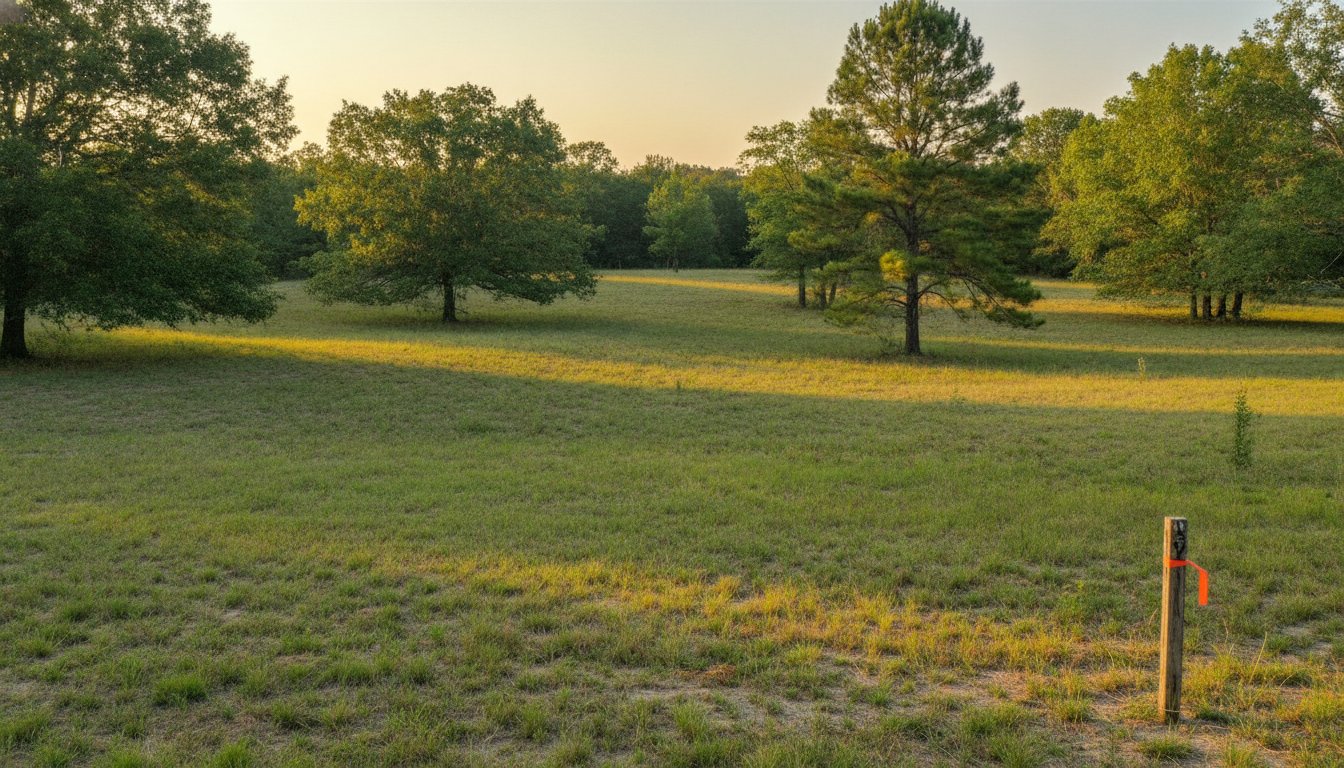
Raw land prices have surged by 86.5% since 2019, but that doesn’t mean your dream of ownership is out of reach. Most buyers struggle to find cheap residential lots for sale that are actually buildable. You might fear buying a “useless” parcel with no utility access or getting tangled in confusing zoning laws. It’s a valid concern. The market is tighter than ever. Inventory is down 23.6% over the last seven years. You need a strategy that prioritizes efficiency and avoids the common pitfalls of hidden closing costs.
This 2026 guide simplifies your search. Learn how to identify high-value land. Evaluate its true development potential before you sign a contract. Our goal is to help you secure a lot for under market value while understanding the total cost of ownership from day one. We’ll also explore owner-financing options that bypass traditional lending hurdles. This straightforward path helps you find, vet, and close on your land with total confidence and peace of mind.
Key Takeaways
- Spot hidden development costs by evaluating utility access and local zoning laws before you commit to a purchase.
- Master marketplace filters to find motivated sellers and undervalued “For Sale By Owner” opportunities.
- Discover how owner financing lets you bypass traditional bank hurdles to secure land faster and with less stress.
- Use specific search terms to find buildable cheap residential lots for sale that fit your budget and building goals.
- Learn a streamlined process to verify property value and avoid common pitfalls like high closing fees or useless land.
Understanding Cheap Residential Lots for Sale in 2026
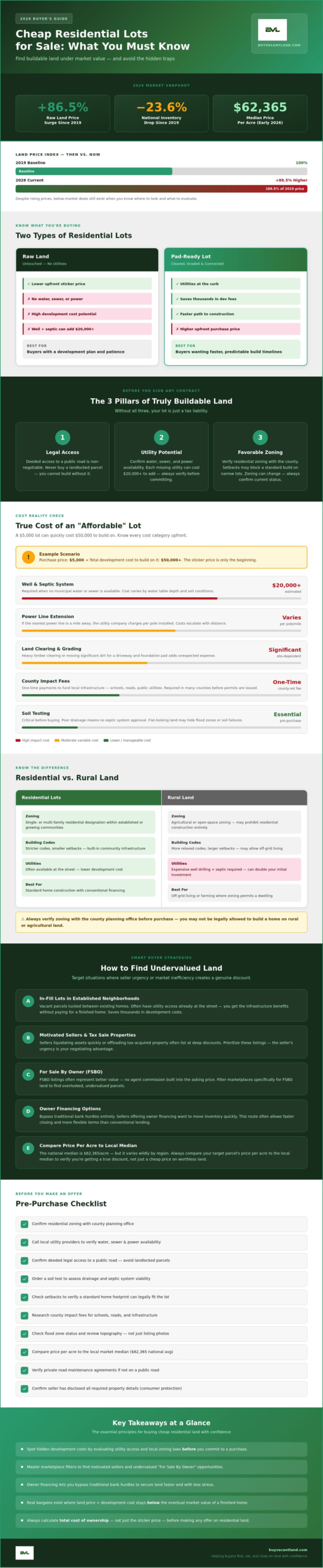
In the current 2026 market, finding cheap residential lots for sale requires a sharp eye for value. A residential lot is a specific parcel of land zoned for housing construction. Since 2019, raw land prices have climbed by 86.5%. This makes the “cheap” label relative to the surrounding market. You’ll encounter two main types: raw land and pad-ready lots. Raw land is untouched. It lacks water, sewer, and power. Pad-ready lots are cleared and graded with utility connections already at the curb. Pad-ready land costs more upfront but saves you thousands in development fees later.
Sellers list land at deep discounts for specific reasons. Some are liquidating assets quickly to free up capital. Others are offloading property acquired through tax sales to avoid further liability. Frequently, “cheap” land lacks immediate utility access. This isn’t a deal-breaker if you have a development plan, but you must know what you’re buying. Real bargains exist where the cost of the land plus the cost of development remains below the eventual market value of a finished home.
Residential vs. Rural Land: Know the Difference
Zoning is the primary divider. Residential lots are designated for single-family or multi-family dwellings within established or growing communities. Rural land often falls under agricultural or open-space zoning. You must understand what is a residential lot to avoid buying acreage where you aren’t legally allowed to build a home. Residential lots usually have smaller setbacks and stricter building codes. Rural land might allow for off-grid living but often requires expensive well-drilling and septic systems that can double your initial investment.
Why Land Prices Vary Nationally
Market data shows a median price per acre of $62,365 as of early 2026. This number fluctuates wildly based on location and inventory availability. National land inventory has contracted by 23.6% since 2019. This scarcity drives prices up in high-demand zones. In areas where remote work remains the standard, previously overlooked regions have seen significant price appreciation. Conversely, some regions in the West have experienced a post-pandemic correction with falling prices. You find the best deals where supply exceeds local demand or where sellers offer owner-financing to move inventory faster. Always compare the price per acre to the local median to ensure you’re getting a true discount.
Evaluating the True Cost of an Affordable Lot
Don’t get blinded by a low sticker price. A $5,000 lot can quickly cost $50,000 to build on if you ignore the infrastructure requirements. You must look beyond the listing photos to see the real work ahead. Buildable land is a lot with legal access, utility potential, and favorable zoning. Without these three pillars, your investment is just a tax liability. Smart buyers calculate the total cost of ownership before making an offer on cheap residential lots for sale.
The Utility Checklist: Water, Sewer, and Power
Utility access is the top factor that turns a bargain into a money pit. If the nearest power line is a mile away, the utility company will charge you for every pole they install. This cost adds up fast. Check for municipal water and sewer connections at the property line. If they aren’t available, you’ll need a well and a septic system. These aren’t minor expenses. They can cost $20,000 or more depending on the local water table and soil conditions. Always call the local utility providers to verify service availability before you sign a contract.
Zoning Constraints and Building Permits
Local regulations dictate your building footprint. Setbacks require you to build a specific distance from the property line. If the lot is narrow, these setbacks might make it impossible to build a standard home. You should also research consumer protection risks when buying land to ensure the seller has disclosed all necessary property details. Zoning laws can change. Verify the current status with the county planning office. They will tell you what type of structure is allowed and what permits you need to start construction.
Hidden Costs: Clearing, Grading, and Impact Fees
Topography and soil quality matter. A lot that looks flat in photos might be a flood zone or have a steep cliff. Clearing heavy timber or moving tons of dirt for a driveway adds significant costs. Soil tests are vital. If the soil doesn’t drain, you can’t install a septic system. Road access is another common trap. Public roads are maintained by the city, but private roads require a maintenance agreement. Avoid landlocked parcels at all costs. You cannot build without legal, deeded access to a public thoroughfare. Many counties also charge impact fees. These are one-time payments to fund local infrastructure like schools and roads. Before you commit, view available land listings to compare development-ready lots against raw acreage.
Strategies to Find Undervalued Residential Land
Finding cheap residential lots for sale requires a systematic approach. You shouldn’t browse aimlessly. Instead, target properties where the seller’s urgency works in your favor. Look for “in-fill” lots. These are vacant parcels tucked between existing homes in established neighborhoods. They often have utility access already. This saves you from the massive infrastructure costs discussed in the previous section. You get the benefit of an established area without the high price tag of a finished home.
Using Marketplace Filters for Maximum Efficiency
Efficiency is your greatest asset. Use advanced filters to isolate motivated sellers instantly. Set your search to flag listings with recent price drops or high “days on market” counts. Keywords like “liquidation,” “must sell,” or “cash only” often signal a seller ready to negotiate. By narrowing your focus, you avoid wasting time on overpriced listings. This targeted method puts you in front of the best deals before other buyers notice them. Speed matters in a tight market.
The Benefits of FSBO Land Transactions
For Sale By Owner (FSBO) listings offer a distinct advantage. You deal directly with the decision-maker. This eliminates the need for agent commissions, which can inflate the price of land significantly. Direct communication leads to faster answers on zoning and utility status. It also opens the door for owner-financing. Many individual sellers prefer a steady monthly income over a lump sum. This allows you to secure land with a smaller down payment and avoids the strict requirements of traditional bank loans. It’s a pragmatic way to bypass procedural hurdles.
Analyzing Market Trends for National Land Value
Timing your purchase requires an understanding of national data. Land inventory has contracted by 23.6% since early 2019. This means supply is low across the United States. However, the median price per acre of $62,365 represents a national average. You find value by identifying areas where remote work trends are driving new demand but prices haven’t peaked yet. Look for regions where home prices are rising faster than land prices. Since raw land prices have increased by 86.5% since 2019, catching the next wave of growth is vital. Secure your lot in the path of development to ensure your purchase becomes a high-value asset.
Financing Your Lot: Owner Financing and Cash Deals
Traditional banks rarely finance vacant land. They view undeveloped parcels as high-risk assets because there is no structure to serve as immediate collateral. Most lenders require a 50% down payment or refuse the loan entirely for raw acreage. If you are hunting for cheap residential lots for sale, you need a financial strategy that bypasses the standard mortgage desk. You have two primary paths: paying cash for maximum leverage or using owner financing for manageable entry costs.
How Owner Financing Works for Land Buyers
Owner financing is a seller-led credit agreement. Instead of a bank, the property owner provides the credit. You make a down payment and pay the remaining balance in monthly installments directly to the seller. This process eliminates bank bureaucracy, strict credit score requirements, and expensive appraisal fees. It’s a pragmatic solution for securing land quickly. To understand the legal mechanics, read our Owner Financed Land: The Complete 2026 Guide to Bank-Free Buying.
Pros and Cons of Seller-Led Financing
The biggest benefit is speed. You can often close an owner-financed deal in less than a week. You avoid the procedural hurdles that kill most real estate transactions. However, you should expect higher interest rates than a typical 30-year fixed mortgage. In 2026, land contracts and deeds of trust are the standard tools for these deals. In a land contract, the seller keeps the title until you pay the final installment. In a deed of trust, a neutral third party holds the title. Both methods provide a clear path to ownership without the headache of traditional financing.
Negotiating the Best Price for Cash Purchases
Cash is your strongest tool for securing a discount. Sellers who list cheap residential lots for sale often value speed over the final sale price. They want to offload the burden of property taxes and maintenance immediately. Use this to your advantage. A cash offer with a 72-hour closing window can often trigger a 20% to 30% reduction in price. This strategy works best on listings that have been active for more than 90 days. It provides the seller with instant liquidity and gives you an equity cushion from day one. Ready to find your property? Search owner-financed land deals to see what’s available in your target area.
How to Buy Land on the BuyVacantLand.com Marketplace
Buying land doesn’t have to be a complex ordeal. Most real estate websites distract you with home listings and rental properties. BuyVacantLand.com is different. We specialize exclusively in vacant land. This focus allows you to find cheap residential lots for sale without sifting through thousands of irrelevant search results. Our platform is designed for speed and clarity. We’ve removed the noise to help you secure your asset with total confidence.
Navigating Our Specialized Land Listings
Your journey starts with the search bar. Step 1 is simple: enter specific terms like “cheap residential lots” to see immediate results across the country. Once the results appear, move to Step 2. Use our filters to narrow your options by price and financing type. If you need a bank-free option, select the owner-financing filter. This displays deals where sellers offer their own terms. It saves time and prevents you from looking at properties that don’t fit your budget. For a broader look at the national market, check out Cheap Land for Sale: The Ultimate 2026 Guide to Affordable US Lots.
Direct Communication with Land Sellers
Efficiency is the core of our marketplace. In Step 3, you communicate directly with the property owners or sellers. This removes the traditional procedural hurdles of a middleman. Use the contact form on each listing to ask specific questions. Ask about utility access and verify if the land is buildable. You can get answers in hours rather than days. This direct link ensures transparency. It helps you build a relationship with the seller before you move to the contract stage. You get the facts you need to make a fast, informed decision.
Finalizing Your Purchase with Confidence
The final phase is Step 4: perform your due diligence before you sign any documents. Verify the zoning and legal access discussed in earlier sections. Review the deed and check for any outstanding property taxes. Once you’re satisfied, proceed with the transaction. Many of our sellers use streamlined closing processes to ensure a swift transfer of ownership. This methodical approach gives you the peace of mind that comes from a secure investment. You’ve identified the lot, vetted the costs, and secured the financing. Now, you can close the deal and start your development project with total confidence.
Secure Your Residential Lot Today
Securing affordable land in 2026 requires a focused, pragmatic strategy. You now understand how to distinguish between raw acreage and buildable lots. You know how to bypass bank hurdles using owner-financing and cash leverage. Most importantly, you know that the true value of a lot depends on utility access and zoning, not just the sticker price. Don’t let market inventory contractions slow your progress. Efficiency is your greatest tool for finding cheap residential lots for sale before they disappear.
BuyVacantLand.com simplifies this process. We are a direct-to-seller marketplace specialized exclusively in raw land. Our national US listings are updated daily to provide you with the most current opportunities. We cut through traditional procedural hurdles to connect you with the right sellers instantly. This transparent approach gives you the peace of mind you need to move forward without stress. Take the first step toward ownership and Browse Cheap Residential Lots for Sale Now. Your buildable lot is waiting for you.
Frequently Asked Questions
What is the cheapest way to buy a residential lot?
Cash purchases are the most effective way to secure the lowest price. Sellers listing cheap residential lots for sale often prioritize speed over a high sale price. Offering a quick, 72-hour cash close can often trigger a significant discount from the list price. Another option is looking for tax-delinquent properties or liquidations. These sellers want to offload the tax burden immediately. Dealing directly with owners on specialized marketplaces also removes agent commissions.
Can I build a house on any residential lot for sale?
No, you cannot build a house on every lot. Every parcel is subject to local zoning laws and building codes. Some lots are zoned for agricultural or commercial use only. Others may have environmental restrictions or easements that prevent construction. You must check the specific zoning designation with the county planning department. They will confirm if single-family residential structures are permitted. Always verify the minimum square footage requirements and setbacks before committing to a purchase.
Does “cheap land” usually have utilities like water and electricity?
Cheap land frequently lacks immediate utility connections. This is often why the price is low. Raw land might require you to pay for power line extensions, well drilling, and septic system installation. These infrastructure costs can exceed the purchase price of the lot. Some affordable lots are “pad-ready” with connections at the curb, but these are rarer at the lowest price points. Always ask the seller for a specific utility report to avoid unexpected development expenses.
How do I verify if a lot is buildable before buying it?
Contact the local county planning and zoning office to verify buildability. Provide them with the property’s Parcel Identification Number or legal description. They can identify flood zones, wetlands, or steep slopes that restrict building. You should also perform a perc test to ensure the soil can support a septic system if city sewer is unavailable. Checking for deeded road access is also mandatory. A lot without legal access is considered landlocked and usually unbuildable.
Is owner financing a good idea for buying cheap land?
Owner financing is an excellent strategy if you want to preserve your cash or bypass bank restrictions. Traditional lenders rarely finance raw land for buyers. Sellers on specialized marketplaces often provide their own credit terms with lower down payments than banks require. This allows you to secure an asset and start your project sooner. You’ll avoid appraisal fees and long wait times. Just ensure the contract clearly defines the interest rate and payment schedule to protect your investment.
What are the hidden costs of buying a cheap vacant lot?
Hidden costs include property taxes, land surveys, and soil testing fees. You might also face impact fees charged by the county to support local infrastructure. If the land is not cleared, grading and tree removal can cost thousands. Don’t forget about closing costs like title insurance and recording fees. These expenses aren’t always listed in the initial price. Budgeting an extra 20% for these variables ensures your project remains financially viable from start to finish.
How can I find cheap land for sale by owner?
Use specialized vacant land marketplaces that connect buyers directly with sellers. These platforms filter out traditional home listings so you can focus on raw parcels. Search specifically for “For Sale By Owner” or FSBO listings to eliminate middleman commissions. You can often negotiate better terms and faster closing times when dealing with the owner. Look for listings that mention owner financing or motivated sellers to find the most competitive prices available for cheap residential lots for sale.
What documents do I need to close a land sale in 2026?
You need a signed purchase agreement, a warranty or quitclaim deed, and a closing statement. If you’re using owner financing, a land contract or deed of trust is also required. Ensure you have a clear title report to prove the seller has the legal right to transfer the property. In 2026, many of these documents are handled digitally through secure platforms. Verify that all property taxes are paid in full up to the date of the sale to avoid inheriting debt.



Join The Discussion