
A low price per acre can be tempting, but hunting land is not a bargain if you cannot legally reach it, hunt it safely, or manage it the way you want. Knowing how to buy hunting land starts with looking past the listing photos and asking a more useful question: will this property deliver the hunting experience and long-term value you expect?
For some buyers, that means a weekend deer camp within two hours of home. For others, it means a timber tract with income potential, a waterfowl property with seasonal habitat, or a private place to build a cabin and bring family for generations. The right property depends on the game you pursue, the time you can spend there, and what the land can realistically support.
Start With Your Hunting Land Goals
Before searching by acreage or price, define the job the property needs to do. A 20-acre parcel can be a productive personal hunting spot in the right area, especially if it borders larger woods, agriculture, or protected land. In a more open landscape with heavy hunting pressure, that same acreage may offer limited room to hunt safely and manage wildlife.
Think through your primary use. Deer hunters often prioritize cover, food sources, bedding areas, travel corridors, and a setup that allows entry without disturbing game. Turkey hunters may value mature timber, field edges, and roosting cover. Waterfowl buyers need to understand water control, migration patterns, wetland rules, and the reliability of seasonal water. If you want to hunt several species, look for diverse habitat rather than a tract that is excellent at only one thing.
Also decide whether hunting is the only purpose. Land that can support a cabin, RV use, timber management, a small farm, or future resale may give you more flexibility. That does not mean every hunting parcel needs development potential. It means you should buy based on the full value you want from ownership.
Choose the Right Market, Not Just the Lowest Price
Location drives far more than the asking price. It affects wildlife populations, hunting regulations, property taxes, access, terrain, and how often you will actually use the land. A less expensive tract five hours away may cost more in fuel, time, and missed weekends than a smaller property closer to home.
Start with a realistic travel radius, then compare counties within it. Look at public land nearby, local hunting pressure, crop patterns, timber cover, and the quality of surrounding properties. Neighboring land matters because wildlife does not recognize property lines. A parcel next to a large agricultural field or mature timber can hunt bigger than its acreage suggests. A parcel surrounded by high-traffic roads, dense development, or intensive activity may hunt smaller.
State and local hunting rules should shape the search as well. Verify seasons, weapon restrictions, bag limits, baiting rules, and minimum acreage or setback requirements before making an offer. Rules can differ by county, municipality, and wildlife management zone. Do not assume a property is huntable simply because the listing calls it hunting land.
Evaluate the Land in Person
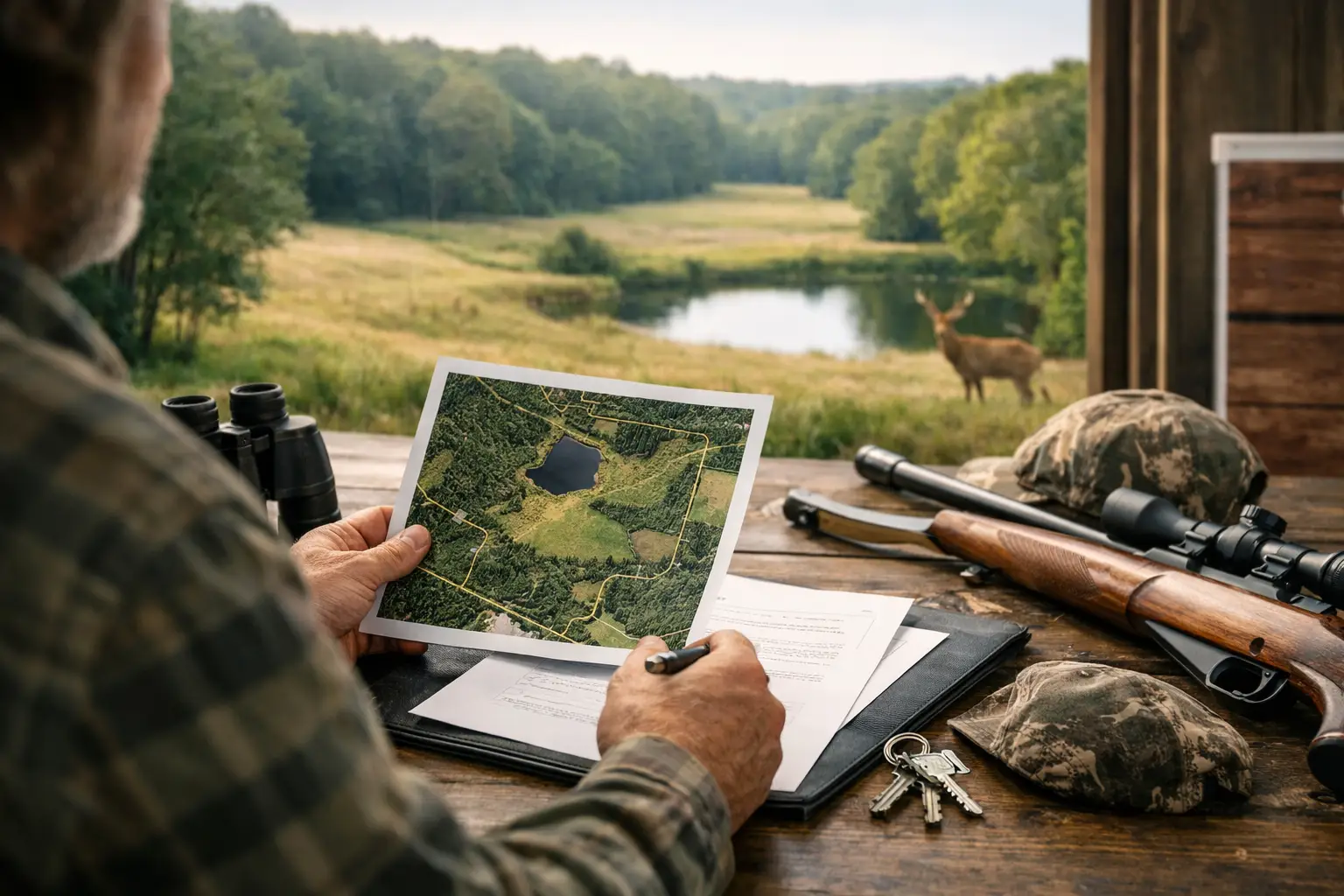
Photos and aerial maps are useful screening tools, but they are not a substitute for boots on the ground. Visit the parcel more than once if possible, ideally in different conditions. A dry, easy-to-cross creek in late summer may become an obstacle after heavy rain. A quiet road on a weekday may see regular traffic during hunting season.
Walk the boundaries with a map, GPS app, or survey in hand. Look for signs of deer, turkey, hogs, or other target species, but do not judge the property only by fresh tracks. Study the habitat that keeps animals returning: water, cover, food, terrain transitions, and low-pressure areas.
Pay attention to practical details that can change your ownership experience:
- Where can you park, unload equipment, and enter the property without crossing a neighbor’s land?
- Is there a usable trail system, or will you need to create roads, crossings, and food plots?
- Are there steep slopes, flood-prone areas, rock, wetlands, or drainage issues that limit access?
- Can you identify safe shooting directions and enough space for hunting stands or blinds?
If the parcel has timber, walk it with a forestry professional before assuming it has harvest value. Timber can add income and habitat potential, but species, age, access, market conditions, and harvest restrictions all affect what it is worth.
Confirm Legal Access and Property Boundaries
Legal access is one of the most important parts of buying hunting land. A tract may appear reachable on a map while lacking recorded access from a public road. This is commonly called a landlocked property, and it can be difficult and expensive to solve after closing.
Ask for the recorded deed, survey, and title information. Confirm whether access is direct, through a recorded easement, or merely based on a neighbor’s informal permission. A handshake arrangement can disappear when ownership changes. If an easement exists, review its width, permitted uses, maintenance responsibilities, and whether it allows vehicles, utilities, or only limited passage.
Boundary clarity matters too. Old fence lines, painted trees, and hunting camp lore are not reliable legal boundaries. A current survey is especially valuable when acreage is irregular, corners are unclear, improvements sit near a line, or you plan to build fences, roads, or a cabin. It can reveal encroachments and prevent an expensive dispute with a neighbor.
Understand Zoning, Restrictions, and Land Use
Vacant land is not automatically free from rules. County zoning, deed restrictions, homeowners associations, conservation easements, and subdivision covenants can limit what you can do with a property. Some restrictions affect cabins, RV stays, shooting, livestock, timber harvests, commercial hunting leases, or even the type of road you can build.
Call the county planning or zoning office directly. Ask about permitted uses, setback requirements, building permits, septic approval, road access standards, and whether the parcel can be divided in the future. If the land has wetlands, floodplain areas, or conservation programs, ask what activities require approval.
This due diligence is not about finding reasons to walk away. It is how you buy with confidence. Many excellent hunting tracts have limitations, but a limitation is manageable when you understand it before you set your price.
Price the Property Beyond Price Per Acre
Price per acre is a starting point, not a valuation. Two nearby parcels with the same acreage can have very different values based on road frontage, usable terrain, timber, water, improvements, utilities, hunting quality, and access.
Compare recent sales of similar recreational land in the same county or region. Then adjust for the features that matter. A tract with established trails, a gated entrance, a proven food plot system, and year-round road access may justify a higher price than raw acreage. On the other hand, a property needing a bridge, survey, clearing, and extensive habitat work should be priced with those future costs in mind.
Budget for ownership after closing. Property taxes, insurance, road maintenance, trail work, equipment, food plots, boundary marking, and habitat improvements can add up. A lower-priced parcel with high annual upkeep may not fit your plan as well as a slightly more expensive tract that is ready to use.
Plan Your Financing Before You Offer
Land financing often works differently than a traditional home mortgage. Lenders may require larger down payments, shorter loan terms, and stronger credit because vacant land can be harder to resell than a house. Terms can vary based on acreage, location, road access, utilities, and intended use.
Cash offers can be competitive, but they are not the only path to ownership. Buyers may use bank land loans, local agricultural lenders, home equity, portfolio loans, or seller financing when available. Seller financing can create a more accessible entry point, but read the contract carefully. Confirm the interest rate, payment schedule, balloon payment, late-payment terms, responsibility for taxes and insurance, and when title transfers.
Get prequalified or understand your budget before making offers. This lets you move faster when a strong property appears and keeps you from stretching for acreage that leaves no room for improvements.
How to Buy Hunting Land With Smart Due Diligence
Once you find a property that fits, make your offer contingent on the checks that protect you. Your exact contract terms will depend on the transaction and state law, but buyers commonly need time to review title, access, survey information, restrictions, inspections, and financing. Work with qualified local professionals when the property has complicated boundaries, easements, mineral rights, wetlands, timber, or a conservation easement.
Ask whether mineral, timber, water, and hunting rights convey with the sale. In some areas, mineral rights were separated from the surface estate long ago. That does not always make a property a bad purchase, but you need to know who holds those rights and what access they may have.
Title insurance can help protect against certain ownership and title defects. Your title company or real estate attorney can explain what is covered and identify exceptions that deserve closer attention. Never skip the title review because a seller seems trustworthy or the parcel has been in one family for decades.
A specialized land marketplace such as BuyVacantLand.com can make it easier to narrow your search by state, acreage, land type, and financing options. Still, every listing is the beginning of your research, not the end of it. The best buyers verify the details that maps and marketing descriptions cannot fully answer.
The first season on your own hunting land may not produce a trophy or even a filled tag. It will give you something more lasting: firsthand knowledge of the property. Buy a tract you can access, afford, and enjoy improving, then let careful management turn it into the place you look forward to returning to every fall.



Join The Discussion