
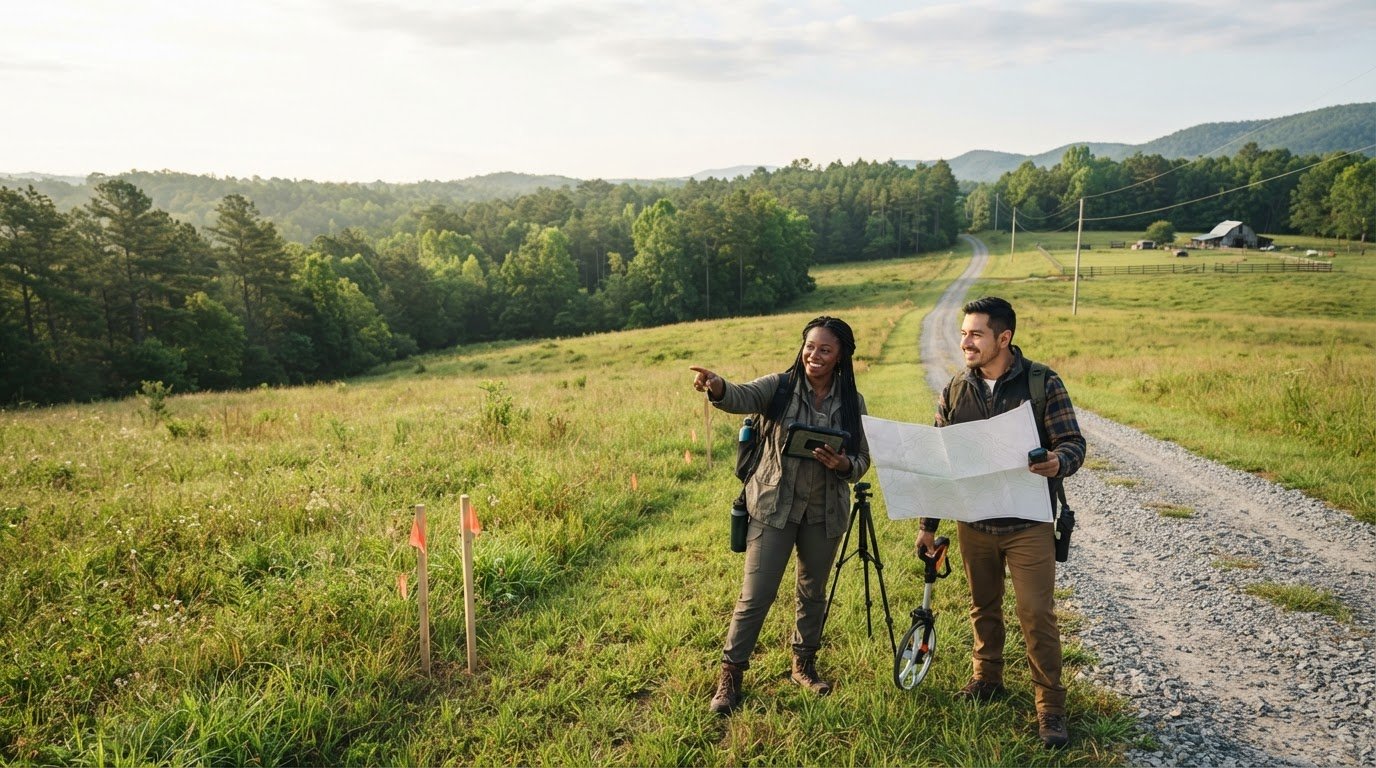
The costliest mistake when buying land outside the city happens before you ever make an offer. Most buyers fall in love with listing photos, only to realize the dirt lacks legal road frontage, sits miles from electric lines, or carries strict zoning codes that prevent building.
You’re likely tired of digging through generic real estate portals cluttered with single-family houses when all you want is raw acreage. Add in the stress of traditional mortgage lenders rejecting undeveloped property, and the entire purchase process quickly feels overwhelming.
You don’t have to gamble your hard-earned savings. This practical guide gives you the tools to find, evaluate, and secure rural vacant land with absolute clarity. You’ll master a proven pre-purchase verification checklist, understand county zoning rules, and learn how to use flexible owner financing to buy without bank hassles.
Below is your complete step-by-step framework to inspect property rights, eliminate transactional surprises, and claim your acreage with confidence.
Key Takeaways
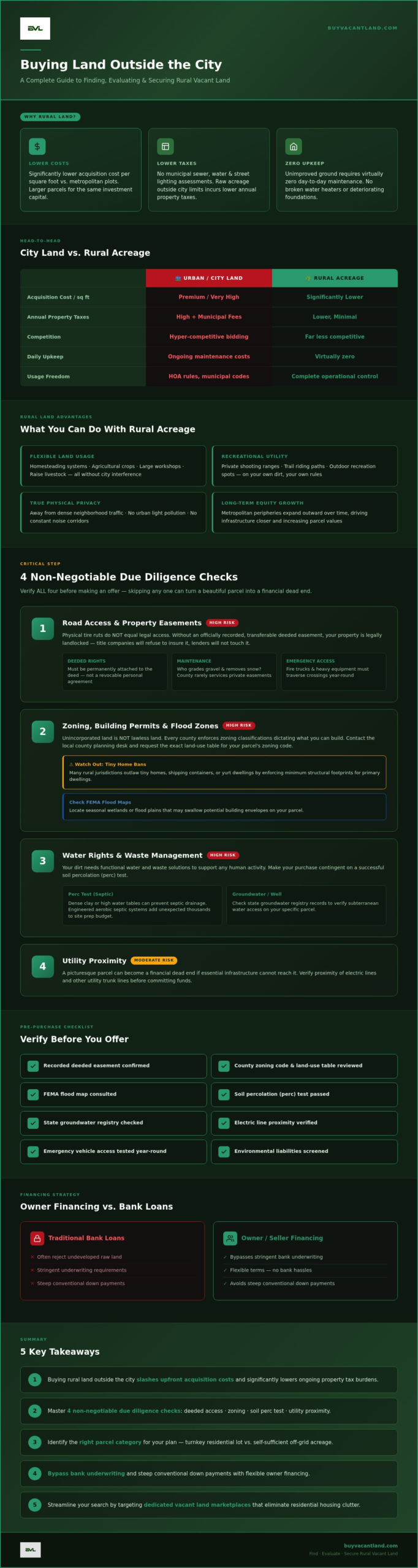
- Discover why buying land outside the city slashes upfront acquisition costs and significantly lowers ongoing property tax burdens.
- Master the four non-negotiable due diligence checks, from confirming recorded deeded access to passing soil percolation tests.
- Identify the right parcel category for your development plans, whether you need turnkey residential lots or self-sufficient off-grid acreage.
- Bypass stringent bank underwriting and steep conventional down payments by using flexible owner financing.
- Streamline your search by targeting dedicated vacant land marketplaces that eliminate residential housing clutter.
Why Buying Land Outside the City Makes Financial and Practical Sense
Urban real estate demands a premium for crowded space. When you focus on buying land outside the city, you fundamentally change the financial equation. Unincorporated acreage delivers significantly lower acquisition costs per square foot compared to metropolitan plots. You secure substantially larger parcels for your investment capital while bypassing the hyper-competitive bidding wars common in developed urban centers.
Carrying costs also shift in your favor. Raw acreage outside municipal lines incurs lower annual property taxes, protecting your cash flow year after year. Without municipal sewer, water, and street lighting assessments tacked onto your tax bill, your holding costs remain minimal. This makes rural land a practical, low-overhead vehicle for generational wealth building.
The Freedom of Unrestricted and Rural Acreage
Urban living traps owners beneath layers of municipal codes and homeowners association bylaws. In contrast, rural acreage gives you complete operational control. You decide how to configure your property without arbitrary aesthetic review boards dictating paint colors, outbuilding sizes, or vehicle parking.
- Flexible land usage: Establish homesteading systems, plant agricultural crops, build large workshops, or raise livestock without city interference.
- Recreational utility: Set up private shooting ranges, trail riding paths, or outdoor recreation spots on your own dirt.
- True physical privacy: Insulate your daily life from dense neighborhood traffic, urban light pollution, and constant noise corridors.
Long-Term Equity and Tangible Asset Stability
Raw land is a finite physical asset. Unlike residential structures that suffer physical depreciation, roof leaks, and costly maintenance schedules, unimproved ground requires virtually zero day-to-day upkeep. You don’t have to manage broken water heaters or deteriorating foundations while your equity builds.
Strategic acreage ownership also capitalizes on long-term demographic movement. Metropolitan peripheries constantly expand outward over time, driving infrastructure closer to peripheral parcels. When evaluating potential corridors, savvy buyers review municipal growth trends and legal precedents regarding Eminent Domain to understand how planned utility trunk lines or highway extensions could impact long-term property boundaries. Buying land outside the city ahead of outward growth patterns positions you to capture significant equity appreciation as peripheral zones develop.
Critical Due Diligence: 4 Factors to Verify Before Making an Offer
Never place money on raw earth without inspecting its legal and physical realities. When buying land outside the city, the most picturesque parcel can turn into a financial dead end if essential infrastructure cannot reach it. Before drafting an offer, work through four non-negotiable verification checkpoints: legal access, zoning allowances, waste capacity, and utility proximity.
Failing to perform basic site research creates expensive surprises. Reviewing federal due diligence guidance helps buyers identify historical environmental liabilities and structural site risks before committing funds. If you want to bypass complicated listings and review verified rural inventory directly, browse available acreage on BuyVacantLand.com to evaluate parcel boundaries before you begin fieldwork.
Road Access and Property Easements
Never rely on a dirt path just because tire tracks exist. Physical tire ruts do not equal legal access. Without an officially recorded, transferable deeded easement across neighboring parcels, your property is legally landlocked. Title companies will refuse to insure it, and lenders will not touch it.
- Deeded rights: Confirm the access right is permanently attached to the deed, not a revocable personal agreement with an adjacent owner.
- Maintenance responsibility: Check who grades gravel paths and removes snow; county public works departments rarely service private easements.
- Emergency access: Verify that fire trucks and heavy construction equipment can traverse narrow bridge crossings or steep culverts year-round.
Zoning Classifications, Building Permits, and Flood Zones
Unincorporated land does not mean lawless land. Every county enforces broad zoning classifications that dictate whether you can build a residential home, set up an off-grid cabin, or run a commercial livestock operation. Contact the local county planning desk and request the exact land-use table for your parcel’s zoning code.
Check FEMA flood maps to locate seasonal wetlands or flood plains that swallow potential building envelopes. You must also check county minimum square-footage mandates. Many rural jurisdictions outlaw tiny homes, shipping containers, or yurt dwellings by enforcing minimum structural footprints for primary dwellings.
Water Rights and Waste Management Feasibility
Your dirt needs functional water and waste solutions to support any human activity. Always make your purchase contingent on a successful soil percolation (perc) test. If dense clay or high water tables prevent septic drainage, engineered aerobic septic systems can add unexpected thousands to your site prep budget.
Verify subterranean water access next. Check state groundwater registry records to determine the average drilling depth of neighboring wells. Combine that data with electrical grid proximity: running new overhead poles or trenching underground wires from the nearest utility hub can cost substantial sums per foot, making off-grid solar or battery storage a necessary alternative when buying land outside the city.
Comparing Rural Land Categories: Which Parcel Fits Your Vision?
Every acre of dirt serves a distinct operational purpose. Treating all rural real estate the same leads to mismatched expectations and wasted capital. When buying land outside the city, matching your operational goals to the correct parcel classification saves thousands of dollars in site preparation and zoning reclassifications.
Rural real estate generally falls into four clear operational categories:
- Residential lots: Positioned on suburban edges, these platted parcels feature established access roads and nearby municipal or community utility tie-ins for fast residential construction.
- Off-grid land: Remote tracts designed for complete utility independence, prioritizing natural water access, solar exposure, and maximum isolation from municipal services.
- Farms and ranches: Acreage zoned for livestock grazing, crop cultivation, or timber production, often qualifying for agricultural property tax valuations.
- Hunting and recreational land: Heavily wooded, mountainous, or wetland terrain optimized for wildlife management, camping setups, and outdoor sports rather than primary residential living.
Turnkey Residential Lots vs. Raw Undeveloped Land
Turnkey residential lots carry higher initial purchase prices because developers have already absorbed preliminary grading, road construction, and utility trenching costs. You buy immediate building readiness. In contrast, raw undeveloped vacant land offers substantially lower upfront acquisition costs, but shifts all preparation responsibilities directly onto your shoulders.
You must weigh that initial savings against site-clearing machinery rentals, long private driveway installations, and the infrastructure coordination detailed earlier. Choose turnkey residential lots if you require a rapid construction schedule. Choose raw undeveloped acreage if you want maximum acreage per dollar and total control over parcel layout.
Off-Grid Living and Self-Sustaining Acreage
Off-grid parcels eliminate ongoing utility bills entirely. Achieving true independence, however, requires precise site evaluation before closing. Inspect sun exposure angles to ensure your solar arrays receive adequate daily peak sunlight hours. Year-round power security demands properly sized inverter systems and substantial battery storage capacity.
Water self-reliance follows the same rule. Research local rainwater catchment regulations, as several states limit collection volumes or specify acceptable filtration equipment. For seasonal climate control, map out dependable thermal solutions like propane delivery routes, high-efficiency wood stoves, or managed timber harvesting on your own boundary lines. Buying land outside the city for off-grid living gives you unmatched personal sovereignty, provided your physical site supports self-contained life-support infrastructure from day one.
Financing Land Outside the City: Banks vs. Owner Financing
Securing capital for raw acreage is entirely different from securing a conventional suburban home mortgage. When buying land outside the city, most buyers discover that traditional commercial banks treat vacant dirt as high-risk, speculative collateral. If an economic downturn hits, borrowers walk away from raw parcels long before sacrificing primary residences, which makes institutional lenders extremely hesitant to lend on unimproved ground.
The Hurdles of Conventional Raw Land Mortgages
Institutional lenders establish punishing standards to offset perceived land risk. Conventional banks routinely demand down payments of twenty to fifty percent for raw, undeveloped tracts. They also enforce elevated interest rates, aggressive credit score thresholds, and compressed repayment windows of only five to fifteen years.
- Rigid building mandates: Lenders frequently condition financing approval on formal construction contracts and strict building deadlines.
- Appraisal bottlenecks: Rural acreage lacks uniform neighborhood sales data, making conventional appraisals difficult and triggering sudden loan rejections.
- Intrusive qualification: Weeks of tax return reviews, asset documentation hurdles, and endless processing delays stall time-sensitive land purchases.
How Owner Financing Unlocks Direct Land Ownership
Owner financing removes institutional gatekeepers completely. Instead of begging a commercial mortgage department for approval, you establish payment terms directly with the land seller. The seller acts as the lender, securing the balance through a standard promissory note and recorded deed of trust until you satisfy the loan terms.
This structure transforms buying land outside the city into an efficient, predictable transaction. You bypass intrusive credit scoring, eliminate predatory loan origination fees, and finalize legal closing in days rather than months. Sellers offer practical down payment requirements and manageable monthly schedules that fit real budgets, creating a clear pathway to debt-free ownership.
Ready to skip institutional lending roadblocks? Search thousands of verified seller-financed parcels on BuyVacantLand.com to secure your acreage today.
How to Find and Secure Your Rural Property Today
Finding the right acreage requires a deliberate search strategy. Before reviewing listings, establish your operational parameters: minimum acreage, required access level, and your specific timeline for development. Buying land outside the city becomes straightforward once you eliminate guesswork and focus strictly on properties that match your criteria.
Mainstream real estate portals create unnecessary friction. They cater to residential home buyers, forcing you to filter through thousands of subdivision houses, condos, and rentals just to locate a handful of poorly documented vacant parcels. Bypassing bloated housing directories cuts your search time in half.
Targeting Dedicated Vacant Land Marketplaces
Dedicated listing platforms strip away residential clutter completely. Instead of sorting through suburban houses, you immediately see pure land listings categorized by real-world usability, including residential lots, agricultural tracts, hunting acreage, and remote off-grid parcels.
You can search verified acreage across the country on BuyVacantLand.com to connect directly with property owners. Dealing straight with sellers allows you to verify parcel boundaries quickly, ask direct questions about access, and secure owner-financing terms without third-party gatekeepers.
Streamlining the Closing Process Safely
Once you select a parcel and agree on terms, execute the closing process with strict procedural discipline. Never rely on informal handshakes or unrecorded contracts. Protect your investment by following a clear, reliable settlement sequence:
- Order a title search: Work with an established title company or real estate attorney to obtain a title commitment. This ensures the dirt is free of delinquent property taxes, contractor liens, or probate disputes.
- Verify physical boundaries: Hire a licensed surveyor to locate corner pins and confirm boundary lines. This prevents costly boundary disagreements with neighboring parcel owners later.
- Execute legal documents: Sign the purchase agreement, promissory notes (if owner-financed), and closing paperwork before a notary public.
- Record the deed: Ensure the title company or attorney formally records the deed with the county recorder’s office to establish your legal ownership.
Following this structured sequence eliminates closing friction, protects your capital, and ensures complete peace of mind when buying land outside the city.
Claim Your Rural Property with Confidence
Securing raw acreage doesn’t have to be an intimidating gamble. When buying land outside the city, lasting success comes down to disciplined verification: confirm legal deeded access, test soil percolation, and match your operational plans to the proper zoning classification. Choosing flexible owner financing over rigid commercial bank loans allows you to protect your capital, sidestep invasive credit underwriting, and dictate your own development schedule.
Stop wasting valuable hours sifting through single-family houses, condos, and rental clutter on generic real estate portals. You deserve a streamlined marketplace with an exclusive focus on raw, undeveloped vacant land parcels across the United States. Gain direct access to turnkey residential lots, off-grid tracts, and affordable owner-financed acreage without traditional procedural hurdles. Find your ideal rural parcel on BuyVacantLand.com and take the first step toward lasting land ownership today.
Frequently Asked Questions
Is it harder to get a loan for land outside the city than for a house?
Yes, securing a bank loan for raw dirt is significantly harder than getting a standard residential mortgage. Commercial banks view unimproved land as speculative collateral because borrowers default on raw land much faster than primary homes during economic downturns. As a result, conventional lenders mandate steep down payments between twenty and fifty percent, elevated interest margins, and strict credit criteria. This institutional friction makes flexible owner financing a far more practical alternative when buying land outside the city.
How do I confirm if rural land has legal road access?
You confirm legal access by reviewing the property’s title commitment and deed for a recorded, insurable access easement or direct public road frontage. Never rely on visible dirt paths or verbal promises from neighbors. Have a title company or real estate attorney examine the chain of title to verify that legal right-of-way ingress and egress transfers permanently with the deed. If access isn’t recorded, the property is legally landlocked, preventing title insurance and building permits.
What is a perk test, and why is it mandatory for rural property?
A percolation (perc) test measures the rate at which soil absorbs and filters water to determine if the ground can support a standard gravity-fed septic system. Municipal sewer lines rarely extend into rural areas. County health departments mandate an approved perc test before issuing residential building permits. Failing a perc test means you must engineer costly specialized aerobic treatment systems or alternative containment solutions, which drastically alters your total site development budget and building timeline.
Can I legally camp or park an RV on vacant land while building?
That depends entirely on specific county zoning ordinances and local building codes. While some rural jurisdictions permit temporary RV living once an active building permit is issued, many counties restrict recreational camping to fourteen or thirty consecutive days per calendar year. Other areas prohibit living in an RV entirely without an installed, permitted septic connection. Always contact the local county development services department to check temporary occupancy rules before moving living quarters onto raw dirt.
How do property taxes on rural vacant acreage compare to city lots?
Property taxes on rural vacant acreage are generally substantially lower than taxes on developed city lots. Unincorporated acreage lacks high municipal millage rates levied for urban services like stormwater management, public transit, and municipal trash collection. Additionally, vacant parcels carry lower assessed values because there are no physical structures on the site. If you use your acreage for agricultural purposes, timber management, or livestock grazing, you can often qualify for state-level agricultural tax exemptions that slash holding costs even further.
What does owner financing mean when buying vacant land?
Owner financing means purchasing property directly from the seller without involving a traditional mortgage bank. The seller acts as your lender. You negotiate the down payment, monthly payment schedule, and loan duration directly, executing a promissory note and recorded deed of trust at closing. This arrangement eliminates invasive bank underwriting, steep origination fees, and bureaucratic delays, making buying land outside the city simple and accessible for buyers with nontraditional income or limited credit history.
Can I install solar panels and live completely off-grid on rural land?
Yes, you can install off-grid solar systems on most rural parcels, provided county zoning codes permit off-grid power generation. Many rural counties welcome solar arrays and battery banks, but you still need to verify local building codes regarding electrical permits and minimum dwelling standards. Some jurisdictions require grid interconnection or enforce strict standards for primary power sources before granting certificates of occupancy. Confirm regulations with the county building division before investing in standalone renewable energy hardware.



Join The Discussion