
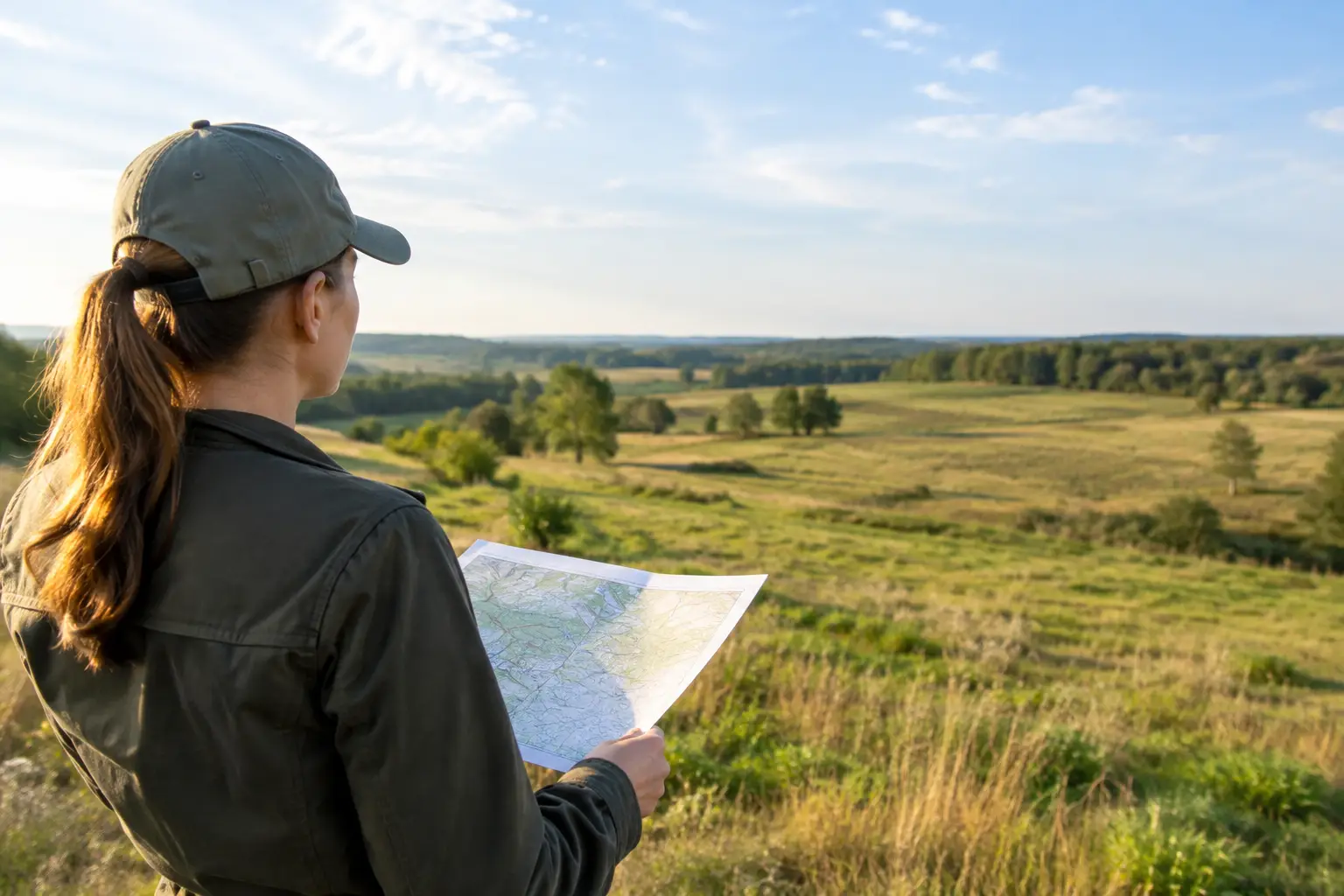
A low price can make a remote parcel look like a rare opportunity. But if you cannot legally reach it, use a road year-round, or get utilities to it, that bargain may become an expensive problem. Knowing how to check land access before you make an offer protects your plans for a cabin, homesite, hunting property, farm, or long-term investment.
Access is not just about seeing a dirt road on a map. You need to confirm two separate things: whether you can physically get to the land and whether you have the legal right to do so. A parcel can have a visible trail but no recorded access rights. It can also have a legal easement that is difficult to use after heavy rain or snow. Smart land buyers verify both.
Start With the Property’s Road Frontage
The simplest access situation is direct frontage on a public, maintained road. If the parcel touches a county, city, state, or federally maintained road, you may be able to enter directly from that road. Still, do not assume every road shown on an online listing or satellite image is public.
Ask the seller or listing agent which road serves the parcel and who maintains it. Then contact the county road department, planning office, or assessor’s office to verify its status. Some rural roads are public but minimally maintained. Others are privately owned roads that require landowners to share maintenance costs.
Road frontage also does not always mean you can install a driveway wherever you choose. Many counties require a driveway permit or culvert approval, particularly along state highways and drainage ditches. Before buying, ask whether an existing entrance is permitted and whether a new access point is allowed.
How to Check Land Access in the Title Records
When a parcel is landlocked, it has no direct connection to a public road. That does not automatically make it unbuyable, but it raises the level of due diligence. The key question is whether there is a recorded easement that gives the owner a legal route across neighboring land.
An easement is a legal right to use another person’s property for a specific purpose, such as travel, utility installation, or shared road access. It should be identified in the deed, title commitment, plat, survey, or recorded easement document. A verbal agreement with a neighbor is not enough. Neighbors can sell, relationships can change, and informal permission may disappear when you need it most.
Request a preliminary title report or title commitment before closing. Read the listed exceptions carefully, especially any language describing access easements, road agreements, ingress and egress rights, or restrictions. The description should identify where the easement runs, its width, and who may use it.
A 20-foot easement may work for a basic driveway, while a future residential build, fire access requirement, or utility line may need more space. If the easement is narrow, overgrown, steep, or crosses a creek, find out whether your intended use is realistic before you buy.
Review a Current Survey and Parcel Map
County GIS maps and online parcel viewers are useful starting points, but they are not legal proof of access. Their boundary lines can be approximate, and roads shown on the map may not be maintained or legally available for use.
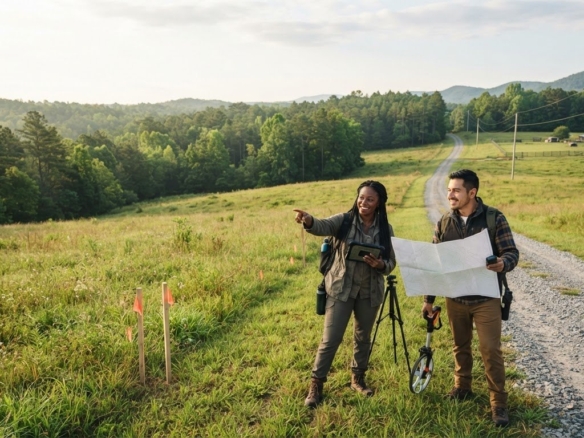
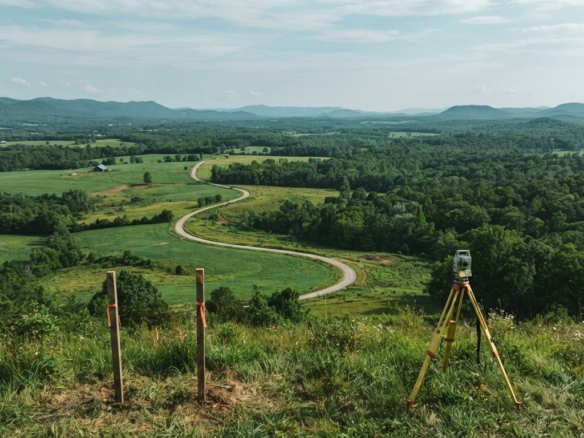
A current boundary survey gives you a much clearer picture. It can show property corners, road frontage, visible roads, and recorded easements. If a survey is older, compare it with the current deed and title records. In rural areas, old fences, gates, and trails often do not match the legal boundary.
Pay close attention to the route from the public road to the property line. Does the route stay within the easement? Does it cross multiple neighboring parcels? Are there gates, creek crossings, or sharp grades that could limit use? A route that looks short on a map can be very different on the ground.
If the property is a serious purchase, consider hiring a licensed surveyor to mark key corners and confirm the access route. That expense can be modest compared with the cost of resolving a boundary or access dispute after closing.
Visit the Land in More Than One Condition
A site visit is where access becomes real. Drive the route you would use to reach the property, not just the route that navigation software selects. If possible, visit after rainfall or during the season when you expect to use the land most often.
A dry-weather road may become impassable in winter, during spring thaw, or after a heavy storm. Look for washouts, deep ruts, low-water crossings, narrow turns, mud, and bridges with uncertain weight limits. This matters even more if you plan to bring in a camper, building materials, heavy equipment, livestock trailers, or an RV.
Check the condition of gates as well. Ask who owns them, whether they are locked, and whether you will receive a key or code. A gate may protect a shared private road, but it should not prevent you from exercising recorded access rights.
Also consider practical day-to-day access. A four-wheel-drive vehicle may reach a recreational lot, but that may not suit a family homesite or rental property. Your access standard should match your intended use, not simply the fact that a vehicle can reach the parcel once.
Ask Who Maintains the Road and Pays for It
Private roads can be a great fit for affordable rural land, but ownership comes with shared responsibility. Find out whether there is a road maintenance agreement, homeowners association, road association, or informal cost-sharing arrangement.
You want clear answers to practical questions: Who grades the road? Who pays for gravel? How are emergency repairs handled? Are owners assessed equally, by frontage, or by frequency of use? If the road needs a major culvert or bridge repair, could you be responsible for a large special assessment?
Review any written maintenance agreement before making an offer. If there is no agreement, factor that uncertainty into the property’s value and your budget. A private road is not necessarily a deal breaker, but unclear maintenance obligations can create avoidable friction with neighbors.
Confirm Access for Utilities and Future Plans
Road access and utility access are related, but they are not the same. A legal driveway easement may not allow power, water, fiber, or other utility lines. If you plan to build, ask whether the recorded easement specifically permits utilities and whether utility providers can use the route.
For off-grid land, access still affects the cost of bringing in solar equipment, a well rig, a septic installer, or construction materials. For a farm or ranch, consider whether larger trucks, trailers, and equipment can make the turns and cross any bridges safely.
Check local zoning and building rules early. Some jurisdictions require a property to have frontage on a public road or an approved private road before issuing a building permit. Others require emergency vehicle access, a minimum road width, or a turnaround area. A parcel may be ideal for camping or recreation but unsuitable for immediate residential construction.
Do Not Rely on “Prescriptive Access” Without Legal Advice
You may hear that a road has been used for decades, so access must be legal. Sometimes long-term use can create rights under state law, often called a prescriptive easement. But the rules vary by state, and proving those rights can require legal action, evidence of continuous use, and a court decision.
Treat claimed prescriptive access as a risk, not a benefit, unless a qualified real estate attorney confirms the situation. The same caution applies when a seller says, “Everyone uses that road,” or “The neighbor has always allowed access.” Those statements may be true, but they do not replace a recorded right.
Build Access Into Your Offer and Due Diligence Period
Access questions should be resolved before your earnest money becomes nonrefundable. Make your offer contingent on satisfactory title review, survey review, and confirmation of legal and practical access. If the property depends on an easement, request the recorded document and inspect the full route.
When evaluating land listings on BuyVacantLand.com or anywhere else, use the listing details to start your research, not end it. Good listings may identify road frontage, easements, or private-road access, but buyers should still verify the facts with county records, title professionals, and an on-site visit.
The right parcel should support the life you want to build around it. Whether that means a quiet hunting base, an off-grid retreat, a future homesite, or a smart land investment, confirmed access turns possibility into property you can actually use.

Join The Discussion