
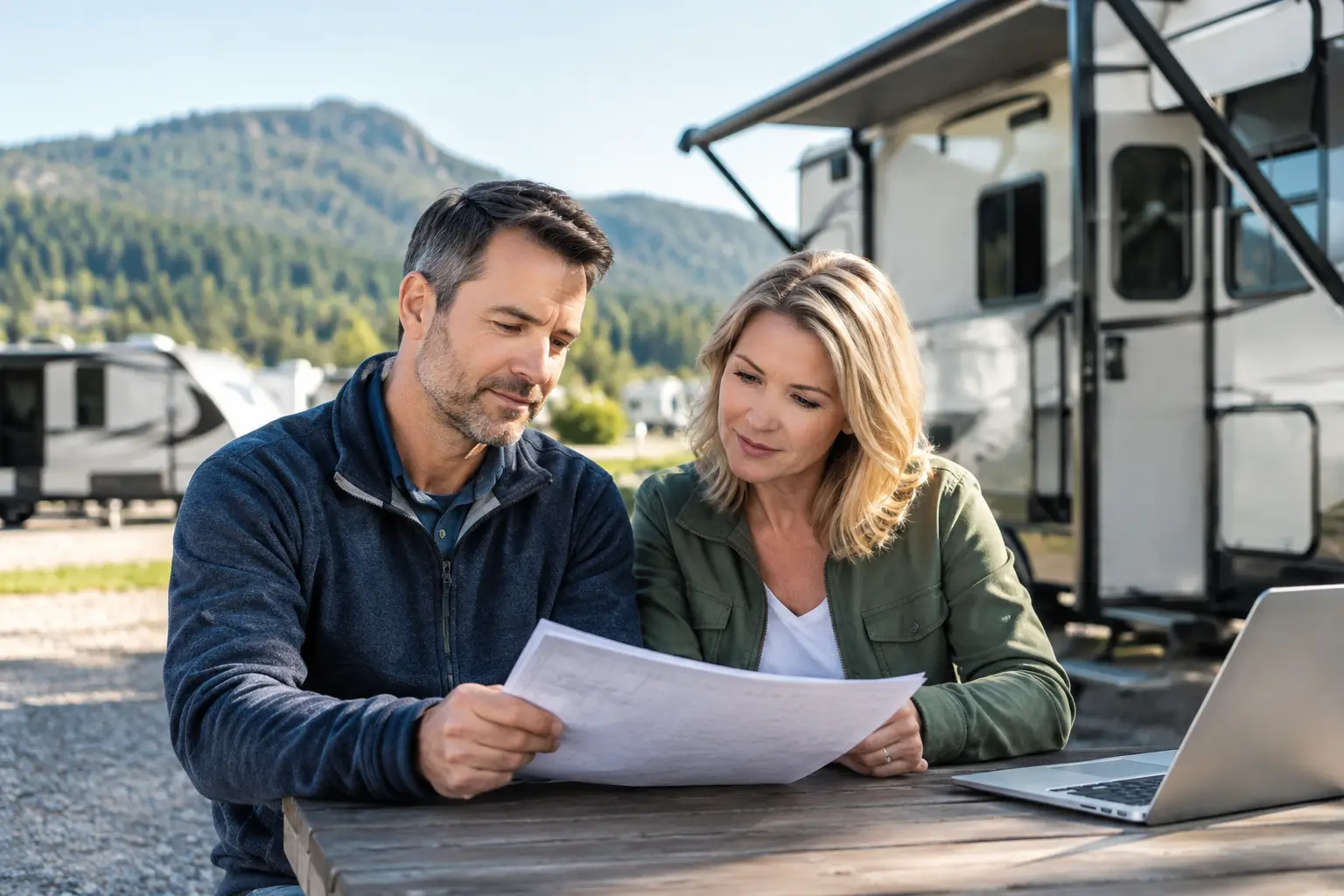
The right RV lot can give you something a campground reservation never will: a place that is yours. RV lot ownership can mean a dependable seasonal escape, a convenient stopover in a favorite region, or a property with rental income potential. But a low purchase price is only one part of the decision. The rules, carrying costs, utilities, and location determine whether a lot becomes a smart asset or an expensive parking space.
For buyers who want more freedom without taking on a full home or large acreage, an RV lot can be an approachable path into land ownership. The key is buying for the way you actually plan to use it.
What RV Lot Ownership Can Offer
An RV lot is a parcel designed or approved for recreational vehicle use. It may sit within an RV resort, a deed-restricted community, a campground condominium development, or a more rural area with flexible local zoning. Those settings can look similar in listing photos, but they offer very different ownership experiences.
A resort lot may include paved roads, clubhouse access, pools, landscaping, security, and utility connections. In exchange, owners typically pay HOA or condominium association dues and follow detailed community standards. A rural RV-friendly parcel may provide more privacy and fewer restrictions, but it may also require the owner to solve for access, electric service, water, septic, and maintenance.
The best fit depends on your goal. Retirees and snowbirds may value an active community and predictable amenities. Weekend travelers may want a simple base camp near a lake, trail system, or coastal destination. Investors may focus on locations where short-term RV rentals are allowed and demand stays strong through the season.
Ownership also creates flexibility over time. You can use the lot now, rent it when permitted, and potentially sell later if the area grows in popularity. That flexibility has real value, but it should not replace careful due diligence.
Start With How You Will Use the Lot
Before comparing listings, define the job the property needs to do. Will you keep one RV there year-round, visit a few months each winter, or use it as a rental? Do you need to accommodate a large fifth wheel, a tow vehicle, guests, or outdoor gear? A lot that works for a compact travel trailer may feel tight with a 40-foot motorhome and a patio setup.
Also consider how long you expect to stay. Some communities limit continuous occupancy, prohibit living in an RV full-time, or close during part of the year. Others require RVs to meet age, appearance, or size standards. These rules can protect the look and marketability of a community, but they can also limit the freedom buyers expect from owning land.
If rental income is part of the plan, get the answer in writing before you buy. A community may permit rentals but restrict minimum stay length, require registration, cap the number of rental days, or prohibit rentals managed through booking platforms. Local county or city regulations can add another layer. Never assume a popular vacation area automatically allows short-term rentals.
Check Zoning, Deed Restrictions, and Community Rules
The biggest mistake in RV lot ownership is treating a parcel as usable simply because an RV is shown in the listing photos. Confirm the legal use of the lot with the appropriate local planning or zoning department, especially for vacant land outside an established RV community.
Ask whether RV use is allowed as a primary use, a temporary use, or only while building a permanent home. Find out if there are restrictions on duration of stay, hookups, accessory structures, sheds, decks, fencing, fire pits, and storage. In some areas, parking an RV is allowed but sleeping in it is not. That distinction matters.
For lots inside an HOA, condo association, or resort, request and read the governing documents. Look beyond the monthly dues. Review the bylaws, covenants, rules, budgets, meeting notes, reserve funds, and any pending special assessments. A well-managed community can make ownership easy. A poorly funded one may face higher dues or major assessments for roads, utilities, roofs, pools, or common facilities.
Pay attention to RV standards as well. Some communities do not allow older RVs, certain types of trailers, bus conversions, or units in need of visible repair. If you already own an RV, make sure it qualifies before committing to a lot.
Understand What the Price Does and Does Not Include
A listed price does not tell you the total cost of owning an RV lot. Association dues, property taxes, insurance, utility bills, maintenance, and rental management fees can change the economics quickly.
Ask the seller or listing agent for the current costs and whether they have increased recently. In a resort, dues may include water, sewer, trash, cable, internet, lawn care, and amenity access. In another community, the owner may pay each item separately. A low monthly fee may sound appealing until you learn the roads, landscaping, or utilities are the owner’s responsibility.
For rural parcels, evaluate the cost of making the property usable. A power line at the road is not the same as electric service at the RV pad. A nearby well does not guarantee a water connection. If septic is needed, verify whether the soil can support it and whether the property has an approved or feasible system design.
Financing can vary, too. Some lenders treat RV lots like vacant land or second-home property, which can mean larger down payments and shorter terms than a traditional home loan. Seller financing can be useful for qualified buyers, but review the interest rate, balloon payment, prepayment terms, and default provisions carefully.
Inspect Access, Utilities, and the Actual Site
Visit the property if possible. Photos rarely reveal whether the drive is easy to navigate in a large rig, whether the lot floods after rain, or whether neighboring sites feel uncomfortably close.
Measure the usable space, not just the parcel dimensions. Consider the RV pad, parking, slide-outs, stairs, awnings, patios, storage, and turn radius. Check overhead clearance for trees and utility lines. If the lot is in a wooded or mountain setting, verify that your RV can reach it safely on the approach roads.
Utilities deserve a close look. Confirm the electrical service type and amperage, along with the condition and location of water and sewer connections. Many modern RVs need 50-amp service, while older lots may provide only 30 amps. Ask whether hookups are individually metered and whether the sewer connection is suitable for regular use.
Internet and cell service matter more than many buyers expect. If you plan to work remotely, stream entertainment, manage rentals, or stay for long periods, test your phone signal and ask about available internet options. Do not rely on a coverage map alone.
Buy Location for Both Lifestyle and Resale
A good RV lot is usually close to the reason people travel. Beaches, lakes, national forests, fishing areas, golf, major events, and warm winter climates can all support long-term demand. Convenience matters too. A property near groceries, medical care, restaurants, fuel, and major roads may be easier to enjoy and easier to resell.
At the same time, highly desirable locations can come with higher dues, stricter rules, and greater exposure to weather risks. Coastal lots may face hurricane concerns and rising insurance costs. Mountain lots can have steep access or seasonal road issues. Desert locations may have extreme summer heat. Every market has trade-offs, so evaluate the property through your own travel habits rather than buying only on projected appreciation.
For investment-minded buyers, compare recent sales of similar lots within the same community or area. Look at days on market, current competition, rental rules, seasonal demand, and the financial health of the association. A lot with a modest purchase price and steady demand can be more attractive than a premium lot with high fixed costs and limited rental flexibility.
A Better Way to Make the Decision
Treat an RV lot as both a lifestyle purchase and a piece of real estate. The lifestyle side asks whether you will genuinely use and enjoy it. The real estate side asks whether the use is legal, the costs are manageable, and the property will remain marketable if your plans change.
A focused land marketplace such as BuyVacantLand.com can help buyers compare RV lots and recreational parcels by location and intended use. Still, every promising listing deserves its own review of local rules, title, access, utilities, and ongoing expenses.
The best RV lot is not necessarily the one with the lowest price or the most amenities. It is the one that gives you a practical place to go, clear rights to use it as intended, and enough long-term appeal to support your next move when the time comes.



Join The Discussion