
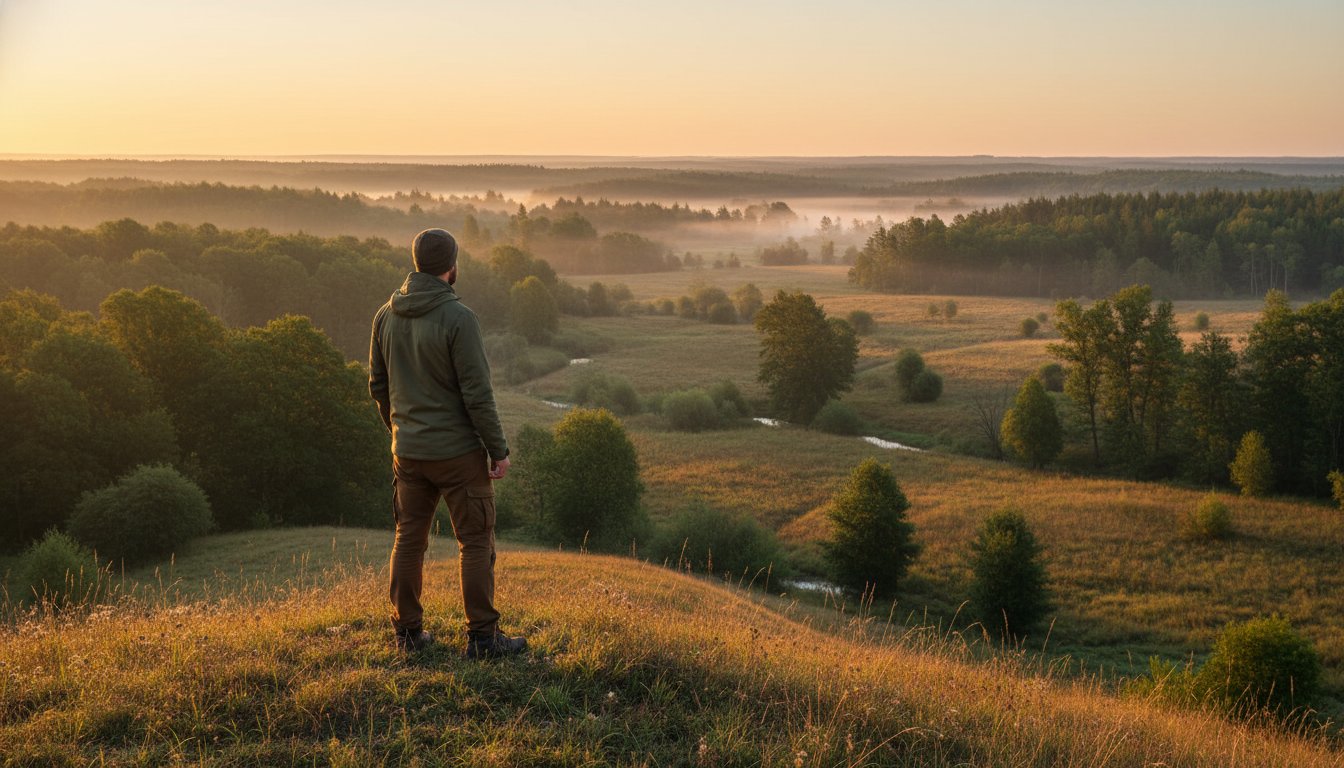
What if your best hunting season didn’t depend on a public land lottery or fighting crowds at dawn? You’re likely tired of public grounds where there are more orange vests than deer. You want your own land to manage, but traditional banks make financing a hunting property for sale a slow, bureaucratic nightmare. They often demand 20% down and perfect credit for raw acreage. It’s a high barrier to entry that keeps most hunters on the sidelines.
You don’t need a bank to secure your private spot. This 2026 guide shows you how to build long-term equity and find a streamlined path to ownership. We’ll teach you how to identify high-value parcels and use owner financing to bypass the usual stress. You’ll get a clear, multi-step plan to evaluate land and close your deal quickly. Stop dealing with public land headaches and start building your own legacy on your own dirt.
Key Takeaways
- Eliminate safety risks and heavy competition by moving your hunts from public grounds to private acreage.
- Identify a productive hunting property for sale by prioritizing habitat diversity and permanent water sources over total square footage.
- Reduce your initial investment by choosing raw land over established camps to avoid hidden maintenance costs.
- Secure your investment by verifying deeded easements and local shooting ordinances before you sign any paperwork.
- Bypass restrictive bank credit checks by using owner financing to streamline your path to land ownership.
What is Hunting Land and Why Should You Buy in 2026?
Hunting land is raw, undeveloped acreage used primarily for wildlife habitat and recreation. It isn’t just a patch of woods. It’s a specialized asset class that provides both utility and financial stability. To understand the history and evolution of this practice, you can look at the general definition of What is Hunting to see how game management has changed over time. Ownership gives you the power to transform a standard parcel into a high-performance environment for wildlife.
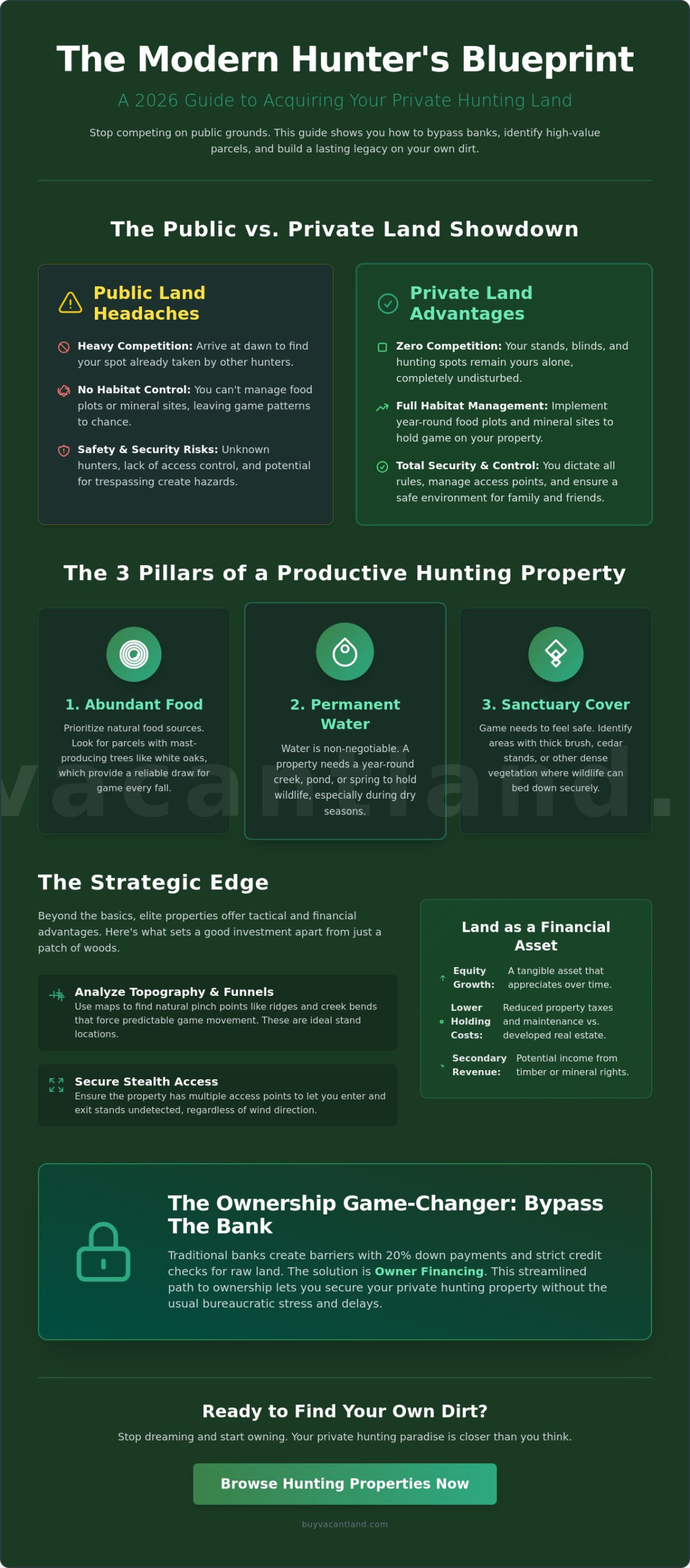
Why look for a hunting property for sale in 2026? The answer is control. Public hunting grounds are increasingly congested and dangerous. When you own the land, you dictate the rules. You decide who hunts, where they sit, and which animals are harvested. This isn’t a luxury. It’s a practical solution for anyone serious about the sport. You stop being a visitor and start being a manager.
The Advantages of Private Over Public Land
Public land hunters face a constant battle for space. You often arrive at your favorite spot only to find another truck parked there. Private ownership ends this frustration immediately. It allows you to build a consistent hunting strategy that spans years, not just hours.
- Zero Competition: Your stands and blinds remain undisturbed. No one will set up 50 yards from you on opening morning.
- Habitat Management: You can implement year-round food plots and mineral sites. This keeps game on your property instead of wandering onto the neighbor’s land.
- Total Security: You control access points. This reduces safety risks and prevents illegal trespassing.
Hunting Land as a Strategic Financial Move
Land is a tangible hedge against inflation. While currency fluctuates, the supply of dirt is fixed. Buying a hunting property for sale is a move toward long-term wealth. It’s a stable asset that you can touch and use while it appreciates in value.
- Lower Holding Costs: Raw land typically carries lower property taxes and maintenance fees than developed real estate. You don’t have to worry about broken pipes or roof leaks.
- Secondary Revenue: Many parcels offer timber value or mineral rights. These can provide cash flow while the land appreciates over time.
- Equity Growth: Vacant land remains a reliable investment. It builds equity that you can leverage for future land purchases or financial needs.
Owning land in 2026 is about more than just the harvest. It’s about securing an asset that traditional banks often overlook. You can build a legacy while protecting your capital. This guide will show you how to find these deals and skip the bank hurdles that stop most buyers.
Essential Features of a Productive Hunting Property
Don’t fall for the trap of buying land based on size alone. A massive 100-acre parcel of open pasture is often useless for hunting. You need a hunting property for sale that prioritizes habitat diversity. High-quality tracts provide everything game needs to survive and thrive within their boundaries. This keeps animals on your land instead of your neighbor’s. Focus on the quality of the dirt, not just the quantity. A small, diverse tract holds more game than a massive monoculture every time.
The Three Pillars of Habitat: Food, Water, and Cover
Success begins with three specific pillars: food, water, and cover. Look for parcels with established mast-producing trees like white oaks. These provide a reliable, natural food source that draws game every fall. Water is equally critical. A property without a year-round creek, pond, or spring will struggle to hold deer during dry months. You can always improve wildlife habitat on your property by adding food plots or digging water holes, but natural features are the best foundation. Finally, identify thick sanctuary cover. This includes brushy thickets or thermal cover like cedar stands where game feels safe from predators and winter weather.
Topography and Natural Funnels
Topography dictates how game moves through your land. Use topographic maps to find natural funnels and pinch points. These are areas where the land’s shape, such as a steep ridge or a creek bend, forces animals through a narrow corridor. These spots are perfect for stand placement because they create predictable travel patterns. You must also understand how wind patterns interact with the land’s elevation. Scent can pool in hollows or swirl over ridges. Avoid dead zones where the land is too flat or open to offer security. If you are ready to start your search, you can browse available hunting land for sale today to find these natural features.
Access is the final piece of the puzzle. You need a way to enter and exit your stands without being detected. This is called stealth entry. If the only way into your best hunting spot is through a bedding area, you’ll spook the game before the season even begins. Look for a hunting property for sale with multiple access points or road frontage that allows for varied wind directions. Efficiency in your layout leads to more successful harvests and less pressure on the local wildlife. Secure a property that lets you hunt smarter, not harder.
Raw Land vs. Established Hunting Camps: A Cost Comparison
Most buyers assume they need a fully equipped cabin to begin their ownership journey. This is a costly mistake. You often pay a massive premium for someone else’s idea of a “dream” camp. When searching for a hunting property for sale, look at the dirt first. Raw, undeveloped land offers the lowest entry price point. It allows the average hunter to secure acreage that would otherwise be unaffordable. You aren’t paying for outdated plumbing or rotting decks. You are paying for the resource that matters: the habitat.
Buying vacant land is a proactive way to build equity. Every improvement you make adds value without the initial markup of a “turnkey” property. National averages for raw rural land in 2026 sit between $1,500 and $2,500 per acre. Compare this to developed farm real estate, which the USDA reports at over $4,000 per acre. You can clear your own trails and dig your own water holes. This creative control ensures the land works for your specific hunting style. You aren’t just buying land. You’re building an asset from the ground up.
The Benefits of Starting with Vacant Land
A lower initial investment is the primary advantage. By choosing raw land, you can often afford a larger parcel. More acreage means more room for game and more stand options. You also avoid the “hidden” costs of poor design. Many established camps have stands placed in bad spots or roads that spook game. Starting with a blank canvas means you place every feature with a purpose. It’s the most efficient way to maximize the utility of your hunting property for sale.
Hidden Costs of Improved Properties
Improved properties come with ongoing financial burdens that many buyers overlook. Structures and utilities trigger higher property taxes immediately. Your liability insurance will also spike if there are buildings on-site. These costs add up every year. Maintenance on an old cabin takes time away from scouting and hunting. You’ll spend your weekends fixing roofs instead of hanging stands. This creates a “time tax” that diminishes the joy of ownership.
Ask yourself if you truly need a cabin today. A simple campsite or an off-grid setup is often sufficient for the first few seasons. This approach keeps your overhead low. It lets you focus your capital on the land itself rather than depreciating structures. Secure the acreage now while prices are favorable. You can always add a structure later once you understand the land’s natural flow. Focus on the soil, the water, and the game. Everything else is secondary.
How to Evaluate Hunting Property for Sale Before You Buy
Evaluation is your insurance policy. You don’t need an expensive agent to tell you if a parcel is worth your money. You need to do the work yourself. When you find a hunting property for sale, start with the logistics. Verify legal access immediately. A property without a deeded easement or road frontage is a liability. You can’t hunt land you can’t reach. Check local zoning laws to ensure shooting and hunting are permitted. Some counties have noise ordinances or discharge restrictions that could ruin your plans. Don’t sign a contract until you know the law allows your intended use.
Due Diligence: The Legal Checklist
- Confirm Boundary Lines: Match the legal description in the deed to the actual markers on the ground. You don’t want to find out later that your best stand is on the neighbor’s land.
- Research Leases: Check for existing timber or mineral leases. These allow third parties to enter your property and disrupt the habitat.
- Check Restrictions: Ensure there are no environmental restrictions like protected wetlands. These areas are great for game but might prevent you from building a shed or clearing a trail.
Field Evaluation: Identifying Game Sign
Walk the property to find concrete evidence of wildlife. Look for active trails connecting bedding areas to food sources. These paths should be beaten down and full of fresh tracks. Identify browse lines on the vegetation. This indicates a healthy deer population is actively feeding on the land. Check for scat and bedding depressions in thick cover to confirm resident game. Use historical satellite imagery to see how the habitat has changed over the last five years. Look for consistent water sources that don’t dry up in the summer months.
Investigate neighboring land use. If the parcel next door is slated for a housing development, your hunting quality will drop. You want neighbors with similar goals, like large timber tracts or agricultural fields. Once you’ve completed your evaluation, you’re ready to make a move. You can find your next hunting property for sale on our marketplace and skip the traditional bank hurdles. Move fast when the data confirms a winner. Good land doesn’t stay on the market long.
How to Find and Finance Hunting Land for Sale Today
Traditional banks are the biggest obstacle to land ownership. They often view raw land as a speculative risk. This leads to high interest rates and massive down payment requirements. You don’t have to follow that path. Finding a hunting property for sale is easier when you look outside the traditional mortgage system. You need a method that prioritizes speed and accessibility. Direct land marketplaces connect you with sellers who understand the value of the dirt, not just the credit score of the buyer. This approach removes the stress of traditional bank hurdles.
The Power of Owner Financed Land
Owner financing is the ultimate shortcut for hunters. It bypasses the months of paperwork required by traditional lenders. You deal directly with the seller to set the terms. This often results in much lower down payments. While banks might demand 20% or more for raw land, owner-financed deals can sometimes be secured with 5% to 20% down. This flexibility makes ownership possible for the average hunter. You can skip the strict credit checks and close the deal in days. It is a streamlined process that puts you in the woods faster. You can learn more about owner financed land and how it works to see if it fits your budget.
Using BuyVacantLand.com to Secure Your Spot
Stop wasting time on residential real estate sites. They are cluttered with houses and overpriced suburban lots. You need a dedicated marketplace for raw acreage. You can browse a specialized collection of cheap land for sale across the country to find high-potential parcels. Look for listings that others might overlook. A parcel listed as “undeveloped” in a rural area can often be converted into a premier hunting plot with minimal effort. Use filters to find specific lands of america that are already suited for game management.
Direct communication with sellers is a major advantage. It eliminates middleman fees and hidden commissions. You get the best possible price by talking to the person who actually owns the dirt. Focus on sellers who specialize in vacant land. They know how to handle the paperwork quickly and efficiently. This ensures a transparent transaction without the usual procedural hurdles. If you are ready to stop dreaming and start scouting, you can browse our current hunting land listings today. Your private hunting spot is closer than you think. Secure your hunting property for sale now and start building your own equity.
Secure Your Private Hunting Legacy Now
Ownership is the only way to guarantee a safe and productive season every year. You now understand that habitat diversity and permanent water sources are the real drivers of game retention. You also know that raw land combined with owner financing provides the fastest path to building equity. Don’t let traditional bank hurdles or complex credit requirements keep you on the sidelines. The market for a quality hunting property for sale moves quickly; waiting only increases your entry cost and competition.
Our marketplace focuses exclusively on vacant land to save you time. We provide direct seller listings that eliminate middleman fees and simplify the discovery of affordable acreage. This streamlined process ensures you get the best value for your investment without unnecessary corporate delays. It’s time to stop fighting for space on public grounds and start managing your own dirt. Take the final step toward asset ownership and professional game management.
Find Your Perfect Hunting Property Today. Your private sanctuary is ready for discovery. Build your legacy on land you actually own.
Frequently Asked Questions
Can I get a loan for hunting land?
Traditional bank loans are available but often difficult to secure for raw, undeveloped land. Most commercial lenders require a 20% down payment and a credit score above 700. If a bank rejects your application, look into the USDA Farm Service Agency or specialized lenders like AgAmerica. These entities provide products specifically for rural acreage and agricultural use. Many buyers prefer owner financing because it removes these rigid institutional requirements entirely.
Is 10 acres enough for a hunting property?
Ten acres is sufficient if the land contains high-quality habitat and borders larger undeveloped tracts. A small parcel can be highly productive if it offers a unique resource like a permanent water hole or a dense bedding thicket that neighbors lack. Success on small acreage depends on low pressure and smart stand placement. You must manage your entry and exit carefully to avoid spooking game off the property.
What should I look for when buying land for hunting?
Prioritize the “edge effect” where different habitat types like hardwoods and brushy thickets meet. These transition zones create the highest biodiversity and attract the most game. You should also evaluate the soil quality to ensure it can support food plots in the future. Check for natural funnels and pinch points on topographic maps. These features create predictable travel corridors that make hunting much more effective.
How does owner financing work for hunting land?
Owner financing occurs when the seller acts as the lender instead of a traditional bank. You make a down payment and pay the remaining balance in monthly installments directly to the seller. This is a common way to secure a hunting property for sale without a traditional credit check or lengthy appraisal process. It allows for faster closings and more flexible payment terms that fit your specific financial situation.
Do I need a survey before buying vacant hunting land?
You should always obtain a professional survey to confirm the exact legal boundaries of the parcel. Relying on old fence lines or verbal descriptions often leads to costly legal disputes with neighbors. A survey ensures you aren’t paying for acreage that doesn’t exist. It also identifies any unknown easements or encroachments that could limit your use of the land. Never skip this step to save a few dollars.
Are there taxes on vacant hunting land?
Property taxes on vacant land are required but are typically much lower than taxes on developed real estate. Many states offer significant tax reductions if the land is enrolled in forest management or agricultural programs. These “current use” assessments can lower your annual holding costs by 50% or more. You should verify the current tax status with the local county assessor before finalizing your purchase.
Can I build a cabin on hunting land later?
Most rural land allows for structures, but you must verify local zoning and deed restrictions first. Some parcels have minimum square footage requirements or prohibitions against seasonal dwellings. If you plan to add a cabin, perform a perc test to ensure the soil can support a septic system. This test is a critical part of your due diligence if you want to move beyond a simple campsite.
How do I know if a property has good hunting potential?
Research local harvest records from state wildlife agencies to see the productivity of the surrounding county. You can also use trail cameras during your inspection period if the seller allows it. Look for heavy browse lines on native vegetation and high concentrations of tracks near water sources. A property with multiple age classes of timber and diverse cover is a strong indicator of a healthy resident population.




Join The Discussion