
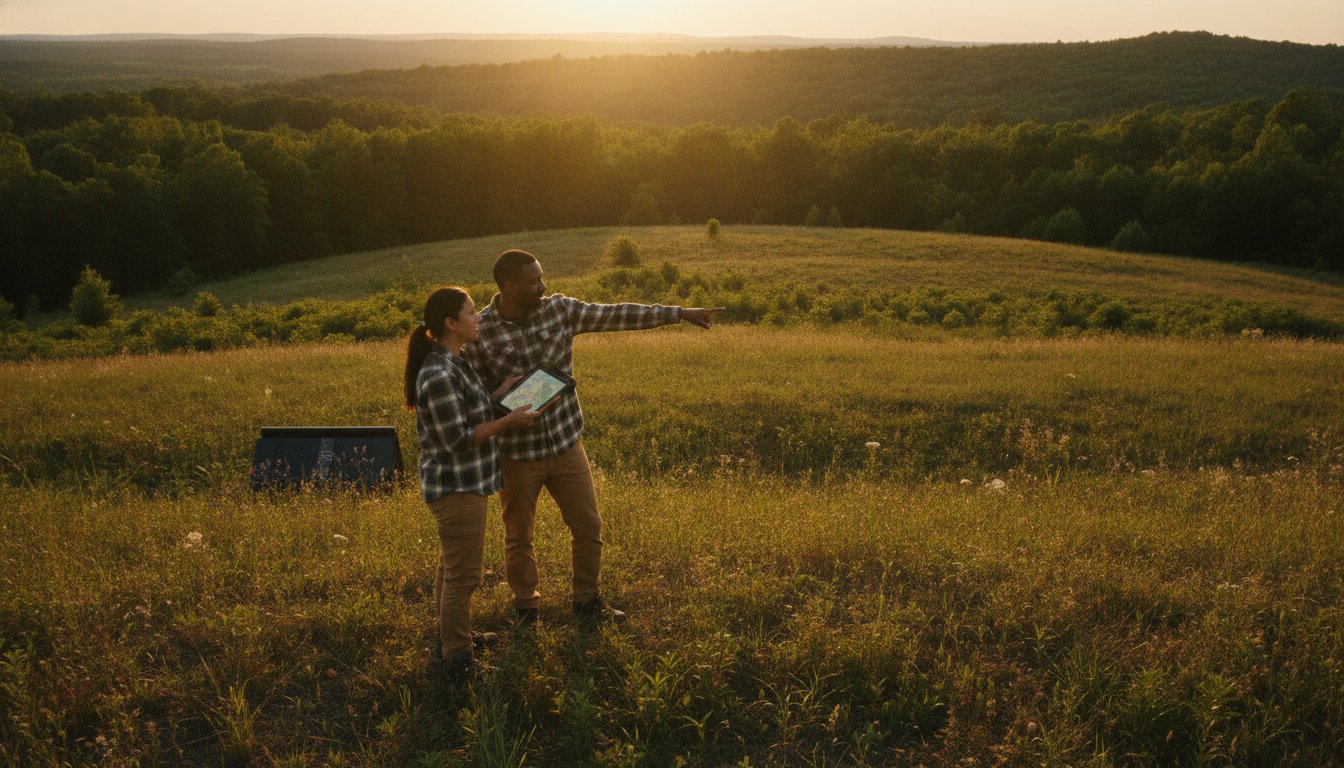
The “last cheap year” for rural acreage is officially here. Finding quality off grid land for sale in 2026 requires more than a map and a dream. It requires a tactical plan to bypass bureaucratic hurdles. You likely feel the frustration of finding a perfect parcel only to discover that opaque zoning laws or a total lack of water access make it uninhabitable. This is a common burden that stalls most remote property dreams before they even begin.
This guide eliminates that stress by providing a direct path to land ownership. You will learn how to evaluate soil for septic, secure water rights in restrictive states like Arizona, and navigate the 2026 financing market where land rates currently range from 4% to 10%. We break down the complex process into a simplified sequence so you can move from browsing to building with total certainty. We will cover state-specific regulations in New Mexico and Tennessee, explain how to find owner-financed deals, and ensure your investment is legally sound. Get the facts you need to secure your sovereignty today.
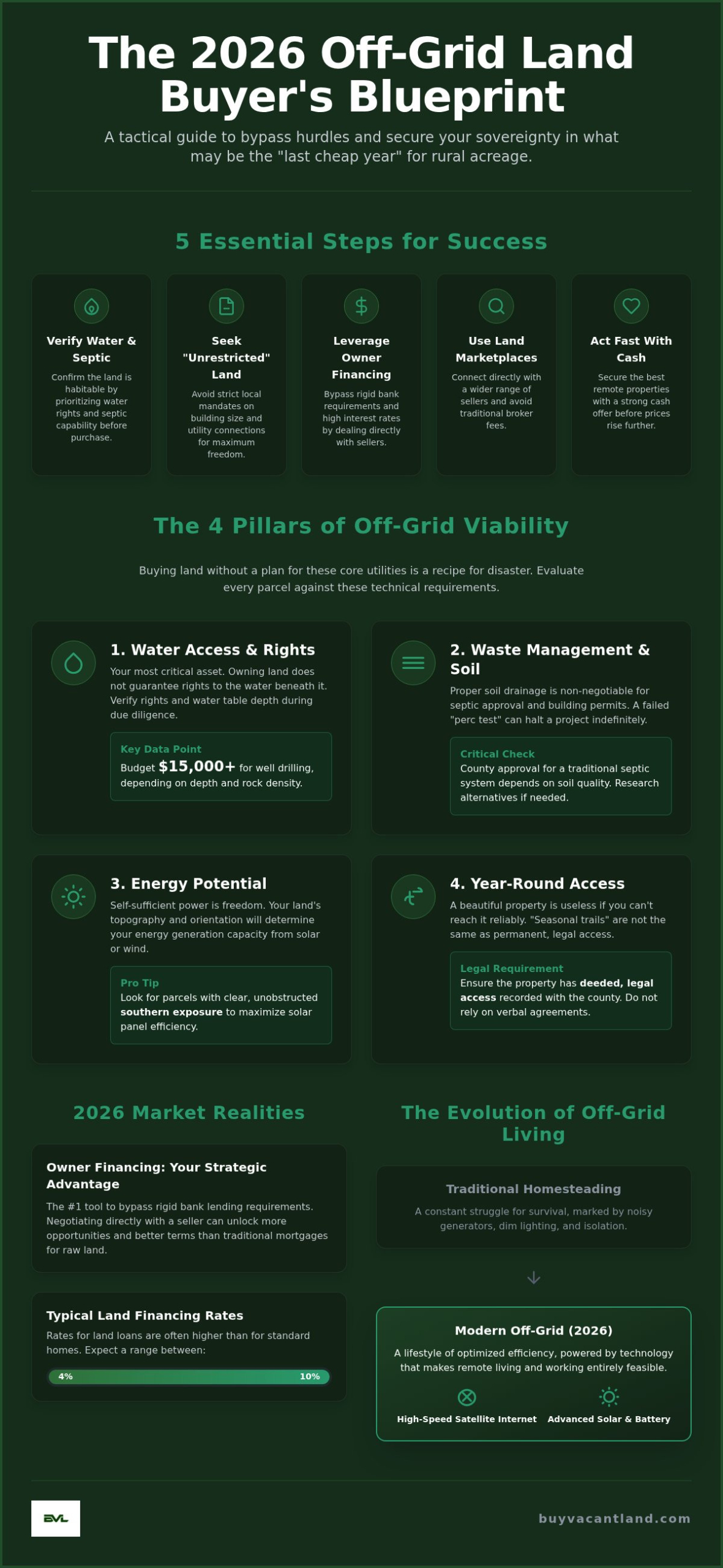
Key Takeaways
- Prioritize water rights and septic capability to confirm the land supports long-term habitation.
- Search for “unrestricted” parcels to avoid local mandates on building size and utility connections.
- Master the 2026 market for off grid land for sale by using owner financing to bypass rigid bank requirements.
- Use a dedicated land marketplace to connect with sellers and avoid the fees of traditional real estate brokers.
- Move quickly with cash offers to secure the best remote properties before prices rise further in 2026.
What is Off-Grid Land and Why Seek It in 2026?
Off-grid land is property physically and legally disconnected from municipal utility networks. This includes electricity, public water systems, and sewer lines. To understand What it means to be off-the-grid, you must view it as a total break from centralized infrastructure. Unlike a standard residential lot in a suburban neighborhood, these parcels require you to provide your own power and water. In 2026, this is no longer a fringe lifestyle. It’s a pragmatic financial move for those seeking stability.
The demand for off grid land for sale has surged because it offers a hedge against rising utility costs and inflation. You aren’t just buying dirt. You’re buying an insurance policy for your lifestyle. When you eliminate monthly bills for water and power, your cost of living drops significantly. This financial freedom is the primary driver for buyers today. You gain total sovereignty over your resources. You control your energy independence and food security without relying on failing municipal grids or unpredictable service hikes.
The Core Benefits of Off-Grid Ownership
Lower property taxes represent a major financial win for land owners. Governments typically tax raw, unimproved acreage at a fraction of the rate applied to developed residential lots. This keeps your annual carrying costs low. You also gain unmatched privacy. These parcels sit far from urban centers, providing a buffer against noise and intrusion. Modern solar and battery technology now allow you to develop this land sustainably. You can build a high-performance home that produces more energy than it consumes. This is a strategic asset that grows in value as urban sprawl continues and privacy becomes a premium commodity.
Modern Off-Grid Living vs. Traditional Homesteading
The off-grid experience has evolved. In 2026, high-speed satellite internet like Starlink makes remote work entirely feasible from the middle of the wilderness. You no longer have to choose between a career and a remote lifestyle. Advanced solar arrays and lithium battery storage have replaced noisy generators and dim lighting. Traditional homesteading was a struggle for survival; modern off-grid living is about optimized efficiency.
The current inventory of off grid land for sale reflects a nationwide movement toward self-reliance. This shift makes 2026 the optimal time to secure remote assets. Technology has caught up to the dream. You can now manage a global business from a parcel that has no physical connection to the outside world. This structural simplicity mirrors the streamlined nature of the life you want to build.
Eliminating monthly utility bills is the ultimate goal. When you own your power source and water supply, you’re immune to price hikes. You stop paying for the inefficiency of public systems. This is the relief and peace of mind that comes from true asset ownership. Start your search now to lock in these benefits before the market tightens further. Secure your land, secure your future, and exit the cycle of endless bills.
Essential Evaluation Criteria for Off-Grid Land for Sale
Buying land without a plan for utilities is a recipe for financial disaster. You must evaluate every parcel based on the “Big Four” of off-grid viability: water, waste, power, and access. Most listings for off grid land for sale look beautiful in photos, but they fail if they don’t meet these technical requirements. You need to verify these factors before signing any contract. This evaluation process removes the guesswork and ensures your property is a functional asset rather than a liability.
- Water Access: The absolute priority for any off-grid property search.
- Waste Management: Clear understanding of septic requirements and alternative systems.
- Energy Potential: Assessment of solar exposure and wind speeds on the specific site.
- Year-Round Access: Distinguishing between seasonal trails and deeded, legal access.
Water Rights and Well Drilling
Water is your most critical asset. Owning the surface land does not always mean you own the water beneath it. You must verify water rights during your due diligence period. Check the local water table depth through state records to estimate drilling costs. In 2026, drilling a well can cost $15,000 or more depending on depth and rock density. If the water table is too deep, your property might be worthless for permanent living. You should review how do you buy land to ensure you follow a strict checklist for every potential purchase. This step prevents you from buying a “dry” lot that requires expensive hauling services.
Soil Quality and Perc Testing
Waste management is the next hurdle for any remote build. Most counties require a percolation (perc) test to approve a traditional septic system. If the soil doesn’t drain properly, you won’t get a building permit. Review the septic system regulations to understand which designs work for your specific soil type. If a traditional system fails, you may need expensive engineered solutions or alternative systems like composting toilets. You should also evaluate the soil for gardening or small-scale farming. Poor soil quality limits your food security and forces you to rely on expensive amendments or raised beds.
Energy potential and access round out your evaluation. Look for southern exposure to maximize solar panel efficiency. High wind speeds can support turbines, but solar is usually more reliable for individual homesteads. You must also confirm year-round access. Seasonal roads often become impassable during winter months, which can trap you or prevent you from reaching your home. Deeded access ensures you have a legal right to reach your property through neighboring lands. Don’t assume a dirt trail is a legal road. Finding a parcel that checks all these boxes is easier when you use a specialized marketplace. You can browse verified listings for off-grid properties that provide the data you need to make an informed decision.
Zoning and Legal Hurdles for Off-Grid Living
Zoning laws determine if your off-grid dream is a legal reality or a code violation. You must look past the scenery and focus on the legal framework. Many counties mandate connections to the public grid. Others enforce minimum square footage requirements. These rules can force you to build a 1,500 square foot house when you only wanted a tiny cabin. This is why “unrestricted” land is the gold standard. It gives you the sovereignty to choose your structure type and utility setup. Finding off grid land for sale with zero building codes is the most efficient way to avoid future legal entanglements.
Agricultural zoning often provides more freedom than residential zoning. It typically allows for outbuildings, livestock, and alternative power systems. However, deed restrictions and covenants can still exist. These are private rules created by past owners or developers. They might ban mobile homes, shipping container houses, or even specific solar arrays. You must read the deed before buying. Hidden rules kill projects. Don’t let a beautiful view blind you to a restrictive covenant that prevents you from living as you intended.
Identifying Unrestricted Land
You find building freedom by calling county planning offices directly. Ask specific questions. Ask if they allow composting toilets or off-grid solar. Some states, like New Mexico, have counties with almost no zoning regulations. Others, like Tennessee, offer “opt-out” provisions for building codes in specific rural areas. You can find cheap land for sale that permits modular homes or RV living if you target these permissive zones. Verify every claim with the local authorities. Never take a seller’s word as the final truth.
Easements and Deeded Access
Legal access is non-negotiable. You need a deeded easement to cross neighboring land if your parcel isn’t on a public road. Without it, you are landlocked. You can’t legally reach your property. Cheap off grid land for sale often lacks this access. It’s a trap that leads to expensive legal battles and frozen assets. You should also watch for utility easements. Even on off-grid land, a power company might have the right to run lines across your property. This disrupts your privacy and limits where you can build. Confirm all easements through a professional title search before you close the deal.
The path to ownership is simple when you follow a logical sequence. Identify the legal burdens of a specific county. Present the property’s zoning as the solution to your lifestyle needs. Then, follow the clear path to a signed contract. This process creates momentum and pushes you toward your goal without distraction. Secure a parcel that allows for your vision today.
Financing and Buying Off-Grid Property Pragmatically
Banks don’t like remote dirt. They see risk where you see opportunity. Financing off grid land for sale through traditional channels often requires a 40% down payment and interest rates hitting 10% in July 2026. This financial barrier stops most buyers before they start. You need a more efficient way to close. Cash is your strongest leverage in this market. It eliminates the need for bank appraisals and lengthy approval processes. Sellers prefer cash because it guarantees a swift transaction. You can often negotiate a lower purchase price by offering a quick, cash-based closing that bypasses the red tape.
Due diligence is your only protection against a bad investment. Never hand over money until you verify the title is clear. Title insurance is non-negotiable for remote land. It protects you from hidden liens or ownership disputes that could surface years later. You must also review the purchase agreement for “as-is” clauses. These are standard in rural transactions. They mean the seller won’t fix access issues or soil problems after the sale. Verify everything yourself. This pragmatic approach ensures you’re buying a functional asset rather than a legal headache.
The Power of Owner Financed Land
Owner financing is the primary bridge for buyers without six-figure savings. In this setup, the seller acts as the bank. You make a down payment and pay the balance in monthly installments. These deals often bypass credit checks and expensive loan origination fees. Typical terms in 2026 involve a 10% to 20% down payment with interest rates that remain competitive with private lenders. You can find specialized guidance on owner financed land to understand how to structure these notes. This method secures your property without the rigid requirements of a corporate lender.
Closing the Deal Without a Realtor
You don’t need a realtor to buy off grid land for sale, but you do need a title company. They ensure the transfer of ownership is legal and documented. Using a title company provides an aura of efficiency and reliability to the transaction. Always perform a final walkthrough before closing. Verify boundary markers in person to ensure the acreage matches the legal description. Don’t rely solely on GPS coordinates. Physical markers are the final word in land ownership. This simple step prevents you from paying for land you don’t actually own.
Ready to skip the bank? Browse owner-financed off-grid listings and secure your parcel with a simple, direct contract that puts you in control.
Find Your Off-Grid Property on BuyVacantLand.com
You have the criteria. You understand the legal hurdles. Now you need the inventory. BuyVacantLand.com is a specialized marketplace built for this exact purpose. We focus exclusively on vacant land. You won’t find suburban houses or rental properties here. This focus allows for a faster, more efficient search for off grid land for sale across the United States. We eliminate the noise of traditional real estate sites to provide a direct path to ownership.
Our platform connects you directly with land owners and sellers. This direct link removes traditional procedural hurdles that often stall remote land transactions. You can find everything from desert parcels to wooded tracts across the country. We provide national coverage to ensure you find a climate and price point that fits your strategy. Every listing is a raw asset waiting for your vision. This structural simplicity mirrors the streamlined nature of the life you want to build.
Why Use a Dedicated Land Marketplace?
Traditional real estate websites are cluttered with residential noise. You waste time filtering out single-family homes and condo developments. BuyVacantLand.com eliminates that distraction. Realtors often ignore raw land because commissions are lower than home sales. This means the best off grid land for sale often stays hidden on generic platforms. Our marketplace gives you access to these “off-market” feeling deals. You deal with sellers who understand the unique value of unimproved acreage.
Generic listing sites often prioritize developed lots that don’t fit the off-grid profile. We provide specific categories for hunting land and undeveloped parcels. This allows you to target land that meets the technical criteria discussed earlier. You can quickly identify properties with the southern exposure needed for solar or the acreage required for a private well. Our platform handles the volume so you can focus on the value. You get a direct path to completion without the standard corporate delays.
Start Your Search Today
Speed is essential in the 2026 market. High-quality parcels move quickly. You can use our streamlined filters to target specific categories like owner-financed lots or remote hunting acreage. Set up alerts for your target states to receive immediate notifications when new inventory hits the site. This proactive approach ensures you’re the first to see a deal. Don’t wait for a realtor to call you with a property that’s already sold. Take control of your search and secure your future.
The process is simple. Identify your target area. Filter for your specific needs. Connect directly with the seller to negotiate your terms. This multi-step path to completion removes the stress of asset ownership. You gain the relief and peace of mind that come from a swift, assured transaction. Start your journey toward total sovereignty now.
Browse off-grid land for sale on BuyVacantLand.com and find the parcel that meets your criteria for water, zoning, and price.
Secure Your Off-Grid Future Today
Sovereignty is no longer a luxury. It’s a strategic necessity. You now have the pragmatic roadmap to evaluate water rights, bypass restrictive zoning, and navigate the financing hurdles that stall most buyers. Success in this market depends on your ability to move with speed and certainty. Don’t let the complexity of traditional real estate sites slow your progress toward independence. You can bypass the noise of residential listings and connect with sellers who share your vision for self-sufficiency.
Finding the right off grid land for sale is the first step toward a lifestyle defined by freedom and resource security. Our national marketplace focuses exclusively on raw acreage and provides direct seller-to-buyer listings to keep your transaction simple. We eliminate the procedural hurdles that complicate traditional land deals. It’s time to stop browsing and start building. Find your perfect off-grid property on BuyVacantLand.com today. Your path to a secure, remote lifestyle is clear and achievable.
Frequently Asked Questions
What does “off-grid land” actually mean?
Off-grid land refers to property that is physically and legally disconnected from municipal utility networks like electricity, water, and sewer. You are responsible for providing your own resources through solar power, private wells, and septic systems. It’s a form of property ownership that prioritizes self-sufficiency and resource sovereignty over convenience.
Is it legal to live off-grid in the United States?
Living off-grid is legal at the federal level, but it’s heavily regulated by state and county governments. Some areas, like specific counties in New Mexico, have zero zoning regulations and allow total freedom. Other states, like Tennessee, have strict wastewater laws that mandate a connection to public sewers if they are nearby. Always verify local building codes before you commit to a build.
How do I get water on an off-grid property?
You can secure water through a private well, rainwater harvesting, or natural springs. Well drilling is the most common method, but costs vary based on the water table depth. Be aware of local regulations; for example, Arizona has strict water rights in Active Management Areas. In Tennessee, rainwater harvesting is legal, but making that water potable for indoor use requires specific state approvals.
Can I get a mortgage for off-grid land?
Securing a traditional mortgage for raw, remote land is difficult and often requires a 40% down payment. As of July 2026, interest rates for land loans typically range from 8.25% to 10%. Most buyers find owner financing to be a more pragmatic solution. It bypasses rigid bank criteria and provides a faster, more certain path to ownership without the red tape of a corporate lender.
What is the cheapest state to buy off-grid land?
New Mexico currently offers some of the lowest prices for off grid land for sale, with averages around $2,200 per acre in 2026. This is significantly more affordable than states like Massachusetts, where prices can exceed $65,000 per acre. Other popular options include Texas at approximately $10,200 per acre and Tennessee at $14,500 per acre. Focus your search on high-value, low-cost states to maximize your investment.
Do I still have to pay property taxes on off-grid land?
Yes, you must pay property taxes even if you don’t use municipal services. However, taxes on raw, unimproved land are usually much lower than on developed residential lots. This low annual cost is a major benefit of land ownership. You eliminate monthly utility bills while maintaining a low-cost, stable asset that serves as a hedge against inflation.
How do I know if I can build a cabin on my land?
You must contact the county planning and zoning office to confirm the specific building rules for your parcel. Ask about minimum square footage requirements and if the county allows “opt-out” provisions for building codes. Searching for “unrestricted” off grid land for sale is the fastest way to find property that allows cabins, tiny homes, or modular structures without bureaucratic interference.
What is a perc test and why do I need one?
A percolation (perc) test measures how quickly the soil on your property absorbs liquid. You need this test to receive a permit for a traditional septic system. If the soil fails to drain at the required rate, you won’t be allowed to build a standard home. This test is a critical part of your due diligence to ensure the land can support permanent habitation.


Join The Discussion