
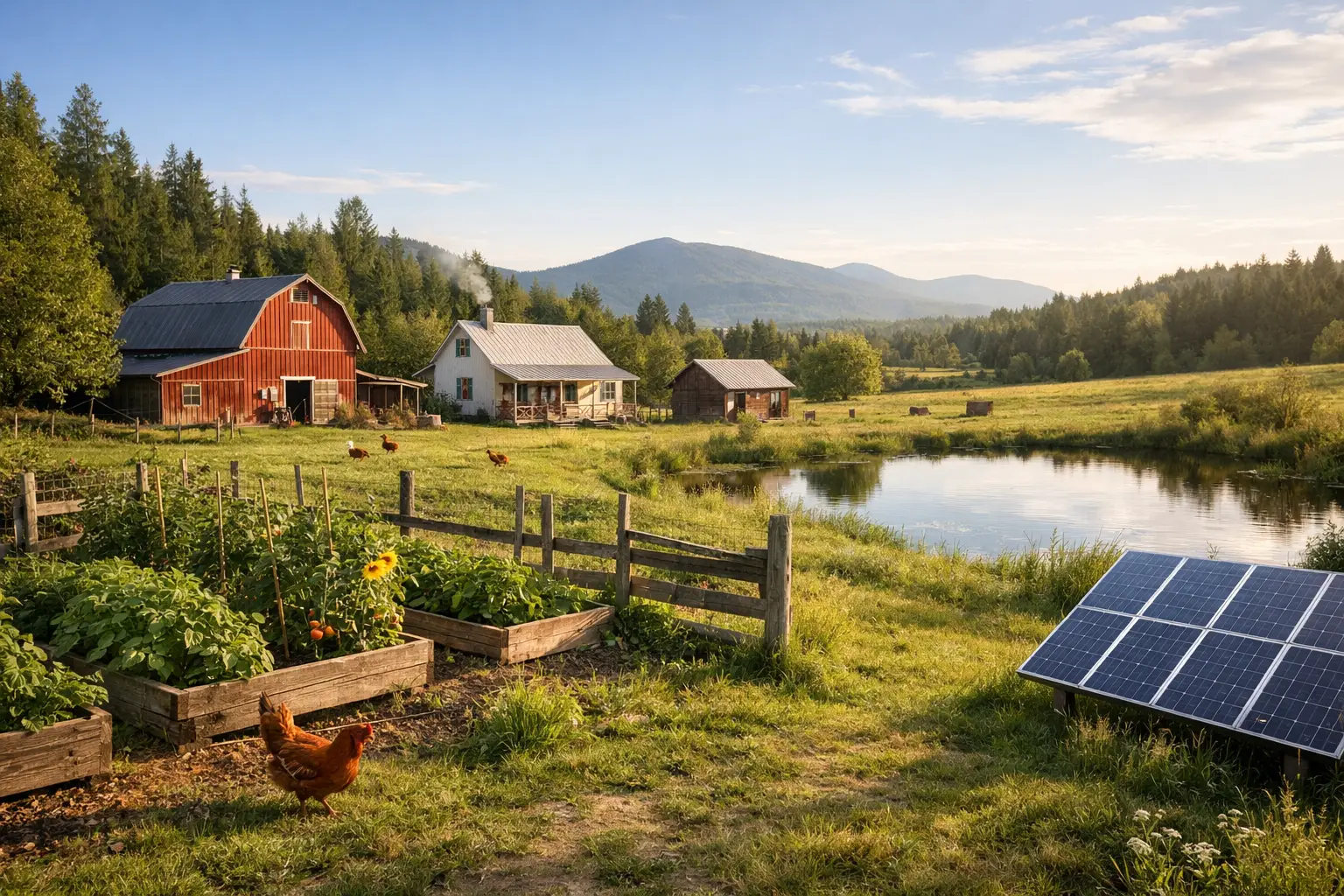
A cheap 10-acre parcel can look perfect in photos and still be a terrible homestead. The best land types for homesteading are not just about price or size. They are about how well the property supports food production, water access, shelter, access, and the kind of life you actually want to build.
That is where a lot of buyers get stuck. They start by asking how many acres they need, when the better question is what kind of land will help them succeed. A family planning gardens, chickens, and a small orchard needs something very different from someone focused on cattle, hunting, and off-grid living. The smartest buy is the one that matches your goals, your budget, and the amount of work you are ready to take on.
What makes land good for homesteading?
Good homestead land gives you options. It should be usable, not just scenic. Flat or gently rolling ground is easier to build on, fence, garden, and maintain. Soil quality matters because poor soil can turn a simple garden into a constant fight. Water matters even more. A creek, pond, strong well area, or reliable rainfall can make a property far more practical than another parcel with a nicer view.
Access is another big factor. Remote land can be appealing, especially if privacy is a priority, but difficult roads, long drive times, and limited utility access all add cost. Zoning and land use restrictions matter too. A parcel may look rural enough for livestock, outbuildings, and a full-time homestead, but local rules can still limit what you build or how you use it.
The best homestead properties usually balance five things: usable terrain, water potential, decent soil, manageable access, and freedom to use the land the way you intend.
Best land types for homesteading by use
There is no single perfect land type for every homesteader. The right fit depends on whether your priority is food production, livestock, timber, privacy, recreation, or affordability.
Pasture land
Pasture land is often one of the easiest land types to start with. It is generally open, usable, and already suited for grazing animals or building out a simple homestead layout. If you want space for goats, sheep, horses, or a few cattle, pasture can save years of clearing and setup work.
It also gives you flexibility for gardens, barns, fencing, and solar exposure. Full sun is a major advantage for crops and fruit trees. The trade-off is that open land may offer less natural privacy, less shade, and less firewood or timber than wooded tracts. In some areas, pasture also needs better wind protection and more irrigation support.
Mixed-use acreage
For many buyers, mixed-use land is the sweet spot. This usually means a combination of open ground, some wooded areas, and varied terrain. A property like this can support a garden, small livestock, hunting, privacy buffers, and wood for heating or fencing.
This is often one of the best land types for homesteading because it gives you room to adapt. You can clear more ground over time, rotate uses, and spread risk. If one part of the property is not ideal for planting, another area may work better. The only downside is that mixed-use land takes more evaluation. You need to understand how much of it is truly usable and how much is steep, wet, rocky, or hard to access.
Fertile farmland
If your homestead dream centers on growing food, fertile farmland deserves a close look. Land that has already been used for crops often offers some of the best soil and easiest working conditions. You may be able to move into production faster with fewer surprises.
The challenge is cost. High-quality farmland is often more expensive than rougher rural acreage because it has obvious agricultural value. It may also come with neighboring large-scale farm activity, which can be a plus or a drawback depending on what you want. If your plan is serious gardening, orchards, row crops, or market farming, better soil can justify the higher purchase price.
Wooded land
Wooded parcels appeal to buyers who want privacy, natural beauty, wildlife, and a stronger off-grid feel. Trees can provide shade, wind protection, timber, firewood, and a more secluded setting for a cabin or homesite.
But wooded land is not automatically ideal. Clearing space for a house, driveway, septic system, pasture, or large garden can be expensive. Heavy tree cover can also limit sunlight, and some wooded tracts have thin or rocky soil. If you want a homestead with a strong recreation component and do not mind developing the property gradually, wooded land can be a smart long-term play.
Recreational or off-grid land
Some buyers are specifically looking for remote land where they can live more independently. Recreational or off-grid parcels can work well for homesteading if they offer enough usable ground, legal access, and dependable water options.
These properties are often more affordable, which is a major advantage for buyers starting small. The trade-off is that low price usually comes with extra work. You may need to handle power alternatives, road improvements, water storage, septic planning, or more complex permitting. For buyers willing to build slowly, this kind of land can open the door to ownership sooner.
The land types that sound good but can create problems
Some parcels look like a bargain because they come with major limitations. Flood-prone land is a good example. A seasonal creek can seem attractive, but if large portions of the property stay wet or sit in a flood zone, building and farming become much harder.
Steep mountain land can also be tricky. It offers views and privacy, but slopes make construction, gardening, access, and water management more difficult. Very rocky desert parcels may be affordable and appealing for off-grid buyers, but without water access or decent soil, they can be better suited for recreation than a productive homestead.
That does not mean these land types are always bad. It means they need a realistic plan. A great deal only helps if the land can support your intended use.
How to choose the best land type for your homestead
Start with your non-negotiables. If you want livestock, open pasture and fencing potential matter. If you want a large garden, focus on soil, sunlight, and water. If privacy matters most, wooded or mixed acreage may be the better fit.
Then look at the setup costs, not just the purchase price. A cheap parcel that needs road work, clearing, well drilling, septic installation, and soil improvement may cost more in the long run than a more expensive property that is ready to use. This is where many first-time buyers make mistakes. They buy based on acreage alone instead of thinking through what it takes to make that acreage functional.
It also helps to think in phases. You do not need the perfect finished homestead on day one. You need land that can grow with your plans. A parcel with a buildable site, some open ground, and room for future expansion often makes more sense than a larger property with major physical limitations.
Best land types for homesteading in different budgets
If your budget is tight, recreational land or lightly improved off-grid acreage may offer the best path to ownership. You may have to trade convenience for affordability, but that can still be a smart move if the property has usable terrain and water potential.
In the mid-range, mixed-use acreage often offers the best balance of value and flexibility. You get enough variety to support different homesteading goals without paying top dollar for prime farmland.
At higher price points, fertile farmland and improved rural tracts become more realistic. These properties can shorten the timeline between purchase and production, which is valuable if you want to start building, planting, or raising animals right away.
For buyers searching across multiple regions, a land-focused marketplace like BuyVacantLand.com can make comparison easier because you can sort by property type, use case, and location instead of getting buried in general real estate listings.
What matters more than land type alone
Even the best land type will not work if the legal and practical details do not line up. Before buying, verify zoning, deed restrictions, easements, road access, utility options, and water rights or well potential. Walk the property if possible. Study the terrain. Ask what happens in heavy rain. Look at neighboring land uses. A peaceful rural parcel next to a commercial operation or heavily hunted tract may not feel the way you expect.
Homesteading success usually comes from buying land that is realistic, not romantic. Open pasture, mixed acreage, fertile farmland, and some wooded tracts can all work well. The right choice depends on how you want to live, what you can afford, and how much development you are willing to do yourself.
The best property is not the one that checks every fantasy box. It is the one that gives you a practical place to start, enough freedom to build over time, and a real shot at turning land ownership into the life you want.
Join The Discussion