

Land is the only asset they aren’t making more of. While others chase volatile stocks, smart money moves into the dirt. A disciplined long term land investment strategy turns vacant parcels into reliable wealth preservation tools. You likely feel the pressure of rising interest rates, which often range from 8% to 10% for land loans in 2026. You might fear buying a useless lot or getting buried under holding costs. We understand the stress of asset ownership and the need for a swift, assured transaction.
You deserve a clear path to growth without the traditional procedural hurdles. This guide provides a pragmatic framework for selecting high-growth parcels that act as a hard hedge against inflation. We’ll break down zoning requirements, explain the 2026 tax landscape, and show you a simple path to finding affordable listings. You will learn exactly how to identify, acquire, and hold vacant land for maximum multi-decade appreciation. Stop guessing and start building a portfolio that lasts for generations.
Key Takeaways
- Secure your wealth by owning a tangible asset that cannot be wiped out by market volatility.
- Implement a pragmatic long term land investment strategy that targets the path of progress for multi-decade growth.
- Use a strict checklist of physical and legal characteristics to ensure every parcel you acquire has clear value.
- Eliminate common ownership stress by mastering simple tactics for tax management and property protection.
- Streamline your search with a dedicated marketplace designed for efficient, no-nonsense land acquisition.
Why Land is the Ultimate Long-Term Wealth Asset
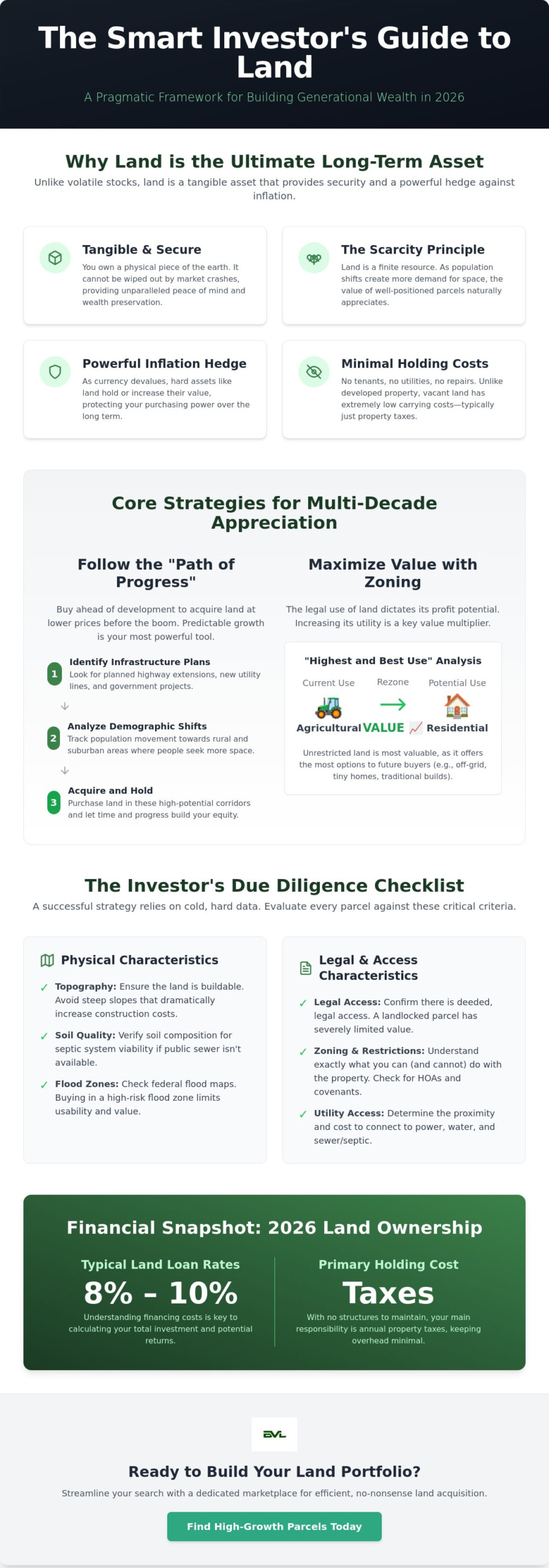
Land is a finite resource. They aren’t making more of it. This simple fact makes a long term land investment strategy one of the most reliable ways to preserve wealth in 2026. Unlike stocks or digital assets, land is a physical entity. It cannot disappear during a market crash. It provides a level of security that paper assets simply cannot match. You own a tangible piece of the earth. This ownership offers immediate peace of mind. It removes the stress of watching ticker symbols or worrying about corporate bankruptcy. Direct ownership means you hold the deed. No bank or broker can delete your asset. In a volatile economy, this certainty is priceless. You are building a portfolio that resists the chaos of traditional equity markets.
The Scarcity Principle in 2026
Population shifts are accelerating. People are moving away from congested hubs toward undeveloped areas. This migration drives demand for undeveloped parcels. Raw land is the purest form of real estate. It hasn’t been modified or built upon yet. This means its value is tied directly to its location and future utility. As usable land becomes more limited, the value of well-positioned parcels climbs. You are betting on the fundamental human need for space. It is a pragmatic move. You buy now to provide for the needs of the future. The impact of limited usable land on future valuations is predictable. Demand goes up while the supply stays fixed.
Inflation Hedging and Portfolio Diversification
Currency devaluation is a constant threat. Your cash loses purchasing power every year. Land acts as a powerful hedge against this decline. When the cost of living goes up, the value of hard assets typically follows. Understanding real estate investing fundamentals helps you see why land remains stable. Even when interest rates are high, land holds its ground. It doesn’t require the constant maintenance of a house. You don’t deal with leaky roofs or difficult tenants. This stability is essential for a diversified portfolio. It balances out the high-risk, high-volatility segments of your wealth.
A long term land investment strategy also lowers your carrying costs. You aren’t paying for utilities, massive insurance premiums, or complex repairs. You pay your property taxes and let time do the heavy lifting. This structural simplicity is why land is a superior asset. It offers high potential for multi-decade appreciation with minimal daily burden. You gain an equitable financial proposal that protects your family’s future. It is efficient. It is reliable. It works. This asset class allows you to step away from the procedural hurdles of traditional property management. You simply hold the asset and wait for the path of progress to reach your borders.
Core Strategies for Long-Term Appreciation
Successful investing requires a plan. You aren’t just buying dirt; you’re buying potential. A long term land investment strategy thrives on logic. It moves away from guesswork. You must decide between a conservative or speculative model. Conservative models focus on areas with established, steady growth. Speculative models target “frontier” land where the payoff is higher but the timeline is longer. Both require patience. Both demand a clear exit strategy. You can also add value through minor improvements. Clearing brush or establishing a gravel access point can significantly increase a buyer’s interest. This is a pragmatic way to manufacture equity without building a single structure.
The Path of Progress: Predicting Growth
Follow the money. Developers and government agencies signal their intentions years in advance. Look for planned highway extensions. Check for new utility lines. These are the veins of future growth. When you identify where new infrastructure is headed, you find the “Path of Progress.” Buying ahead of these projects allows you to acquire land at lower prices before the boom. Analyzing demographic shifts toward rural and suburban areas is also critical. People want more space. You can find high-potential residential lots in these emerging corridors right now. This is how you beat commercial developers to the punch.
Zoning Flexibility as a Value Multiplier
Zoning dictates profit. If you buy agricultural land and successfully rezone it for residential use, the value jumps. This is known as “highest and best use” analysis. It asks what the land could be, not just what it is today. Professional entities often rely on state-level land investment strategies to ensure their holdings meet future economic needs. You should apply the same rigor. Unrestricted land offers the most options. It allows for off-grid living, tiny homes, or traditional builds. More options mean more potential buyers. This flexibility is your ultimate safety net for long-term wealth preservation. It ensures your asset remains liquid and desirable regardless of how the market shifts over the next twenty years.
Selecting Your Land: Criteria That Drives 2026 Value
Selection is a cold, calculated process. A successful long term land investment strategy relies on hard data, not emotional attachment. You must evaluate the physical, legal, and economic traits of every parcel before signing a contract. Topography determines buildability. Steep slopes increase construction costs significantly. Soil quality affects septic viability. You should also check flood zones. Buying in a high-risk area leads to expensive insurance and strict permit hurdles. These factors dictate your future ROI. You want a property that is easy to hold and easy to sell when the time comes.
Legal clarity is your primary shield. You must verify title ownership immediately. Liens or hidden encumbrances can destroy your investment. Check for easements. These are legal rights for others to cross your property. Mineral rights are another factor. You want to own what is beneath the surface to prevent future disputes. Economic factors like property taxes also matter. In 2026, states like Alabama offer low effective rates around 0.41%, while Illinois can reach 2%. High taxes drain your profits over decades. Prioritize states that favor the long-term holder as part of your long term land investment strategy.
The Essential Due Diligence Checklist
Never skip the basics. You need confirmed road access. Legal “ingress and egress” ensures you aren’t landlocked. Verify this through a title search and a physical inspection. Next, evaluate utility proximity. The cost of bringing power or water to a remote site can exceed the purchase price. Get quotes from local utility companies before you close. This simple step prevents a financial disaster. It keeps your acquisition process fast and predictable. You are looking for a path of least resistance for future development.
Identifying ‘Cheap Land’ with High Potential
You can find incredible deals on specialized marketplaces. The key is distinguishing “cheap” land from “bad” land. Cheap land is undervalued due to seller motivation or a lack of exposure. Bad land is cheap because it’s fundamentally flawed or unusable. Look for parcels that have clear titles and road access but are priced below market value. You can leverage a guide on cheap land for sale to build a diversified portfolio quickly. This approach allows you to secure multiple high-growth lots for the price of one developed property. It is an efficient way to scale your wealth preservation efforts without unnecessary procedural hurdles.
Managing Your Investment and Avoiding Pitfalls
Ownership is a responsibility. You must manage your asset with the same precision you used to acquire it. Effective management protects your capital. Your long term land investment strategy succeeds only when you control the carrying costs. High property taxes can erode your appreciation over time. For example, in 2026, states like Hawaii offer effective property tax rates as low as 0.28 percent. Compare this to New Jersey, where rates can hit 2.23 percent. You must budget for these annual payments to maintain profitability. Do not let a lack of planning turn a high-growth asset into a financial burden.
Protect your boundaries. Vacant land is vulnerable to squatters and environmental hazards. Visit your property periodically. Check for illegal dumping or unauthorized use. You should also maintain clear signage. This simple act establishes your presence and deters trespassers. An exit strategy is also vital. You must know your target price before you list. Avoid the common mistake of overpaying for land without a specific future use. If you buy a parcel with a clear purpose, you will sell with confidence when the market peaks.
Handling Carrying Costs and Taxes
Land is the most cost-effective real estate asset to hold. You don’t have to worry about broken pipes or roof leaks. Your primary expenses are taxes and periodic surveys. Minimize your tax burden by checking for local exemptions. Some areas offer lower rates for agricultural or timber use. Budget for a professional survey every decade to confirm your boundaries. This prevents legal disputes with neighbors and ensures your title remains clean for a future sale. It is a pragmatic way to keep your overhead low.
Overcoming the Illiquidity Objection
Real estate is not as liquid as stocks. You cannot sell it with a single click. You must structure your investment so you aren’t forced to sell in a down market. Hold enough cash reserves to cover taxes for several years. This gives you the power to wait for the right buyer. Specialized marketplaces speed up the process. You can reach targeted buyers who understand the value of raw dirt. Many investors use owner financed land to attract more buyers during high-interest periods. This tool makes your property accessible to more people. You can secure your future by browsing available undeveloped vacant land today. This allows you to build a portfolio on your own terms without the stress of traditional bank requirements.
Building Your Land Portfolio with BuyVacantLand.com
Execution is everything. You have the knowledge. Now you need the inventory. A successful long term land investment strategy requires a reliable source for quality parcels. BuyVacantLand.com is that source. We provide a dedicated marketplace for raw, undeveloped land. You won’t find houses or rental properties here. You find opportunity. Our platform is built for efficiency. It streamlines the entire acquisition process. You can search for Farms and Ranches or Industrial Land without the clutter of traditional real estate sites. This focus saves you time. It helps you build a portfolio faster. It ensures you are looking at assets that fit your wealth preservation goals.
Clarity drives your decision-making. You can filter listings by land type to match your specific needs. Are you looking for Residential Lots near a growing suburb? Perhaps you prefer Off Grid Land for a more remote hold. We offer categories for Commercial Vacant Lots and Hunting Land as well. You connect directly with sellers. This removes unnecessary middle-men. It speeds up the transaction. You get answers quickly. You close deals faster. This direct-to-seller model provides a level of transparency that traditional brokers often lack. It is the most pragmatic way to secure your future.
Why Use a Specialized Land Marketplace?
Traditional real estate sites are noisy. They focus on kitchens and bathrooms. They ignore the nuances of raw dirt. A specialized marketplace understands that you care about road access and zoning. You need to find niche properties like Hunting Land or large acreage industrial lots. Our platform is built specifically for your needs. It eliminates the distraction of residential housing markets. You get to the data that matters. You see the topography. You see the location. This specialized focus gives you a competitive edge in the 2026 market. It’s about finding the right asset without the procedural hurdles.
Your Next Steps to Land Ownership
Start your journey today. Success doesn’t happen by accident. It happens by taking action on a proven long term land investment strategy. Browse our current listings for affordable vacant lots. Identify the parcels that fit your criteria for multi-decade growth. If you’re just starting, use our how do you buy land resources. These guides simplify the complex. They provide a clear, numbered sequence for your first purchase. This mirrors the streamlined nature of our service. Secure a tangible piece of the future. The land is waiting. The time to act is now.
Secure Your Legacy Through Strategic Land Ownership
Wealth preservation is a choice. You now have the blueprint to turn raw dirt into a generational asset. You understand that land is finite. Positioning yourself in the path of progress is the most pragmatic move you can make in 2026. By applying a disciplined long term land investment strategy, you bypass the volatility of traditional markets. You’ve learned how to manage property taxes, verify legal access, and avoid the common pitfalls that trap unprepared buyers. This knowledge gives you a distinct advantage over the average investor.
It’s time to take the next step. You need an efficient way to find quality parcels without the noise of the housing market. Our specialized marketplace offers direct seller-to-buyer connections and a total absence of hidden service fees for buyers. This is the most direct path to land ownership. Start your search for high-potential vacant land today and secure your piece of the earth. Your future self will thank you for the peace of mind you build today. You have the tools to succeed.
Frequently Asked Questions
Is land a good long-term investment in 2026?
Yes, land remains a premier wealth preservation tool in 2026. The national market is more stable and disciplined than in previous years. You’re buying a finite resource that acts as a hard hedge against inflation. It’s a tangible asset that can’t be wiped out by a digital market crash. Ownership provides immediate peace of mind because the supply of usable earth never increases.
How long should I plan to hold vacant land for the best return?
Plan for a hold of at least 10 to 20 years to see maximum appreciation. Real estate values move in long cycles. A successful long term land investment strategy allows time for infrastructure to reach your borders. Short-term flips are often risky and carry higher tax burdens. Holding long-term ensures you capture the full value of urban sprawl and regional growth.
What are the risks of long-term land investment?
Illiquidity and unexpected zoning shifts are the primary risks. You can’t sell land as fast as you can sell a stock or a bond. Local governments might also change land-use rules after your purchase. You can minimize these risks through thorough due diligence and by buying land with flexible, unrestricted zoning. Always verify road access and title clarity before you commit your capital.
Does vacant land produce any passive income while I hold it?
You can generate income by leasing the surface rights to your property. Many investors lease their parcels for cattle grazing, crop production, or seasonal hunting access. Cell tower companies also look for specific hilltop locations for long-term leases. These small income streams can offset your annual property taxes. It turns your hold into a self-sustaining asset that pays for its own maintenance.
How do property taxes work for undeveloped land?
Property taxes are based on the assessed value of the raw land. Most counties assess these parcels annually. Some states, like Colorado, may assess vacant land at a higher rate than residential properties. You can often reduce this cost through agricultural exemptions or timber programs. This keeps your carrying costs low while the asset grows in value. Always check local rates before you buy.
What makes a piece of land appreciate the most over 10 years?
Access to utilities and public roads creates the most significant value. Land that’s ready for a builder will always sell for a premium. Proximity to expanding urban centers also drives appreciation. If the city is growing toward your parcel, your ROI will increase naturally. Rezoning the property for a higher use is another way to manufacture significant equity over a decade of ownership.
Can I buy land with owner financing for a long-term hold?
Absolutely. Owner financing is a practical and popular tool for land buyers in 2026. It allows you to bypass strict bank credit requirements and high interest rates. You deal directly with the seller to set the terms. This makes it easier to acquire multiple parcels and build a diversified portfolio without a massive upfront cash outlay. It’s an efficient way to start your investment journey.
What is the ‘path of progress’ in land investing?
The “path of progress” is the predictable direction of local urban and suburban growth. It follows new highway extensions and utility expansions. Buying land in these areas is a primary component of a long term land investment strategy. You position yourself where developers will need to build in the future. This strategy turns cheap rural acreage into high-value suburban lots as the city expands.




Join The Discussion