
Most investors assume raw land is a “buy and wait” game. Watching property taxes eat your profits for years is a choice, not a requirement. When you are weighing buying land for appreciation vs cash flow, the right move depends on your timeline and your tolerance for carrying costs. You want your capital to grow. You don’t want it sitting like “dead” money in an undeveloped lot. Stop guessing and start treating your dirt like a business.
This guide helps you master the two primary ways to profit from vacant land in 2026. You will learn how to identify parcels with high growth potential. We also show you specific methods to generate immediate income from your acreage. We provide a clear decision-making framework so you can browse a land marketplace with total confidence. Whether you want a monthly check or a massive future payout, you will find the strategy that matches your financial goals here. This is about moving fast and securing an equitable financial proposal for your future.
Key Takeaways
- Identify the fundamental differences between buying land for appreciation vs cash flow to align with your specific 2026 financial goals.
- Learn how land banking allows you to capture massive future capital gains with zero tenant management or property maintenance.
- Discover practical methods to generate immediate income by leasing your vacant acreage for farming, livestock, or seasonal hunting.
- Use our decision matrix to evaluate entry costs and time commitments before you commit your capital to a specific lot.
- Navigate a specialized land marketplace to find high-potential parcels that generic residential real estate websites often miss.
Buying Land for Appreciation vs. Cash Flow: The Core Differences
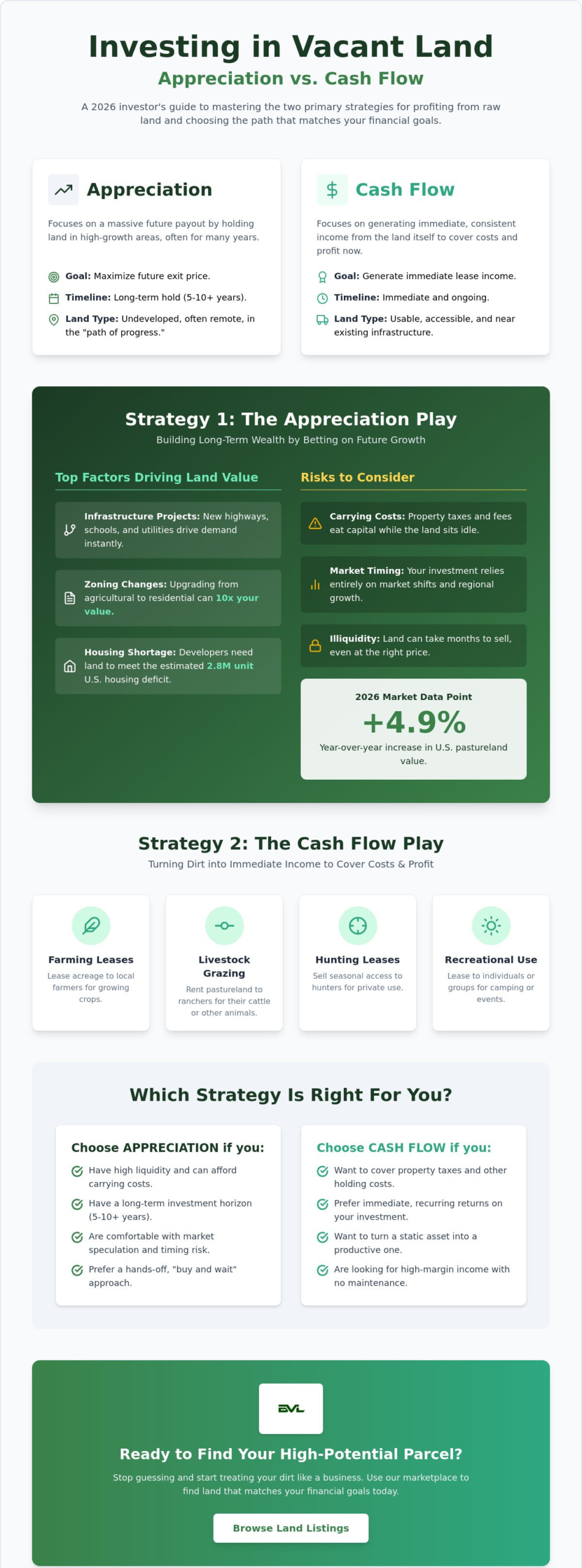
Successful investing requires a clear roadmap. You must decide if you want a massive payout later or steady checks today. Appreciation is the increase in a land parcel’s market value over time. It relies on market demand and local development. Cash flow is the consistent net income generated by the land during ownership. It relies on the land’s current utility. Understanding the balance between buying land for appreciation vs cash flow is the first step toward a high-performing portfolio.
These strategies rarely look the same. An appreciation play often involves holding remote acreage for years. A cash flow strategy focuses on land that someone else can use right now. Both rely on fundamental real estate investment principles to minimize risk. The best investors don’t just pick one. They look for parcels that offer a blend of both to maximize their returns and minimize their out-of-pocket costs.
- Appreciation: Focuses on the future exit price and regional growth.
- Cash Flow: Focuses on immediate lease income and covering carrying costs.
- Holding Period: Appreciation usually requires a 5 to 10 year horizon.
- Land Type: Cash flow favors usable, accessible land near existing infrastructure.
The Mechanics of Land Appreciation
You profit from appreciation by identifying the “path of progress.” This means buying land where the city is moving but hasn’t arrived yet. When a new highway exit opens or a major employer moves in, surrounding land values skyrocket. Zoning changes are the most powerful catalyst. Moving a lot from agricultural to residential status can 10x your value overnight. In high-growth corridors, raw land appreciation often outpaces developed real estate because the initial investment is much lower and the growth potential is uncapped.
The Reality of Land-Based Cash Flow
Cash flow gives you staying power. It covers your annual property taxes and insurance while you wait for the market to peak. You don’t need to build houses or permanent structures to generate income. You can lease your dirt to local farmers for crops or livestock grazing. You can also sell seasonal access to hunters or recreational users. This income turns a “dead” asset into a productive one. It ensures that buying land for appreciation vs cash flow isn’t a zero-sum game. You can use current income to fund your long-term wealth building without draining your savings.
The Power of Land Appreciation: Building Long-Term Wealth
Land banking is a proven wealth strategy. You buy large tracts of cheap land and wait for civilization to catch up. It is the purest form of investing. No buildings. No maintenance. No tenants. Just ownership. When you analyze buying land for appreciation vs cash flow, appreciation offers the highest potential for a single massive payday. It is ideal for investors who have high liquidity and can wait for the market to mature.
Market timing and location are the only two variables that truly matter here. You aren’t managing a property; you are managing an exit strategy. This requires patience and a deep understanding of local development cycles. You are essentially betting on the growth of a specific region.
Top Factors Driving Raw Land Value
Value follows utility. Access to water and electricity is vital. In 2026, high-speed fiber-optic internet is a non-negotiable for residential lots. Infrastructure projects like highway expansions or new schools drive demand instantly. Look at the U.S. housing shortage. The nation is short an estimated 2.8 million housing units. Developers need dirt to build. If your land sits in the path of a new subdivision, your value can explode. Zoning reform is also a major driver. Many local governments are now reforming codes to allow for more housing types like duplexes or ADUs. This increases the profit potential for every square foot you own.
The Risks of an Appreciation-Only Strategy
This strategy isn’t free. You must account for the “carrying cost” trap. Property taxes and HOA fees are constant. They eat your capital while the land sits idle. This is a central point in the debate over cash flow vs. appreciation investing. Appreciation relies entirely on market timing. If the path of progress shifts, your capital is stuck. Land is also illiquid. You cannot sell it in an afternoon like a stock. It often takes months to find the right buyer at the peak price. Current 2026 data shows pastureland values rose by 4.9% year-over-year. That is solid growth, but you must have the financial staying power to wait for the sale.
Generating Cash Flow from Vacant Land: Turning Dirt into Income
You don’t need a house to get rent. This is the biggest misconception in real estate. When you are deciding on buying land for appreciation vs cash flow, remember that dirt can work for you immediately. Raw land generates high-margin income because there are no toilets to fix and no roofs to leak. You are selling access, not infrastructure. This strategy turns a static asset into a recurring revenue stream.
Farms and ranches are the most common income producers. You can lease your acreage to local farmers for crop production or livestock grazing. It’s a simple arrangement. They get the grass; you get a check. For wooded areas, hunting leases are lucrative. You sell seasonal access to private undeveloped acreage. Modern apps now connect owners directly with outdoor enthusiasts, removing the need for a middleman. You maintain ownership while someone else pays for the privilege of using your property.
Consider long-term passive options like cell tower or billboard easements. These are high-margin agreements that often last for decades. Solar farm leases are another major trend for large, flat parcels in 2026. Even the growing off-grid travel market offers opportunities. RV owners often pay for “dry” campsites or secure storage space on private property. This turns idle land into a consistent revenue stream without the need for major development or permanent structures.
Leasing Strategies for Raw Acreage
Structuring a grazing lease is straightforward. You define the number of animals allowed and the duration of the lease. It keeps your land maintained and often qualifies you for agricultural tax exemptions. For hunting land, use specialized platforms to list your property by the day or season. If you own large, flat parcels, solar developers are actively looking for 20-year lease partners. These contracts often include annual escalators, ensuring your income grows over time.
The “Carry Cost” Solution
Small-scale cash flow makes your land self-sustaining. Even $500 a year in lease income can cover your annual property taxes. This eliminates the “dead capital” problem that scares many investors away from raw land. It also makes your land more attractive to future buyers. Investors prefer assets that pay for themselves. When you prove the land generates income, it’s easier to justify a higher sale price later. Cash-flowing land provides the financial safety net you need to wait for peak appreciation without draining your personal savings.
Decision Matrix: Which Investment Strategy Fits Your Portfolio?
Choosing between buying land for appreciation vs cash flow requires a cold look at your bank account and your schedule. These strategies demand different levels of capital and effort. Appreciation plays usually require buying in “hot” zones like suburban corridors. These areas have higher entry costs because you are paying for future potential. Cash flow plays often focus on rural or agricultural land where the price per acre is lower. You must decide if you want to spend your time managing leases or your money paying property taxes while you wait for a developer to call.
Analyze your exit strategy before you sign a contract. If you buy for appreciation, your target buyer is likely a developer or a builder in 10 years. If you buy for cash flow, your target buyer is another investor who wants a turnkey income stream. Your tax strategy also changes based on your choice. In 2026, long-term capital gains rates for single filers remain at 0% for taxable income up to $49,450. Cash flow income is typically taxed at ordinary rates. Balance your immediate income needs against your desire for a low-tax windfall later.
- Entry Cost: Appreciation requires higher capital for prime locations.
- Time Commitment: Cash flow requires active lease management and networking.
- Exit Timing: Appreciation is a long game; cash flow is a current game.
- Tax Impact: Capital gains offer tax advantages over ordinary rental income.
Evaluating Your Risk Tolerance
Are you comfortable paying taxes on an asset that isn’t paying you back yet? Property taxes and insurance don’t stop just because your land is idle. This is the “carrying cost” reality of appreciation. If you want a safe bet, look at stabilized markets with steady growth. If you want a growth play, look at the fringes of major metro areas. Beginners should start with cheap land for sale to minimize their initial exposure. This allows you to learn the market without risking your entire portfolio on one parcel.
The Hybrid Approach: The Ultimate Land Strategy
The smartest investors find the middle ground. They buy land with high appreciation potential and immediate lease value. This covers the carrying costs while the market matures. You can use owner financed land to increase your cash-on-cash return. This strategy preserves your liquidity. You pay a small down payment and let the lease income cover your monthly note. Eventually, you can transition from a passive holder to an active developer for maximum profit. This path creates wealth today and a legacy tomorrow.
Ready to build your portfolio? Browse our current land listings to find your next investment opportunity.
Start Your Search on a Dedicated Land Marketplace
Generic real estate websites focus on houses. They show you bedrooms and kitchens. You are looking for a financial engine. You need a specialist. BuyVacantLand.com is a dedicated marketplace for undeveloped parcels. It removes the noise of the traditional residential market. You can find exactly what you need without scrolling through thousands of home listings. This efficiency is vital when you are deciding on buying land for appreciation vs cash flow. Speed matters in a stabilized 2026 market. Our platform allows you to connect directly with sellers. This direct link lets you negotiate better terms. It leads to faster closings and fewer procedural hurdles. You deal with the source. You save time.
The 2026 market is disciplined. You cannot afford to browse aimlessly. You need tools that categorize land by its utility. Whether you are looking for residential lots, industrial land, or hunting land, a specialized marketplace provides the data you need. You see the property boundaries. You see the terrain. You get the facts without the fluff of a residential agent. This transparency is the cornerstone of an equitable financial proposal. It ensures you know exactly what you are buying before you commit your capital.
How to Filter for Potential
Data-driven searching is the key to profit. Use specific filters to narrow your search to your desired outcome. If you want appreciation, look for land for sale in Florida or other high-growth states. These regions benefit from the ongoing housing shortage and proactive zoning reforms. If you want cash flow, filter for “Off-Grid” land or “Farms and Ranches.” These parcels are perfect for recreational leases, livestock grazing, or dry camping. Look for undervalued parcels that have been listed for 90 days or more. These sellers are often highly motivated. They provide the best chance for a swift transaction. You can find commercial lots and undeveloped vacant land all in one simplified interface.
Taking the Next Step
Pragmatic action follows research. Perform your due diligence immediately. Check the local zoning codes to ensure your plan is legal. Verify road access to avoid landlocked traps. Confirm utility proximity if you plan to build or lease for residential use. These factors determine your ultimate ROI. If you are new to the process, review our complete 2026 beginner’s guide to buying land. It breaks the complex industry process into a simplified, numbered sequence. This guide gives you the confidence to move from browsing to owning. Don’t let the fear of carrying costs hold you back. The land market is stabilized. Use the tools available to find a parcel that matches your strategy. Browse our current listings now. Identify your target. Make an offer. Secure your financial future with a tangible asset.
Secure Your Future with Strategic Land Ownership
The choice between buying land for appreciation vs cash flow defines your financial trajectory. You now have the framework to decide. Appreciation builds massive future wealth through market timing and regional growth. Cash flow provides the immediate income needed to cover carrying costs and protect your capital. Successful investors in 2026 use a hybrid approach to maximize both. This strategy ensures your money never sits idle while the market matures.
Stop waiting for the perfect moment. The land market is stabilized and ready for action. You need a platform that connects you directly to the source. We offer national coverage across all 50 states with over 10 years of specialized land marketplace experience. Our direct-to-seller listings ensure better pricing and faster closings. You get an equitable financial proposal without traditional procedural hurdles. This simplicity mirrors the efficiency you need to grow your wealth quickly.
Browse Vacant Land Listings Now and find the parcel that matches your strategy. Your investment journey starts with a single lot. Take control of your portfolio today and build a legacy that lasts.
Frequently Asked Questions
Is raw land a better investment than a rental house?
Raw land is often a more efficient investment because it lacks the management burden of a rental house. You don’t deal with tenants, broken toilets, or mold. It is a cleaner transaction with lower entry costs. While rental houses provide higher monthly cash flow—a model optimized by professional rental managers like Northern Michigan Escapes—they often come with more operational stress than raw land. Land allows you to scale your portfolio faster with far less maintenance and zero middleman fees.
How much can I realistically make from leasing vacant land?
Lease income depends entirely on the land’s utility and location. Agricultural land typically leases for enough to cover your annual property taxes and insurance costs. Hunting leases on private acreage can generate several thousand dollars per year depending on the wildlife and terrain. Solar farm leases offer much higher returns but require long-term commitments. Your goal is to make the land self-sustaining while you wait for market growth.
What are the main taxes I have to pay on vacant land?
Property taxes and capital gains are your primary tax burdens. You pay annual property taxes based on the assessed value of the dirt. When you sell, you owe capital gains taxes on the profit. In 2026, long-term capital gains rates are 0%, 15%, or 20% depending on your income level. Holding land for more than one year is a vital part of buying land for appreciation vs cash flow because it reduces your tax liability significantly.
Can I get a loan for land that doesn’t have a house on it?
You can obtain financing for raw land, but banks view it as higher risk. These loans often require down payments ranging from 15% to 50%. In 2026, USDA farm ownership loans offer rates as low as 6.000% for direct financing. Improved lots with road access and utilities are the easiest to finance. Many sellers on a specialized marketplace also offer owner financing to bypass traditional bank hurdles and speed up the closing.
How do I know if land is in the “path of progress” for appreciation?
Track local government planning meetings and permit filings. Look for new highway exits, school construction, or major corporate expansions nearby. If developers are building subdivisions within five miles, your land is likely in the path. Increasing utility connectivity, like new fiber-optic lines, is a clear signal of coming growth. Follow the permits and the rooftops to identify where the city is moving next.
What is land banking and is it legal?
Land banking is the strategic acquisition of undeveloped land to hold for future utility or sale. It is a perfectly legal and common wealth-building strategy. You buy at current prices and wait for regional demand to drive values up. It is a passive investment that relies on patience rather than active management. This method allows you to “bank” value in a tangible asset that cannot be destroyed or stolen.
How do I find cash buyers when I am ready to sell my land for appreciation?
Market your property on a dedicated land platform to find liquidity. Developers, builders, and neighboring landowners are your primary audience. High-quality listings with clear boundary maps and utility information attract the most serious offers. Direct-to-buyer platforms eliminate middleman fees and ensure a faster closing. Keep your records organized and highlight the zoning potential to secure an equitable financial proposal from a cash buyer.
Does zoning affect both cash flow and appreciation?
Zoning determines the maximum profit potential for any lot. It dictates how you can lease the land today and what a developer can build tomorrow. A parcel zoned for agricultural use provides immediate grazing income. If that same parcel is rezoned for high-density residential use, its market value can skyrocket overnight. Always verify current zoning before buying land for appreciation vs cash flow to ensure the land matches your long-term investment goals.




Join The Discussion