
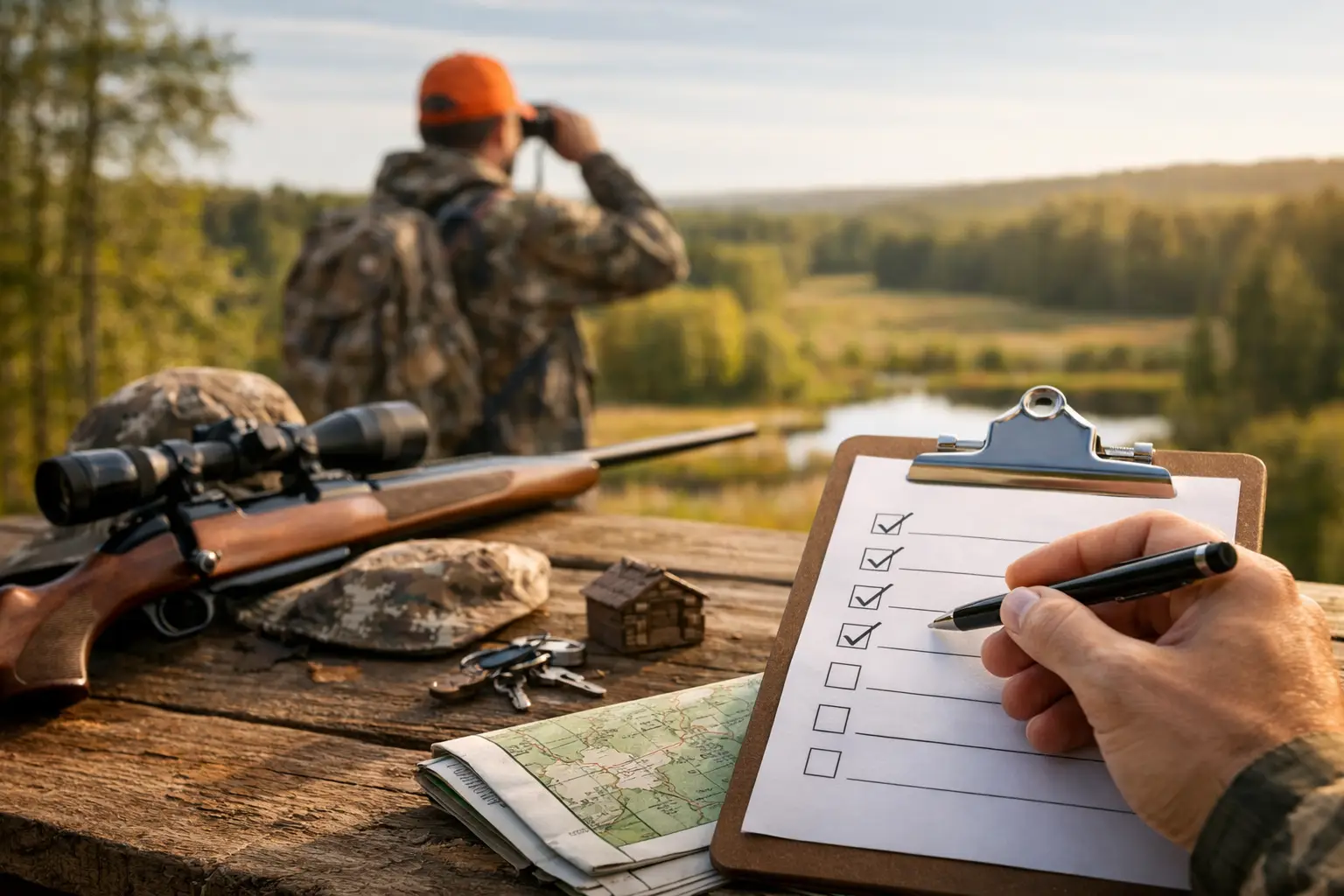
A good-looking hunting property can fool you fast. A trail camera photo, a dense patch of timber, or a low price per acre might make a listing feel like a winner, but hunting land is only a smart buy if the land actually fits how you plan to use it. That is where a buying hunting land checklist helps. It keeps you focused on what matters before you commit money to a property that looks promising on paper but falls short in the field.
Some buyers want a weekend deer camp within two hours of home. Others want a long-term land investment that also offers turkey, duck, or hog hunting. Those goals can point you toward very different properties. The right tract is not always the prettiest one or even the cheapest one. It is the one that matches your budget, your hunting style, and the real-world limits of the land.
Start your buying hunting land checklist with the end use
Before you compare acreage, ask a simple question: what do you want this land to do for you over the next five to ten years? If your main goal is hunting recreation, you may prioritize cover, game movement, water sources, and manageable access. If you also want resale value, cabin potential, or timber income, your checklist needs to expand.
This matters because many buyers shop too broadly at first. A 20-acre parcel can be enough for personal recreation in one market, while in another area it may be too small to hunt effectively or legally. A larger tract may offer more flexibility, but it also raises your carrying costs, maintenance time, and purchase price. More land is not automatically better. Better land is better.
Location matters more than brochure appeal
With hunting land, location is not just about the state or county. It is about the surrounding landscape. You are not buying in a vacuum. Neighboring properties, nearby agriculture, public land pressure, road noise, and development patterns all affect how the land hunts and how it may appreciate.
A property bordered by row crops and thick cover may hold game better than a more scenic tract surrounded by constant human activity. On the other hand, land in a remote area may offer stronger hunting but weaker resale demand if access is difficult or nearby services are limited. It depends on whether you are buying for personal use, future improvement, or a mix of both.
As you evaluate location, look at drive time, local hunting regulations, county land use trends, and whether the area has a history of supporting the game species you care about. Buying land for whitetails is different from buying for waterfowl or upland birds. The region has to support your target use, not just your idea of it.
The land itself has to support game and access
A practical buying hunting land checklist always includes habitat first. You want to know whether the property actually attracts, holds, and moves wildlife. That means studying timber, bedding cover, food sources, edge habitat, open ground, elevation changes, and natural funnels. Water is another major piece. A creek, pond, wet area, or dependable nearby water source can improve wildlife activity, but too much wet ground can also limit use and access.
Access deserves equal attention. A great habitat tract can become frustrating if you cannot enter and exit without blowing out game. Road frontage is valuable, but the type of access matters too. Is there a legal easement? Is the road public or private? Will it hold up in wet weather? If you need to cross another property, you want that right documented clearly, not explained casually.
Topography also plays a bigger role than many first-time buyers expect. Flat land may be easier to navigate and improve, but rolling terrain can create stronger travel corridors and stand locations. Steep ground can add privacy and hunting advantages, though it may limit equipment access and future building plans.
Boundaries, surveys, and legal use are not small details
One of the fastest ways to turn a land purchase into a headache is to assume the boundaries are obvious. They usually are not. Fence lines are not always legal boundaries, and old markers may be wrong or missing. If the survey is outdated or unclear, ask whether a new survey is needed before closing. That cost can be worth it.
You also need to confirm what you are legally allowed to do on the property. Hunting use may seem straightforward, but zoning, deed restrictions, HOA rules, conservation easements, and local ordinances can change what is possible. Some parcels allow hunting but restrict structures, RV use, feeders, timber harvest, or road improvements. Others may have seasonal limitations or special setbacks related to waterways and neighboring homes.
This is where due diligence protects both your enjoyment and your investment. If you plan to build a cabin, add utilities, create food plots, or hold the property long term, make sure the legal framework supports those plans. A cheap parcel with heavy restrictions may not be a bargain at all.
Utilities and improvements affect both use and value
Not every hunting property needs power, a well, or a cabin site. But every buyer should understand what is available and what it would cost to add later. Raw land with no utilities may be perfect for a low-overhead recreational tract. It can also become expensive quickly if you eventually want a camp, storage building, gate, road work, or water access.
Ask about electric availability, well depth trends in the area, septic suitability, and whether the soil can support the improvements you want. If the land is truly off-grid, that is not necessarily a drawback. For some buyers, privacy and simplicity are part of the appeal. The key is knowing whether off-grid use is your plan or an obstacle you are underestimating.
Existing improvements deserve a close look too. Interior trails, cleared access points, blinds, food plots, gates, culverts, and fencing can save time and money. Still, improvements only add real value if they are functional and legal. A rough trail system is useful. A washed-out crossing that looks passable in a listing photo is not.
Know the numbers before you fall for the land
Emotion drives a lot of land purchases, especially recreational ones. That is understandable. People buy hunting land because they can picture opening day, bringing family out, or building a place that stays in the family for years. But the numbers still have to work.
Look beyond asking price. Your total cost includes closing costs, taxes, insurance, road maintenance, habitat work, equipment, and any cleanup or improvement budget. If financing is involved, compare terms carefully. Owner financing can create a flexible path to ownership, but the rate, down payment, and payoff structure still need to make sense.
Comparable sales can be tricky with rural land because no two tracts are exactly alike. Acreage, timber, access, topography, water, and hunting history all influence value. A property may be priced higher for good reasons, or it may simply be overpriced. The smart move is to compare several listings in the same region and weigh what the land actually offers, not just the price per acre.
Walk the property like a buyer, not a dreamer
Maps and aerials are useful, but they cannot replace boots on the ground. Walk as much of the property as you can. Notice how long it takes to reach key areas. Pay attention to signs of wildlife, old stands, bedding cover, food sources, neighboring activity, and terrain that does not show clearly online.
If possible, visit more than once and in different conditions. A dry-weather visit may hide access problems that show up after rain. A summer showing may make the land look thicker and more secluded than it feels after leaves drop. It depends on the season and the region, which is exactly why one quick visit should not be your whole decision.
This is also the stage where patience pays off. A disciplined buyer with a strong checklist often passes on several decent properties before finding the right one. That is not wasted effort. It is how you avoid buying the wrong land for the right reasons.
A buying hunting land checklist should lead to confidence
The best hunting land deals are not always flashy. Often, they are the properties where the basics line up: legal access, usable habitat, realistic costs, clear boundaries, and a location that supports both hunting and long-term value. If you are searching across multiple states or land types, a land-focused marketplace like BuyVacantLand.com can make it easier to compare opportunities without losing sight of your actual criteria.
When a property checks the right boxes, you feel it. Not because the listing sounds exciting, but because the land makes sense on the ground, on paper, and in your budget. That is the kind of purchase you can enjoy for years and feel good about long after the closing documents are signed.



Join The Discussion