
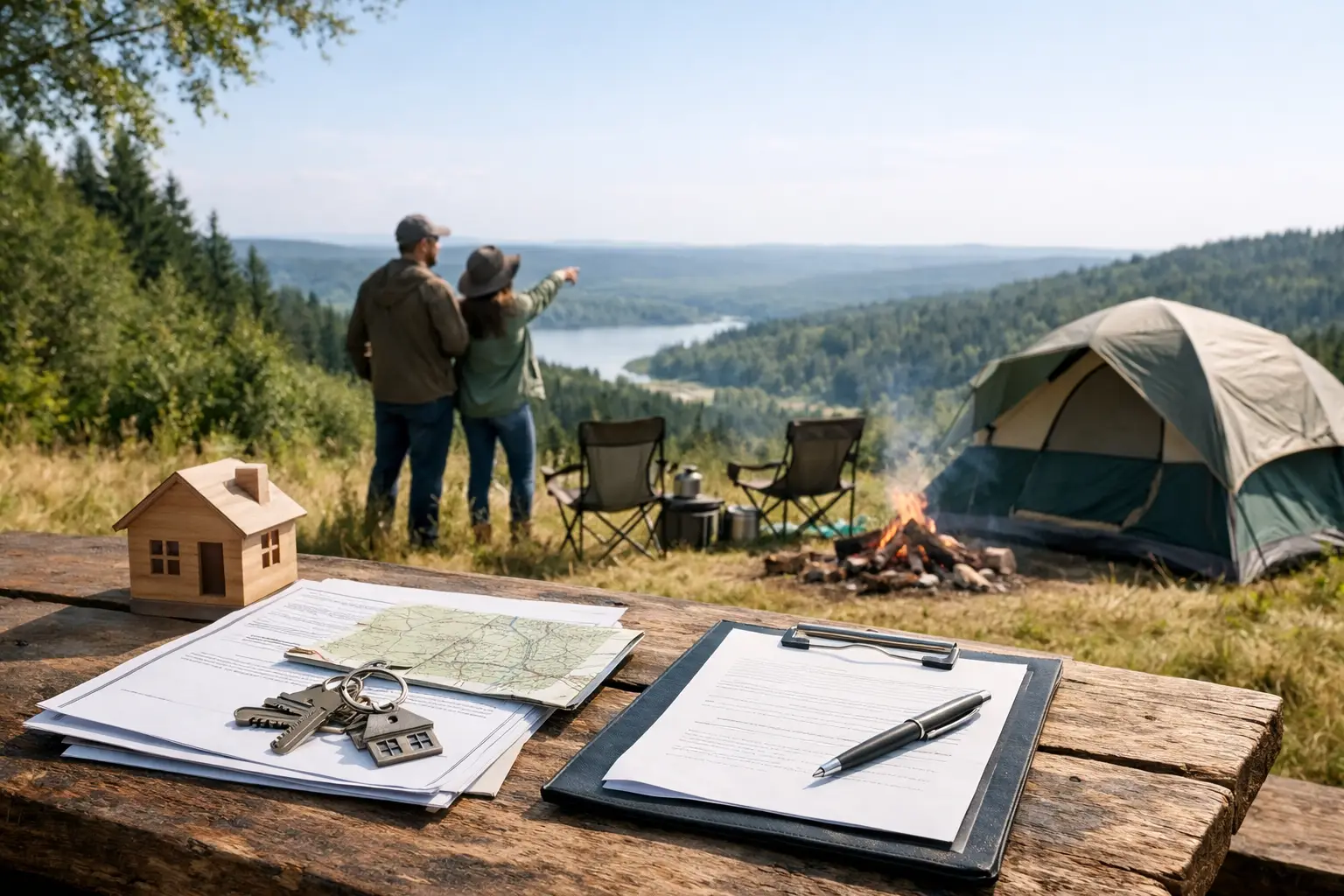
A cheap parcel with a pretty tree line can look like the perfect weekend escape. Then you arrive with a trailer, find a locked gate across the only road, and learn that overnight camping is restricted. To buy land for camping successfully, look beyond the view and confirm that the property can actually support the way you plan to use it.
Camping land can be an affordable path to more freedom, family time, hunting access, off-grid living, or a future cabin site. It can also be a practical real estate asset when you choose a usable parcel in a location people want to visit. The smart purchase starts with a clear plan and a few non-negotiable checks.
Start With Your Version of a Camping Property
“Camping land” covers a wide range of properties. A buyer who wants a quiet tent site a few weekends each year has different needs than someone who plans to park an RV, build a cabin, host family gatherings, or eventually create a short-term rental. Set your intended use before you set a budget.
For tent camping, privacy, shade, dry ground, and reliable access may be enough. For RV use, you need to think about road width, turning radius, slope, parking space, and whether the ground can handle the vehicle. If a future cabin is part of the plan, verify building rules, septic feasibility, utility options, and setbacks now rather than assuming they can be solved later.
Location matters just as much as the parcel itself. Land near lakes, public hunting areas, trail systems, mountain towns, or popular recreation corridors may cost more, but it can offer stronger long-term appeal. A remote property may deliver more seclusion and lower purchase prices, though the trade-off is often longer travel time, fewer services, and higher improvement costs.
How to Buy Land for Camping: Check the Rules First
Never assume a vacant lot can be used for overnight camping because it is rural or because neighboring properties appear undeveloped. County and municipal rules vary widely. Some areas allow temporary camping for a limited number of days. Others allow it only while a home is under construction, require a permitted RV pad, or prohibit long-term RV occupancy altogether.
Call the local planning and zoning office and explain exactly what you want to do. Ask whether tent camping, RV camping, trailers, cabins, sheds, composting toilets, and off-grid structures are allowed. Ask about permit requirements, minimum dwelling sizes, setback rules, and whether there are time limits on RV stays.
Also check for private restrictions. A parcel may be subject to deed restrictions, homeowners association rules, road maintenance agreements, or subdivision covenants that are more restrictive than county zoning. These documents can affect everything from where you park a camper to whether you can place a storage shed on the property.
A simple question such as “Can I camp here?” is not always enough. Be specific: “Can I park and use my RV on this parcel on weekends?” or “Can I camp on this land while I prepare to build a small cabin?” Clear questions produce useful answers.
Legal Access Is Not Optional
A property can look accessible on an online map but still lack legal, practical access. That distinction can make or break your purchase.
Legal access means you have a recorded right to reach the parcel from a public road. This may be direct road frontage or a documented easement across another property. Practical access means the route is usable for your vehicle, trailer, and the seasons when you want to camp. A narrow dirt track may work for a pickup in dry weather but become impassable after heavy rain or snow.
Review the survey, plat map, title information, and any recorded easements. If the road is private, find out who maintains it and what owners pay. Ask whether gates are locked, whether large RVs have used the road, and whether the route crosses creeks, steep grades, or low-water crossings.
Do not rely on a verbal promise from a neighboring landowner that you can cross their property. Land changes hands, relationships change, and permission is not the same as a recorded access right.
Walk the Land Before You Commit
Photos and aerial maps help narrow your search, but they cannot tell you whether a campsite feels level, drains properly, or has enough space to turn around. Visit the property whenever possible, ideally after rain if drainage is a concern.
Walk the boundaries and look for survey markers. Notice the slope, soil, brush density, standing water, rock outcroppings, and signs of flooding. A beautiful creek can be a major benefit, but it may also place part of the property in a floodplain or limit where you can build and camp.
Pay attention to practical details that are easy to overlook during a quick showing. Is there a level area for a tent or camper? Can a delivery truck bring in gravel, a small shed, or a portable toilet? Is there enough sunlight for solar panels if you plan to stay off-grid? Is cell service available if safety or remote work matters to you?
If you are considering land in a wildfire-prone area, assess defensible space, road access for emergency vehicles, and insurance availability. In wooded areas, ask about timber rights and whether logging activity could affect your privacy or access.
Plan for Water, Waste, and Power
Raw land often costs less because it does not have utilities. That can be a good opportunity, but only if you budget honestly for the setup you need.
For occasional tent camping, hauling water and using a portable toilet may be perfectly reasonable. For regular RV use or a future cabin, you may need a well, water storage, septic system, electric connection, solar equipment, or propane. Each option has costs, permitting requirements, and site limitations.
A septic system deserves particular attention. Many rural parcels require a soil evaluation or perc test before a septic permit can be issued. Poor soils, a high water table, steep terrain, or a small lot can make installation expensive or impossible. If future construction is important, investigate septic feasibility before closing.
Power is another it-depends decision. Grid power is convenient, but extending electric service to a remote parcel can be costly. Solar can work well for lights, charging, water pumps, and modest appliances, especially on open land with good sun exposure. A hybrid setup with solar, batteries, and a generator may make more sense for seasonal use.
Price the Land and the First Improvements Together
The purchase price is only the first number. A low-priced lot can become expensive if it needs road work, clearing, grading, a culvert, a survey, septic testing, or utility extensions. On the other hand, a slightly higher-priced parcel with legal access, a cleared campsite, and nearby power may be the better value.
Build a realistic first-year budget that includes closing costs, property taxes, insurance if needed, travel expenses, basic site improvements, and permits. If the land will be unused for part of the year, plan for security too. A locked gate, trail camera, visible address marker, and careful storage choices can protect your investment.
Compare recent sales of similar acreage in the same county, not just asking prices from distant markets. Factors such as road frontage, water features, terrain, utilities, and proximity to recreation can change value significantly. A land-focused marketplace such as BuyVacantLand.com can help you compare properties by state, acreage, land type, and intended use.
Choose Financing That Fits the Property
Cash is common for lower-priced recreational land, but it is not the only option. Some buyers use land loans, local banks or credit unions, home equity, or owner financing. Owner financing can be especially helpful when a traditional lender is reluctant to finance raw land, but review the terms carefully.
Look at the interest rate, down payment, monthly payment, balloon payment, prepayment rules, default provisions, and whether you receive a deed at closing or after the loan is paid. A manageable monthly payment is not enough if a large balloon payment comes due before you are ready.
Keep an emergency reserve after closing. Land ownership is more enjoyable when a washed-out driveway, fallen tree, or unexpected permit cost does not force you to abandon the plans that made the property appealing.
Make the Offer With Due Diligence in Mind
Before making a final commitment, confirm ownership, boundaries, taxes, access, restrictions, zoning, floodplain status, and any mineral, timber, or water rights that could affect your use. A title company, real estate attorney, surveyor, and local land professionals can each play a role depending on the complexity of the property.
Your goal is not to find a flawless parcel. Every property involves trade-offs. The goal is to understand those trade-offs before the deed is signed and make sure they fit your camping plans, budget, and timeline.
The right camping land gives you more than a place to park for the weekend. It gives you a piece of ground you can return to, improve over time, and enjoy on your own terms.



Join The Discussion