
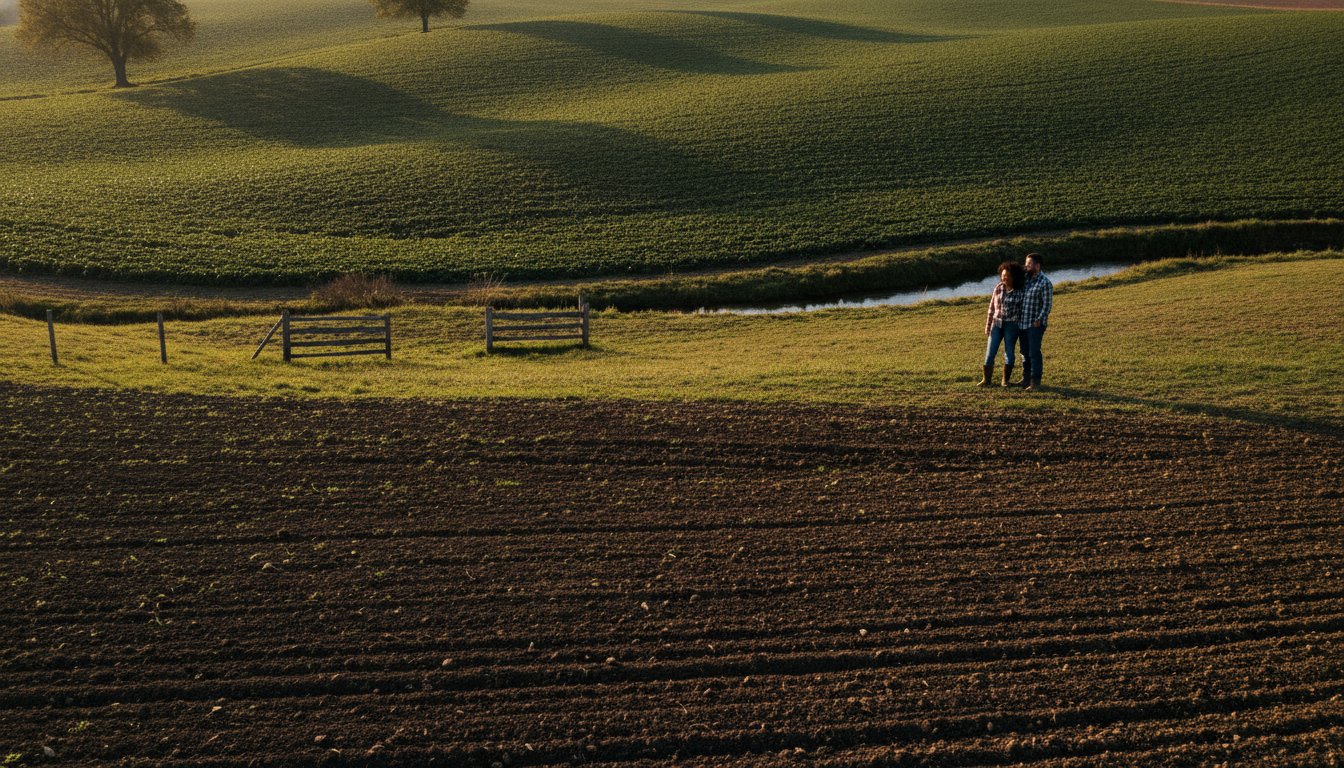
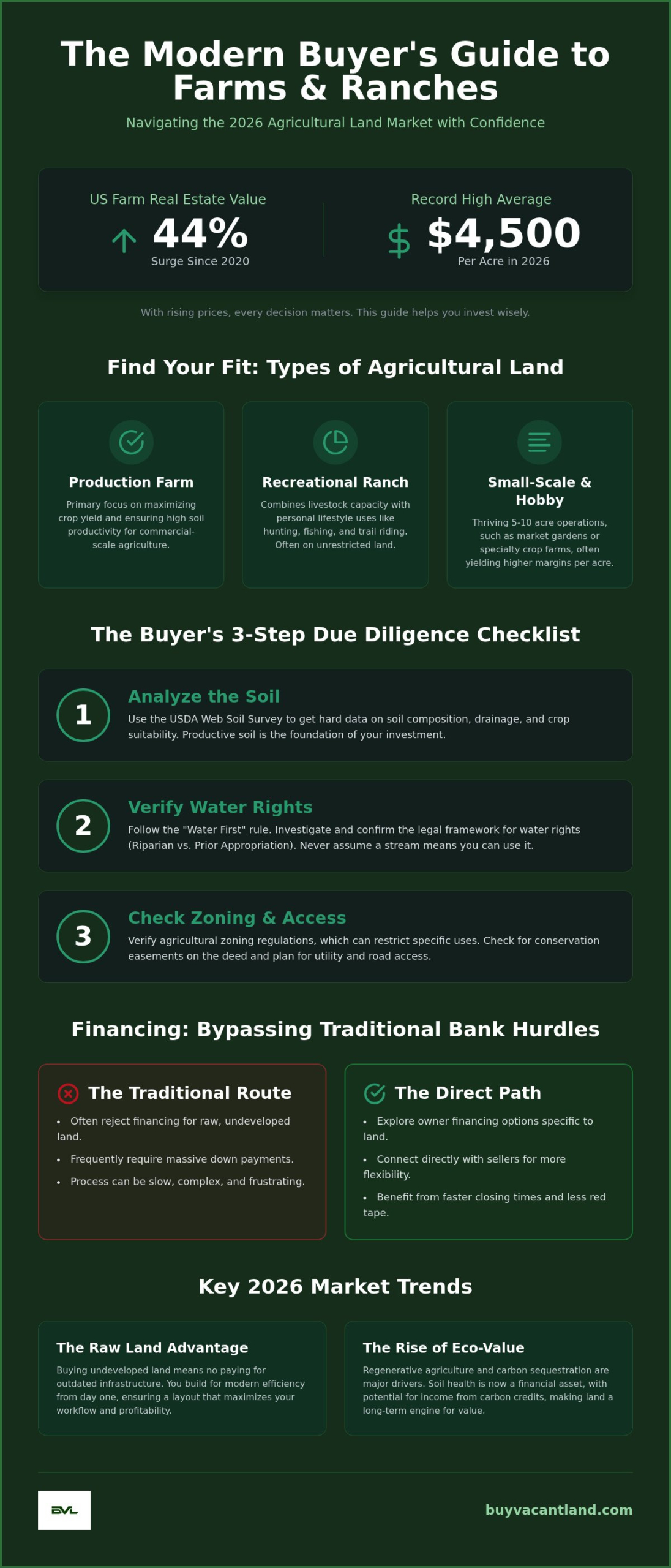
The average value of American farm real estate has surged by 44% since 2020, reaching a record $4,500 per acre in 2026. This price jump makes every mistake more expensive. Finding high-quality farms and ranches for sale requires more than a quick search. It demands a sharp eye for water rights and soil health. You already know that traditional banks often make financing raw land a nightmare. It’s frustrating to see great listings buried under layers of red tape and lack of transparency.
We’re here to fix that. This guide shows you exactly how to identify productive agricultural land and secure the financing you need to close. You’ll gain a clear path to finding a streamlined marketplace that respects your time. We cover the latest USDA loan rates, current cash rent averages, and a simple three-step process to evaluate any parcel. Stop wasting time on dead-end listings. Get the facts, find your land, and start producing.
Key Takeaways
- Distinguish between production farms and recreational ranches to ensure your land choice supports your specific agricultural or lifestyle goals.
- Protect your investment by verifying water rights and using the USDA Web Soil Survey to confirm soil productivity before you buy.
- Bypass traditional bank hurdles by exploring owner financing options specifically available for farms and ranches for sale.
- Streamline your search by using specialized land-only marketplaces that remove the noise of residential listings.
- Connect directly with land owners to secure undeveloped parcels quickly and without the typical procedural delays of the retail real estate market.
Defining Your Search: Types of Farms and Ranches for Sale
Success in agricultural real estate begins with clarity. You need to know exactly what you’re buying before you browse listings. The market for farms and ranches for sale divides into three main categories: production properties, recreational retreats, and hobby setups. A farm focuses on crop yield and soil productivity. A ranch prioritizes forage and livestock capacity. Knowing the difference between these Types of farms saves you from touring properties that don’t fit your specific business model.
In 2026, the demand for raw land is hitting new highs. In an agricultural context, raw land means a parcel with zero existing infrastructure. There are no barns, no fences, and no irrigation systems. While this sounds like a burden, it’s actually an advantage for the pragmatic buyer. You don’t pay for someone else’s outdated layout or decaying buildings. You build exactly what your operation requires from day one. It’s the fastest way to ensure your workflow is efficient and modern.
Modern buyers are also looking beyond traditional yields. Regenerative agriculture and carbon sequestration land have become major 2026 trends. Investors now seek parcels that can qualify for carbon credits by restoring soil health. This shift makes soil quality the most valuable asset on any listing. It’s no longer just about what you can grow; it’s about what the land can store. Finding the right farms and ranches for sale means looking at the dirt as a long-term financial engine.
Small-Scale vs. Commercial Operations
Don’t assume you need a thousand acres to be profitable. Commercial operations require scale, but modern technology allows 5-10 acre farms to thrive. Small-scale market gardens or specialty crop farms often produce higher margins per acre than massive commodity operations. Starting with undeveloped land allows you to maximize every square foot. You can place your greenhouse, well, and storage sheds in the most efficient configuration possible without working around existing obstacles. This custom approach reduces long-term labor costs and increases your bottom line.
Recreational Ranches and Hunting Land
Many buyers want a property that works and plays. A recreational ranch combines livestock production with personal use like fishing or trail riding. If you want the most freedom, look for unrestricted land. This designation means fewer zoning hurdles for building cabins or setting up hunting camps. Integrating hunting land into your ranching strategy provides a secondary income stream through seasonal leases. It turns your acreage into a multi-functional asset that generates value year-round while providing a private escape for your family.
Critical Due Diligence: Evaluating Agricultural Land Quality
Buying land isn’t just about walking the perimeter. You need hard data to avoid a bad investment. High-quality farms and ranches for sale aren’t always obvious to the naked eye. Start with the dirt. Use the USDA Web Soil Survey to verify productivity levels before you make an offer. This digital tool provides a detailed breakdown of soil composition, drainage capacity, and crop suitability. Evaluating agricultural land quality involves more than just seeing if grass grows. You need to know if the land can sustain your specific production goals without massive chemical intervention.
Topography determines your daily workload. Steep slopes are a liability. They cause erosion and make equipment operation dangerous. Check the drainage patterns carefully. Standing water on a flat parcel can drown crops or create marshy areas that are useless for livestock. You want a slight grade that moves water off the field without taking the topsoil with it. Also, consider access. Remote land is cheaper for a reason. Calculate the cost of bringing power to the property line immediately. If you’re searching for Off Grid Land, have your solar or wind strategy ready before you buy.
The “Water First” Rule for Ranches
Water is the lifeblood of any ranch. Without it, your land is just a dry lot. You must understand the legal framework of your water rights. Riparian rights allow land owners near a water source to use it. Prior appropriation follows a “first in time, first in right” rule. In 2026, groundwater availability is tightening across the country. Check the state’s well registry. Verify that the water on the property actually belongs to the land title. Never assume a stream means you have the right to pump from it.
Zoning and Conservation Easements
Verify the zoning before you sign any contract. Agricultural zoning isn’t a blanket permission for all uses. Some counties restrict specific types of livestock or intensive farming practices. Look for conservation easements on the deed. These can slash your property taxes significantly. However, they also restrict your ability to subdivide or develop the land later. If you want maximum flexibility for your farms and ranches for sale, avoid parcels with heavy restrictive covenants that limit future growth.
Financing the Dream: How to Buy a Farm Without a Traditional Bank
Traditional banks hate raw land. They want a finished house on the property to secure their investment. For most farms and ranches for sale, that structure simply does not exist yet. This leaves buyers facing massive down payment requirements or flat rejections. You need a faster, more pragmatic strategy to secure your acreage. Understanding alternative funding is the only way to move from browsing to owning without the red tape of a commercial lender.
The USDA offers a critical lifeline through the Farm Service Agency. They specialize in Financing the Dream for producers who cannot get credit elsewhere. As of August 2026, the Direct Farm Ownership loan rate sits at 6.000%. If you qualify for the Down Payment loan program, that rate drops to a staggering 2.000%. These programs are designed to get you onto the land. They provide the capital needed to start production while the land is still raw and undeveloped.
Budgeting for a farm goes beyond the purchase price. You must account for the “Big Three” infrastructure costs: fencing, wells, and roads. Fencing is a non-negotiable expense for any ranch operation. A reliable well is your most important asset. Roads ensure you can actually get your equipment and products to the market. Plan for these expenses during your initial search for farms and ranches for sale. It prevents you from being “land rich and cash poor” once the deal closes.
Owner Financed Land Explained
Owner financing is the fastest path to land ownership. In these deals, you bypass the bank entirely. You and the seller agree on a down payment and monthly installments. This is typically handled through a land contract or a deed of trust. The benefits are undeniable. You get lower credit requirements and closing times that happen in days, not months. For a deeper look at these bank-free options, read our owner financed land guide. It breaks down the math and the legal protections you need to close with confidence.
Agricultural Tax Exemptions
Lower your carrying costs immediately with an agricultural valuation. Most states offer “Ag Use” or “Ag Timber” exemptions that slash property taxes. These exemptions calculate tax based on the land’s productive capacity rather than its high market value. You must meet specific requirements to maintain this status, such as active livestock production or minimum acreage. This makes undeveloped vacant land a sustainable long-term investment. It allows you to hold the asset while building equity without being crushed by annual tax bills.
Finding the Best Farm and Ranch Listings Nationally
Stop wasting time on general real estate sites built for suburban homebuyers. You need a platform that understands the value of dirt. Start by defining your non-negotiables. You need specific acreage, documented water access, and high-quality soil. Distance to market is a critical factor often ignored by novices. If you’re too far from a distribution hub, your logistics costs will eat your margins. Once your list is set, search for farms and ranches for sale on platforms that prioritize raw land. You don’t need a three-bedroom ranch house; you need a three-hundred-acre ranch. Filter out the residential noise to find properties that match your production goals.
Analyze local “Sold” data to avoid overpaying. While national averages provide a baseline, prices fluctuate significantly based on soil productivity and water availability. For example, prime cropland often commands a premium nearly triple that of standard pastureland. Use these benchmarks to spot overpriced listings. Once you find a parcel that fits the math, contact the seller immediately. Ask about existing restrictions or easements. This is the time to inquire about an equitable financial proposal or owner financing. A direct conversation reveals more than a static listing description ever could.
Filtering for Success
Use specific keywords to find hidden value. Search for terms like “raw land” or “unrestricted” to identify parcels with the most potential. These terms often signal a seller ready for a swift, assured transaction. Make sure to check for “Owner Financed” filters. This allows you to skip the bank hurdles and close faster. If you’re new to the process, follow our how do you buy land guide to master the full acquisition sequence. It provides the roadmap you need for a successful purchase.
The “Boots on the Ground” Inspection
Satellite imagery is a starting point, not a substitute for a physical visit. You must walk the property lines before signing a contract. Look for issues that cameras miss, such as neighbor encroachments or old debris piles. Check for unrecorded easements that might limit where you can build fences or barns. Seeing the land in person confirms the drainage and soil health you researched online. It provides the peace of mind that comes from a physical verification of your future asset. Ready to start your search? Browse our current listings for farms and ranches for sale and secure your parcel today.
Why BuyVacantLand.com is the Best Choice for Farm Buyers
Most real estate websites treat vacant land as an afterthought. They focus on kitchens and bathrooms. We don’t. BuyVacantLand.com is a specialized national marketplace designed for one thing: empty land parcels. When you search for farms and ranches for sale on our platform, you get exactly that. You won’t sift through thousands of suburban house listings to find a single acre of pasture. We provide a direct connection between land owners and serious buyers. This efficiency saves you time and eliminates the stress of traditional retail real estate hurdles. Our focus is on the dirt, not the decor.
Our platform categorizes listings by their actual use. You can filter specifically for Farms, Ranches, or Residential Lots. This precision is vital for agricultural buyers who need specific soil types or water access. We also cater to sellers who want to reach a targeted audience. They don’t want to list on sites where their 40-acre parcel is buried under condo advertisements. We simplify the listing process to ensure serious ag buyers see the most relevant land immediately. It’s a pragmatic solution for a complex market. We cut through the noise of the traditional marketplace to deliver high-impact results with total transparency.
A Marketplace for Specialized Land
We cover the full spectrum of vacant land needs. You can find everything from Off Grid Land and Hunting Land to Industrial Land and Commercial Vacant Lots. There are no homes and no rental properties on our site. This focus allows us to offer a streamlined discovery process for cheap land for sale across all 50 states. You get the raw land you need to build your future without the residential distraction. It’s the fastest way to identify high-quality agricultural land that fits your budget. We remove the procedural hurdles that slow down typical land acquisitions.
Join the Land Ownership Movement
Land ownership shouldn’t be a bureaucratic nightmare. We provide the tools for efficient transactions on a national scale. Whether you’re looking for Owner Financed Land or a massive production ranch, our platform delivers results. Start your search for the perfect farm or ranch listing today. We offer direct, pragmatic support for the modern buyer who values speed and certainty. Join thousands of others who have bypassed traditional hurdles to secure their piece of the American landscape. Take action now and find the farms and ranches for sale that align with your 2026 production goals.
Secure Your Agricultural Future Today
You now have the roadmap to secure high-quality agricultural land in 2026. Success starts with diligent research into soil health and water rights. It continues with a pragmatic approach to financing that bypasses traditional bank red tape. By focusing on raw land and specialized marketplaces, you eliminate the noise of residential real estate. You save time. You avoid the stress of traditional procedural hurdles. It’s about getting onto the land quickly so you can start producing without delay.
Finding the right farms and ranches for sale is easier when you use a platform built specifically for land buyers. Our national marketplace connects you directly with sellers and owner-financed listings across all fifty states. We don’t list homes; we list potential. This specialized focus ensures you see the most relevant parcels immediately without the residential fluff. Take the next step toward your production goals now. Browse current farms and ranches for sale on our marketplace and find the parcel that fits your vision. Your future starts with the right dirt.
Frequently Asked Questions
What is the difference between a farm and a ranch?
A farm focuses on crop production and soil health, while a ranch prioritizes livestock grazing and forage capacity. Farms are often smaller and more intensive. Ranches require larger acreage to support herds. Both categories are prominent in listings for farms and ranches for sale. You’ll need to choose based on whether you intend to grow plants or raise animals for your primary income.
Can I get a mortgage for a vacant farm or ranch?
Traditional mortgages usually don’t apply to vacant land because there’s no house to secure the loan. You’ll need a specialized land loan or a farm ownership loan from the USDA Farm Service Agency. These lenders look at the land’s productive value rather than a residential structure. Another option is looking for owner-financed listings. This path skips the bank entirely and simplifies the closing process for buyers.
How much land do I really need to start a farm?
You can start a profitable farm on as little as 5 to 10 acres if you focus on high-yield specialty crops. Commercial livestock operations usually require much more space, often 40 acres or more, depending on the region’s forage quality. Your specific production goals dictate the acreage. Always check local zoning laws to ensure your planned use is permitted on the parcel size you intend to purchase.
What are water rights and why do they matter for ranch land?
Water rights are the legal permissions to use water from sources on or near your property. They are the most critical asset for any ranch. Without documented rights, you can’t irrigate crops or provide water for livestock. Rights are often separate from the land title. You must verify if the water is included in the sale. Don’t assume a visible stream translates to a legal right to pump.
Is owner financing a safe way to buy a farm?
Owner financing is a safe and efficient strategy when documented through a legal land contract or deed of trust. It allows you to bypass strict bank credit requirements and high down payments. The seller acts as the lender, and you pay them directly in installments. This method is common for farms and ranches for sale. Always have a professional review the contract to ensure your equity is protected during the term.
What should I check for during a physical land inspection?
You must walk the property lines to identify unrecorded easements, neighbor encroachments, or hidden debris. Check the soil drainage in person to ensure there are no marshy areas that limit building or grazing. Look for existing well heads and evaluate the condition of any perimeter fencing. A physical inspection confirms the data you found in satellite imagery. It provides the peace of mind needed for a swift, assured transaction.
Do I need a special real estate agent to buy a ranch?
You don’t necessarily need a specialized agent if you use a dedicated land marketplace. BuyVacantLand.com allows you to connect directly with sellers who understand the nuances of agricultural parcels. Traditional agents often lack expertise in water rights or soil productivity. By dealing directly with land owners, you cut out the residential fluff. This direct approach saves time and ensures you get the technical information required for a smart purchase.
How do agricultural tax exemptions work for vacant land?
Agricultural tax exemptions reduce your property taxes by valuing the land based on its production capacity rather than its market value. You must prove the land is being used for active farming or ranching to qualify. This status significantly lowers your annual carrying costs while you develop the property. Requirements vary by state. Most jurisdictions demand a minimum acreage or a specific number of years in active production to maintain the status.




Join The Discussion