

Your vacant land is currently a liability, not an asset. Every month it sits idle, property taxes and maintenance costs eat away at your potential profit. You likely feel the frustration of owning property that generates nothing but bills while you struggle to find serious buyers. Learning how to sell vacant land shouldn’t feel like a second job. You’re tired of the confusion over zoning laws and the lack of interest from traditional residential agents who simply don’t understand raw dirt.
It’s time to stop waiting for a miracle and start following a proven system. This guide provides the exact roadmap to master your sale in 2026. You’ll learn how to price your parcel based on hard data, market it to the right audience, and close the deal without paying high real estate commissions. We’ll walk through a clear, multi-step plan that eliminates stress and ensures a legally sound transaction. By the end of this article, you’ll have a professional strategy to turn your unwanted land into liquid cash quickly and efficiently.
Key Takeaways
- Understand why traditional home marketing fails and how to sell vacant land as a unique asset class.
- Identify the specific data points and boundary details every buyer requires before making a serious offer.
- Master the price-per-acre mindset to set a competitive value that attracts immediate interest.
- Target serious buyers on specialized land platforms to eliminate the noise of generic real estate portals.
- Navigate a simplified closing sequence to finalize your sale quickly without high commissions.
Understanding the Vacant Land Market vs. Residential Sales
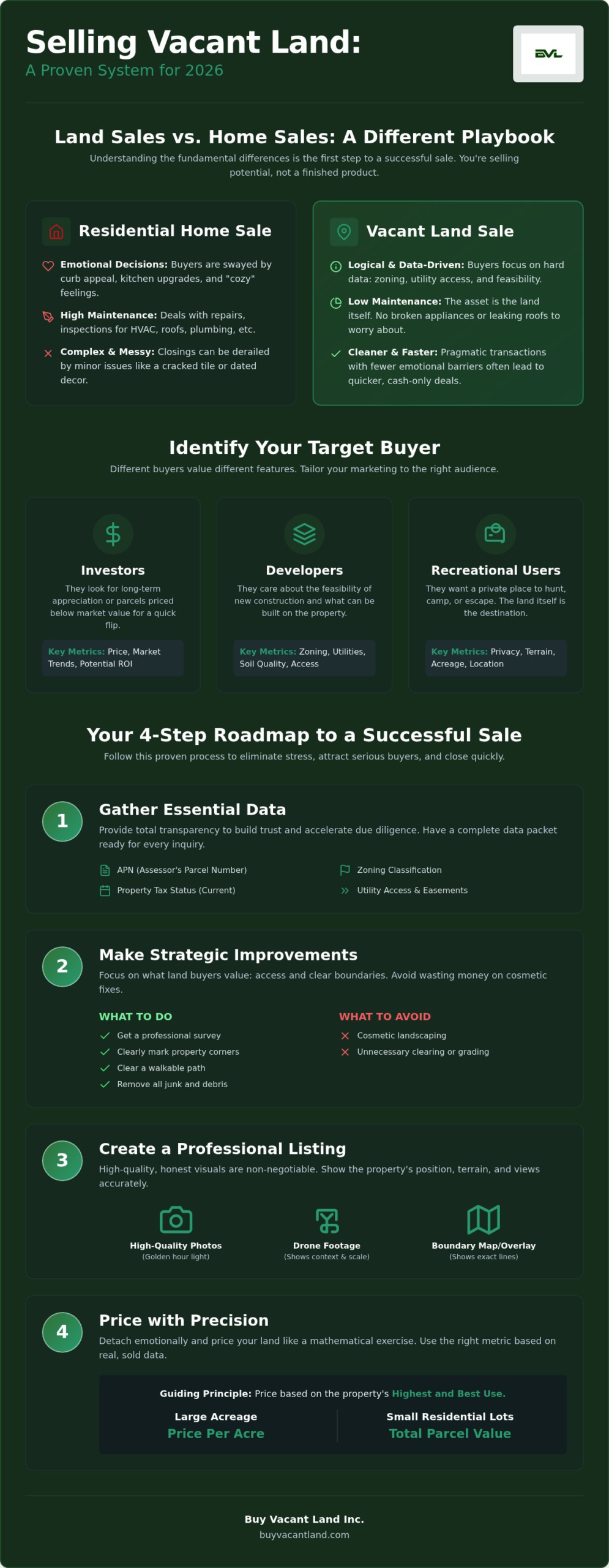
Selling dirt is different from selling a three-bedroom ranch. If you try to use the same playbook, you’ll fail. Vacant land is a unique asset class. It follows its own rules of supply, demand, and valuation. Most people don’t know how to sell vacant land because they treat it like a house without walls. That’s a mistake. You’re selling a future opportunity, not a finished product.
Traditional residential marketing focuses on curb appeal and kitchen upgrades. These metrics mean nothing to a land buyer. They don’t care about the color of the siding because there is no siding. Instead, they care about utility. Selling land is about providing raw data and potential. It’s a cleaner transaction. You don’t deal with broken HVAC systems, leaking roofs, or midnight calls from tenants. Maintenance is minimal. You pay your taxes, keep the grass manageable, and wait for the right offer.
Success starts with identifying your audience. Buyers typically fall into three categories:
- Investors: They look for long-term appreciation or parcels priced below market value.
- Developers: They care about soil quality, utility hookups, and zoning restrictions for new construction.
- Recreational Users: They want a place to hunt, camp, or escape. For them, privacy and terrain are everything.
The Unique Psychology of Land Buyers
Land buyers operate on logic and vision. They don’t look at aesthetics; they look at feasibility. You must identify who you are talking to and tailor your pitch accordingly. If your land is off-grid, don’t market it to a suburban developer. If it’s a small residential lot, don’t pitch it to a commercial farmer. Focus on what can be done with the dirt. Understanding the specific zoning requirements is the most powerful tool in your marketing arsenal. It’s about what the buyer can build, not how the grass looks today.
Why Your Land Isn’t a Home (and Why That’s Good)
Residential sales are emotional and messy. Buyers get cold feet over a cracked tile or a dated bathroom. Land sales are different. The emotional barriers are lower because the transaction is pragmatic. This often leads to faster closings and more cash-only deals. Stop using “granite countertop” language in your listings. Don’t call it “cozy” or “charming.” Call it “buildable,” “level,” or “ready for utilities.” Focus on hard facts to move the property and eliminate the stress of traditional real estate hurdles.
Preparing Your Land for a Professional Listing
Preparation removes friction. If you want to know how to sell vacant land effectively, you must provide total transparency. Buyers are looking for reasons to say no. Don’t give them any. A professional listing is essentially a data set that proves the property’s utility. When you provide all the answers upfront, you build trust and accelerate the closing process.
Gathering Essential Property Data and Documents
Start with the APN. It’s the social security number for your land. You can find this on your latest tax bill or by visiting the county assessor’s website. You also need the full legal description. Verify that your property taxes are current. Outstanding liens or back taxes will stop a closing in its tracks. Research your zoning classification immediately. Buyers need to know if they can build a home, start a farm, or park an RV. Check for easements and utility access. Is power at the street? Is a well required? Compile these facts into a single digital folder. Providing this data upfront speeds up due diligence and positions you as a serious seller.
Physical Improvements That Actually Add Value
Physical improvements should be strategic. Don’t waste money on cosmetic landscaping for raw acreage. Focus on access and boundaries instead. A professional survey is often the best investment you can make. It eliminates boundary disputes and gives buyers confidence. If a full survey isn’t in the budget, mark the corners yourself with bright stakes. Clear a basic path through heavy brush. If a buyer can’t physically walk the property, they’ll move on. Remove any debris, old tires, or junk.
High-quality photography is non-negotiable. Take photos during the golden hour to highlight the terrain and views. Use a drone if possible to show the property’s position relative to roads and neighbors. Clear, honest visuals prevent wasted time for both parties. Once your property is ready for the spotlight, you can list your property on a specialized land marketplace to connect with buyers who are already looking for dirt.
Pricing Strategies for Raw Land and Undeveloped Lots
Pricing land is a mathematical exercise. You must detach your emotions from the dirt. To understand how to sell vacant land for its maximum value, you must first identify its highest and best use. This means determining the most profitable, legally permissible use for the property. Is it a single-family homesite, a multi-unit development, or a hunting retreat? The answer dictates your price floor and your ceiling.
You also need to choose the right pricing metric. Large acreage is typically priced per acre. Small residential lots are priced by the total parcel value. If you use the wrong metric, you’ll either leave money on the table or scare away serious buyers with an inflated number. Market demand is the final filter. If the local economy is growing, you can push the price. If the area is stagnant, your price must be aggressive to move the asset.
Analyzing Market Comps for Vacant Parcels
Real data comes from sold records, not active listings. Active listings represent what sellers hope to get; sold prices show what the market actually pays. You can find this data through county records or by filtering for sold listings on specialized land platforms. When comparing parcels, look for matches in terrain and utility. A flat, cleared lot is not comparable to a steep, heavily wooded one. Look for these specific factors:
- Total usable acreage versus total deeded acreage.
- Terrain type, including elevation changes and soil drainage.
- Road frontage and the quality of legal access.
- Proximity to major corridors or town centers.
Adjusting Value Based on Zoning and Utilities
Infrastructure is the ultimate value multiplier. A parcel with power at the lot line is worth significantly more than one three miles from the nearest utility pole. If you’ve already installed a well or septic system, you should include those costs in your asking price. These features reduce the buyer’s future risk and effort, making your land more attractive.
Zoning also creates massive price swings. Buildable land that meets all local requirements for a permit is a premium product. Conversely, land with unrestricted zoning appeals to a different, often more budget-conscious buyer. Road quality matters too. A property accessible by a paved county road will always command a higher price than one reached via a seasonal dirt track. Adjust your expectations based on these physical and legal realities to ensure a swift, no-nonsense transaction.
Marketing Your Property to Reach Targeted Land Buyers
Marketing is about visibility and precision. You’ve already prepared your data and calculated the right price. Now you must put that information in front of the right people. If you want to know how to sell vacant land without waiting months for a phone call, you must avoid the noise of general real estate. Most sellers make the mistake of listing where house hunters browse. You need a strategy that targets land-specific intent and eliminates distractions.
Why Specialized Marketplaces Outperform General Sites
Generic real estate portals are designed for bedrooms and bathrooms. Their search algorithms prioritize square footage and school districts, which makes raw dirt an afterthought. This creates an inefficient environment where your listing gets buried under thousands of residential homes. Specialized marketplaces attract a different breed of buyer. These users are specifically searching for cheap land for sale and undeveloped parcels. Niche sites offer filters for soil quality, terrain, and zoning that generic sites simply don’t have. By listing on a dedicated platform, you ensure your property is seen by investors and recreational users who already value the asset class.
Crafting a High-Impact Land Listing
Your listing description should sell the future utility of the dirt. Use a “Hook, Details, Call-to-Action” framework to keep readers engaged. Start with a headline that includes high-impact keywords like “off-grid,” “hunting,” or “ready-to-build residential lot.” If you want to increase your pool of potential buyers, highlight options like owner financed land in the first paragraph. This lowers the barrier to entry and attracts more offers. Always include satellite overlays and boundary maps. Buyers need to see the property lines and the surrounding landscape to feel confident. Detail the access points and utility proximity clearly. End your description with a direct instruction on how to submit an offer or request more documents.
Signage and social media serve as effective supplementary tools. A large, legible sign on the property attracts locals and neighbors who might be looking to expand their own holdings. Join social media groups dedicated to land investing and share your listing with high-quality photos. This multi-channel approach creates the momentum needed for a swift sale. To get your property in front of a national audience of land buyers, list your vacant land for sale on our specialized marketplace today and skip the traditional residential hurdles.
Navigating the Closing Process and Finalizing the Sale
Closing is the final hurdle. It requires precision. Once you accept an offer, the clock starts. You must move from a handshake to a recorded deed without delays. Learning how to sell vacant land culminates in this technical phase. It’s about securing your funds and transferring the title legally. This is where your preparation pays off. A clean closing provides the peace of mind that the transaction is finished and the liability is gone.
Decide how to handle the paperwork based on your state’s requirements. In many regions, a title company manages the escrow and recording. In others, a real estate attorney is required. A title company is often the most efficient choice for simple cash deals. They ensure the title is clear and handle the distribution of funds. This approach allows you to avoid the high commissions and unnecessary service fees of traditional agents. You receive your funds directly from the buyer, and the closing agent ensures the money lands in your account securely.
Essential Paperwork for a Smooth Land Transaction
Start with a solid Purchase and Sale Agreement. This document outlines the price, due diligence period, and closing date. You also need to choose the right deed. A Warranty Deed is the gold standard; it guarantees you own the land and have the right to sell it. A Quitclaim Deed is faster but offers less protection to the buyer, which might slow down the sale. Don’t forget disclosures. Even for raw land, you must reveal known issues like flood zones or environmental hazards. Clear paperwork prevents post-sale litigation and ensures a smooth, legally sound transfer.
Listing on BuyVacantLand.com to Find Your Buyer
Speed up this entire process by finding the right buyer from the start. A specialized platform puts your property in front of thousands of active investors. Whether you have land for sale in florida or a residential lot in another state, national reach is essential. Generic sites waste your time with tire-kickers who don’t understand raw acreage. Our marketplace streamlines the connection between motivated sellers and serious buyers. You can sell land fast by speaking directly to people who understand the value of dirt. Start your listing today and turn your idle asset into liquid capital.
Finalize Your Sale and Secure Your Profit
Selling land doesn’t have to be a slow, expensive ordeal. You now have the blueprint for how to sell vacant land without the stress of traditional real estate hurdles. Success in this market requires a focus on utility and data rather than aesthetics. By gathering your zoning documents, setting a price based on sold comps, and targeting the right investors, you eliminate the friction that keeps properties sitting on the market for years. You’ve learned how to bypass the noise of residential portals and speak directly to people who value raw dirt.
It’s time to stop paying property taxes on a liability. Use this direct, no-nonsense approach to convert your parcel into liquid cash. Our specialized land-only platform removes the distractions of home seekers and connects you with serious land investors across the country. You can bypass high commissions and take full control of your transaction right now. List your vacant land on our national marketplace today! You have the plan and the tools. Go out there and close your deal with confidence.
Frequently Asked Questions
How long does it typically take to sell vacant land?
Land sales typically move slower than residential homes; expect a timeline of 6 to 12 months for a market-value sale. You can shorten this window significantly by pricing the parcel below competitors or offering owner financing. High-demand areas with utility access sell much faster than remote, off-grid acreage. Speed depends entirely on how well you match your price to the property’s utility and the current market demand.
Do I need a survey to sell my land?
A professional survey isn’t a legal requirement for listing, but it’s a massive advantage for closing. Buyers are often hesitant to purchase dirt without verified boundaries. Providing a survey upfront eliminates doubt and prevents expensive legal disputes after the sale. If you choose not to pay for a full survey, ensure the property corners are clearly marked with stakes and flagging tape so buyers can walk the lines confidently.
What is the best way to price land for a quick sale?
Set your asking price at 10% to 15% below the average of recent sold comps to attract a quick cash offer. Investors look for equity immediately. If you price at the top of the market, expect to wait much longer for an interested party. Focus on the price-per-acre for large tracts or the total parcel value for small residential lots. Real value is found in sold data, not the wishful thinking of active listings.
Can I sell land without a real estate agent?
Selling land without an agent is a practical way to keep more profit in your pocket. You avoid high commissions and deal directly with the buyer. This approach works because land deals are data-driven rather than emotional. Using a specialized marketplace is a core part of how to sell vacant land effectively. It gives you the same reach as a traditional agent without the added costs or procedural hurdles.
What documents are required to sell land by owner?
Prepare a Purchase and Sale Agreement, a Warranty Deed, and a clear legal description from your current deed. You also need the Assessor’s Parcel Number and proof that property taxes are paid in full. If the land has specific restrictions, include those disclosures to build trust. Having a complete document package ready for the title company ensures a fast, no-nonsense closing process that protects both parties and secures your funds.
Should I offer owner financing when selling my land?
Offering owner financing is a powerful tool to move land that might otherwise sit idle. Most banks don’t offer traditional mortgages for raw land, which limits your buyer pool to those with large amounts of cash. By accepting a down payment and monthly installments, you open the door to thousands of additional buyers. This strategy often results in a higher final sale price and consistent interest income over several years.
Is it better to sell land for cash or finance it?
A cash sale is the best choice if you need immediate liquidity and a clean break from the property. It’s the fastest way to stop paying taxes and maintenance. Financing is better if you want to maximize your total return over time. While financing brings in more money through interest, a cash deal offers the relief of a swift, one-time transaction with zero future obligations or management requirements.
How do I find out what my land is worth?
Analyze the sold prices of similar parcels within a five-mile radius over the last twelve months. Adjust your estimate based on road access, zoning, and available utilities. A lot with power and water is worth significantly more than a landlocked parcel. If you can’t find exact matches, look at the price-per-acre trends in your county. This data-driven approach provides a reliable estimate without the cost of a professional appraisal.




Join The Discussion