
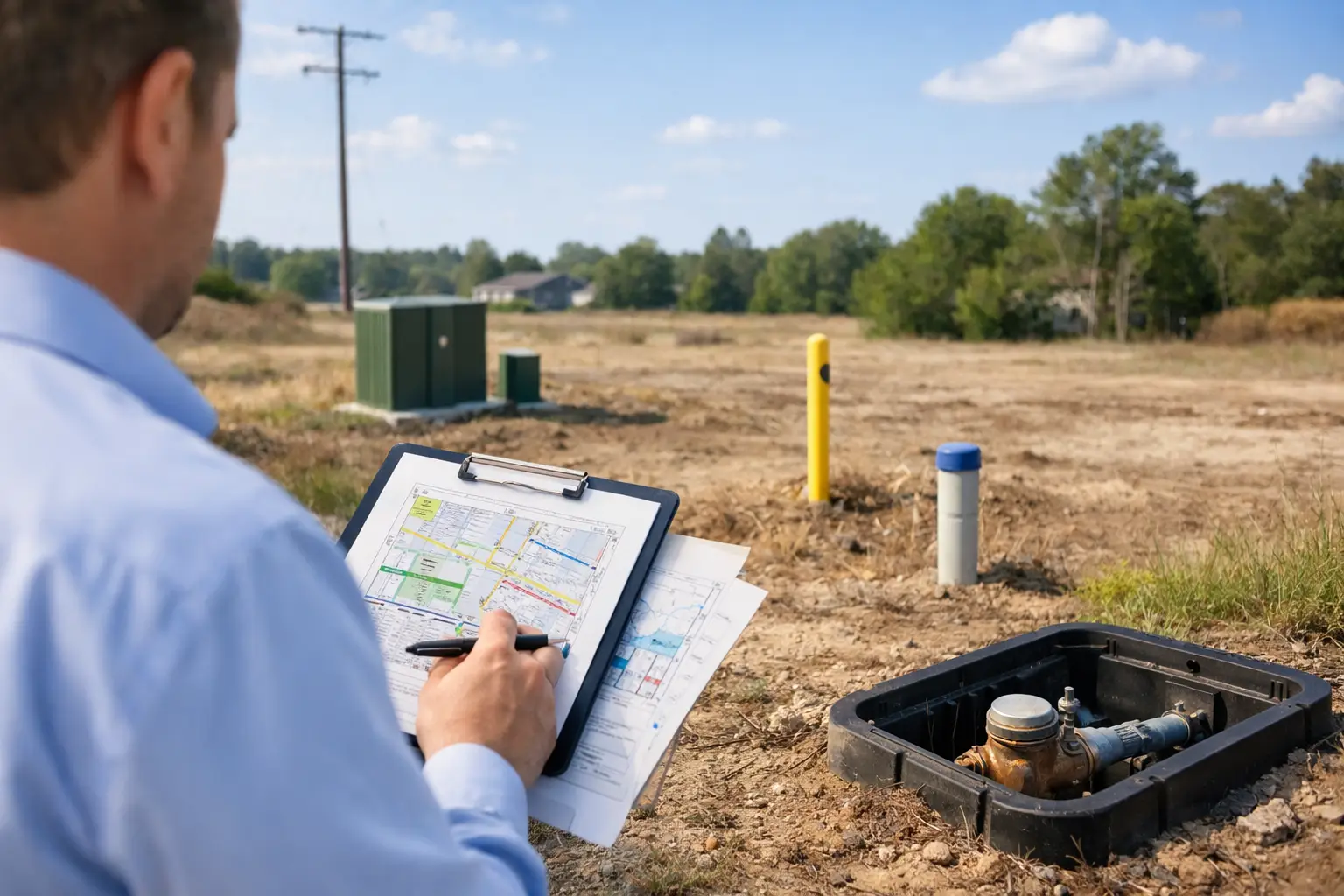
A low price can make a vacant parcel look like a great opportunity. Then comes the question that can reshape the entire deal: Can you actually get power, water, and wastewater service to the property? Before you verify utilities on a vacant parcel, understand that nearby utility lines, neighboring homes, and a listing description are clues, not proof of service.
For a future homesite, RV base, small business site, or investment property, utility availability affects what you can build, how soon you can use the land, and what your total ownership cost will be. A parcel without public utility connections is not automatically a bad buy. It may be ideal for an off-grid cabin, recreational retreat, or long-term hold. The key is buying with a realistic plan and a realistic budget.
Why Utility Verification Changes the Value of Land
Two parcels with similar acreage and road frontage can have very different practical value. One may have a water meter, electrical service at the lot line, and an approved septic area. The other may require a long power extension, a well that reaches hundreds of feet, and engineered wastewater work before construction can begin.
Those differences can add thousands, or sometimes tens of thousands, of dollars to your project. They also affect financing, resale appeal, insurance options, and the type of buyer who may want the property later. If your goal is to build soon, utility facts deserve the same attention as access, zoning, flood risk, and title.
Do not assume that a road with utility poles means your parcel can be connected quickly. A line may serve properties on the other side of the road, may have no available capacity, or may require an extension across land you do not control. Likewise, a water main in the area does not guarantee that the utility district will issue a tap or that service is affordable.
Start With the Listing, Then Verify Independently
A land listing can provide a useful starting point. Look for specific language such as “electric at lot line,” “public water available,” “well installed,” “septic permit on file,” or “power nearby.” Vague terms such as “utilities available” deserve follow-up questions.
Ask the seller or listing agent for records rather than relying on a verbal answer. Useful documents may include a recent utility bill, water tap receipt, septic permit, well log, survey showing easements, electric service agreement, or a prior site plan. If the seller does not have them, that does not necessarily signal a problem. It simply means you need to confirm the details directly.
The most reliable approach is to contact each relevant provider yourself. Have the parcel number, street address if one exists, county, and a map or survey available. An address can be misleading on undeveloped land, so the assessor parcel number is often the best reference.
Ask the Right Questions of Each Provider
When you call an electric cooperative, municipal utility, water district, or broadband provider, ask more than whether service is “available.” Find out whether the provider serves the parcel itself, where the nearest connection point is, and whether capacity is available for your intended use.
Ask whether an existing meter, account, tap, or service drop is associated with the parcel. Confirm who pays for line extensions, trenching, transformers, poles, road bores, meters, and upgrades. Request a written estimate when possible, and ask how long the work typically takes after permits and payment are complete.
For water and sewer, ask about connection fees, impact fees, monthly minimums, meter sizes, moratoriums, and whether the district requires annexation or other approvals. For internet, ask about actual service at the parcel, not just coverage shown on a map. Satellite and fixed wireless may be workable alternatives, but their speeds, installation needs, and monthly costs vary.
Verify Electricity on a Vacant Parcel
Electricity is often the first utility buyers investigate, and for good reason. It can affect everything from construction timing to whether a property works for full-time living. Start by identifying the serving utility. In rural areas, that may be an electric cooperative rather than the company that serves the nearest town.
Ask the utility to explain the nearest existing distribution line and whether it is on the same side of the road as your parcel. Crossing a public road, railroad, drainage area, or neighboring property can change both the cost and timeline. If a power line is visible, do not assume it is a distribution line capable of serving a new residence. It may be a transmission line or a private line.
If the property is remote, compare conventional grid service with solar, battery storage, and generator backup. Off-grid systems give buyers flexibility, especially for cabins and recreational acreage, but they require an honest assessment of energy use, site exposure, equipment maintenance, and replacement costs. A modest weekend cabin has very different power needs than a full-time home with central air conditioning, a well pump, and electric heat.
Confirm Water and Wastewater Options
Public water is convenient, but a private well can be a strong solution on rural land. The question is not simply whether wells exist nearby. Ask the county health department, well driller, or appropriate local office about typical well depths, water quality concerns, drilling conditions, and any local restrictions.
A neighboring well can be encouraging, but it does not guarantee the same result on your parcel. Ground conditions can change across a short distance. If you are under contract, consider whether a well feasibility review or drilling estimate belongs in your due diligence period.
Wastewater is equally important. If public sewer is unavailable, the property may need a septic system. Confirm whether the lot has a current septic permit, prior soil evaluation, or approved system design. Permits can expire, and standards can change, so verify current requirements with the county or local health authority.
A failed perc test or unsuitable soil does not always end a deal. Engineered systems may be possible. But they can cost more, require ongoing maintenance, and affect where you place a house, driveway, well, and outbuildings. Get the facts before you price the land as an easy build site.
Check Easements, Access, and Physical Obstacles
Utilities need a legal and physical path to the parcel. Review the survey, title documents, and recorded easements to see whether utility providers have the right to install lines where needed. A provider may require an easement across your own property, or you may need permission to cross a neighboring tract if the route is not within public right-of-way.
Terrain matters too. Steep slopes, rock, wetlands, creeks, dense timber, and long driveways can increase installation costs. A site visit is essential. Walk the likely building area and the route from the road, then compare what you see with the provider’s information.
Also check local rules for driveways and culverts. In some locations, a road access permit must be approved before a utility company will complete certain work. Land due diligence works best when you view access, utilities, drainage, and buildability as connected pieces of one plan.
Put Utility Questions in Your Offer
If utility availability is central to your decision, protect your buying timeline with an appropriate due diligence or feasibility contingency. The exact language should fit your state, contract form, and situation, so work with a qualified real estate professional or attorney when needed.
Your inspection period should give you enough time to contact providers, receive estimates, review permits, and visit the property. Do not wait until after closing to discover that the electric extension is outside your budget or that the lot cannot support the septic system you expected.
Keep copies of every email, estimate, permit, and provider note. Written records help you make a confident decision and can be valuable if you sell the property later. A buyer considering the same parcel will appreciate clear answers just as much as you do.
Match the Parcel to Your Intended Use
Utility needs depend on what you want to do with the land. A hunting tract used a few weekends a year may work well with solar lighting, hauled water, and a portable sanitation solution where allowed. A future retirement home may justify the higher cost of grid power, a private well, and a permanent septic system. A commercial or agricultural use may require three-phase power, higher water volume, or specialized permits.
That is why the best land purchase is not always the parcel with every utility already installed. It is the parcel whose utility setup fits your plans, budget, and timeline. BuyVacantLand.com helps buyers compare opportunities built for different goals, from off-grid recreation to residential lots ready for the next step.
Before you make an offer, make the calls, request the records, and walk the route utilities would need to take. A few focused hours of verification can turn a promising piece of land into a well-planned ownership opportunity.



Join The Discussion