
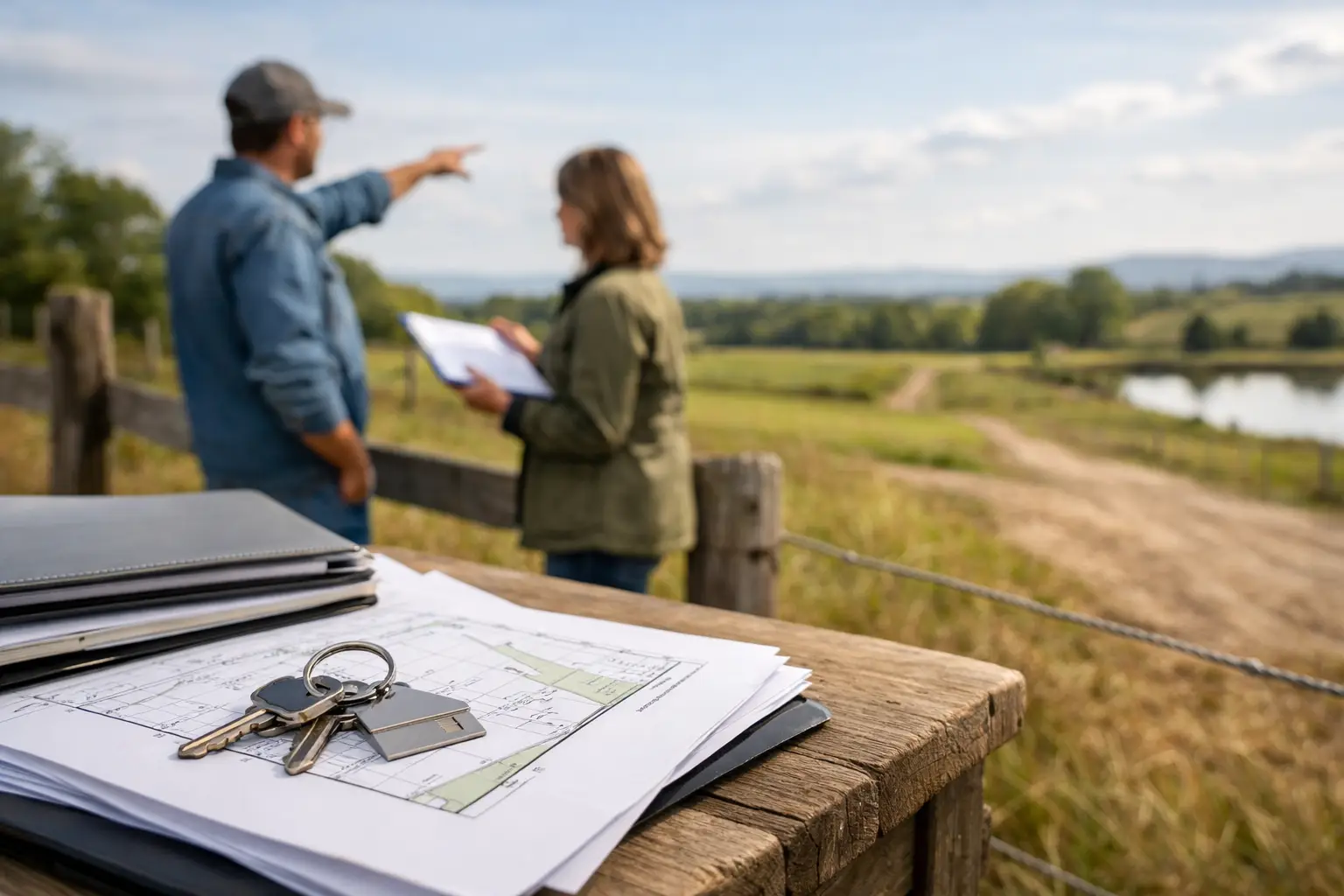
A beautiful five-acre parcel can look like a clear path to a cabin, homestead, or long-term investment. Then the title report reveals that a neighbor has the legal right to cross part of it. So, what is a land easement? It is a legal right that allows someone else to use a specific portion of a property for a stated purpose, even though they do not own that land.
An easement is not automatically a deal-breaker. Many vacant parcels have utility, access, drainage, or conservation easements that are routine and manageable. The opportunity lies in knowing exactly what the easement permits, where it sits, and whether it conflicts with your plans before you buy.
What Is a Land Easement and How Does It Work?
A land easement separates ownership from a limited right of use. You still own the affected area, pay taxes on it, and may often use it yourself. However, your use cannot interfere with the rights granted to the easement holder.
For example, an electric utility may have an easement along a property boundary to install, inspect, repair, or replace power lines. You may still own that strip of ground, but building a permanent structure under the line or blocking utility access could violate the easement.
Easements are usually recorded in county land records and often appear on a title commitment, deed, plat, survey, or separate easement agreement. Their terms matter more than their label. A document described broadly as an “access easement” may be a simple lane used by one neighbor, or it may grant use to multiple current and future parcels. Those are very different situations for a buyer.
An easement generally stays with the land, meaning a new buyer takes ownership subject to it. That is why reviewing it is a core part of vacant land due diligence, not a detail to handle after closing.
Common Types of Land Easements
The most familiar easement on rural and vacant land is an access easement, often called a right-of-way. It gives one property owner the right to travel across another parcel to reach a public road. This can be essential for a landlocked parcel. It can also affect privacy, road maintenance costs, gate placement, and where you can build.
Utility easements give electric, water, sewer, gas, telecommunications, or broadband providers access to a designated area. These are especially common near subdivision lots and along roads. They can be a positive sign if service is available or easier to extend, but they may limit where you place a home, septic system, driveway, fence, or outbuilding.
Drainage easements allow water to flow through or be managed on part of a parcel. They are common in developed areas, but rural properties may also have them near ditches, culverts, streams, or engineered drainage features. Filling, grading, or obstructing the area without approval can create legal and practical problems.
Conservation easements restrict certain uses to protect natural, scenic, agricultural, historic, or wildlife values. Depending on the terms, they may limit subdivision, commercial development, timber harvesting, building locations, or other activities. For the right buyer, a conservation easement can protect the character of a recreational or agricultural property. For a buyer planning intensive development, it may be a major constraint.
Private easements may be held by a neighbor, a homeowners association, a road association, or another private party. Public easements may be held by a government agency or utility company. Some benefit a specific neighboring parcel, while others are held by an organization or individual rather than tied to nearby land.
How an Easement Can Affect Your Plans
The impact depends on the easement’s location, width, purpose, and wording. A 10-foot utility easement along the far edge of a 40-acre tract may have little effect on your goals. A 60-foot access easement running through the only level building site can materially affect value and usability.
Before making an offer, picture the use you want from the land. If you want an off-grid retreat, ask whether anyone has the right to drive through your preferred camp or cabin area. If you want to build a home, confirm that setbacks and easement boundaries still leave a workable building envelope. If you are buying hunting land, consider whether regular access by others could disrupt wildlife or your privacy.
Easements can also influence financing and resale. Lenders, title companies, and future buyers may scrutinize access rights, especially when a parcel depends on a private road. A documented, usable access easement can make a landlocked property more marketable. An unclear or poorly described easement can do the opposite.
Do not assume an existing road matches the legal easement. A dirt track may cross a property for decades without being located within the recorded easement area. Conversely, a recorded easement may exist even if no visible road has been built. The legal description and a current survey help connect the paperwork to the ground.
Questions to Ask Before Buying Land With an Easement
Start with the title commitment or preliminary title report. Ask for copies of every exception listed, not just a short reference number. Read the recorded document to identify who holds the right, what activities are allowed, and whether there are conditions regarding maintenance, gates, improvements, insurance, or notice.
Then ask the seller direct, practical questions. Who uses the easement today? How often? Is there a road maintenance agreement? Have there been disputes over access, locked gates, culverts, snow removal, or road repairs? The seller’s answer is useful, but verify key points through documents and local professionals.
A survey is often one of the smartest investments a vacant-land buyer can make. It can show property lines, known easements, road locations, encroachments, and the usable area remaining after restrictions. If a survey is older, incomplete, or unavailable, talk with a licensed surveyor about what level of work fits the property and your plans.
You should also confirm local zoning, setback, septic, floodplain, and driveway requirements. An easement is only one layer of the evaluation. A tract may have legal access but still need county approval for a driveway entrance, or it may have ample acreage but limited places where a home can legally be placed.
For properties with shared roads, review any road maintenance agreement carefully. It should address who pays, how costs are allocated, what happens when repairs are needed, and whether each owner has the right to improve the road. A vague “everyone chips in” arrangement can become expensive when a culvert washes out or a new owner wants a better road.
Can You Build or Fence Over an Easement?
Sometimes, but only if the easement terms and holder allow it. The safe answer is never to build, plant, fence, or install a gate within an easement area until you understand the restrictions in writing.
A utility company may allow a removable gate but prohibit trees, sheds, pools, or structures that block access. An access easement may allow fencing if the road remains passable, but gate rules can be specific. A conservation easement may require approval for changes that would otherwise seem minor.
If you need flexibility, address it before closing. You may be able to request written consent, negotiate a relocation, or adjust your building plan. Relocating an easement can be costly and requires agreement from the easement holder. It is far easier to solve a layout problem before you own the parcel than after you have paid for plans, clearing, or construction.
Easements Are About Clarity, Not Fear
Some of the best land opportunities include easements because easements are part of how land is accessed, serviced, protected, and shared across the country. The key is to buy with clear eyes. A properly recorded access easement may turn an otherwise landlocked parcel into a practical purchase. A utility easement may make future service more realistic. A conservation easement may preserve the setting that made you want the property in the first place.
At the same time, do not rely on a listing description, a neighbor’s recollection, or a visible road alone. Review the title documents, walk the land, consult a surveyor when needed, and involve a local real estate attorney or title professional for questions that affect your intended use. The right parcel is not simply land with no restrictions. It is land whose rights and limits fit the future you want to build.



Join The Discussion