

The interest rate on your land deal matters far less than who holds the deed while you pay for it. Most buyers focus on the monthly payment while ignoring the legal structure that secures their investment. Banks demand perfect credit and months of paperwork for simple raw land. It’s a slow, rigid process that stops most people before they start. An owner financing land contract cuts through this red tape. It allows you to move from browsing to owning without a single bank interaction.
You deserve a clear path to ownership without the stress of a traditional mortgage. We understand the fear of losing a down payment to a poorly structured deal. This 2026 guide teaches you how to secure raw land, navigate the legal risks, and protect your equity from day one. We break down current IRS rates and Dodd-Frank exemptions to ensure your contract remains solid. You’ll find a streamlined strategy to locate an equitable financial proposal and close your transaction with total certainty. This is your roadmap to acquiring land with speed and ease.
Key Takeaways
- Bypass traditional bank hurdles by using an owner financing land contract to deal directly with the seller.
- Identify the critical legal distinctions between equitable and legal title to ensure your path to full ownership is clear.
- Negotiate flexible terms for your down payment and purchase price without the constraints of institutional lending.
- Execute essential due diligence by verifying zoning and conducting a professional title search before signing.
- Locate high-value raw land deals quickly by filtering for owner-financed listings on specialized marketplaces.
What is an Owner Financing Land Contract?
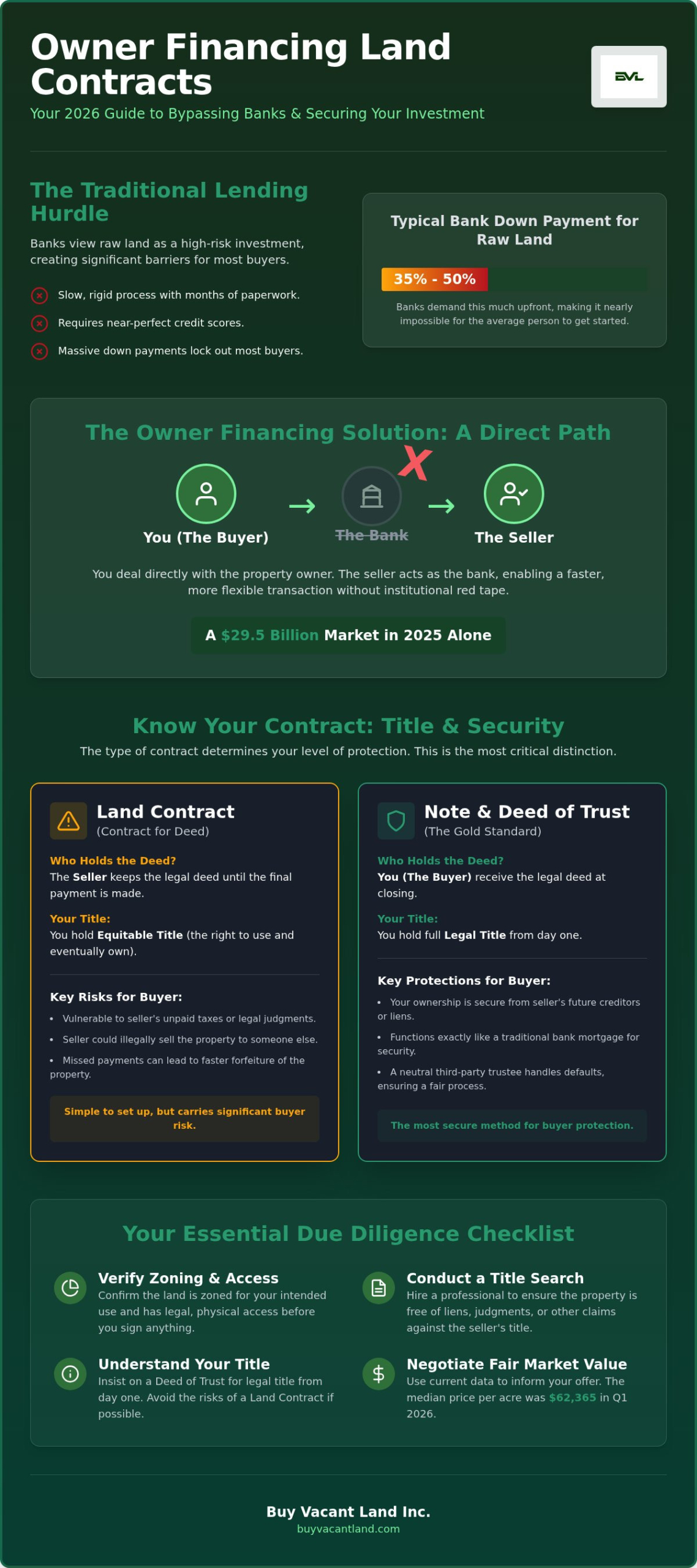
An owner financing land contract is a direct transaction between you and the property owner. You skip the bank middleman entirely. In this arrangement, the seller carries the debt while you make monthly payments directly to them. This specific legal vehicle is often called a land contract. It bypasses the rigid requirements and slow timelines of traditional financial institutions. The market for these deals is substantial, with $29.5 billion in seller-financed notes created in 2025 alone. For anyone asking What is a Land Contract?, it’s a legal agreement where the seller holds the deed until the final payment is made. You gain immediate possession of the property while building equity with every check you write.
Why Banks Hate Raw Land Loans
Traditional lenders view raw land as a high-risk liability. There is no house to serve as immediate collateral. If a borrower defaults, the bank is left with a vacant parcel that requires specialized marketing to sell. Because of this perceived risk, banks often demand massive down payments ranging from 35% to 50%. These requirements lock most buyers out of the market. In 2026, lending standards are tighter than ever. Banks prefer the safety of developed residential lots over off-grid acreage. An owner financing land contract provides a pragmatic alternative. It allows you to bypass these institutional hurdles and secure your asset with a manageable upfront investment.
The Role of the Seller as the Lender
When a seller finances a deal, they step into the role of the bank. They receive steady monthly income plus interest, which provides a better return than most standard savings accounts. This setup creates an efficient, direct relationship. You avoid the stress of high credit score requirements and invasive paperwork. The seller avoids the hassle of waiting months for a bank to approve a buyer’s loan. The process is straightforward:
- Negotiate the purchase price and interest rate directly with the owner.
- Sign the land contract to establish your equitable interest.
- Make regular payments according to the agreed schedule.
- Receive the recorded deed once the balance reaches zero.
The seller retains a legal interest in the property until you pay it off in full. This provides them with security, while you receive an equitable financial proposal that guarantees your right to the deed upon completion. Approval speed is the primary benefit here. You can move from an initial offer to a signed contract in a fraction of the time required by a mortgage broker. There are no loan origination fees, no service charges, and no hidden costs to complicate the transaction.
Land Contract vs. Deed of Trust: Knowing the Difference
Understanding the legal paperwork is vital. Many buyers use “owner financing” as a blanket term. However, the specific instrument used determines your level of protection. In an owner financing land contract, the seller keeps the deed until you pay the final dollar. This creates a split in ownership rights. You hold equitable title, which means you have the right to use the land and eventually own it. The seller retains legal title, meaning their name stays on the official county records. This distinction is the core of your financial risk.
Foreclosure processes vary significantly by structure. Land contracts often involve forfeiture. If you miss payments, the seller can sometimes reclaim the land without a lengthy court battle. This is a judicial process in many jurisdictions, but 21 states now have substantive laws regulating these contracts to protect buyers. A Deed of Trust usually follows a non-judicial path through a third-party trustee. Knowing these differences helps you secure a safer deal when you browse owner-financed listings for your next project.
The Land Contract (Contract for Deed)
Choosing an owner financing land contract is common because it’s simple to set up. The seller maintains total control until the end of the term. It’s often the easiest way to secure a deal with a very low down payment. This simplicity helps you move fast. However, it carries specific risks. If the seller has unpaid taxes or legal judgments, creditors could place liens on the property. Since the deed is still in the seller’s name, your investment is vulnerable to their financial mistakes. Always ensure your interest is recorded at the county level to prevent the seller from selling the land to someone else while you’re still paying for it.
Note and Deed of Trust
This is the gold standard for buyer protection. It mirrors how a bank mortgage works exactly. You receive the legal deed at the closing table. Your name goes on the title immediately. You then sign a Promissory Note and a Deed of Trust. This provides an equitable financial proposal that protects both parties. The Deed of Trust gives a third-party trustee the power of sale only if you default on your payments. This structure protects you from the seller’s future creditors or legal troubles. It’s the most secure way to handle a long-term transaction and ensures a clear path to full ownership from day one.
Essential Terms for a Secure Land Agreement
Success in an owner financing land contract relies on the fine print. You must negotiate the purchase price based on current market data. In the first quarter of 2026, the median price per acre for land listings was $62,365. Use this as your baseline. Unlike a bank loan, you don’t need a third-party appraisal to move forward. You and the seller agree on a value that works for both parties. Down payments often fall between 10% and 20% of the total price. This is significantly lower than the 35% or 50% banks demand. Remember that every term is negotiable. A higher down payment can often secure a lower interest rate.
Interest rates for these deals are typically higher than traditional mortgages. Expect rates between 6% and 12%. This premium compensates the seller for the increased risk of a bank-free transaction. For September 2026, the IRS Applicable Federal Rate for long-term loans is 5.12%. Sellers must charge at least this much to avoid tax complications. Your payment schedule should match your income cycle. Monthly installments are standard, but some agricultural sellers prefer annual payments following a harvest. Ensure the schedule is realistic for your budget.
The Danger of the Balloon Payment
A balloon payment is a scheduled lump sum that terminates the loan term. Many contracts use a 15-year or 30-year amortization but require the full balance to be paid in five or seven years. This creates a refinance trap. If land values drop or your credit doesn’t improve, you might lose the property and your equity. Always calculate your exit strategy before signing. If you can’t guarantee the funds for that final payment, negotiate for a fully amortized loan instead. This ensures your monthly payments eventually lead to a zero balance without a sudden financial burden.
Prepayment Penalties and Late Fees
Demand a contract with no prepayment penalty. You should have the right to pay off your debt early without extra costs. This allows you to refinance with a bank later if rates drop or your financial situation improves. Check the late fee structure carefully. Standard grace periods are usually 10 to 15 days. Ensure the contract clearly states when a late payment triggers a default. Clear rules prevent sudden forfeiture and protect your path to ownership. A well-structured agreement removes the stress of asset ownership by providing a predictable, transparent financial roadmap.
Due Diligence: Protecting Your Investment
Speed doesn’t excuse sloppiness. An owner financing land contract allows for a fast closing, but you must verify the asset’s quality first. Start by conducting a professional title search. You need to know if the seller actually owns the property free and clear. If they have hidden liens or unpaid taxes, those burdens could become yours. Next, verify the zoning and land use restrictions with the county. Don’t assume you can build a cabin or park an RV without checking the local codes. Confirm legal access to the parcel. Never buy landlocked property that lacks a recorded easement for road access.
Review the seller’s existing debt. This is known as a wrap-around risk. If the seller has a mortgage and stops paying it, the bank could foreclose on the land even if your payments are current. Finally, record your document with the county clerk immediately. This puts the world on notice that you have an interest in the property. It prevents the seller from selling the same land to another buyer. Protecting your capital starts with these five steps. You can find vetted land listings that simplify this verification process.
The Title Search: Non-Negotiable
A seller can only finance what they own. A title company or attorney will hunt for clouds on the title that could jeopardize your investment. If the seller’s creditors seize the land to satisfy a judgment, your contract might be worthless. This is a critical step in Owner Financed Land: The Complete 2026 Guide to Bank-Free Buying. Recording your interest early provides a layer of legal defense against future claims. It ensures your path to ownership remains unobstructed by the seller’s financial history.
Physical Land Inspection
Verify the physical state of the property before signing. Check for utility availability including water, septic suitability, and power lines. Many raw land parcels look perfect but lack the infrastructure needed for development. Look for environmental hazards like flood zones or protected wetlands. Easements for power lines or pipelines can also limit where you build. Always request a current survey. Sellers often rely on old maps that might be inaccurate. A fresh survey defines your boundaries with certainty and prevents future disputes with neighbors. This clarity is the foundation of a successful transaction.
Finding Owner-Financed Land Deals Today
Most general real estate sites bury land listings under thousands of houses and rentals. You need a specialized tool to find the right parcel. Filtering for an owner financing land contract requires a platform that prioritizes raw assets over residential buildings. Specialized marketplaces remove the noise. They connect you directly with sellers who understand the value of bank-free transactions. This efficiency saves time and reduces the stress of the search process. You can focus on the land’s utility rather than fighting through irrelevant residential data.
Communicating with sellers is your next move. Before you visit a lot, ask specific questions to verify the deal’s viability. Ask if the title is clear and free of liens. Confirm the minimum down payment they’ll accept. Inquire about existing easements or zoning restrictions that might limit your plans. Finally, ask if they allow a grace period for monthly payments. These answers provide the clarity you need to move forward with certainty. Clear communication prevents wasted trips and ensures both parties are aligned on the financial proposal.
Searching the BuyVacantLand Marketplace
Our platform focuses exclusively on vacant land. You won’t find single-family homes or apartment complexes here. We provide a dedicated “Owner Financed Land” category to streamline your discovery. This curated approach helps you find off-grid acreage, residential lots, or hunting land without digging through thousands of house listings. It’s the most direct way to locate a seller-financed deal that fits your budget. For those looking for the lowest entry point, check out our Cheap Land for Sale: The Ultimate 2026 Guide to Affordable US Lots.
Making an Offer to a Private Seller
Don’t ignore a perfect parcel just because the listing doesn’t mention financing. Many private sellers are open to the idea but haven’t considered the long-term benefits. Use the “Seller’s Relief” angle. Explain that financing helps them sell the property faster while earning interest. It turns a stagnant asset into a steady stream of monthly income. This strategy often leads to better terms than a pre-packaged deal. Sellers are often more flexible when they realize they can avoid the traditional bank approval process and close the transaction in days.
Cheap land often comes with the most flexible financing terms. Sellers of lower-priced parcels are typically motivated to move the asset quickly. They are more likely to accept a low down payment to get the deal moving. This creates a clear path to full ownership for buyers with limited upfront capital. Once you find a seller willing to talk, move from discovery to a signed owner financing land contract with confidence. The process is simple, fast, and entirely bank-free. You gain the asset you want without the institutional hurdles that slow you down.
Secure Your Land Asset Today
You now have the roadmap to bypass traditional lenders. A bank-free purchase relies on understanding the legal mechanics of an owner financing land contract. Prioritize title protection and conduct your due diligence with zero compromises. Verify zoning, confirm access, and record your documents immediately at the county level to safeguard your equity. These practical steps transform a complex financial hurdle into a streamlined path to full ownership. You don’t need a bank’s permission to secure your future.
Our national database removes the noise of residential houses and rentals. We provide a specialized marketplace for raw, undeveloped land where many listings require no bank credit checks. This platform connects you directly with sellers who value efficiency and transparency. You can skip the months of paperwork and move straight to an equitable financial proposal today. Take the final step toward your goals right now without the traditional procedural hurdles.
Browse Owner-Financed Land Listings on BuyVacantLand.com and claim your parcel with speed and ease. Your path to land ownership is simple and secure.
Frequently Asked Questions
Is a land contract the same as a mortgage?
No, they’re legally distinct instruments. A mortgage transfers the deed to you immediately while the bank holds a lien. In an owner financing land contract, the seller keeps the legal title until you pay the full balance. This structure allows for faster closings and lower upfront costs. It skips the institutional red tape. You gain equitable title and possession now but get the deed later.
What happens if the buyer defaults on a land contract?
The seller can initiate a forfeiture process to reclaim the land. This is often faster and less expensive for the seller than a judicial foreclosure. You might lose your down payment and all monthly installments made to date. Always check your state laws before signing. Some jurisdictions provide a grace period or require the seller to refund a portion of your equity if you’ve paid a significant amount.
Can I build a house on land I am still paying for via owner financing?
Usually, yes. Most sellers allow you to improve the property while you’re paying for it. You must confirm this in writing within your contract. Verify all local zoning codes and permit requirements before starting any construction. Some contracts might require the seller’s written consent for major structures. Building on the land increases your investment’s value and your commitment to the deal. It’s a pragmatic way to develop your asset.
Who pays the property taxes in a land contract?
The buyer is typically responsible for property taxes. Even though the seller’s name stays on the deed, the contract usually shifts the tax burden to the person using the land. You must ensure taxes stay current to avoid government liens. Failure to pay can trigger a default in your owner financing land contract just like a missed payment. Many sellers include a provision that allows them to pay the taxes and bill you if you fall behind.
Do I need a lawyer for an owner financing land deal?
A lawyer is an essential ally for these transactions. They verify that the contract complies with state laws and protects your right to the deed. Legal counsel helps you identify predatory terms or hidden costs before you sign. It’s a small investment that provides total peace of mind. A professional review ensures your path to ownership remains clear and legally sound. Don’t skip this step to save a few dollars.
Can I sell the land if I still owe the seller money?
You can sell your interest through a payoff or a transfer. Most contracts allow you to sell the land if you pay the remaining balance to the original seller at closing. This is a standard way to exit a deal early while capturing any appreciation in land value. Always check for “due on sale” clauses that might complicate a transfer without a full payoff. It’s a direct way to liquidate your investment when needed.
Is a credit check required for owner financing?
Traditional credit checks are often unnecessary. Many private sellers prioritize your down payment over a FICO score. This allows for a fast, inclusive approval process that banks can’t match. You skip the invasive paperwork and months of waiting. Sellers look for reliable buyers who can manage the monthly installments. It’s a pragmatic solution for acquiring land with speed and ease. This efficiency is the hallmark of the bank-free buying process.
What is a wrap-around land contract?
This is a contract that “wraps” around an existing mortgage. The seller still owes money to a bank for the property. You pay the seller, and they are supposed to pay their mortgage. It’s a high-risk scenario for the buyer. If the seller defaults on their bank loan, the bank can foreclose on the land regardless of your payments. Always use a third-party escrow service to ensure the seller’s mortgage gets paid first.




Join The Discussion