
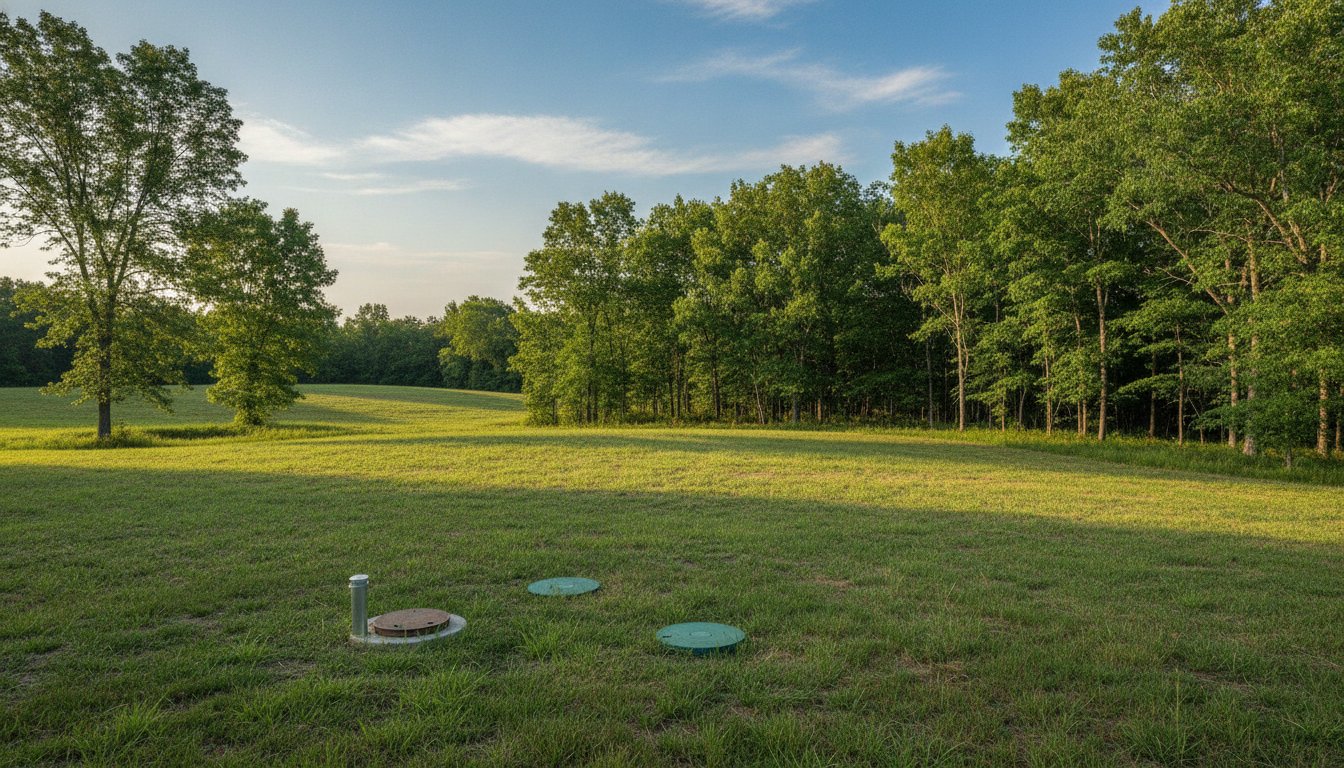
Why risk $21,500 on infrastructure before you even break ground on your home? Drilling a well and installing a septic system are the two biggest wildcards in rural development. You already know that raw land is a gamble. You worry about high drilling costs and whether the soil will even pass a perc test. Secure land with well and septic already installed to eliminate these variables instantly. It’s the most efficient shortcut for any buyer who values their time and budget.
You want a shovel-ready property that doesn’t require months of permitting or thousands in unexpected fees. We agree that the traditional path to building is often too slow and unnecessarily expensive. This guide provides the exact roadmap you need to secure a utility-ready lot in 2026. You will learn how to verify existing systems, calculate your total savings, and navigate the latest state regulations without the typical stress. We break down the complex process of rural land buying into a clear, actionable strategy for success.
Key Takeaways
- Eliminate construction delays by securing land with well and septic already installed.
- Avoid the high financial risk of drilling deep wells or installing complex, engineered septic systems.
- Verify existing permits through local health departments to ensure your investment is protected.
- Master the siting requirements and mandatory setbacks to ensure your home design fits existing infrastructure.
- Use specialized search filters to find high-value, utility-ready vacant lots across the national marketplace.
The Strategic Value of Land with Well and Septic Already Installed
Utility-ready land is a parcel that already includes existing water and waste infrastructure. This isn’t just a convenience. It’s a strategic asset. When you buy land with well and septic already installed, you’re buying a property that is functionally shovel-ready. You bypass the most unpredictable and stressful parts of rural development. This setup provides immediate peace of mind because the infrastructure is proven and ready for use.
Building on raw land often feels like a gamble. You don’t know if the ground will support your vision until you’ve spent thousands on testing. Existing systems eliminate the perc test gamble entirely. You don’t have to worry if the soil will drain or if you’ll be forced to install a massive, expensive alternative system. The work is done, the permits are likely on file, and the risk is gone.
Why Water and Waste are the Biggest Variables
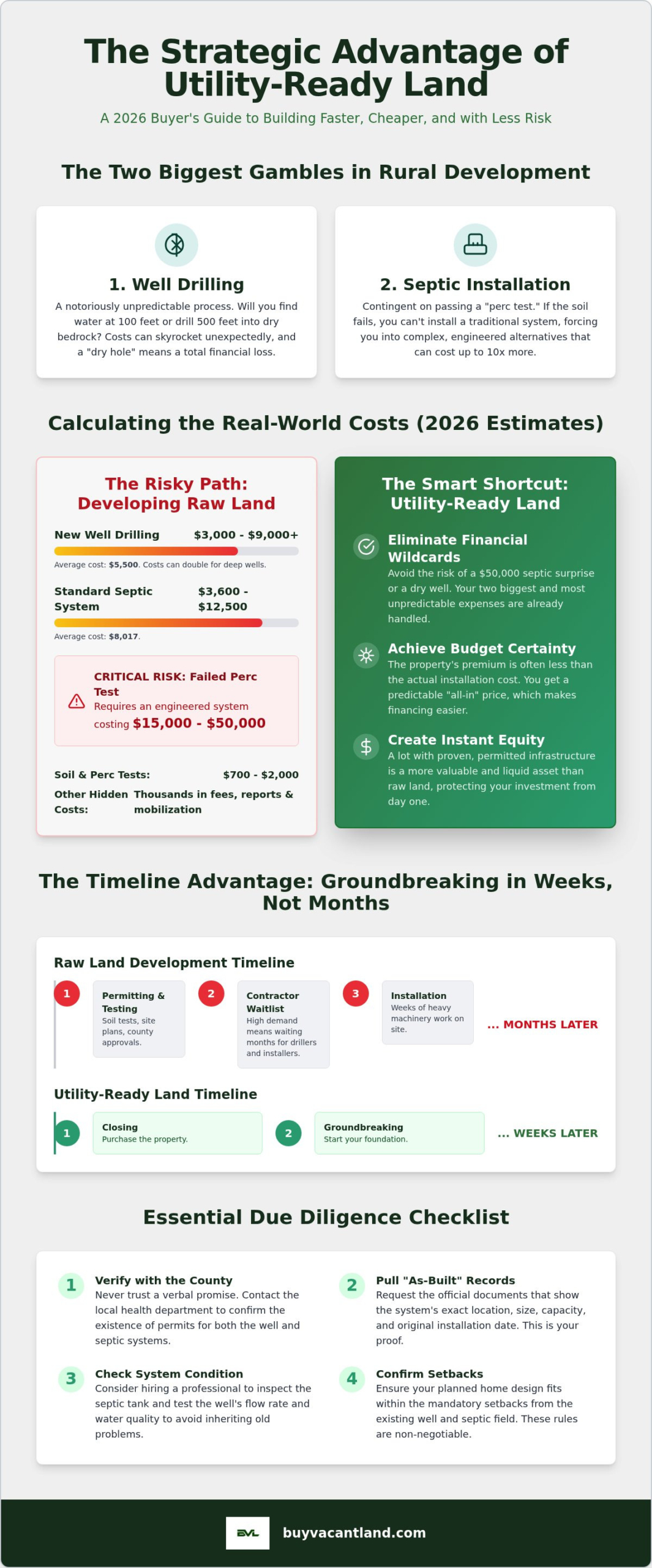
Water and waste are the two biggest deal-breakers in any land deal. Drilling a well is notoriously unpredictable. You might find water at 100 feet, or you might drill 500 feet into dry bedrock. In 2026, the average well drilling cost sits around $5,500, but deep wells can easily double that. You also have to consider water quality, which remains a major variable in undeveloped areas.
Septic permitting is equally complex. Environmental regulations are tightening in many counties. If a property doesn’t pass a percolation test, you can’t build a traditional system. You would then need to research how septic systems work to understand the high costs of engineered alternatives, which can reach up to $50,000. Buying land with well and septic already installed removes these variables from your financial equation instantly.
The Time-Saving Factor in 2026
Time is money in construction. In 2026, the demand for skilled contractors remains high. Wait times for well drillers and septic installers often stretch for months. By purchasing a lot with utilities already in place, you jump to the front of the line. You move from the closing table to groundbreaking in weeks instead of waiting for a drilling rig to become available.
Existing utilities also streamline your financing. Lenders view these properties as lower risk. A construction loan is easier to secure when the two most expensive unknowns are already solved. You get a faster construction timeline and a more predictable total project cost. It’s the most efficient way to build your dream home without the traditional procedural hurdles.
Calculating the Real-World Cost Savings of Pre-Installed Utilities
The sticker price of raw land is deceptive. You see a low price and think it’s a bargain. It isn’t. You must calculate the “all-in” cost before signing a contract. Finding land with well and septic already installed is often the cheaper financial path once you factor in 2026 labor and material rates. You bypass the risk of budget overruns before your foundation is even poured.
In 2026, drilling a new well averages $5,500. The typical range spans from $3,000 to $9,000. These numbers only apply to standard conditions. If a driller hits bedrock or needs to go deeper than expected, your costs will skyrocket. You also face the risk of a “dry hole” where you pay for the drilling but get no water. This is a total loss that most buyers cannot afford.
Septic systems add another layer of heavy expense. The average installation cost is $8,017, with a typical range of $3,593 to $12,463. Before you even dig, you must pay $700 to $2,000 for percolation and soil tests. If your soil is poor, you might be forced into an engineered system costing between $15,000 and $50,000. These are not small variables. They are massive financial risks that disappear when you buy a utility-ready lot.
Hidden Costs of Developing Raw Land
Equipment mobilization fees are a common surprise for new buyers. You pay a premium just to get heavy machinery to your site. You also pay for engineering reports and mandatory county inspections at every stage. These soft costs can add thousands to your budget without moving a single shovel of dirt. Buying a lot with utilities already in place eliminates these administrative and logistical headaches.
ROI: Why You Often Pay Less for Pre-Installed Systems
A property with utilities usually carries a price premium. However, this premium is often less than the actual cost of installation. You aren’t just paying for the hardware. You are paying for the certainty of a buildable site. This creates instant equity. If you ever need to sell, a lot with proven infrastructure is much more liquid than raw land. You can browse utility-ready listings to see how these values compare in real-time.
Owning a system also means you are responsible for its longevity. Start by learning the basics of maintaining your septic system to protect your investment from day one. Proven infrastructure is the most reliable way to ensure your project stays on budget and on schedule.
Essential Due Diligence: How to Verify Existing Well and Septic Systems
Never buy a property based on a verbal promise. Even if the listing says land with well and septic already installed, you must verify every claim. Systems fail. Permits expire. Records get lost. Your first step is to contact the county health department to pull the “as-built” records. These documents show the system’s location, size, and original installation date. If no permit exists on file, you are looking at a major legal and financial liability.
Adopt a “Trust but Verify” rule for every transaction. This means you don’t just look at the hardware; you test its performance. An old well or a neglected septic tank can cost you thousands in immediate repairs. You need documented proof that the infrastructure is functional and compliant with current 2026 local codes. Skipping this step is the fastest way to turn a “shovel-ready” lot into a money pit.
Verifying the Septic System
A septic system is designed for a specific load. You must confirm that the tank and drain field size match your planned bedroom count. A system permitted for two bedrooms won’t support a four-bedroom home. Look for signs of failure like soggy patches, standing water, or lush, dark green grass over the drain field. Hire a professional to pump the tank and perform a camera inspection. This is the only way to check for cracks in the tank or blockages in the lines that a surface inspection will miss.
Testing the Well Performance
A well that exists is useless if it doesn’t produce enough water. You need a professional flow test to determine the Gallons Per Minute (GPM). Most modern homes require at least 5 GPM for reliable daily use. While testing the flow, inspect the well head, pump, and pressure tank for rust or mechanical wear. Older pumps may be nearing the end of their service life and require a replacement budget.
Water quality is just as important as quantity. Conduct a potability test to check for bacteria, nitrates, and local contaminants like lead or arsenic. The EPA provides excellent resources for verifying well water safety and understanding your results. Don’t close the deal until you have a lab report confirming the water is safe to drink. This step protects your health and your financial investment from the moment you move in.
Planning Your Build: From Utility-Ready Lot to Finished Home
Infrastructure dictates design. When you buy land with well and septic already installed, you aren’t just buying dirt; you’re buying a pre-determined layout. Your home’s location must align with the existing tank and well head. This is the final step in the efficiency chain. You save thousands on trenching costs and excavation by building as close to the existing lines as possible. You are no longer guessing where the house should go; the land has already told you.
Integrating these systems into your new home’s plumbing plan requires precision. You must verify the elevation of the existing septic inlet pipe. Gravity is the most reliable way to move waste. If your home’s foundation is lower than the septic tank, you’ll be forced to install a lift pump. This adds unnecessary mechanical complexity and maintenance costs. A simple elevation check during your planning phase prevents a major plumbing surprise during construction.
Navigating Setbacks and Zoning
Setback requirements are non-negotiable and strictly enforced in 2026. Most jurisdictions require a minimum 50-foot distance between a septic tank and a private well to prevent contamination. You must also account for property line setbacks and the drain field’s “no-build” zone. You cannot build a heavy structure, like a garage or a paved driveway, over the septic pipes. Doing so would crush the system and cause an immediate, expensive failure. Map these zones clearly on your site plan to avoid permit rejections from the county.
Upgrading Older Systems
Older systems may require a refresh to meet modern demands. If your new home has more bedrooms than the original septic permit allowed, you must upgrade the tank size. You should also evaluate your water quality early in the process. Adding a filtration or softening system ensures your new appliances and plumbing fixtures last for decades. This is also the time to inspect the electrical service. Ensure your panel can handle the well pump’s power draw alongside modern high-efficiency HVAC systems and electric vehicle chargers.
The well pump is the heart of your water system and requires a dedicated circuit. On utility-ready lots, the electrical service might already be at the well head or a nearby pole. Inspect the casing and wiring for signs of weathering or rodent damage. Replacing a pump before you move in is significantly cheaper than doing it during a midnight emergency. Find your next build site by visiting our marketplace for utility-ready land today.
Navigating the Marketplace for Utility-Ready Vacant Land
General real estate websites are inefficient for land buyers. They clutter your search results with houses and rentals you don’t need. BuyVacantLand.com is a specialized marketplace built exclusively for land parcels. It’s the most direct way to find land with well and septic already installed without filtering through irrelevant residential listings. You save time by using a platform that understands the specific needs of rural developers.
Working with specialized land sellers gives you a distinct advantage. These professionals understand that existing infrastructure adds significant value to a property. They often keep permit documentation and well logs on hand for immediate review. This transparency cuts through traditional procedural hurdles and lets you verify the asset’s quality before you even step foot on the dirt. When you find a high-demand lot, move fast. Utility-ready land is the gold standard in 2026, and these parcels don’t stay on the market long.
How to Spot the Best Deals
Look for “tear-down” lots where a previous structure has been removed. The house may be gone, but the well and septic system often remain functional and permitted. These properties provide a massive head start at a potentially lower price point than a pristine, ready-to-build lot. You should also identify parcels where a previous owner started development but stopped. These “abandoned” projects often have brand-new systems that have never been used. Many sellers on our marketplace offer owner financing on these developed lots, which helps you preserve your construction budget for the actual home build.
Taking Action on BuyVacantLand.com
Speed is your greatest asset in a competitive market. Use the platform’s search filters to isolate listings that explicitly mention utilities. Don’t wait for a weekly digest. Set up automated alerts to notify you the moment new land with well and septic already installed hits the marketplace. This proactive strategy ensures you are the first to contact the seller and request the “as-built” records. You can connect directly with land owners to ask technical questions and secure a deal before the competition even sees the listing. Efficiency is the key to a successful land purchase.
Start your search for land with well and septic already installed today!
Secure Your Shovel-Ready Lot Today
Buying land with well and septic already installed is the most efficient path to property ownership in 2026. You eliminate the high risk of drilling dry holes and the complex permitting hurdles of modern septic regulations. This strategy transforms a high-stakes gamble into a predictable construction project. You save months of waiting for contractors and thousands in unexpected engineering fees. Use the due diligence steps we’ve outlined to verify every permit and performance report before you close.
Our platform provides the most direct path to a buildable lot through a specialized vacant land marketplace. We offer nationwide listings updated for 2026 to help you find the perfect site without the noise of traditional real estate sites. Browse Land with Well and Septic Already Installed to start your search now. Your dream home shouldn’t be stalled by infrastructure delays. Take control of your timeline and budget by choosing a property that is already prepared for development. Success starts with the right foundation.
Frequently Asked Questions
Is it better to buy land with a well and septic already installed?
Yes, it’s better because it eliminates the major financial and logistical risks of drilling and permitting. It turns a raw lot into a shovel-ready property. You avoid the possibility of a dry well or a failed perc test. This certainty allows for faster construction loan approvals and a more predictable building budget. It’s the most efficient choice for buyers who value their time and want to avoid construction delays.
How much value does a well and septic add to vacant land?
Existing utilities typically add value equal to or greater than their installation cost. In 2026, a combined system can cost between $6,600 and $21,500, but the market value increase often exceeds this because the property is now ready to build. Buyers pay a premium for the peace of mind that comes with proven infrastructure. It makes the land significantly more liquid and attractive to traditional lenders and savvy investors.
Can I use an existing septic system for a new house?
You can use an existing system if the capacity matches your new home’s bedroom count. A system permitted for two bedrooms cannot legally support a four-bedroom house. You must verify the as-built records with the county health department to confirm the system’s size and condition. If the home footprint changes, you must also ensure the new structure respects all mandatory setbacks from the septic tank and the drain field.
How do I know if a well on a vacant lot is still good?
You must perform a professional flow test and a potability test to verify the well’s condition. A flow test measures the Gallons Per Minute to ensure it meets modern household needs, usually at least 5 GPM. The potability test checks for bacteria, nitrates, and local contaminants. Inspect the well casing and pump for mechanical integrity. Documentation of recent maintenance or a well log from the driller provides the best certainty.
What is a perc test and do I need one if there is already a septic system?
A perc test measures how quickly soil absorbs water to determine if a septic system is feasible. If you’re buying land with well and septic already installed, you generally don’t need a new test for the existing system. However, if you plan to expand the home or replace an old system, the county may require a new test to ensure the soil still meets current environmental standards and 2026 local regulations.
Are there risks to buying land with existing utilities?
The primary risk is infrastructure failure or lack of proper permitting. Systems that have been dormant for years may have cracked tanks, blocked lines, or seized pumps. You also risk inheriting a system that was installed without a permit, which can lead to legal issues or replacement orders. Always conduct a camera inspection of the septic lines and a pump test on the well to mitigate these risks before you close.
How do I find land for sale with well and septic near me?
Use a specialized marketplace like BuyVacantLand.com to find nationwide listings. Our platform focuses exclusively on vacant land parcels, allowing you to filter for properties with existing infrastructure. Instead of browsing generic real estate sites, you can target utility-ready lots through dedicated keyword searches. This streamlined discovery process connects you directly with sellers who understand the value of developed land across the United States without the noise of residential listings.
Do I need a permit to use an existing well on a new build?
Requirements vary by state and county, but you typically need to include the well location on your new building permit application. Some jurisdictions require a Notice of Intent or a Notice of Completion when connecting an existing well to a new structure. In 2026, many areas also require a water yield estimate report. Check with your local building department to ensure your connection plan complies with current codes and health standards.




Join The Discussion