
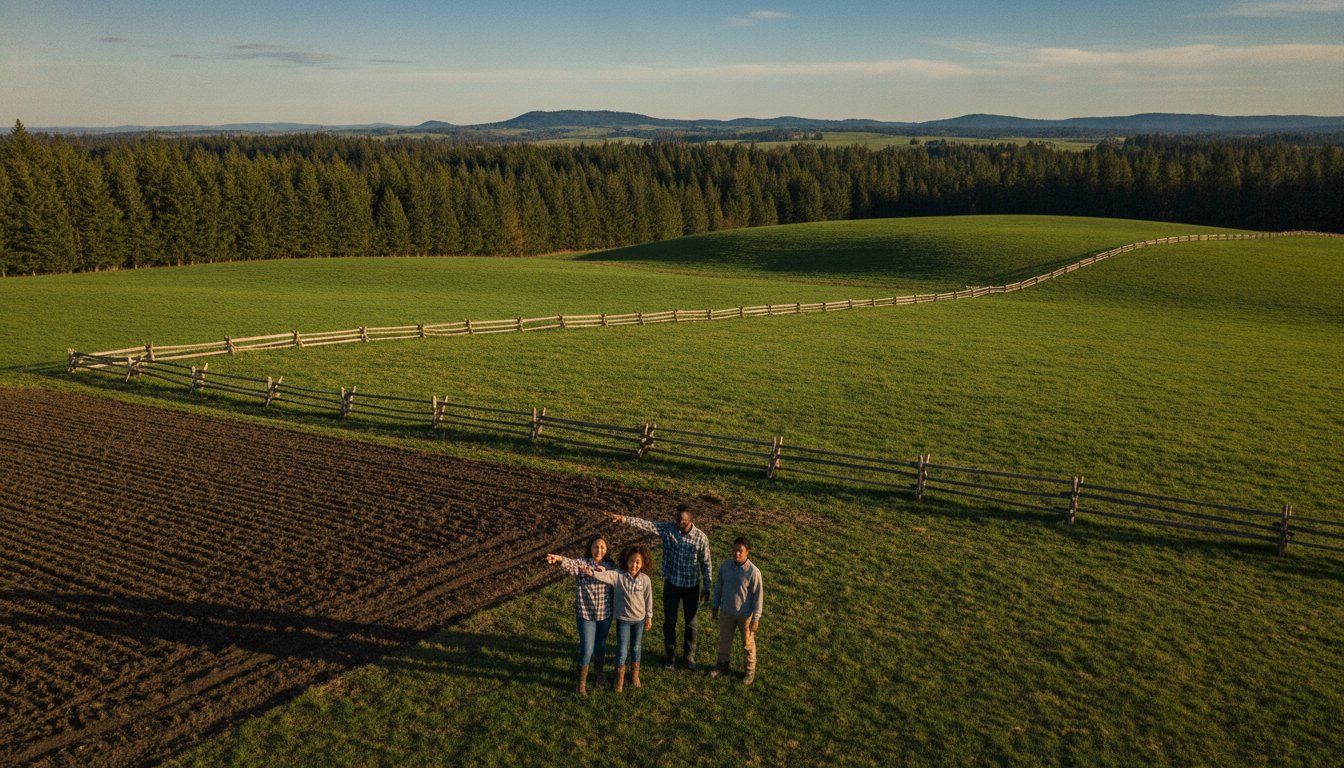
Most homesteading dreams fail long before the first harvest because the owners bought the wrong piece of dirt. If you want to know how to start a family homestead from scratch, you must prioritize utility over aesthetics. A beautiful sunset won’t fix a lack of water rights or restrictive zoning laws. You want a self-sufficient life, but the gap between a dream and a functional property feels massive. You’re likely worried about overpaying for a “lemon” property or getting buried under unexpected infrastructure costs.
We understand that frustration. We’re here to eliminate it. This 2026 guide provides a no-nonsense strategy that prioritizes land quality. You’ll learn how to identify high-value raw parcels, navigate the complexities of off-grid utilities, and set a realistic timeline for your first harvest. We provide a clear, multi-step roadmap to move you from searching vacant land listings to established self-sufficiency. Our approach ensures you receive an equitable financial proposal on your land purchase without the distraction of hidden fees or service costs.
Key Takeaways
- Identify the critical differences between a hobby farm and a truly self-sufficient homestead on raw land.
- Learn the essential criteria for evaluating vacant land parcels to ensure they support water, power, and crops.
- Discover how to prioritize infrastructure costs to build a functional homestead without draining your budget.
- Follow a proven roadmap on how to start a family homestead from scratch that focuses on land quality first.
- Access specialized tools to find affordable, off-grid land parcels that meet your family’s long-term needs.
Defining the From-Scratch Homestead: Land vs. Lifestyle
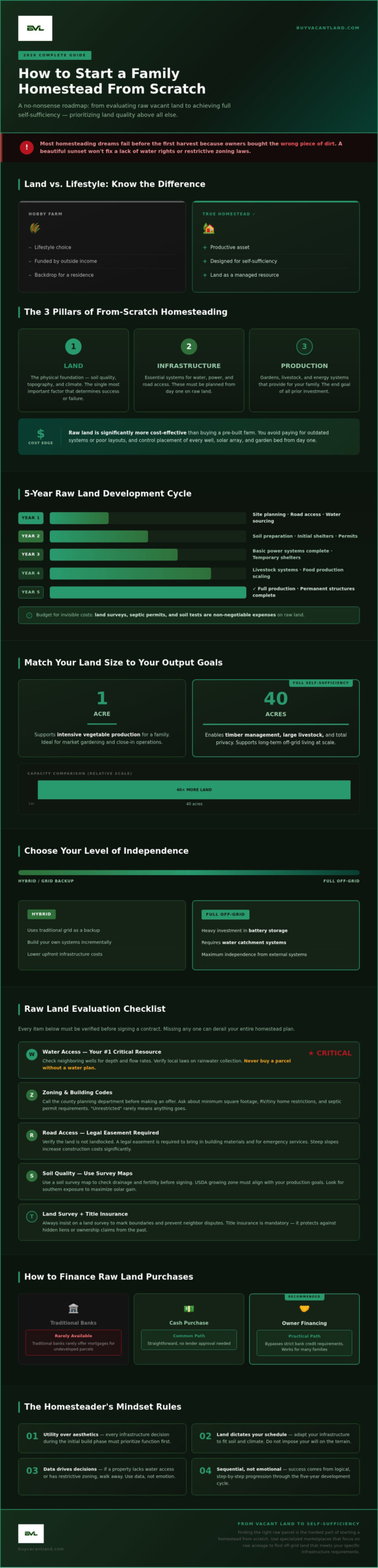
Starting a homestead from scratch means you begin with undeveloped, vacant land. It’s a process that lacks existing utilities, structures, or cleared fields. Many people confuse hobby farming with true homesteading. A hobby farm is a lifestyle choice often funded by outside income. A homestead is a productive asset designed for long-term self-sufficiency. To understand what a homestead traditionally means, you must view the land as a resource to be managed rather than a backdrop for a residence.
Learning how to start a family homestead from scratch requires a focus on three specific pillars:
- Land: The physical foundation, including soil quality, topography, and climate.
- Infrastructure: The essential systems for water, power, and road access.
- Production: The gardens, livestock, and energy systems that provide for your family.
Raw land is significantly more cost-effective than buying a pre-built farm. You avoid paying for someone else’s outdated systems or poor layouts. Buying undeveloped parcels allows you to build exactly what you need. You control the placement of every well, solar array, and garden bed from day one.
The Reality of Building on Raw Land
Building on raw land is a multi-year commitment. Expect a five-year development cycle for a fully functional site. Year one focuses on site planning, road access, and water. Year three usually sees the completion of basic power systems and temporary shelters. By year five, you should reach full production capacity with permanent structures. You must budget for invisible costs. Land surveys, septic permits, and soil tests are non-negotiable expenses. A no-nonsense mindset is your best tool. Efficiency and utility must always come before aesthetics during the initial build phase.
Setting Your Homesteading Goals
Decide your degree of independence before you buy. Full off-grid living requires heavy investment in battery storage and water catchment systems. A hybrid approach uses the traditional grid as a backup while you build your own systems. Match your land size to your output goals. One acre can support intensive vegetable production for a family. Forty acres allow for timber management, large livestock, and total privacy. A homestead is a managed environment where the land’s output provides the primary sustenance and security for the family unit.
Knowing how to start a family homestead from scratch means accepting that the land dictates your development schedule. You don’t impose your will on the terrain. You adapt your infrastructure to fit the soil and climate. Success comes from logical, sequential progression rather than emotional impulses.
The Land Search: How to Evaluate Raw Parcels for Homesteading
The dirt you choose determines your success or failure. When you learn how to start a family homestead from scratch, your first priority is the land’s utility. Start by identifying your priority regions based on USDA growing zones. A zone 4 climate requires different infrastructure than zone 8. Analyze the topography of every parcel. Steep slopes increase construction costs and complicate garden layouts. Look for southern exposure to maximize solar gain and extend your growing season.
Water is your most critical resource. Never buy a parcel without a plan for water. Check for existing wells on neighboring properties to gauge depth and flow rates. If you rely on rainwater catchment, verify local laws first. Some states strictly regulate how much water you can collect. Soil quality is equally vital. Use a soil survey map to check for drainage and fertility before you sign a contract. You can find off-grid land that meets these specific requirements by using specialized marketplaces that focus on raw acreage.
Zoning and Building Codes
Unrestricted land is a common term that is often misunderstood. It rarely means you can do whatever you want. Most counties still require septic permits and health department approvals. Call the county planning department before making an offer. Ask about minimum square footage requirements for dwellings. Some areas prohibit living in an RV or tiny home long-term. Verify that the land is not landlocked. You need a legal easement for road access to bring in building materials and emergency services.
The Logistics of Buying Land
Buying raw land differs from buying a house. Traditional banks rarely offer mortgages for undeveloped parcels. You’ll likely choose between a cash purchase or owner-financed land deals. Owner financing is a practical path for many families because it bypasses strict bank credit requirements. Always insist on a land survey to mark your boundaries clearly. This prevents future disputes with neighbors. Title insurance is also mandatory. It protects you against hidden liens or ownership claims from the past. For a deeper look at the transaction process, read our guide on how do you buy land to ensure a secure purchase.
Finding the right plot is the hardest part of how to start a family homestead from scratch. Use data to drive your decision. If a property lacks water access or has restrictive zoning, walk away. There’s always another parcel that fits your needs and budget. Efficiency in the search phase saves years of frustration during the build phase.
Essential Infrastructure: Establishing Water, Power, and Access
Infrastructure is the engine of your homestead. Without water and power, your land is just a campsite. When learning how to start a family homestead from scratch, you must tackle these systems before planting a single seed. Every dollar spent here increases your property value and survival odds. You can’t farm without water, and you can’t build efficiently without power. Prioritize these “invisible” systems to ensure your family’s long-term security.
Securing a Reliable Water Source
Water dictates your survival. Drilling a well provides long-term security but requires a high upfront cost. In 2026, drilling costs often range from $30 to $60 per foot depending on the depth and local geology. This price usually includes the casing and pump installation. Before you install a septic system, you must perform a perc test. This test measures how quickly soil absorbs liquid. If your soil fails, you’ll need a more expensive engineered system or a mound system. Water rights are another hurdle. Many Western states decouple land ownership from water rights. Always verify you have the legal right to use the water under your feet before closing on a parcel. If a well is too expensive, consider rainwater catchment or hauling water as temporary measures.
Off-Grid Power Systems
Solar is the standard for modern homesteaders. A family of four typically needs a 5kW to 10kW system to maintain a modern lifestyle. You must include battery storage to bridge the gap during cloudy days. Lithium iron phosphate (LiFePO4) batteries are the 2026 choice for efficiency and safety. Don’t rely solely on the sun. A backup propane or diesel generator is a necessity for emergencies. Reduce your energy demand before you buy your panels. Use LED lighting, high-efficiency appliances, and manual tools where possible. Every watt saved is money kept in your pocket. Traditional grid tie-ins are sometimes cheaper if the line is close, but they leave you vulnerable to outages.
Waste management is your next priority. A traditional septic system is required in most counties for a certificate of occupancy. If you’re in a remote area, composting toilets offer a low-cost alternative for outbuildings. Don’t ignore building access. Clearing a path and laying a gravel driveway can cost thousands depending on the distance. Heavy equipment rental is often more efficient than manual labor for road building. Ensure your driveway can support the weight of a concrete truck or a fire engine. Proper planning here prevents your homestead from becoming a muddy trap during the winter months. Successful homesteading requires a logical, sequential progression from raw land to a fully functional site.
Developing the Productive Landscape: Soil, Shelter, and Livestock
Turning raw dirt into a food-producing asset is the core of how to start a family homestead from scratch. You must prioritize soil health before you buy your first cow. Raw land often lacks the nutrients needed for intensive gardening. Start with a comprehensive soil test to identify deficiencies. Use cover crops like clover or vetch to fix nitrogen naturally. This is a low-cost way to build fertility while you focus on other infrastructure projects. You can’t grow a self-sufficient garden in depleted soil.
Soil Health and Gardening
The “No-Dig” method is your most efficient gardening strategy. It involves layering compost and mulch directly over the grass. This suppresses weeds and builds topsoil without disturbing the existing microbial life. It’s faster and less labor-intensive than traditional tilling. If you haven’t secured a plot yet, look for cheap land for sale that offers existing arable soil. This saves you years of remediation work and puts you on a faster track to your first harvest.
Shelter is your next hurdle. Don’t build your permanent home immediately. Use a temporary shelter like a yurt or a heavy-duty shed to live on-site during the initial development. This allows you to observe the land’s natural patterns throughout the seasons. You’ll learn where the wind hits hardest and where the sun lingers longest. Place your permanent house in a spot that maximizes these natural resources. Use a permaculture layout to group your most-visited zones, like the kitchen garden, close to your living area.
Livestock Integration
Resist the urge to buy large livestock immediately. Chickens and bees are the most practical entry points for a new homestead. They provide immediate returns in eggs and honey with minimal infrastructure requirements. Large animals like cattle require robust fencing and significant pasture management. You must calculate your land’s carrying capacity to avoid overgrazing. A sustainable livestock-to-land ratio typically requires one acre of high-quality pasture for every cow or five sheep to maintain soil health. Overstocking leads to mud, parasites, and expensive supplemental feed bills.
Fencing is a non-negotiable expense. Use high-tensile wire or woven field fencing to protect your animals from predators. Build your enclosures before the animals arrive on the property. Managing livestock on an unfenced parcel is a recipe for disaster. If you’re ready to find a parcel with enough acreage for your animals, find your homestead plot today on our marketplace. Success in how to start a family homestead from scratch depends on a logical, sequential build-out of your productive landscape.
Taking the First Step: Finding Your Homestead Plot Today
The transition from dreamer to landowner requires a shift in focus from “what if” to “where is”. You’ve researched the soil, the solar arrays, and the livestock. Now you must secure the physical asset. General real estate platforms are cluttered with suburban houses and rental properties that don’t fit your goals. Using a specialized marketplace is the fastest way to bridge this gap. It puts you in direct contact with sellers who understand the value of raw, undeveloped land. The journey of how to start a family homestead from scratch only truly begins when you sign the deed.
Efficiency is your greatest advantage in a competitive market. Specialized platforms allow you to filter for exactly what you need. If you want a remote life away from city restrictions, filter for “Off Grid Land”. If your plan involves large animals, focus your search on “Farms and Ranches”. This targeted approach saves you hundreds of hours of scrolling through irrelevant residential lots. You need a tool built for the specific requirements of a homesteader, not a house hunter.
Navigating the BuyVacantLand.com Marketplace
Speed determines who gets the best deals. You can set up automated alerts for new parcels in your target state to ensure you see the best opportunities the moment they hit the market. Direct communication with sellers allows you to get answers about soil quality, water rights, and access without middleman delays. For example, if you are analyzing regional opportunities, you might explore listings across different states to see how local zoning laws and climate conditions impact your overall search strategy. Every minute saved in the search phase is a minute gained in the build phase.
Your 2026 Homesteading Action Plan
Follow this simplified sequence to move from search to ownership. First, define your total budget, including the purchase price and your first year of infrastructure costs. Second, search the marketplace using filters that match your growing zone and utility needs. Third, verify the zoning by calling the county planning department to confirm your building plans are legal. Take action now. Affordable land is a finite resource, and delaying your search usually means paying more for less utility later. The most successful homesteaders are those who act with certainty when they find a parcel that meets their criteria.
Once you secure your land, your first 30 days are critical for establishing a presence. Secure your perimeter with basic fencing or signage. Establish a temporary water source immediately. Clear a small area for equipment storage or a temporary shelter. These steps protect your investment and set the stage for your first growing season. You now have the roadmap for how to start a family homestead from scratch. The next step is yours to take. Browse our vacant land listings and start your journey today.
Secure Your Future on Your Own Terms
Building a self-sufficient life requires more than a dream. It demands a pragmatic strategy that starts with the right dirt. You now have the roadmap for how to start a family homestead from scratch by prioritizing utility over aesthetics. Success comes from a logical sequence. Find raw land. Secure water and power. Build your productive landscape. You don’t need to navigate this process alone or pay unnecessary middleman fees. Efficiency is the key to a swift and assured transition into asset ownership.
We simplify the search process by providing national listings of off-grid and undeveloped land. Our platform focuses exclusively on vacant parcels; you won’t waste time on residential homes or rentals. You can communicate directly with sellers to get answers fast and secure an equitable financial proposal. Take the first step toward your family’s independence today. Your productive homestead is waiting for its foundation. Start your homestead search today on the BuyVacantLand.com marketplace and turn your vision into a functional reality.
Frequently Asked Questions
How much money do I need to start a homestead from scratch?
You need enough capital to cover the land purchase, essential infrastructure, and initial production costs. Many buyers utilize owner financing to lower the upfront burden and keep cash liquid for development. Budget for a land survey, soil tests, and building permits immediately. Infrastructure like wells and septic systems often costs as much as the land itself. A no-nonsense approach involves starting with a small parcel to keep initial equipment costs manageable.
What is the minimum acreage required for a family homestead?
One acre is the minimum for intensive vegetable production and small livestock like chickens. If you plan to raise larger animals or manage timber, target five to ten acres. Your goals dictate the size. A self-sufficient family can thrive on a small plot with efficient permaculture design. Larger parcels offer more privacy but increase the workload for maintenance and fencing. Prioritize land quality over total size to ensure productivity.
Can I live in an RV on my land while building a homestead?
Living in an RV depends entirely on local county zoning laws and building codes. Many jurisdictions prohibit long-term RV living unless you have an active building permit and a permitted septic system. Always call the county planning department before you buy. Some remote areas are more lenient, but you must verify the rules to avoid fines or eviction during your build process. Secure your permits before moving on-site to ensure a smooth transition.
How do I find land with guaranteed water rights?
You must verify water rights during the due diligence period before closing on a parcel. Hire a water rights attorney or a qualified land surveyor to check the deed and state records. In the Western United States, land ownership doesn’t always include the water underneath. Look for listings on specialized marketplaces that mention existing wells or adjudicated water rights. This step is critical to ensure your family’s long-term survival and agricultural success.
What are the most common mistakes beginners make when buying land?
Beginners often fail to verify legal access or overlook restrictive zoning laws. Buying landlocked property without an easement is a critical error. Skipping a professional land survey or soil test can lead to expensive infrastructure failures later. Focus on the land’s utility rather than the view. Ensure the parcel supports your specific goals for how to start a family homestead from scratch before you commit your hard-earned funds.
Is it possible to start a homestead with no previous farming experience?
You can start without experience by prioritizing land quality and starting small. Focus on one system at a time, such as a kitchen garden or a small flock of chickens. Research and preparation are your best tools. Choosing the right parcel on a specialized marketplace like BuyVacantLand.com simplifies the process. This allows you to focus on learning lifestyle skills rather than fighting a poor property with bad soil or no water.
How do I check the zoning laws for a vacant lot?
Call the county planning and zoning department where the land is located. Provide the assessor’s parcel number (APN) to get specific information about the property. Ask about dwelling requirements, set-backs, and livestock restrictions. Don’t rely on verbal promises from neighbors or sellers. Request a written copy of the zoning ordinance to ensure your plans for how to start a family homestead from scratch are legally sound and permitted.
What is owner financing and how does it help homesteaders?
Owner financing occurs when the seller acts as the bank and allows you to make monthly payments. This helps homesteaders by bypassing strict traditional bank requirements for raw land loans. It often requires a lower down payment and offers a faster closing process. This method provides an equitable financial proposal for families who want to secure land quickly without traditional credit hurdles. It is a pragmatic path to land ownership for many new buyers.


Join The Discussion