
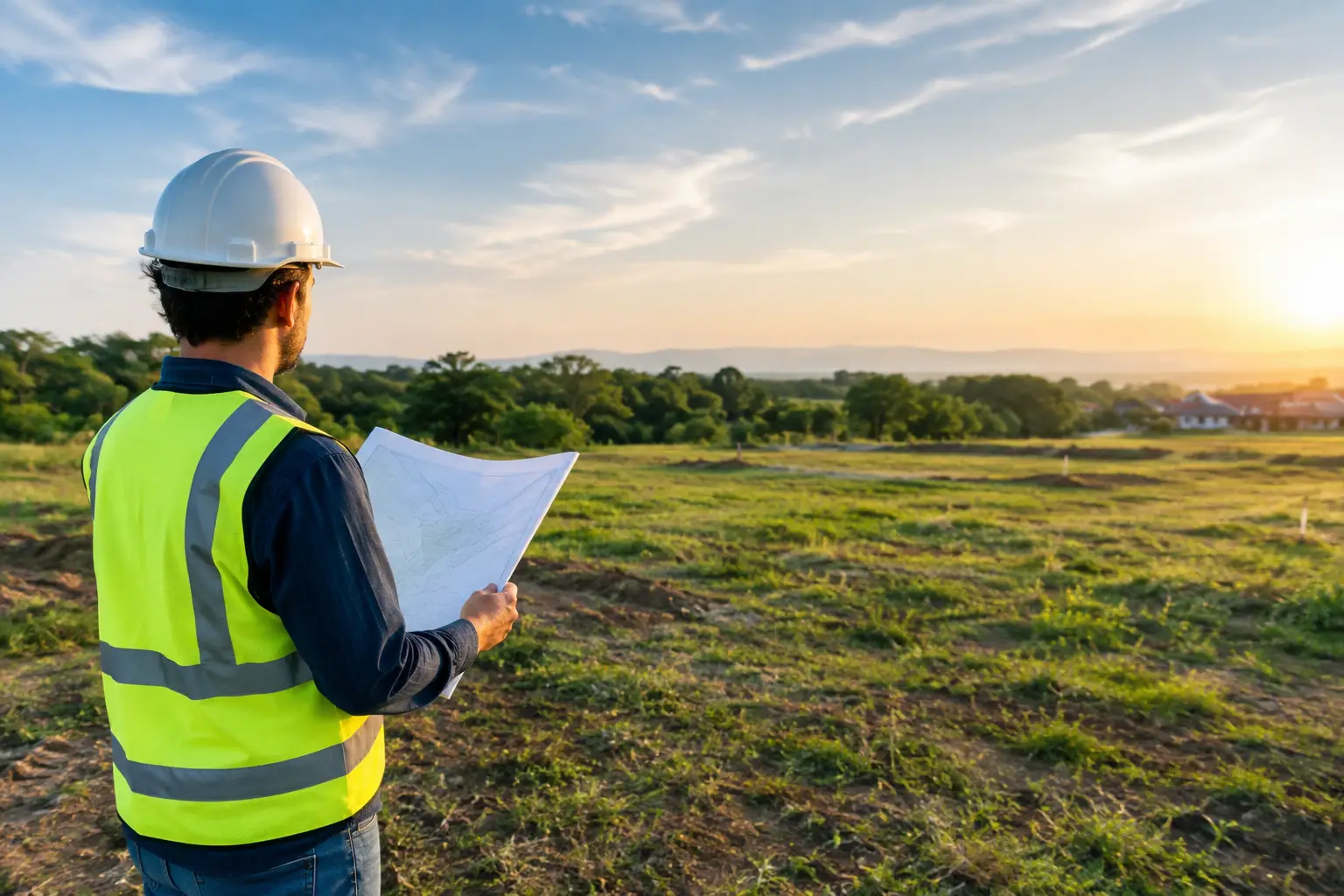
A low price can make an empty parcel look like a great deal. But land is not automatically ready for a house, cabin, RV site, barn, or business just because it is vacant. What makes land buildable is the combination of legal permission, physical suitability, and practical access needed to use the property the way you intend.
That distinction can protect your budget. A parcel with no road access, unsuitable soils, restrictive zoning, or costly utility challenges may still have value for recreation, hunting, investment, or long-term holding. It may not, however, be the affordable homesite or income property you had in mind. Before making an offer, look beyond acreage and price to find out what the land can realistically support.
What Makes Land Buildable?
Buildable land is a parcel where a proposed structure can be legally permitted and physically constructed. The details vary by county, municipality, and intended use. A lot that works for a seasonal cabin may not qualify for a full-time residence. A parcel that permits a single-family home may not allow a manufactured home, RV living, short-term rentals, livestock, or commercial activity.
The strongest parcels align in several ways: their zoning allows the use, they have lawful access, the site can handle wastewater and drainage, and utilities can be brought in at a reasonable cost. There also needs to be a clear ownership path and enough usable area to meet local setbacks, easements, and building requirements.
Buildability is not always a simple yes-or-no answer. Sometimes the land is buildable after a septic test, driveway permit, utility extension, grading work, rezoning, or variance. The question is whether those steps are achievable and financially sensible for your plan.
Start With Zoning and Land-Use Rules
Zoning is often the first checkpoint because it determines the uses a local government allows on a parcel. Residential, agricultural, commercial, industrial, and mixed-use designations each come with different rules. Even within residential zoning, local ordinances may limit the number of homes, minimum home size, accessory dwelling units, mobile homes, or manufactured homes.
Ask the local planning or zoning office for the parcel’s zoning designation and permitted uses. Explain your intended use clearly. If you want to place a tiny home, build a barndominium, operate a home business, park an RV while building, or keep horses, say so. Broad questions such as “Can I build?” can produce incomplete answers.
Also ask about minimum lot size, frontage requirements, setbacks, height limits, floodplain rules, and whether the property is subject to a subdivision ordinance. These standards can affect where a structure can sit, not just whether one is allowed.
A parcel outside city limits is not necessarily free of regulation. Counties commonly enforce zoning, building codes, septic rules, driveway requirements, and floodplain standards. If there is no zoning, deed restrictions, homeowners’ association rules, or recorded covenants may still control how the land can be used.
Legal, Reliable Road Access Matters
A property needs more than a path on a map. For most building plans, you need legal and practical access from a public road or a recorded easement. Landlocked parcels can sometimes be accessed through neighboring land, but never assume a neighbor’s verbal permission will carry over after ownership changes.
Review the deed, title commitment, plat, and survey to confirm how access is granted. A recorded ingress and egress easement is far stronger than an informal trail. You should also understand who maintains the road. Private roads can be perfectly workable, but road maintenance agreements, seasonal conditions, gate access, and emergency vehicle access can all affect the property’s usefulness.
In some areas, a new driveway or road entrance requires approval from the county or state transportation department. Culverts, sight-distance standards, and drainage improvements may add cost. For a rural homesite, a long driveway can become one of the largest early expenses, especially on wooded, steep, or wet ground.
Test the Ground, Not Just the View
Beautiful land can still present expensive construction challenges. Soil, slope, drainage, and topography influence the foundation, driveway, septic system, and usable building area.
If public sewer is unavailable, a successful septic evaluation is one of the most important buildability tests. A soil scientist, engineer, or local health department may evaluate the soil’s ability to treat wastewater. High groundwater, shallow bedrock, heavy clay, or poor percolation can limit conventional septic options. Alternative systems may be possible, but they can cost significantly more and require ongoing maintenance.
Topography matters for the same reason. Moderate slopes can offer views and privacy, while severe slopes may require retaining walls, engineered foundations, extensive excavation, or difficult access for construction equipment. Check for low areas that collect water, seasonal creeks, drainage easements, and signs of erosion.
Flood zones deserve careful attention as well. Land in a floodplain is not always unbuildable, but construction may require elevation, engineering, permits, and flood insurance. The portion of a parcel outside the floodplain may be much smaller than the total acreage advertised, so focus on the actual building envelope.
Utilities Can Change the True Cost of Land
A buildable lot does not always have electric, water, sewer, gas, or internet already in place. That is common with rural acreage and does not automatically make a property a poor choice. It simply means you need real numbers before deciding whether the opportunity fits your budget.
Call utility providers with the parcel number or address and ask whether service is available, where the nearest connection point is, and what extension costs may apply. Electric service can be relatively straightforward near an established road, but bringing power across a long distance or difficult terrain can be costly. Water may come from a public system, a private well, or a shared rural water line. Each option has different availability, permitting, and installation costs.
Off-grid living can be an attractive solution for the right buyer. Solar power, batteries, propane, rainwater collection where permitted, and a well can support a self-reliant lifestyle. Still, off-grid does not mean rule-free. Local building, sanitation, and occupancy requirements may apply, and the upfront investment should be part of your land budget.
Broadband is another practical consideration. If you work remotely, plan to manage a business from the property, or simply want reliable connectivity, verify available service rather than relying on a coverage map. Satellite, fixed wireless, and cellular options vary widely by location.
Confirm Boundaries, Easements, and Ownership Rights
A survey can reveal issues that listing photos cannot. It helps identify boundary lines, encroachments, access points, utility easements, and the usable location for future improvements. If a neighboring fence is not on the boundary line, or an easement crosses the only level building site, that knowledge is valuable before closing.
Title work is equally important. You want to know that the seller can convey clear ownership and that there are no liens, unpaid taxes, restrictive covenants, mineral-rights issues, or other recorded matters that could affect your plans. In some regions, mineral rights may be separate from surface rights. That does not always prevent residential construction, but it can affect long-term use and should be reviewed carefully.
For larger acreage, pay attention to conservation easements, timber contracts, agricultural leases, hunting leases, and shared-water agreements. These may support the property’s value or income potential, but they can also limit development choices.
Buildability Depends on Your Specific Plan
The right due diligence starts with a simple question: what do you want this land to do for you? A buyer seeking a quiet camping parcel may prioritize privacy, trees, and recreation. An aspiring homesteader may need favorable soils, water access, room for animals, and fewer use restrictions. An investor may care most about road frontage, nearby growth, zoning flexibility, and resale demand.
Before you make an offer, create a short checklist for your intended use. Confirm zoning and restrictions, verify legal access, ask about utilities, review flood and topographic conditions, and determine whether septic or sewer is feasible. Then build a realistic estimate that includes closing costs, site preparation, permits, driveway work, utility connections, and contingency funds.
If you are comparing several parcels, this process makes the decision clearer. The cheapest property is not always the best value. A slightly higher-priced lot with approved septic, paved access, nearby power, and compatible zoning can save substantial time and money later.
A Smart Next Step Before Closing
Most buyers should make their offer contingent on due diligence when possible. This gives you time to speak with local officials, utility providers, surveyors, septic professionals, lenders, and contractors before your earnest money becomes nonrefundable. Requirements differ by location, so rely on the appropriate county or municipal offices and qualified local professionals for property-specific answers.
Land ownership can create room for a home, a retreat, a business, or a long-term investment. The smart move is to buy the parcel that supports your vision on paper and on the ground, so your plans have somewhere solid to grow.

Join The Discussion