
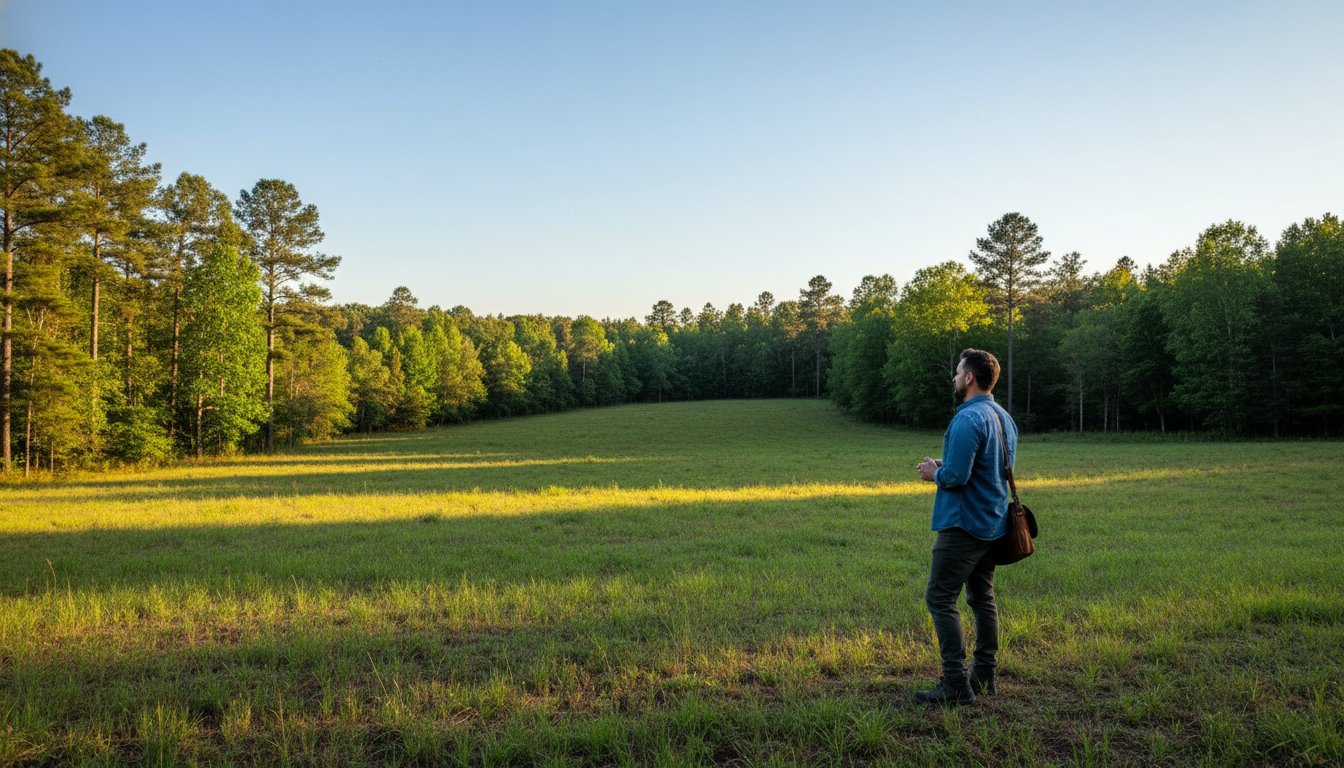
Buying a secluded property isn’t a lifestyle choice; it’s a technical acquisition. You can find raw land in New Mexico for $725 per acre in 2026, but a low price tag is worthless if the parcel lacks legal access or water rights. You’re likely searching for remote acreage for sale because you want freedom, yet the fear of buying a “useless” lot keeps you paralyzed. It’s frustrating to stare at a beautiful listing while wondering if zoning laws or hidden easements will kill your plans.
You don’t need to be a developer to buy land safely. This guide gives you the exact framework to evaluate, secure, and own secluded property without the typical legal pitfalls. We’ll break down the 2026 USDA Farm Ownership rates, which currently sit at 5.875% for direct loans, and explain how to navigate rural opportunity zones. You’ll learn to calculate the total cost of ownership and master the due diligence process. We’ve simplified the complex steps so you can move from browsing to owning with total confidence.
Key Takeaways
- Define remote land as undeveloped property outside metropolitan service areas and understand how decentralization drives 2026 market demand.
- Prioritize the three pillars of land evaluation—access, water, and zoning—to ensure your secluded parcel is physically and legally functional.
- Secure remote acreage for sale by following a streamlined 5-step acquisition process that removes traditional procedural hurdles.
- Filter out the noise of residential listings by using specialized marketplaces that focus exclusively on vacant, undeveloped land parcels.
- Match specific land features to your primary goal, whether you are seeking off-grid living, recreational use, or long-term asset security.
Defining Remote Acreage for Sale: Market Trends and Opportunities
Remote acreage for sale refers to undeveloped land situated outside major metropolitan service areas. This is not just rural property; it is land located beyond the reach of standard city utilities and municipal services. In 2026, this asset class has become a primary focus for buyers seeking decentralization and tangible security. Owning physical earth provides a level of control that digital assets or paper investments cannot match. Our platform focuses strictly on vacant land. We do not list homes or rental properties. This specialization ensures you find the privacy and lower cost per acre you need without the clutter of traditional residential real estate.
Why Remote Land is a Strategic Asset in 2026
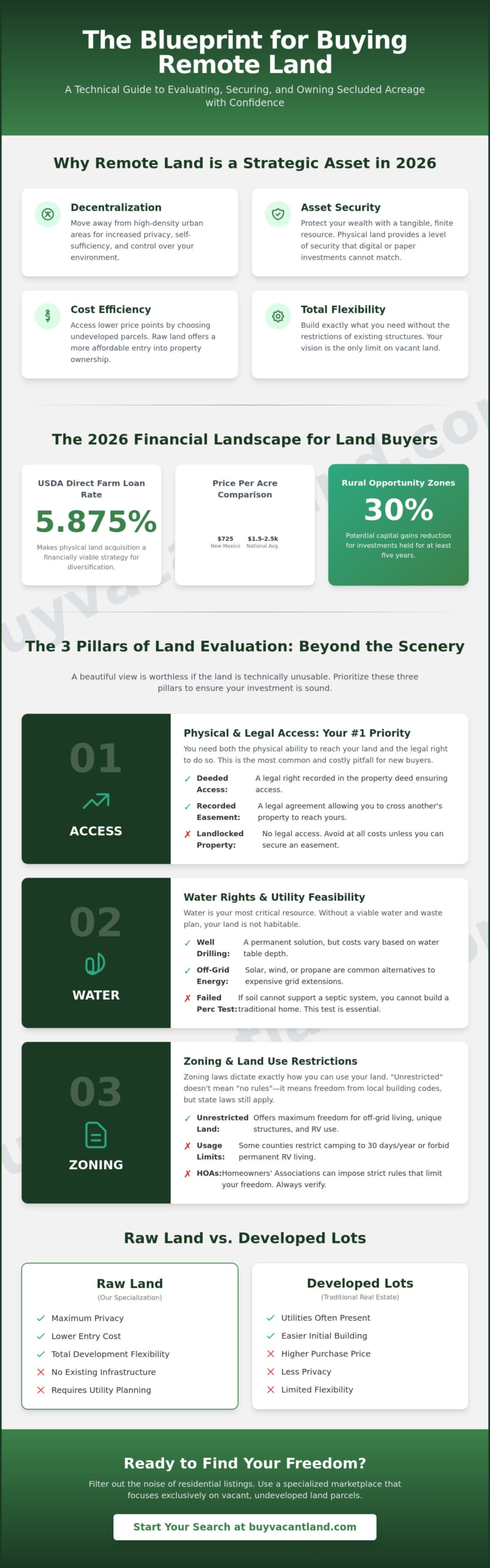
The shift toward land ownership is driven by economic volatility and a desire for self-sufficiency. Many buyers now view cheap land for sale as a necessary hedge. Large, contiguous parcels are becoming scarce as demand for recreational and off-grid property increases. Understanding the legal systems of land ownership is vital before you commit capital. In June 2026, the USDA Farm Ownership Loan rate stands at 5.875% for direct loans. This makes physical land acquisition a viable strategy for those looking to diversify. National averages for undeveloped rural land currently range between $1,500 and $2,500 per acre, though prices in states like New Mexico can drop as low as $725 per acre. Additionally, investments in Rural Opportunity Zones after December 31, 2025, are eligible for a 30% capital gains reduction if held for five years. This creates a significant financial incentive for long-term holders.
The Reality of Raw Land vs. Developed Lots
You must distinguish between raw land and improved lots before starting your search. Raw land has no improvements. There are no power lines, no septic systems, and often no cleared access roads. This marketplace focuses exclusively on vacant land to ensure maximum buyer flexibility. We exclude developed properties to save you time and keep your search efficient. Expect a lack of immediate infrastructure on remote acreage. You are responsible for every aspect of development, from water sourcing to waste management. This lack of development is precisely why these parcels offer high privacy and lower entry costs. A “two-speed” market is currently emerging. Premium properties with renewable energy potential or water rights are appreciating faster than single-use agricultural land. Focus on the physical and legal feasibility of the dirt rather than just the scenery.
- Decentralization: Move away from high-density areas for increased privacy.
- Asset Security: Protect your wealth with a tangible, finite resource.
- Cost Efficiency: Access lower price points by choosing undeveloped parcels.
- Flexibility: Build exactly what you need without being restricted by existing structures.
Critical Evaluation Factors: Beyond the Scenery
A stunning mountain view is a distraction if the land is legally unreachable or physically unbuildable. You must prioritize technical feasibility over aesthetics every time. Never purchase remote acreage for sale without a professional boundary survey. This document confirms exactly where your property lines sit and identifies any encroachments. High slopes, rocky terrain, or protected wetlands can render a parcel useless despite its beauty. Reviewing consumer protection regulations for land purchases helps you identify the mandatory disclosures sellers must provide. Master the Three Pillars of remote land: Access, Water, and Zoning.
Physical and Legal Access: The #1 Pitfall
Deeded access is a legal right recorded in the property deed, while physical access is the actual ability to drive a vehicle to the boundary. You need both to secure your investment. A landlocked property has no legal way to enter or exit through neighboring parcels. These properties are often cheap for a reason; they are legal nightmares. Avoid them unless you have a recorded easement. An easement is a legal agreement allowing you to cross another person’s land to reach your own. Verify these documents during your due diligence period to ensure long-term rights.
Water Rights and Utility Feasibility
Water is your most significant utility variable in remote areas. Drilling a well is a common solution, but costs vary wildly based on the water table depth. Hauling water is a lower-cost entry point but demands constant logistics and large storage tanks. For energy, evaluate off-grid options like solar, wind, or propane as alternatives to expensive grid-tie extensions. A perc test is the essential soil suitability requirement used to determine if the ground can support a functional septic system. Without a passing perc test, you cannot build a traditional home or cabin.
Zoning and Unrestricted Land Realities
Zoning laws dictate exactly how you can use your land. Some counties restrict camping to 30 days per year or forbid living in an RV permanently. Unrestricted land offers the most freedom, but you must still follow state health and safety codes. This is a stark contrast to parcels governed by strict HOAs or county development codes. Always research how do you buy land with a specific goal like homesteading or hunting in mind. You can view off-grid land for sale to find properties that match your specific development needs.
Comparing Land Use Categories: Strategic Selection
Selecting the right remote acreage for sale requires a clear objective. You cannot evaluate a property effectively without a defined intended use. The “best” land does not exist in a vacuum; it depends entirely on your intended exit strategy. We categorize remote land into three primary uses: Off-Grid, Recreational, and Investment. Our marketplace allows you to filter listings by these categories to streamline your search. Match the land’s physical features to your specific goals to avoid buying a parcel that doesn’t fit your needs.
Off-Grid Living and Homesteading
Successful homesteading relies on the land’s inherent resources. Focus on soil quality and the depth of the water table. You must verify the growing season length for your specific region before committing capital. Southern exposure is a critical requirement for solar efficiency. It ensures your panels capture maximum sunlight during short winter months. Year-round access is another non-negotiable factor for permanent residents. If the county stops maintaining the road miles from your gate, you are responsible for snow removal. This adds significant cost and labor to your daily life. Evaluate these physical features before you consider the scenery.
Recreational and Hunting Land
Recreational land should be judged by its proximity to public features. Seek parcels near state parks, national forests, or rivers. Wildlife is naturally attracted to “edge habitat” where different types of vegetation meet. Water sources on or near the property are essential for attracting game. You can often find a lower price per acre by accepting seasonal access. If you only plan to visit during hunting season or summer months, an impassable winter road is a minor inconvenience. This trade-off saves you thousands in upfront costs while providing the same recreational utility.
Buy-and-Hold Land Investment
Strategic investors look for long-term appreciation in path-of-progress areas. Land banking is the strategy of holding undeveloped property as a wealth preservation tool. It is a low-maintenance strategy compared to managing residential rentals. Investors frequently choose owner financed land to minimize carrying costs. This approach allows you to secure an asset without the hurdles of traditional bank financing. Focus on areas with low property taxes to maximize your eventual return. Your goal is to park capital in a finite resource that requires minimal oversight.
Managing the Remote Acquisition Process: A Practical Framework
Securing remote acreage for sale requires a disciplined, step-by-step approach to avoid common procedural hurdles. You don’t need a traditional real estate agent to buy land, but you do need a reliable framework. Direct communication with land sellers is the fastest way to clarify property specifics and negotiate terms. Using a dedicated land marketplace allows you to cut through the noise of residential listings and focus on raw dirt. A title company is your primary safeguard during this process. They verify the chain of ownership and ensure you receive a clean deed free of undisclosed liens. Follow these steps to move from discovery to ownership with total efficiency.
Step 1: Define Your Non-Negotiables
Create a strict checklist before you begin your search. Your primary filters should include minimum acreage, maximum distance from the nearest town, and your total acquisition budget. Establish clear “no-go” criteria for properties that lack legal access or have severe topographical limitations. If a parcel doesn’t meet these standards, walk away immediately. Consult the lands of america guide for broader market context and to understand regional price variations. This clarity prevents you from wasting time on properties that won’t suit your long-term goals.
Step 2: Remote Due Diligence Techniques
Step 3: Negotiating and Closing the Deal
Cash offers are the most effective way to secure remote acreage for sale. They eliminate the delays associated with bank financing and often result in a lower purchase price. Structure your offer with a defined “due diligence period” to allow for final soil tests or surveys. Negotiating the price is just one part of the deal. Step 4 of the process involves the actual closing with a title company to ensure a clean transfer. Step 5 is the physical recording of the deed with the county clerk. This sequence ensures your ownership is legally recognized and protected. Start your search today and browse our current remote land listings to find a parcel that fits your framework.
- Step 1: Define your non-negotiables and budget.
- Step 2: Conduct remote due diligence via GIS and county records.
- Step 3: Submit an offer with a due diligence period.
- Step 4: Close the transaction through a title company.
- Step 5: Record the deed with the county to finalize ownership.
Leveraging a Specialized Marketplace for Efficient Discovery
General real estate websites are cluttered. They force you to filter through thousands of houses and rental properties just to find one piece of dirt. BuyVacantLand.com solves this problem. We are a specialized marketplace. We strictly exclude homes and rentals to save you time. This focus ensures every listing you see is a potential asset. Our platform serves as a streamlined tool for finding land for sale in florida and high-value parcels across the United States. You connect directly with land owners and sellers. This direct link removes the traditional procedural hurdles that slow down acquisitions. You need remote acreage for sale that meets your technical requirements. We provide the platform to find it without the noise.
The Benefits of a Focused Land Listing Platform
Specialized filters allow for rapid discovery. You can isolate off-grid land or hunting parcels with a single click. This speed is essential in the 2026 market where high-quality inventory is in high demand. Sellers on our platform understand the technical nature of vacant land. They provide the data you need: zoning codes, topography, and access rights. There are no hidden service fees or common transactional costs often found with traditional brokers. This transparency leads to a swift, assured transaction. You get the facts. You make the decision. You secure the land. This streamlined approach mirrors the efficiency you need to manage your assets effectively.
Getting Started: Your Path to Land Ownership
The 2026 market presents unique opportunities for prepared buyers. Federal tax incentives for Rural Opportunity Zones now offer a 30% capital gains reduction if you hold the land for five years. Use your new technical evaluation framework to browse current listings. Prioritize properties that meet your non-negotiable criteria for water, access, and soil quality. The process is now simplified into a clear sequence. First, identify your target region. Second, apply our due diligence techniques to verify the parcel. Third, contact the seller directly to finalize the proposal. Speed and certainty are your primary advantages in this competitive landscape. Do not wait for traditional procedural hurdles to clear. Take direct action to secure your secluded property now.
Browse our current listings of remote acreage for sale today.
Secure Your Secluded Property with Confidence
Owning land is a technical process, not a lifestyle dream. You now have the practical framework to evaluate the Three Pillars: access, water, and zoning. You know how to navigate 2026 market trends, from leveraging Rural Opportunity Zones to securing USDA financing at current rates. By focusing on raw land rather than developed properties, you maximize your buyer flexibility and lower your total cost of ownership. This disciplined approach ensures you avoid “useless” parcels and secure a tangible asset that fits your specific goals.
Finding the right remote acreage for sale shouldn’t be a burden. Our specialized land-only marketplace offers national coverage across the United States and a direct connection to land sellers. This removes the traditional procedural hurdles and common service fees that slow you down. You save time by skipping the residential noise and focusing strictly on vacant land opportunities. We provide the tools you need for an efficient, assured transaction.
Take the next step toward asset ownership today. Start your search for remote acreage on BuyVacantLand.com. Our streamlined platform ensures you find exactly what you need with total efficiency and peace of mind. Your path to a secure, secluded investment is now clear.
Frequently Asked Questions
Can I build a house on any remote acreage for sale?
No. Zoning laws, deed restrictions, and physical terrain determine buildability. You must check the county planning department for specific setbacks and minimum square footage requirements. Some remote land is zoned only for agricultural or recreational use. Always verify if the parcel has passed a perc test for septic systems before planning a permanent structure. Building on remote acreage for sale requires following local health and safety codes.
How do I verify if remote land has legal access?
Review the property deed for a recorded easement or frontage on a county-maintained road. Legal access ensures you have a right to enter the property across neighboring lands. Physical access might exist without legal rights; conversely, you might have legal rights but no cleared road. A title search is the most reliable way to confirm these rights are officially documented and legally enforceable.
Is it possible to get financing for remote undeveloped land?
Yes, but traditional banks often require larger down payments between 20% and 50%. In June 2026, the USDA Farm Ownership Loan rate is 5.875% for direct loans. Many buyers also look for owner-financed remote acreage for sale to bypass strict bank requirements. This option allows for faster closings and more flexible terms than traditional commercial land loans. It is a common strategy for raw land acquisition.
What are the typical property taxes on secluded acreage?
The national average effective property tax rate is approximately 0.99%. However, rates vary significantly by state. Hawaii has the lowest rate at 0.27%, while New Jersey is the highest at 2.23%. Secluded acreage often benefits from lower assessed values than land near urban centers. Check if the property qualifies for agricultural or timber exemptions to reduce your annual tax burden further. Local county assessors provide the exact tax history.
How do I find out if a remote property has water?
Check the local water table depth and existing well logs from neighboring parcels. You can search state-wide well databases online to see the average depth and yield in the area. If no wells exist, you must factor in the cost of drilling or hauling water. Verify if the property includes deeded water rights. Some western states separate land ownership from water usage, so clear documentation is essential.
Can I live in an RV on remote land while I build?
This depends entirely on local county ordinances. Many rural counties permit temporary RV living during the construction phase if you have an active building permit. Other areas strictly forbid RV occupancy for more than 30 to 90 days per year. Contact the local zoning office to confirm their specific rules on camping and temporary dwellings. Never assume that remote location means a total absence of building regulations.
Why is remote land cheaper than land near a city?
Remote land lacks immediate access to municipal utilities and infrastructure. The national average for undeveloped rural land is between $1,500 and $2,500 per acre, which reflects the high cost of development. Prices drop further in states like New Mexico, where land averages $725 per acre. You pay less upfront because you assume the responsibility and cost of bringing in power, water, and road access yourself.
What should I look for in a land survey for a remote parcel?
Look for clearly marked boundary lines and any recorded easements or encroachments. A professional survey identifies the exact acreage and confirms that the land matches the legal description in the deed. It should also highlight topographical features like flood zones or steep slopes that could impact your building plans. This document is your primary defense against future legal disputes and is required by most title companies.



Join The Discussion