
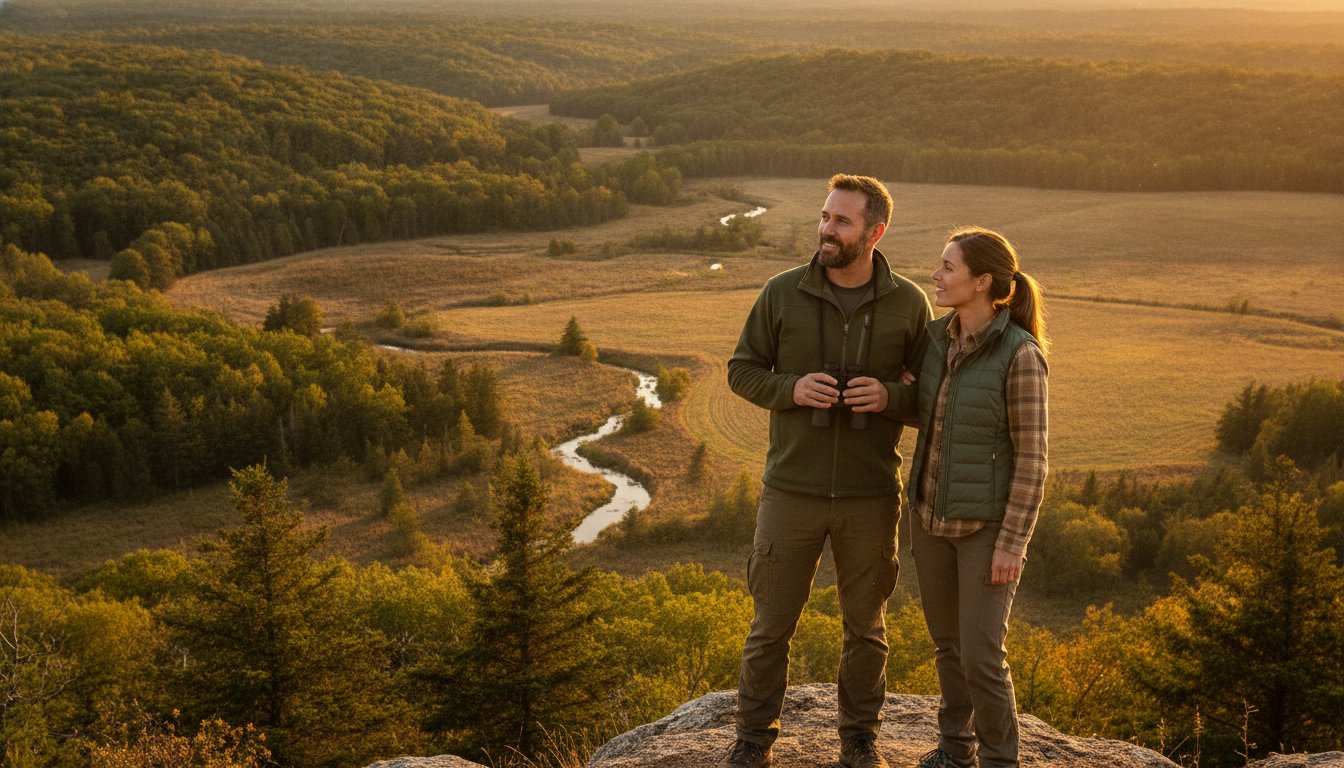
Most hunters buy land based on a gut feeling. In the 2026 market, that “feeling” is the fastest way to lose a 30% down payment on a property with zero game sign. You need a disciplined approach to find a parcel that actually produces. Understanding exactly what to look for when buying hunting land separates the successful owners from those stuck with landlocked, low-value dirt. You want a private sanctuary where you can manage the habitat and build real equity over time.
It’s frustrating to realize a property has hidden legal issues or poor “bones” after you’ve already closed. We’ll show you how to master the essential criteria for evaluating raw land to ensure your investment attracts trophy game. This guide covers everything from habitat quality and water sources to the critical due diligence required for clear titles and legal access. Follow this simplified, multi-step path to secure a high-performing hunting property that serves as both a personal retreat and a solid financial asset.
Key Takeaways
- Master exactly what to look for when buying hunting land by prioritizing raw acreage that offers total management control over seasonal leases.
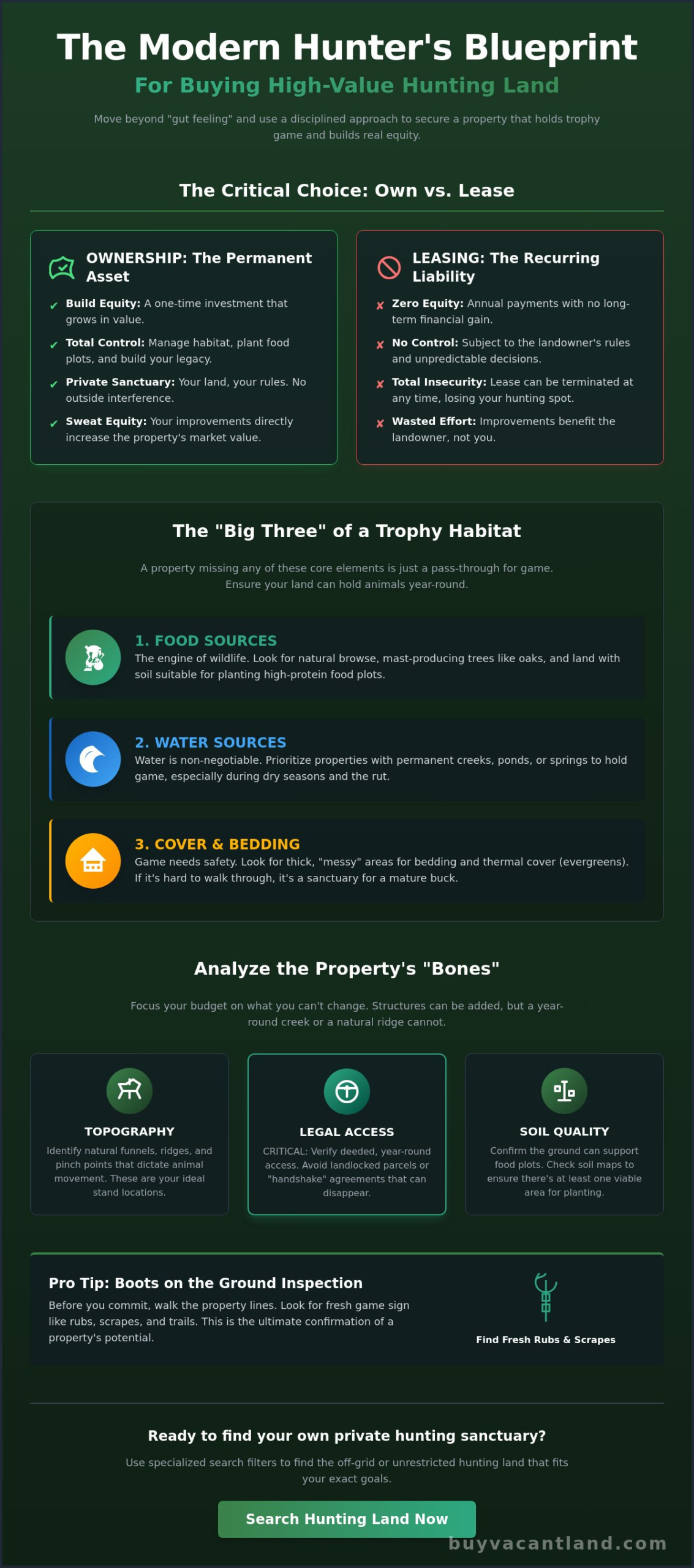
- Identify the “Big Three” of habitat-food, water, and cover-to ensure your property holds trophy game year-round.
- Protect your investment by verifying deeded access and avoiding the common trap of landlocked parcels or handshake agreements.
- Use a professional inspection checklist to find fresh game sign like rubs and scrapes before you commit to a purchase.
- Leverage specialized search filters on BuyVacantLand.com to find off-grid or unrestricted hunting land that fits your budget and goals.
What to Look for When Buying Hunting Land: The Basics
Hunting land is more than just a plot of dirt. It is raw acreage specifically managed for wildlife management and outdoor recreation. Unlike commercial timberland, which focuses on harvest cycles and board feet, recreational land prioritizes habitat quality. When you understand what to look for when buying hunting land, you stop viewing the purchase as a hobby and start seeing it as a functional asset. You are looking for a property that can hold game and grow in value over time.
Owning a “blank canvas” property allows you to build long-term equity. Every trail you clear and every food plot you plant adds tangible value to the deed. You aren’t just buying a place to sit in a tree; you’re securing a private sanctuary. This control is the foundation of a successful hunting legacy. It allows you to manage the land according to your specific goals without outside interference.
Raw Land vs. Managed Hunting Leases
Leases are a recurring liability. You pay for access every year and gain zero equity. If the landowner decides to sell or give the lease to a family member, you lose everything. Ownership is a one-time investment that creates a permanent asset. It provides the freedom to implement year-round habitat improvements. You can establish permanent sanctuaries where deer feel safe. You can plant diverse food sources that provide nutrition through the winter. This level of security ensures your hunting spot won’t vanish overnight. It’s the difference between renting a lifestyle and owning one.
The Value of ‘Unimproved’ Acreage
Don’t be afraid of land without a cabin or a well. Structures often inflate purchase prices and property taxes. Unimproved acreage is the most efficient way to enter the land market. It allows you to focus your budget on the “bones” of the property. This includes the topography, water sources, and soil quality. You can always add a shed or a gravel pad later. You cannot easily “add” a natural ridge or a year-round creek.
Buying raw land also creates an opportunity for sweat equity. By doing the work yourself, you increase the property’s market value without the massive overhead of a turnkey ranch. Focus on the following when evaluating raw tracts:
- Topography: Look for natural funnels and bedding areas.
- Access: Ensure the land has a clear, legal path for entry.
- Soil: Confirm the ground can support the food plots you plan to plant.
This pragmatic approach reduces your initial risk. It puts you in a position of strength by keeping your holding costs low while you build the ultimate hunting retreat.
Essential Habitat and Terrain Features for Wildlife
Habitat is the engine of a hunting property. You can’t just buy dirt; you need a system that supports life. Knowing what to look for when buying hunting land means identifying the “Big Three”: food, water, and cover. If one component is missing, the land is just a pass-through for game. Look for “edge” habitat. This is the transition zone where timber meets fields or brush meets creeks. These edges are the primary travel corridors for deer and turkey. Also, look over the fence. If your neighbor is a high-pressure commercial farm or a housing development, it changes how animals use your ground. You want properties that border large tracts of timber or protected conservation areas.
Water Sources and Drainage Patterns
Water is non-negotiable. A permanent creek or pond is ideal, but seasonal water holes still hold value during the rut. Check for drainage patterns on the map. Wet ground restricts where you can drive a tractor or hang a stand. Before you sign, understand how do you buy land with wetland restrictions. Federal laws can limit your ability to clear brush or build in these areas. Finding land with reliable water keeps animals on your side of the line during dry spells. It’s a critical factor in holding trophy game year-round.
Topography and Bedding Cover
Topography dictates animal movement. Ridges and funnels create natural pinch points. These are the best spots for stands because they force deer through specific gaps. Look for thermal cover. This is thick, evergreen growth that protects game from winter winds. Don’t be put off by “brushy” or “waste” land. Thick tangles of briars and scrub are often the most productive bedding areas. If it’s hard for you to walk through, it’s a safe haven for a mature buck. Successful hunters prioritize these thick zones over manicured woods.
Soil Quality for Food Plots
Food plots are the ultimate management tool. You need soil that can grow more than just weeds. Check soil maps for agricultural potential. Even if you want “cheap” land, ensure there is at least one flat, open acre with decent dirt. High-value land often features mast-producing trees like white oaks. These provide a natural, free food source every fall. If you buy former agricultural land, you might even qualify for the Conservation Reserve Program (CRP). This program pays you to convert crop fields into wildlife habitat. Once you identify these features, you can find hunting land for sale that matches your vision and budget.
Legal Access, Easements, and Property Restrictions
Legal issues can ruin a great property. When you evaluate what to look for when buying hunting land, legal access is your top priority. You must distinguish between deeded access and a “handshake” agreement with a neighbor. A handshake is not a legal right. It is a temporary favor. If that neighbor sells their property or passes away, you could lose access to your own land overnight. Always demand a recorded easement in the property deed. This ensures you have a permanent, legally protected path to your acreage that stays with the land forever.
Utility easements are often viewed as a negative, but they offer hidden benefits for hunters. Power lines or gas pipelines create permanent, straight clearings through the timber. These serve as excellent locations for food plots and long-range shooting lanes. They also provide easy vehicle access through thick brush without the cost of clearing your own roads. These clearings act as “edge” habitat that attracts game, turning a utility burden into a hunting advantage.
Identifying Landlocked Parcels
A landlocked property has no direct access to a public road and no recorded easement through neighboring tracts. You will see these listed at suspiciously low prices. Don’t take the bait unless you have a clear legal strategy. Gaining an “easement by necessity” involves expensive legal battles and years in court. It is a high-risk gamble that rarely pays off for recreational buyers. For example, buyers often find parcels surrounded by state-owned timber or private ranches. Without deeded access, these tracts are essentially worthless because you cannot legally step foot on them without trespassing.
Zoning and Right to Hunt
Never assume you can hunt just because you own the dirt. You must verify that hunting is a permitted use in that specific zone. Some counties have strict acreage minimums for firearm discharge to ensure safety. If you buy a small parcel in a semi-rural zone, you might be limited to archery only. Check for local CC&Rs in rural subdivisions. These private restrictions can ban hunting entirely, even if the county allows it. Local zoning also dictates what you can build. If you want a hunting cabin or a storage shed, confirm the setback requirements and permit costs before you close the deal. Researching these legal hurdles is a vital part of what to look for when buying hunting land to protect your investment and your peace of mind.
The Hunting Land Inspection: A Boots-on-the-Ground Checklist
You cannot evaluate a property from a computer screen. A physical walk-through is the only way to confirm the “bones” of the tract. When you perform your inspection, you must look beyond the scenery. Focus on the data the land provides. Knowing what to look for when buying hunting land requires a systematic approach to scouting. Start at the access point and work your way toward the center. Look for natural funnels and pinch points that were not visible on satellite imagery. This is your chance to verify that the terrain actually allows for stealthy entry and exit during different wind directions.
Bring a GPS-enabled app and a notebook. Document everything you see. Check the quality of the timber and the density of the undergrowth. If the woods are too open, the land lacks the security cover needed to hold mature bucks. If the brush is too thick to navigate, you will face high costs for trail clearing. A successful inspection confirms that the property can support your specific hunting style and management goals.
Evaluating Game Sign and Pressure
Tracks are common, but they don’t tell the whole story. You need to distinguish between resident game and traveling game. Look for heavy bedding areas and established “social” scrapes that show animals live on the property year-round. Check for signs of human interference. Old tree stands, spent shell casings, or fresh ATV tracks indicate high hunting pressure. If you are browsing cheap land for sale, be extra vigilant. Low-cost parcels often border high-traffic areas where neighbors might jump the fence. Fresh rubs and scrapes are the best indicators of a healthy, low-stress environment for trophy game.
Boundary Verification and Neighbors
Never trust a rusted fence line as a legal boundary. Use a modern GPS app to walk the perimeter and verify the actual acreage. Check the condition of neighboring fences. If a neighbor’s fence is well-maintained, it usually signals a respect for property lines. Look for “sanctuary” potential on adjacent tracts. If the land next door is a thick, unhunted swamp, it will act as a feeder for your property. Who your neighbors are matters as much as the dirt itself. Ask about local hunting clubs or commercial operations nearby. Once you’ve verified the boundaries and the sign, you can view available hunting land listings with total confidence in your choice.
Finding Affordable Hunting Land on BuyVacantLand.com
BuyVacantLand.com focuses exclusively on raw, undeveloped tracts. Traditional real estate websites clutter your search results with homes, rentals, and commercial buildings. We cut through that noise. Our platform is a specialized listing marketplace where you connect directly with land owners and sellers. This direct connection eliminates unnecessary middleman fees and speeds up the transaction process. When you know what to look for when buying hunting land, you need a tool that lets you locate those specific features without a struggle. Our marketplace provides a clear, multi-step path to ownership that values your time and your budget.
Dealing directly with sellers creates an environment of transparency. You get answers about the land’s history and habitat quality straight from the source. This no-nonsense approach aims to alleviate the stress of asset ownership by projecting an aura of efficiency. You aren’t just browsing listings; you are finding a helpful ally in your search for the perfect hunting sanctuary.
Using Specialized Search Filters
Privacy is the ultimate luxury for a hunter. Use our specialized filters to target large acreage parcels that offer maximum concealment and security. You can specifically search for land with water features like creeks, ponds, or seasonal runoffs. This saves you hours of manual searching. Unlike broader real estate marketplaces, BuyVacantLand.com provides a more streamlined path to categories like “Off Grid” or “Unrestricted” land. These filters ensure you only see properties that meet your criteria for wildlife management. You can find “Cheap Land” or “Farms and Ranches” with a single click, allowing you to focus on evaluating the “bones” of the property rather than fighting a clunky interface.
The Benefits of Owner Financing for Hunters
Banks are notoriously difficult when it comes to raw land. According to current 2026 market data, traditional lenders typically demand a down payment of 20% to 30% or more for raw land loans. They also charge higher interest rates than standard mortgages. This is why owner financed land is a strategic advantage for recreational buyers. It bypasses rigid credit requirements and high bank fees.
A lower down payment keeps more cash in your pocket. You can use those immediate savings for habitat improvements, seed for food plots, or trail cameras. The BuyVacantLand marketplace simplifies the buying process into a numbered sequence that push you toward a final closing without distraction. You find the land, agree on an equitable financial proposal with the seller, and secure your hunting spot fast. This certainty allows you to start your management plan today instead of waiting months for a bank’s approval.
Secure Your Hunting Legacy Today
Owning your own ground is the only way to guarantee a hunting spot for the future. You now know that legal access and habitat “bones” are the foundation of a high-value parcel. Handshake agreements and poor drainage are risks you can’t afford to take. By focusing on raw acreage and verifying the “Big Three” of habitat during a physical inspection, you turn a simple purchase into a strategic investment. Master exactly what to look for when buying hunting land to ensure your property holds trophy game for generations. It’s time to stop renting access and start building equity in your own private sanctuary.
Our marketplace simplifies the path to ownership by connecting you directly with sellers. You can use our specialized “Hunting Land” search category to find parcels that meet your specific needs. We provide an extensive inventory of owner-financed parcels and direct-to-seller listings to ensure you get the best possible pricing without unnecessary fees. Start Your Search for Hunting Land Today and secure a property that delivers both recreation and long-term value. Your ultimate hunting retreat is within reach.
Frequently Asked Questions
How many acres do I need to hunt deer effectively?
You need at least 10 to 20 acres of high-quality habitat to hunt deer effectively on a small scale. While you can hunt on 5 acres, larger tracts allow for better scent management and sanctuary establishment. Most hunters find that 40 acres is the ideal starting point for managing a resident herd. This size provides enough room to hunt different wind directions without blowing out the entire property.
What is the best time of year to walk a potential hunting property?
Late winter and early spring are the best times to walk a potential property. The lack of foliage reveals the true topography and “bones” of the land, including deer trails, bedding areas, and old rubs. You can see through the timber and identify drainage issues that thick summer brush often hides. This timeframe gives you the clearest picture of how game uses the tract before you buy.
Is it better to buy land with a creek or a pond?
A year-round creek is generally better than a pond because it provides a continuous flow of water and acts as a natural travel corridor. Creeks create “edge” habitat and funnels that dictate animal movement across the parcel. Ponds are excellent for waterfowl and fishing, but they don’t influence deer travel as predictably as a running water source that cuts through the timber and provides a travel route.
Can I hunt on land that is currently in a timber program (CRP)?
Yes, you can hunt on land enrolled in the Conservation Reserve Program (CRP). These programs actually enhance hunting quality by creating thick bedding cover and diverse food sources for wildlife. However, you must follow specific maintenance rules. You cannot mow or disturb the cover during primary nesting seasons. Always review the specific contract terms to ensure your management plans don’t violate federal rules or trigger penalties.
What should I do if the land I want is landlocked?
Walk away from landlocked property unless you can secure a recorded, deeded easement from the neighbor before you close. Handshake deals are legally worthless. They will vanish if the neighbor sells their land or passes away. Obtaining an easement by necessity through the court system is an expensive, slow process that is never guaranteed. Don’t risk your capital on inaccessible dirt without a legal right to enter.
How do I find out if there are any hunting restrictions on a vacant lot?
Check the local county zoning ordinances and any private CC&Rs tied to the property deed. Many rural subdivisions ban the discharge of firearms even if the county allows it. Verifying these rules is a critical step when researching what to look for when buying hunting land. This due diligence prevents you from buying a property that prohibits your primary hobby and ruins your investment goals.
Is owner financing a good idea for buying recreational land?
Owner financing is an excellent solution because it bypasses the strict requirements and high down payments of traditional bank loans. Most banks view raw land as a high-risk asset and demand significant cash upfront. Owner financing offers a simplified, multi-step path with faster closing times and lower initial costs. It allows you to secure the land quickly and start habitat improvements immediately with your saved capital.
What is the most important terrain feature for holding big bucks?
Thick bedding cover located near a reliable water source is the most important terrain feature for holding mature bucks. Security is a mature buck’s top priority. If your land has dense thermal cover and natural funnels, deer will feel safe enough to stay on your property during daylight hours. High-quality cover is a primary factor in what to look for when buying hunting land for trophy potential.




Join The Discussion