
Did you know that 52% of real estate title fraud cases in 2025 involved vacant land? Most investors assume that buying a patch of dirt is a simple transaction with zero baggage. You might feel that if there are no structures to inspect, there is nothing to lose. However, the lack of a house doesn’t mean the property is clear. Understanding what is title insurance for vacant land is the difference between a secure asset and a legal nightmare. You deserve to know exactly what you’re buying before you sign the closing documents.
This guide proves why title insurance is a non-negotiable shield for your raw land investments. We’ll break down how this one-time fee protects your ownership rights from invisible legal threats like undiscovered easements or fraudulent deeds. You’ll learn about the new 2026 ALTA survey standards and how to minimize your financial risk in a market where median land prices have surged 76.6% since 2019. We make the complex process of securing your dirt simple, fast, and transparent.
Key Takeaways
- Protect your ownership rights with a permanent shield against past legal discrepancies using a single, one-time payment.
- Identify hidden threats like boundary disputes and undiscovered easements before they turn into expensive legal battles.
- Know the difference between mandatory lender policies that protect the bank and optional owner policies that safeguard your full equity.
- Follow our simplified two-step process to hire the right experts and initiate a comprehensive search of public records.
- Learn exactly what is title insurance for vacant land to ensure your property’s ready for a fast, high-value resale.
What is Title Insurance for Vacant Land?
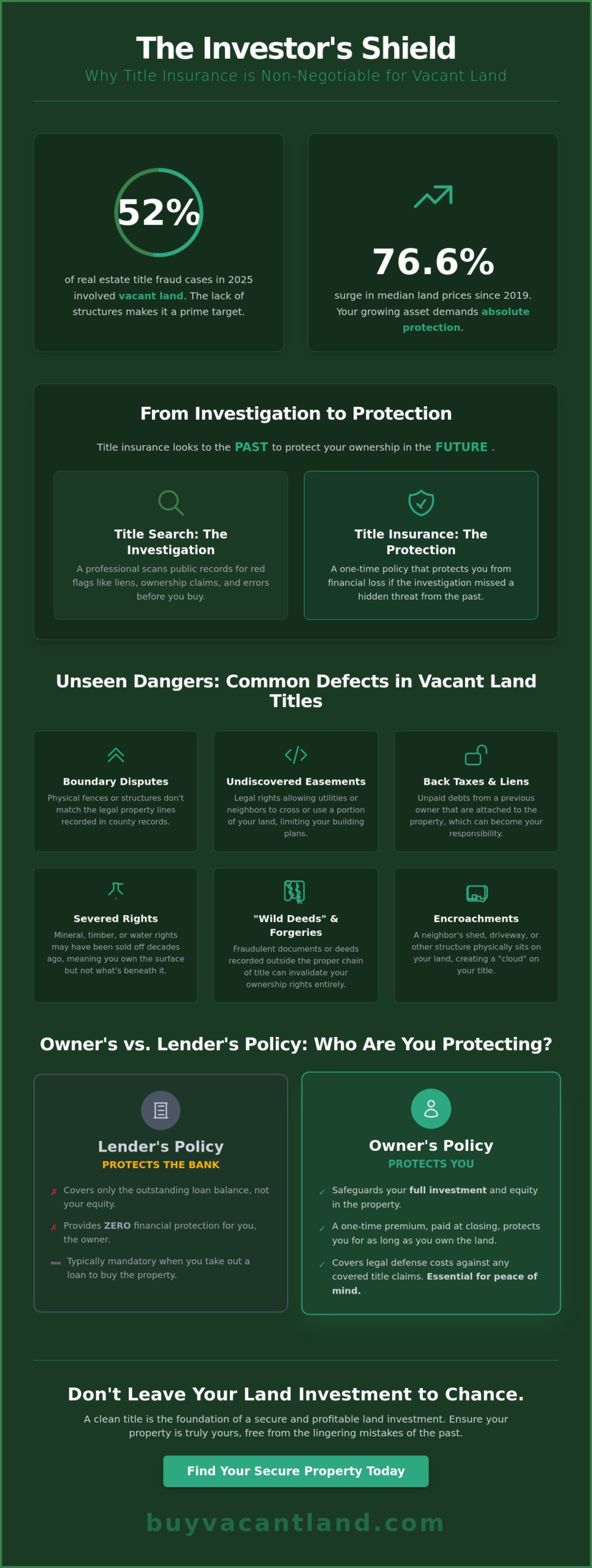
Title insurance is a one-time premium policy that protects you from financial loss related to ownership disputes. Unlike most insurance policies that cover future accidents, Title insurance looks backward. It guards against legal errors, forged signatures, or unpaid debts that happened before you ever stepped foot on the property. When people ask what is title insurance for vacant land, they often confuse it with a title search. These are two separate tools. A title search is the investigation. It is the detective work where a professional scans public records for red flags. Title insurance is the protection. It ensures that if the detective missed a hidden clue, you aren’t the one paying for the mistake.
Vacant land requires a deeper historical look than a standard suburban home. Houses change hands often, creating a clear chain of title. Raw land might sit for decades or even centuries under a single family name. This long gap increases the risk of invisible threats. You cannot see a tax lien or an undisclosed heir by walking the perimeter of a field. You need a legal guarantee that your ownership is absolute. This policy provides that certainty.
The Bundle of Rights Explained
Owning land isn’t just about the soil. You are buying a bundle of rights. This includes the right to use the land, exclude others from it, and sell it to the next investor. Title insurance ensures these rights are secure and transferable. If someone challenges your right to access your lot, the policy covers your legal defense. A marketable title is the gold standard for land ownership because it proves the property is free from reasonable doubt and ready for a clean sale.
Why “Just Dirt” Still Carries Risk
The biggest mistake land buyers make is believing the clean slate fallacy. They think because there are no buildings, there are no problems. This is false. Historical claims from long-lost heirs or forgotten utility easements can surface years after your purchase. If you want to know how do you buy land safely in 2026, you must prioritize the title. A single forged deed from 1950 could invalidate your entire investment today. Title insurance eliminates this uncertainty. It turns a risky gamble into a solid, predictable asset. You get the peace of mind that comes from a swift, assured transaction without the stress of future legal battles.
Common Title Defects in Vacant Land Transactions
Empty land isn’t a blank slate. It’s a legal history book with chapters written by people you’ve never met. Boundary disputes are common. The fence line you see might not match the legal description in the county records. If your neighbor’s fence is three feet onto your lot, you have a title defect. Undiscovered easements are another hidden threat. These are legal rights for utilities or neighbors to cross your property. You might buy a perfect build site only to find a legal path for a sewer line runs right through the center. Understanding what is title insurance for vacant land helps you spot these traps before they cost you thousands. You must also watch for severed rights. Mineral, timber, or water rights were often sold off decades ago. You could own the surface but have no right to the water beneath it.
Encroachments and Physical Discrepancies
Encroachments occur when a neighbor’s structure sits on your land. A driveway, shed, or even a garden can create a “cloud” on your title. You can’t ignore these physical discrepancies. A professional survey identifies where the dirt ends, but the title policy protects your right to own it. Title insurance covers the cost of defending your borders in court if a neighbor challenges your property line. This is vital because 52% of title fraud cases in 2025 involved vacant land. For a detailed breakdown of policy types, the California Department of Insurance Title Insurance Guide provides excellent neutral data.
The Danger of “Wild Deeds”
A “wild deed” is a document recorded outside the proper chain of title. It’s a broken link in the ownership history. These documents can invalidate your purchase years after you close. Handshake agreements from previous generations often resurface as legal claims from long-lost heirs. You might also inherit a nightmare of back taxes or undisclosed liens from a previous owner’s unpaid debts. These issues are frequent on “cheap” land deals that seem too good to be true. Knowing what is title insurance for vacant land allows you to move forward with confidence. When you look for residential lots or off-grid parcels, always verify the legal history. Forged deeds are a growing threat in 2026. A simple signature from 1980 could be the one thing that stands between you and your investment. Don’t leave your equity to chance.
Owner’s vs. Lender’s Title Insurance for Land
Understanding the difference between policy types is critical for your financial safety. A lender’s policy is mandatory if you use a bank loan. This policy protects the lender’s financial interest in the property. It covers the remaining balance of the loan if a title defect occurs. However, it provides zero protection for you. If a legal battle invalidates your deed, the bank gets their money back, but you lose your investment. An owner’s policy is the only way to protect your full purchase price and equity. It is a one-time fee that lasts as long as you or your heirs own the land. With median land prices reaching $62,365 per acre in 2026, the cost of a policy is a small price for total security.
The Cash Buyer Trap
Cash buyers often fall into a dangerous trap. They assume that because no bank is involved, the risk is lower. The opposite is true. Without a lender requiring a policy, many investors skip this step to reduce closing costs. This leaves you completely exposed. If a previous owner’s debt surfaces or a forged deed is discovered, you must pay for your own legal defense. Paying cash makes an owner’s policy even more critical for asset protection. You are the only person with skin in the game. This is especially true when looking for cheap land for sale. These affordable parcels often have complex histories and higher title risks. Don’t let a small savings today turn into a total loss tomorrow.
Who Pays for Title Insurance?
The question of who pays for title insurance depends on your location and your negotiation skills. There is no single national rule. In many states, the seller pays for the owner’s policy as a gesture of good faith. They are proving that the title is “marketable.” In other regions, the buyer covers all title-related costs. You should always clarify this in your initial offer. Understanding what is title insurance for vacant land gives you leverage during negotiations. You can ask the seller to provide a clear title policy as a condition of the sale. In states like Texas, Florida, and New Mexico, the rates are set by the government. This means you won’t save money by shopping around for a cheaper company in those areas. Focus instead on who is responsible for the bill at the closing table. This clarity ensures a swift, assured transaction for both parties.
How to Secure Title Insurance for Your Land
Securing your investment requires a disciplined, multi-step process. You cannot afford to skip steps when protecting your capital in the 2026 market. First, hire a reputable title company or a real estate attorney who specializes in undeveloped parcels. They will initiate a comprehensive search of public records to trace the ownership history. This detective work uncovers hidden liens, unpaid taxes, or forged documents from previous generations. Once the search is complete, you’ll receive a title commitment. This document is a promise to issue a policy under specific conditions. You must review this carefully and resolve any “clouds” or legal requirements before the closing date. Finally, you pay the one-time premium at the closing table. Understanding what is title insurance for vacant land ensures you don’t inherit someone else’s financial mess.
Reading the Title Commitment
Your title commitment contains a section called “Schedule B.” This is the most important part of the document. It lists the “Exceptions” that the policy will not cover. Look for red flags like undisclosed utility easements or active boundary disputes. If you see an unreleased mortgage from 1995, demand that the seller clear it before you close. For raw land, always request an “Extended Coverage” policy. Standard policies often exclude items that a physical inspection or a survey would reveal. Given the new 2026 ALTA survey standards, ensure your policy reflects the most recent boundary data. If the exceptions list a lack of legal access, you should walk away from the deal immediately.
Working with a Title Professional
Don’t settle for a generic title agent. Ask your professional about their specific experience with rural or off-grid transactions. Rural land has unique hurdles that residential agents often miss. One critical factor is “ingress and egress,” which is your legal right to enter and exit the property. Never assume a visible dirt path is a legal road. Verify with your agent if the standard policy covers a lack of legal access. Many policies exclude this by default, which can leave you with a landlocked and worthless parcel. A pro-active title professional acts as your final line of defense against fraud. If you are ready to find your next investment, browse our verified listings of undeveloped vacant land today. We prioritize transparency so you can move forward with a swift, assured transaction. Clear ownership is the only path to a stress-free investment.
Maximizing Your Land Investment Strategy
Title insurance is more than a defensive shield. It is a strategic asset for your exit plan. When you understand what is title insurance for vacant land, you see it as a tool for future liquidity. In a 2026 market where inventory is 23.6% below 2019 levels, buyers move fast but verify every detail. They want properties ready for immediate transfer. Having your own owner’s policy from your initial purchase streamlines the process for the next buyer. It proves that a professional entity has already vetted the legal history. This reduces the friction of the transaction and helps you command a premium price. Title insurance is the foundation of a secure land portfolio. Without it, you aren’t building an investment; you are managing a legal liability.
Smart investors look for “optionality” in their parcels. This means the land has potential for multiple uses like recreation or future development. Clear title is the key that unlocks this potential. If your title has clouds, your options disappear. You cannot develop, subdivide, or sell a parcel with unresolved legal threats. By securing insurance, you preserve the long-term value of the earth beneath your feet. You ensure your investment remains a liquid asset rather than a frozen dispute. This pragmatic approach alleviates the stress of ownership and projects an aura of reliability to future partners.
Selling Your Land with Confidence
Speed is everything in real estate. You can sell land faster by being title-ready the moment you list. Serious investors prioritize parcels with “clean title” guarantees. They don’t want to wait weeks for a title company to resolve a 40-year-old boundary dispute. Your prior policy provides a roadmap for the new title search. This often results in a faster closing and lower costs for the next owner. By removing uncertainty, you make your land the most attractive option on the market. You project an aura of efficiency and reliability that buyers trust. A swift transaction is a profitable transaction.
Start Your Search Today
The 2026 land market rewards the prepared. You now know what is title insurance for vacant land and how to use it to protect your capital. Your next step is to find the right opportunity. Our marketplace connects savvy buyers with verified opportunities across the country. You can filter by specific needs to find the perfect match for your portfolio. We offer access to diverse categories:
- Off Grid Land for total privacy.
- Residential Lots ready for your future home.
- Farms and Ranches with established boundaries.
- Hunting Land for recreational use.
- Commercial Vacant Lots for business development.
Stop guessing and start investing with confidence. Clear ownership is the only path to a stress-free investment. Our platform cuts through traditional procedural hurdles to bring you the best deals. Find your next land investment on BuyVacantLand.com and secure your financial future today.
Secure Your Future Ownership Today
Title insurance isn’t a luxury. It’s a pragmatic necessity for every serious land investor. You’ve seen how a one-time premium defends your equity against hidden legal defects and boundary disputes. By prioritizing a clear title, you ensure a swift, assured transaction for yourself and future buyers. Now that you understand what is title insurance for vacant land, you can move forward with total confidence. You have the tools to avoid the cash buyer trap and secure your bundle of rights permanently.
Don’t let invisible threats derail your financial goals. Our platform is the only specialized marketplace dedicated exclusively to raw land. We provide national coverage across all 50 states. You’ll find direct-to-seller and owner-financed opportunities that simplify your path to ownership. We cut through traditional procedural hurdles to deliver reliable, high-quality listings. We value your time and prioritize transparency in every deal. Start building your portfolio with the peace of mind that comes from a secure asset.
Browse Vacant Land Listings Across the USA and take control of your investment strategy today. Your next great asset is waiting for a secure, hassle-free close.
Frequently Asked Questions
Do I really need title insurance for a small, cheap plot of land?
Yes, you need it regardless of the purchase price. Small, affordable plots often have the messiest ownership histories and the most unresolved boundary issues. If a legal claim surfaces later, the cost of hiring a defense attorney will quickly exceed the value of the land itself. This one-time protection eliminates a massive financial risk for a relatively small cost.
How long does title insurance for vacant land last?
Your policy lasts as long as you or your heirs own the property. You pay the premium once at the closing table and never again. There are no monthly fees or renewal costs associated with an owner’s policy. It provides permanent protection against any legal defects that occurred in the past, giving you long-term peace of mind for your investment.
Does title insurance cover property taxes I didn’t know about?
Yes, title insurance typically covers undisclosed back taxes owed from before your purchase. A professional title search should identify these debts before you close. If the search misses a tax lien and it wasn’t listed as an exception, the insurer pays the debt. This prevents a local government from seizing your new asset for a previous owner’s unpaid bills.
Can I buy title insurance after I already own the land?
You can purchase an owner’s policy after closing, but it is a strategic mistake. Buying at the time of the transaction is cheaper and more efficient. A post-closing policy requires a new search and might exclude issues that began after you took ownership. Secure your policy during the purchase process to ensure a swift, assured start to your land investment.
What is the difference between a title search and title insurance?
A title search is a historical investigation into public records to find known issues like mortgages or easements. Title insurance is the indemnity policy that protects you if that search missed a hidden defect. Knowing what is title insurance for vacant land means understanding that even a perfect search can miss forged deeds or undisclosed heirs that only surface years later.
Will title insurance protect me if my neighbor builds a fence on my land?
Title insurance protects you from encroachments if your policy includes the right coverage and a recent survey. If a neighbor builds a structure on your lot, the policy covers the legal costs to defend your borders. This is vital for raw land where physical boundaries are often unclear. It ensures your land remains exactly as described in the legal deed.
Does title insurance cover zoning changes or land use restrictions?
No, title insurance does not cover future zoning changes or government land-use restrictions. It focuses on your legal right to own the property, not how you are allowed to use it. Environmental regulations and local zoning laws are separate from title defects. You must conduct thorough due diligence on local ordinances before you finalize any land purchase to avoid future surprises.
How much does title insurance typically cost for raw land?
Costs generally range from 0.5% to 1.0% of the property’s purchase price. This is a one-time premium paid at the closing table. In states like Texas, Florida, and New Mexico, these rates are regulated and set by the government. Understanding what is title insurance for vacant land helps you budget for this essential expense. It is a small investment for total ownership certainty.




Join The Discussion