

Your new deed isn’t a trophy; it’s a responsibility that starts the moment the ink dries. Most owners think the hard part is over once they sign the papers, but knowing exactly what to do after buying land is the difference between a growing investment and a legal headache. You’re likely worried about trespassers using your lot as a personal dumping ground or getting hit with surprise local ordinances. It’s a valid concern. Property taxes now account for over 70 percent of local government revenue, and the tax man won’t wait for you to figure out your zoning.
You need a plan to secure your perimeter and protect your wallet from rising development costs. This guide provides a pragmatic 2026 roadmap to master your property management. You’ll learn how to establish a secure boundary, navigate the 1.07 percent average national tax rate, and avoid the $30,000 mistakes often found in utility installation. We’ll walk through a simplified sequence to ensure legal compliance and maximize your land’s long term resale value. Stop guessing and start securing your asset today.
Key Takeaways
- Shift from buyer to active steward to eliminate liability and protect your asset’s financial value immediately.
- Master what to do after buying land by verifying physical boundaries and installing access controls within your first 90 days.
- Prevent long-term property damage by prioritizing erosion management and the removal of invasive plant species.
- Reduce maintenance overhead by leveraging free local resources like the County Extension Office and digital mapping tools.
- Build a professional documentation folder and clear your property entrance to justify a higher asking price for future buyers.
What is Land Management for Beginners? Shifting to Stewardship
Ownership isn’t a passive state. It’s an active commitment. Many new owners assume that “raw land” requires zero attention until they’re ready to build or sell. This is a costly mistake. Real estate is a physical asset subject to weather, local laws, and human interference. To succeed, you must shift your mindset from a buyer to a property manager immediately. You need to know what to do after buying land to protect your equity from day one. Passive owners lose money; active stewards build wealth.
What is Land Management? At its core, it is the strategic oversight of your land’s resources to prevent liability and preserve financial value. Stewardship means you are the guardian of the property. Your primary focus should be three specific pillars: security, legal compliance, and value preservation. If you ignore these, your asset will degrade. Nature doesn’t respect property lines, and neither do trespassers. You must be proactive to keep your investment secure and marketable.
The Risks of Passive Land Ownership
Neglecting your property invites trouble. Empty lots often become targets for illegal dumping. Removing a pile of old tires or hazardous waste can cost thousands of dollars and create environmental liabilities. Squatters are another reality. If you don’t monitor your boundaries, unauthorized occupants can establish claims that are expensive to remove through legal channels. Additionally, invasive plant species can take over a lot in a single season. These plants choke out native vegetation and make the land unappealing to future buyers. Your holding costs include more than property taxes; they include the price of preventing these disasters.
Defining Your Long-Term Land Strategy
Your management style depends on your exit plan. Are you holding the parcel for future resale or preparing it for personal recreation? A resale strategy focuses on curb appeal and documentation. You want a clean entrance and clear boundaries. If your goal is recreation, your 2026 maintenance budget might prioritize trail clearing or water access. Every action must align with local zoning and deed restrictions. Don’t spend money on improvements that the county doesn’t allow. Understanding what to do after buying land starts with a clear vision of the property’s final purpose. This clarity saves you time and prevents wasted capital on unnecessary projects.
The First 90 Days: A Strategic Action Plan for New Owners
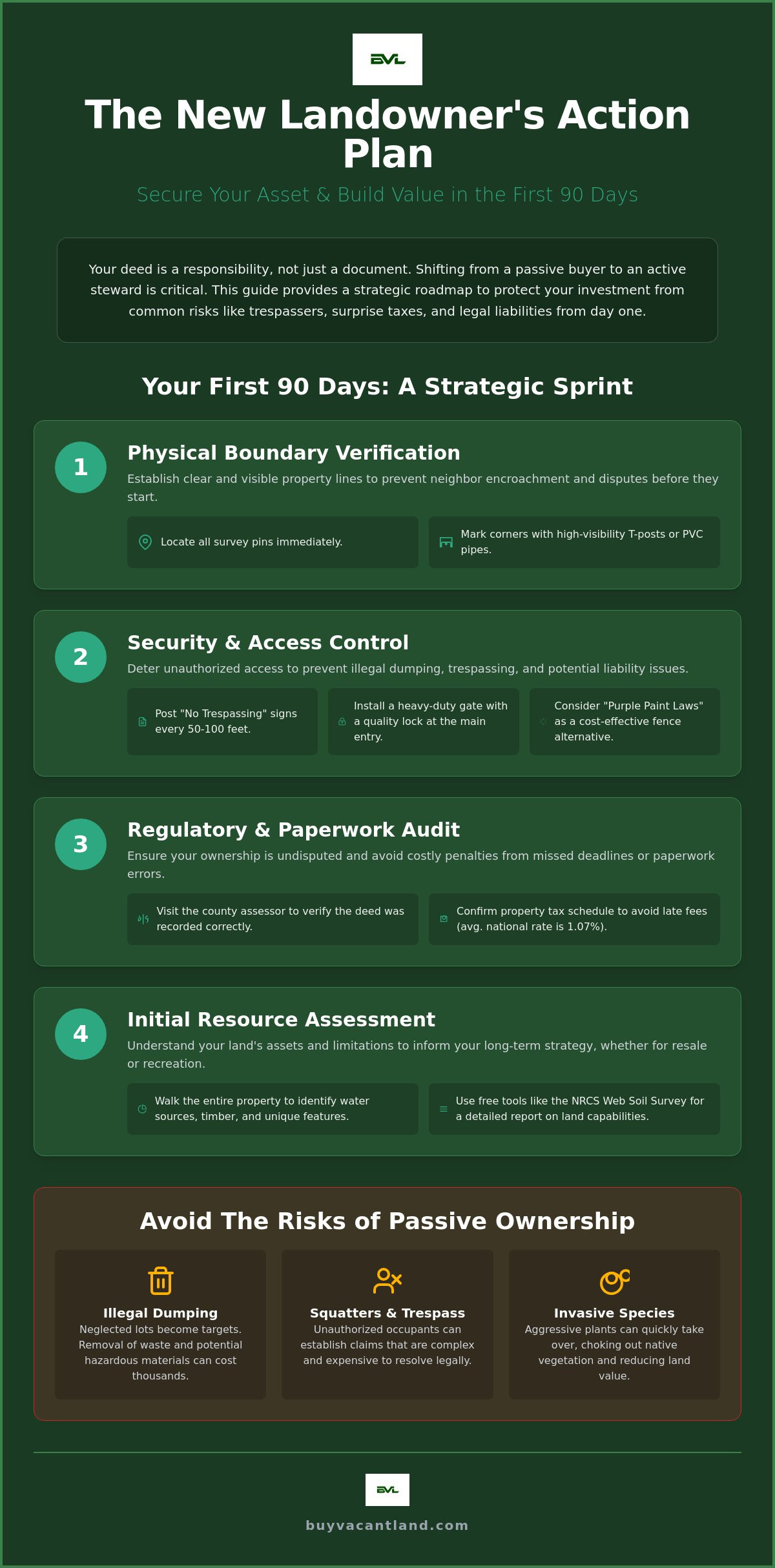
The first three months of ownership define the long-term safety of your investment. You must act quickly to establish control over the physical and legal aspects of your property. Waiting too long invites boundary disputes and tax penalties. If you’re wondering what to do after buying land, follow this 90-day sprint to secure your asset. Speed and precision are your best allies during this transition phase.
- Step 1: Physical Boundary Verification. Locate your survey pins immediately. Use a metal detector if they’re buried. Mark every corner with high-visibility T-posts or PVC pipe to prevent neighbor encroachment.
- Step 2: Security and Access Control. Install a heavy-duty gate at the main entry point. Use a high-quality chain and padlock. Deterrent signage should be visible from the road to signal that the property is monitored.
- Step 3: Regulatory Audit. Visit the county assessor’s office. Verify that the deed was recorded correctly and check for any outstanding liens. Confirm the exact property tax schedule to avoid late fees.
- Step 4: Resource Assessment. Walk the entire acreage. Identify water sources, standing timber value, and soil quality. You can use the Natural Resources Conservation Service (NRCS) web soil survey to get a detailed digital report of your land’s capabilities.
Securing the Perimeter and Preventing Trespass
You don’t need expensive fencing to protect your borders. Many states recognize “purple paint laws,” where vertical purple stripes on trees or posts serve as a legal warning. This is a fast, cost-effective alternative to traditional fences. Place “No Trespassing” signs at eye level every 50 to 100 feet along the road frontage. Introduce yourself to your neighbors. They are your best eyes on the ground. A friendly neighbor will call you if they see strange vehicles on your lot, saving you a trip and potential loss. If you plan to expand your holdings, you can find more undeveloped vacant land nearby to increase your buffer zone.
The Paperwork Audit: Taxes and Insurance
Paperwork errors can jeopardize your title. Check with the county clerk to ensure your deed is filed. Don’t rely on the title company to handle everything perfectly. Set automated alerts on your calendar for property tax deadlines. With national average tax rates around 1.07 percent, a missed payment can lead to significant interest charges. Finally, look into vacant land liability insurance. It’s an affordable way to protect yourself if someone is injured on your property, even if they’re there without permission. Knowing what to do after buying land means staying ahead of the administrative curve to keep your ownership undisputed.
Core Pillars of Land Stewardship: Water, Soil, and Vegetation
Land management is more than just marking boundaries. It’s about protecting the physical integrity of the parcel. When considering what to do after buying land, you must prioritize the natural elements: water, soil, and plants. Neglect leads to degradation. Proactive care leads to appreciation. You are now the primary guardian of these resources. If you ignore the physical health of your acreage, you risk losing the very value you worked hard to acquire.
Water runoff is your primary environmental duty. Uncontrolled water carves gullies and strips topsoil. This makes the land significantly harder to build on later. Soil health is the foundation of your investment’s resale potential. Healthy soil supports better timber, superior grazing, and easier landscaping. Think of topsoil as the “skin” of your land. Once it washes away, it takes decades to return. Protecting this layer is a non-negotiable part of responsible ownership.
Preventing Soil Erosion and Runoff
Early detection saves thousands in repair costs. Walk your property after a heavy rain. Look for small rills or channels forming in the dirt. These become deep gullies quickly. Use natural buffers to slow water down. Plant native grasses, clover, or ground cover to stabilize slopes. Roots act as anchors. If your land has significant elevation changes, consider installing silt fences or straw wattles. Poor drainage doesn’t just lose dirt. It creates red tape. Many jurisdictions will deny building permits if the site has severe erosion issues or poor drainage patterns that could affect neighboring parcels.
Managing Invasive Species and Overgrowth
Invasive species spread fast. They kill native trees and ruin grazing potential. This is a critical step in knowing what to do after buying land to maintain its marketability. Noxious weeds aren’t just an eyesore. Many counties issue strict fines if you let them spread to adjacent properties. You have two main options for control: mechanical or chemical. Mowing is effective for large, flat areas like residential lots or pastures. Targeted herbicides work better for deep-rooted woody brush. Choose the tool that fits your skill level and safety equipment. Promoting native growth reduces your long-term maintenance needs. Native plants are adapted to the local climate. They require less water and zero fertilizer. A clean, well-managed lot always commands a higher price than an overgrown jungle.
Essential Tools and Low-Cost Strategies for New Owners
You don’t need a fleet of heavy machinery to manage your property effectively. Many online forums suggest buying a tractor immediately, but this is often an unnecessary drain on your capital. Effective management is about using the right manual tools and modern technology. If you’re figuring out what to do after buying land on a budget, focus on high-impact, low-cost actions. While individual owners may stick to basics, professional service providers often rely on Mowing Route Density to rent the specialized equipment needed for larger projects. Efficiency is your primary goal. You want to maintain access and visibility without spending thousands on equipment you’ll rarely use.
Start with a “Mow and Go” strategy. Keep a primary trail clear from the road to the center of your lot. This prevents the land from becoming a wall of brush that hides illegal dumping or property damage. For remote monitoring, consumer drones have become essential in 2026. A quick flight once a month provides a high-definition view of your entire acreage. It’s the most cost-effective way to inspect for fallen trees, erosion, or trespassers without walking every inch of the perimeter. Don’t forget to leverage your County Extension Office. They provide free soil testing kits and expert advice on local vegetation that can save you from expensive trial-and-error mistakes.
Building Your Land Management Kit
Your physical toolkit should be lean and durable. A high-quality brush hook and a soil probe are your two most important hand tools. Use the brush hook for clearing small saplings and the probe to check moisture levels before any planting. Invest in professional-grade, puncture-resistant boots to protect against thorns and uneven terrain. Safety is mandatory. Your kit must include personal protective equipment (PPE) like snake gaiters and long-sleeved brush shirts to prevent tick-borne illnesses. In 2026, a high-accuracy GPS mapping app is superior to any paper map. These apps allow you to drop digital pins on survey markers and photo-document changes over time with sub-meter precision.
DIY vs. Professional Land Management
Know your limits to avoid costly injuries or legal fines. You can easily handle trail maintenance, boundary marking, and basic invasive species removal. These tasks require more sweat than specialized skill. However, you should hire professionals for high-risk activities. Prescribed burns, heavy grading for driveways, and timber cruises require licensed experts. If you need a large area cleared, look for local contractors offering “brush hogging” services. It’s cheaper to pay for a day of professional mowing than to rent equipment and risk damaging it. If you’re looking to expand your portfolio with land that’s already well-positioned for development, check out these residential lots for your next investment.
Maximizing Resale Value Through Strategic Management
Resale value is not a matter of luck. It is the result of deliberate stewardship. If you treat your property as a static asset, it will likely stagnate. High-value land is property that looks and feels ready for use. When deciding what to do after buying land to ensure a profitable exit, focus on reducing the next buyer’s perceived workload. To better understand how professional listing services can simplify this transition, you can learn more about Congress Realty and their full-service real estate solutions. Buyers pay a premium for clarity and convenience. If they have to hack through brush just to see the dirt, they will offer less. Clean land sells faster and for more money. It is that simple.
Start by creating a “Land Folder.” This is a comprehensive asset that justifies a higher asking price. It should contain your recorded deed, recent survey maps, soil test results, and a log of your maintenance activities. Providing this level of detail removes friction from the sales process. It proves you have been an active manager rather than a passive owner. Documentation transforms a simple parcel into a professional investment grade asset. When you show a buyer exactly where the survey pins are and provide proof of soil stability, you eliminate their fear of the unknown.
Preparing Your Land for the Market
Curb appeal matters even for raw acreage. Clear a wide, inviting entrance and maintain a visible trail to the best features of the lot, such as a high point with a view or a water source. Strategic clearing improves the perceived acreage by making every corner accessible. You want the buyer to step onto the property and immediately envision their own project. This ties directly into a how do you buy land mindset. By doing the legwork now, you are answering the next buyer’s questions before they even ask them. A property that is “build-ready” or “recreation-ready” always commands the top of the market.
The ROI of Active Stewardship
The financial difference between a neglected lot and a managed one is significant. Junk-filled parcels or those choked with invasive species are viewed as liabilities. Clean, managed parcels are viewed as opportunities. Use your management history to highlight specific use cases, such as hunting potential or residential suitability. Proactive maintenance prevents the “overgrowth discount” that many sellers are forced to accept. Knowing what to do after buying land means preparing for the day you sell it. When you are ready to move your asset, use a specialized lands of america marketplace to find serious buyers who value your stewardship. Your effort today is your profit tomorrow.
Take Control of Your Land Investment Today
Passive ownership is a risk you can’t afford. You’ve moved from a simple buyer to a strategic steward. You now understand that knowing what to do after buying land involves more than just paying property taxes. It requires a commitment to physical security, environmental health, and meticulous documentation. These steps protect your equity. They prevent the common headaches of illegal dumping or boundary disputes. Your land is now a managed asset ready for its next chapter.
When you’re ready to capitalize on your stewardship, don’t settle for a generic real estate site. You need a specialized marketplace for raw land that connects you with the right audience. List your vacant land for sale today on BuyVacantLand.com to reach thousands of targeted land buyers nationwide. Our streamlined listing process is designed specifically for owners who value their time. Secure your profit and move forward with confidence. Your well-managed parcel is exactly what the market is looking for today.
Frequently Asked Questions
Do I need a permit for basic land management tasks like clearing brush?
Most jurisdictions don’t require permits for basic brush clearing, but you must verify local environmental regulations first. If your land contains protected wetlands or endangered species, even minor clearing could trigger heavy fines. Check with your county planning department before starting any mechanical work. Simple hand tool use is almost always permit-free. Stay compliant to avoid legal hurdles that could stall your future development or resale plans.
How often should I visit my vacant land for maintenance?
Visit your property at least once every three months to ensure security and address emerging maintenance issues. Quarterly inspections allow you to catch illegal dumping, fence damage, or erosion before they become expensive disasters. If you live far away, consider hiring a local neighbor for a monthly drive-by report. Regular presence signals to the community that the land is actively managed and not an open target for trespassers.
What is the cheapest way to manage weeds on a large lot?
Periodic brush hogging is the most cost-effective method for controlling weeds on large acreage. Hiring a local tractor operator for a single day of mowing is cheaper than buying and maintaining your own equipment. Schedule this work in late spring before weeds drop their seeds. This prevents the next generation of overgrowth and keeps your property looking clean for potential buyers without the high cost of chemical treatments.
Can I get tax breaks for managing my land for conservation?
You can often qualify for significant property tax reductions by enrolling your land in state-specific agricultural, timber, or conservation deferment programs. These “Current Use” valuations assess your land based on its actual use rather than its market value. Contact your county assessor to see if your acreage meets the minimum size requirements. Proper enrollment can lower your annual holding costs by 50 percent or more in many regions.
How do I prevent people from dumping trash on my vacant land?
Secure your entrance with a heavy-duty gate and clear the roadside brush to eliminate the privacy dumpers look for. Illegal dumping happens in hidden spots. If your property looks well-maintained and visible from the road, dumpers will move to an easier target. Use “No Trespassing” signs and purple paint markers at eye level. A clean entrance sends a clear message that the owner is watching the property closely.
Is it worth hiring a professional land manager for a small property?
Professional land managers are rarely necessary for small residential lots, but they are essential for specialized tasks like timber cruises or prescribed burns. Most small-scale maintenance is easily handled with basic hand tools and a DIY mindset. Save your capital for high-impact professional services that require heavy machinery or specialized licenses. For routine clearing and boundary marking, your own sweat equity provides the best return on investment.
What is the most common mistake beginners make after buying land?
The most common mistake is failing to establish a physical presence on the property immediately after closing. Many owners treat their deed as a passive document and wait years to visit. Knowing what to do after buying land starts with marking your corners and checking your tax status. If you wait, you risk losing land to encroachment or the discovery of illegal dumping that becomes your financial liability.
How does land management differ between residential lots and hunting land?
Residential lot management focuses on curb appeal and utility access, while hunting land management prioritizes wildlife habitat and cover. Your strategy for what to do after buying land must align with your exit goal. For residential parcels, keep the entrance mowed and survey pins visible. For hunting land, you might leave specific brush areas for bedding and focus on water source maintenance. Each approach requires different tools and budgets.




Join The Discussion