
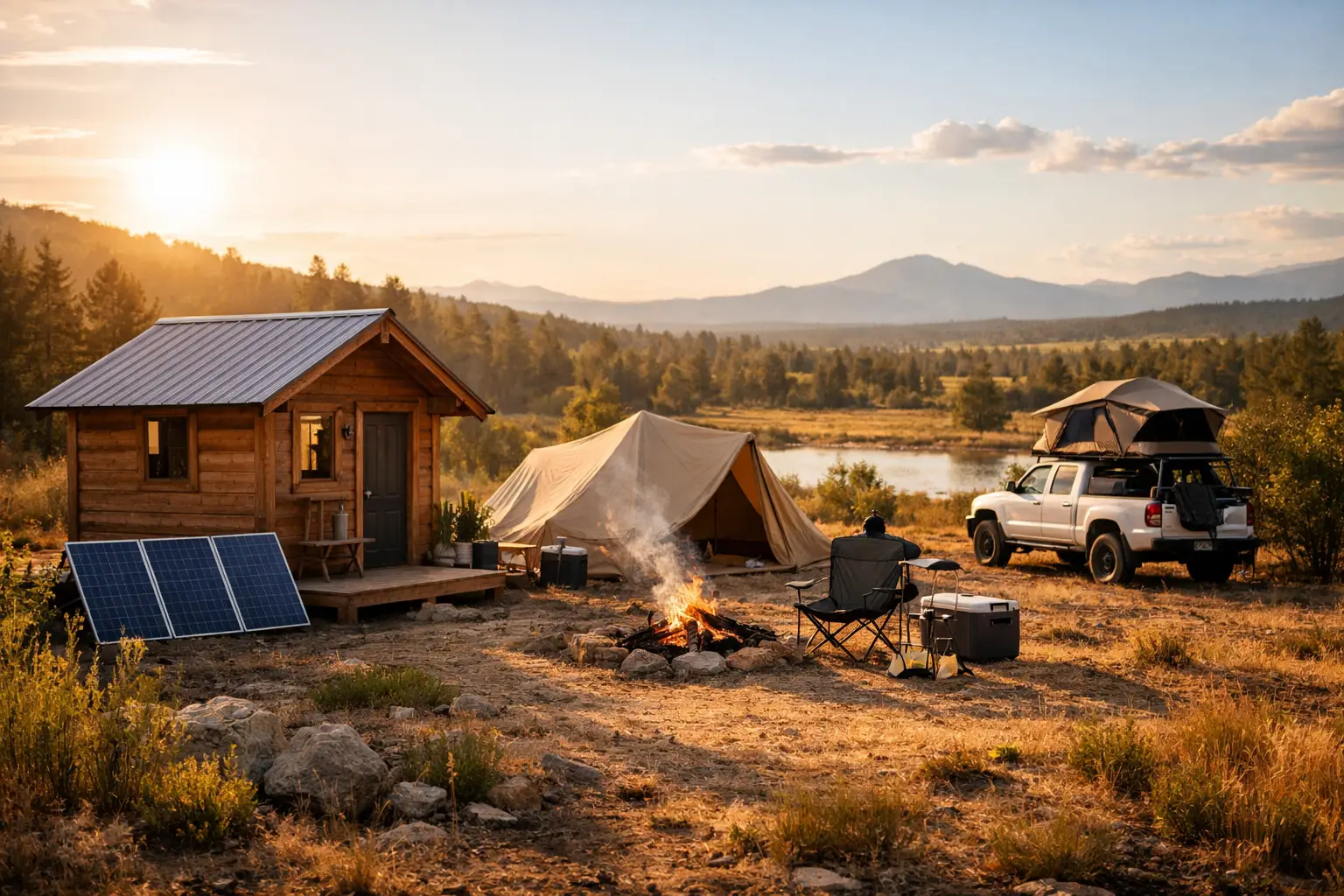
A low-priced parcel can look like the start of total freedom: room for a cabin, an RV, a garden, or simply a place where no neighbor is ten feet away. But can you live on raw land? In many parts of the United States, yes – but buying undeveloped acreage and legally making it your home are two very different things.
Raw land usually has no house, utility connections, septic system, improved road, or guaranteed building rights. That does not make it a bad purchase. It means the value of the property depends on what you are allowed to do there, what it will cost to prepare, and how much independence you actually want.
For some buyers, raw land is the right first step toward a homestead or off-grid lifestyle. For others, it is better used for recreation, camping, investment, or a future build. The smart move is to match the parcel to your plan before you buy.
Can You Live on Raw Land Legally?
The short answer is: it depends on local rules. Ownership alone does not automatically give you the legal right to camp, park an RV, build a tiny home, or establish a permanent residence.
Land-use rules are generally set at the county and sometimes city level. A rural parcel may be zoned for agricultural, residential, recreational, timber, conservation, or another specific use. Each category can have different rules for dwellings, minimum home size, mobile homes, livestock, accessory buildings, and business activity.
A parcel advertised as “off-grid” may be perfect for solar power and a well, but it can still require a permitted dwelling, approved septic system, and building inspections. Some counties allow RV living during construction for a limited period. Others prohibit full-time RV occupancy altogether, even on land you own.
Before making an offer, call the local planning and zoning department. Ask direct questions: Is a single-family home allowed? Are manufactured or tiny homes permitted? Can an RV be occupied temporarily or permanently? What permits are required for a driveway, well, septic system, and building? Get the answers in writing when possible.
Start With the Land’s Basic Reality
A beautiful aerial photo cannot show whether you can actually reach, use, and improve a parcel. The first part of land due diligence is confirming the basics that make day-to-day living possible.
Legal and Physical Access
A property should have recorded legal access from a public road or a properly documented easement. Do not assume a visible dirt road is legal access. It could cross a neighbor’s property without a recorded right to use it, creating a serious problem when you need to bring in a contractor, drilling rig, delivery truck, or emergency vehicle.
Physical access matters too. A steep, washed-out, muddy, or seasonal road may be manageable for a weekend visit but frustrating for full-time living. Find out who maintains the road, whether it is plowed in winter, and whether there are gates, road fees, or access restrictions.
Zoning, Setbacks, and Deed Restrictions
Zoning is only one layer of the rules. A parcel can also have deed restrictions, homeowners association rules, conservation limitations, floodplain concerns, or easements that affect where and how you build.
Setback requirements may limit how close a home, septic system, or well can be placed to property lines, roads, streams, and neighboring wells. On a smaller lot, these rules can shrink the usable building area quickly. Ask for a survey or review the county parcel map, but understand that a map is not always a substitute for a current boundary survey.
Soil, Water, and Terrain
If you plan to use a septic system, soil testing is one of the most important steps you can take. A failed perc test can make a conventional septic system impossible or force you into a much more expensive engineered solution.
Water is equally important. A nearby creek does not necessarily provide legal or safe drinking water. You may need to drill a well, connect to a rural water line, haul water, or install storage tanks. Check local well depths, drilling costs, water quality records, and whether the parcel has water rights where applicable.
Terrain affects nearly every improvement. Rocky ground, wetlands, heavy tree cover, a steep slope, or flood-prone areas can add substantial costs for clearing, grading, driveway construction, foundations, and utilities.
Build the Essentials in the Right Order
Living on raw land is not always about building a house first. In fact, the most successful projects usually start with the systems that make the site usable.
Access comes first. A driveway may require a permit, culvert, grading, gravel, or a bridge crossing. Next, focus on water and sanitation. A drilled well and septic system often represent some of the largest early costs, and their location may determine where the home can go.
Power is more flexible than it once was. Extending grid power can be convenient but expensive if utility lines are far away. Solar panels, batteries, generators, and propane can support off-grid living, but they require realistic planning around weather, energy use, maintenance, and backup power. Running a small cabin is different from powering central air conditioning, a well pump, workshop tools, and a family household.
Shelter should also be planned around local code. A permitted cabin, site-built home, manufactured home, or approved modular home may all be options depending on the area. A tent, shed conversion, or RV might work for occasional recreation but may not qualify as a legal permanent residence.
Budget for More Than the Purchase Price
Affordable land can be an excellent opportunity, especially for buyers willing to improve it over time. Still, the price of the parcel is only the opening number. The real cost of living there depends on what is already in place.
Common improvement expenses include:
- Surveying, title work, closing costs, and property taxes
- Driveway construction, grading, clearing, and drainage work
- Well drilling, water storage, filtration, or a utility connection
- Septic testing, system design, permits, and installation
- Electrical service extension or an off-grid solar and battery setup
- Building permits, foundation work, materials, and contractor labor
Costs vary dramatically by state, county, soil conditions, distance from utilities, and the type of home you want. A five-acre parcel near an established rural community may be far easier and less expensive to develop than a remote forty-acre tract with no maintained road.
A practical approach is to create two budgets: the purchase budget and the land-readiness budget. The first gets you ownership. The second gets you to a point where you can safely and legally stay on the property. If you need financing, remember that vacant land loans and owner financing terms may differ from conventional home mortgages.
Choose the Right Version of Land Living
Not every raw land buyer needs to move onto the property immediately. Your intended use should shape the location, acreage, and improvements you prioritize.
A recreational buyer may value hunting access, a creek, tree cover, and privacy more than nearby utilities. An aspiring homesteader may need usable soil, sunlight, water availability, and enough room for animals or a garden. A future home builder may care most about zoning, paved-road access, internet options, and resale potential.
If your goal is full-time living, consider doing it in phases. Buy the right parcel first, then improve access and utilities, build a legal structure, and move in when the property is truly ready. That approach can reduce financial pressure and prevent a rushed decision based on a low asking price.
Questions to Answer Before You Buy
Before you commit to raw land, verify these details with county offices, utility providers, and qualified local professionals:
- What is the current zoning, and what residential uses are allowed?
- Does the property have recorded legal access and a usable route to the site?
- Can the soil support the type of septic system you expect to install?
- What water source is available, and what will it cost to secure it?
- How far away are electric, internet, and other utility services?
- Are there deed restrictions, flood hazards, easements, or HOA rules?
- What permits and inspections are required before occupancy?
- What will annual property taxes, road fees, and maintenance cost?
These questions are not meant to discourage a land purchase. They are how you separate a promising opportunity from a parcel that may be difficult to use.
Raw Land Can Be a Smart Move With a Real Plan
Living on undeveloped land can offer privacy, flexibility, and a path toward a lifestyle that fits your goals. It can also demand patience, cash reserves, practical skills, and a willingness to work through local rules.
The best parcels are not always the cheapest ones. They are the ones that support your intended use with fewer surprises. As you compare listings on BuyVacantLand.com or in your local market, look beyond acreage and price. Find land with a clear path from vacant ground to the life you want to build there.



Join The Discussion