

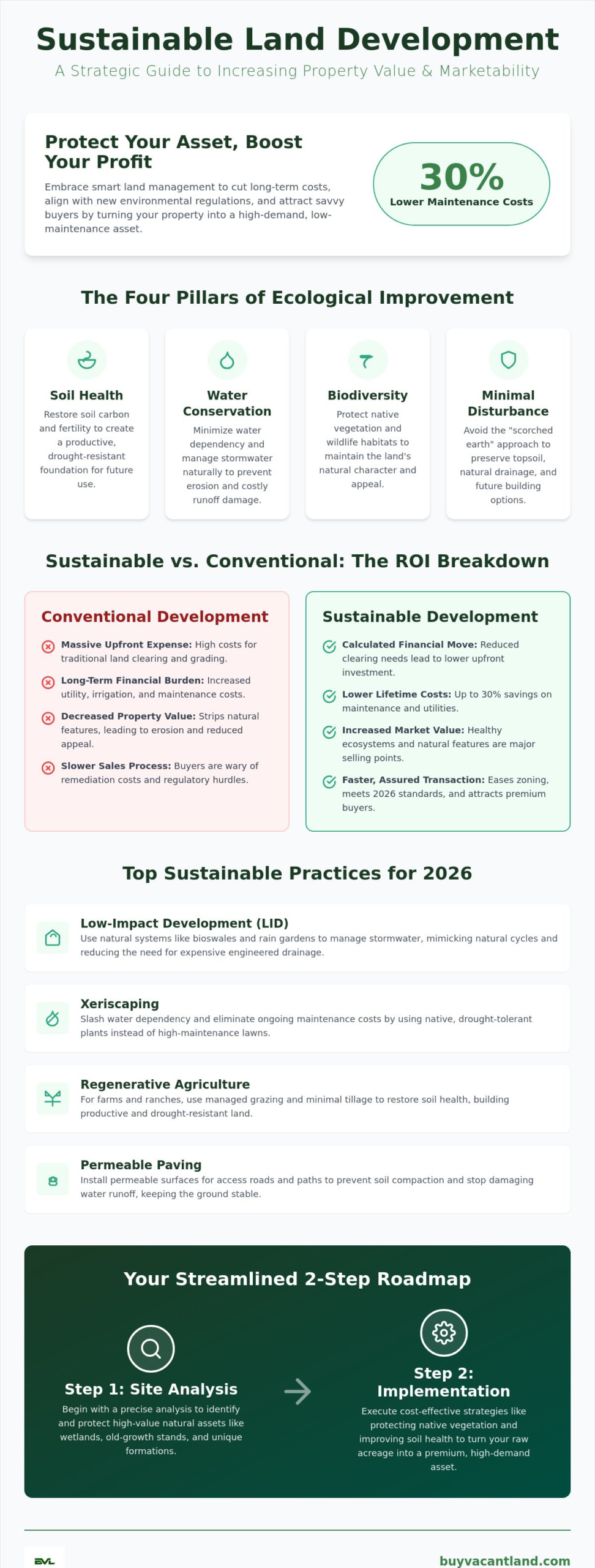
Traditional land clearing is a massive, unnecessary expense that often strips your property of its primary market value. Implementing sustainable land development practices isn’t just about conservation. It’s a calculated financial move to protect your asset. You want a property that appreciates without constant, costly intervention. This approach ensures your land remains a productive asset rather than a financial burden.
You likely feel the pressure of shifting regulations like the 2026 updates to California’s Title 24 or new energy mandates in Washington state. It’s easy to worry that these rules will eat your profits or that poor management will drive down your resale value. This guide changes that perspective. We’ll show you how to maintain a healthy ecosystem while cutting long-term maintenance costs by up to 30% through smarter land management and resource efficiency.
You’ll discover pragmatic, cost-effective strategies that increase the listing appeal of your vacant land. We’ll walk through exactly how to leverage 2026 tax incentives, such as the Colorado Agricultural Stewardship Tax Credit, and nature-based solutions to turn your raw acreage into a high-demand asset. This is your roadmap to a swift, assured transaction in an evolving market.
Key Takeaways
- Identify the four pillars of ecological improvement to boost your property’s value while maintaining its natural functions.
- Master sustainable land development practices like xeriscaping and low-impact development to minimize water dependency and site disturbance.
- Compare the ROI of sustainable versus conventional methods to see how reducing upfront clearing leads to lower long-term utility costs.
- Execute a streamlined two-step roadmap that begins with a precise site analysis to protect your existing land assets.
- Optimize your sales strategy by highlighting natural features and healthy ecosystems to drive interest on specialized land marketplaces.
What is Sustainable Land Development for Vacant Lots?
Sustainable land development isn’t a vague environmental concept. It’s a strategic method for improving raw land while maintaining its natural ecological functions. You aren’t just clearing a lot; you’re managing a long-term financial asset. By using sustainable land development practices, you ensure your property remains productive and valuable for decades. This approach focuses on four specific pillars: soil health, water conservation, biodiversity, and minimal site disturbance. In 2026, these factors dictate your property’s marketability in a competitive national landscape.
For vacant land owners, this means developing with the property’s future in mind. You aren’t just looking at immediate use. You’re looking at the long-term viability of the ecosystem. Sustainable development prevents the “scorched earth” approach that often leads to erosion, flooding, and decreased land value. It’s about working with the natural layout of the land to create a site that is easier to manage and cheaper to maintain.
The Core Principles of Land Stewardship
Effective stewardship requires integrating soil and water conservation to stop erosion before it starts. This prevents costly runoff damage that can ruin adjacent parcels. A smart landowner uses Conservation development strategies to protect natural features while allowing for limited, high-value improvements. You must avoid permanent degradation of undeveloped vacant land. If you strip the topsoil or disrupt natural drainage today, you destroy future building options. Use participatory approaches to understand local ecosystem needs. This ensures your land remains compliant with evolving local codes and maintains its natural character.
Why Land Buyers Prioritize Sustainable Lots
Modern buyers are savvy and risk-averse. They look for “off-grid land” and “farms” that already feature established sustainable systems. Natural drainage and healthy soil are massive selling points. These features mean the buyer won’t have to pay for expensive remediation or massive clearing projects later. Sustainable management makes it easier to meet strict 2026 environmental standards, such as the updated California Green Building Standards (Title 24) or the Washington State Clean Buildings Act. Properly managed land moves through the zoning process faster. It removes the friction from the sale and provides the peace of mind buyers crave.
The national land marketplace is crowded. Sustainability is your differentiator. Whether you own industrial land, hunting land, or residential lots, these practices protect your bottom line. You reduce ownership stress by working with nature rather than fighting it. This leads to a faster, more profitable transaction when you’re ready to list.
Top Sustainable Land Development Practices for 2026
Implementing sustainable land development practices is a direct investment in your property’s future liquidity. Low-impact development (LID) is your first line of defense. It uses natural systems to manage stormwater, effectively mimicking natural hydrologic cycles. This reduces the need for expensive, engineered drainage systems. For residential lots and commercial vacant lots, xeriscaping is no longer optional in many regions. It slashes water dependency and eliminates the ongoing cost of high-maintenance lawns. When you list your land for sale, these established systems signal to buyers that the lot is ready for immediate, low-cost use.
Regenerative agriculture is the standard for modern farms and ranches. It focuses on restoring soil carbon levels through managed grazing and minimal tillage. This doesn’t just help the environment; it builds productive, drought-resistant land. On undeveloped vacant land, use cover cropping during fallow periods. This simple step prevents topsoil loss and keeps your land fertile for the next owner. Remember that soil health is the capacity of soil to function as a vital living ecosystem that sustains plants, animals, and humans.
Protecting native vegetation is the fastest way to reduce your long-term landscaping budget. Native plants are already adapted to your local climate. They require zero extra water or fertilizer. For access roads, install permeable paving. This prevents soil compaction and stops water runoff from damaging your site. It keeps the ground stable and usable year-round. These sustainable land development practices turn a raw parcel into a high-performance asset.
Water and Soil Management Strategies
Natural infrastructure is more reliable than concrete. Create bioswales or rain gardens to capture and filter stormwater on-site. These features prevent erosion and keep pollutants out of local waterways. They also add visual appeal to the landscape, which is a major draw for off-grid land buyers. By managing water where it falls, you avoid the legal and financial headaches of downstream runoff issues.
Ecosystem and Habitat Preservation
Identify your property’s high-value natural features early. This includes wetlands, old-growth stands, or unique rock formations. Protecting these areas maintains the land’s character and biodiversity. On larger hunting land parcels, implement wildlife corridors. These allow for natural movement across the property, increasing the land’s value for recreational use. Always minimize your construction footprint. Preserving as much raw land as possible keeps your future development options open and your maintenance costs low.
Sustainable vs. Conventional Development: Cost and ROI
Conventional development is a front-heavy financial burden. You pay massive fees for heavy machinery to clear, grade, and level your site. These aggressive methods often destroy the land’s natural value and lead to future liabilities. In contrast, sustainable land development practices focus on precision. While initial planning might increase upfront construction costs by 2% to 7%, it can shorten your project timeline by up to 25%. This speed translates directly into saved interest and faster capital recovery.
Sustainable properties command a premium. High-performing sustainable assets often see a 5% to 10% increase in market value compared to traditional lots. You aren’t just saving the environment; you’re building a more liquid asset. Properties listed on specialized land marketplaces with sustainable features attract serious buyers who understand the long-term value of a resilient site. You avoid the hidden costs of conventional development, such as expensive erosion repair and invasive species management that plague poorly managed parcels.
Upfront Investment vs. Long-Term Savings
Compare the cost of traditional concrete culverts to natural drainage systems. Concrete is expensive to install and eventually fails. Natural bioswales use the land’s existing contours. They cost less to build and require minimal maintenance over time. If you’ve invested in xeriscaping for your residential lots, you’ve eliminated the need for complex, high-maintenance irrigation. This reduces operating costs by 15% to 30% over a 20 year period. Don’t ignore the tax benefits either. For the 2026 tax year, programs like the Colorado Agricultural Stewardship Tax Credit offer refundable credits to landowners who prioritize soil health and water efficiency.
Market Appeal and Resale Value
Eco-conscious buyers are a growing demographic. They search for “cheap land” that doesn’t come with a massive restoration bill. When you list your property as “sustainably managed,” you cut through the noise of generic listings. It signals that the land is healthy, stable, and ready for use. Buyers researching how do you buy land specifically look for these turnkey ecological features. They want to avoid the “money pit” scenario of fixing a degraded lot. Your sustainable management makes their decision easy and your sale faster.
The Landowner’s Roadmap to Sustainable Development
Executing a clear plan is the only way to avoid the typical financial pitfalls of property improvement. You need a streamlined process that prioritizes efficiency and long-term asset health. By following a structured sequence, you implement sustainable land development practices that actually work. This roadmap cuts through the confusion of environmental regulations and focuses on practical, high-impact actions. It turns your raw acreage into a premium, market-ready asset without the unnecessary overhead of traditional clearing.
Documentation is your most powerful tool in this process. Every step you take adds a layer of verifiable value to your property. When you are ready to sell, this proof of stewardship justifies a higher asking price. It provides the certainty that modern buyers demand. Follow these five steps to transform your land management strategy.
- Step 1: Conduct a site analysis to identify natural water flows and soil types.
- Step 2: Define your development goals while prioritizing the protection of existing assets.
- Step 3: Implement low-impact infrastructure, such as gravel paths instead of asphalt.
- Step 4: Restore degraded areas through native planting or soil amendment.
- Step 5: Document your practices to provide proof of stewardship to future buyers.
Step 1: Assessing Your Vacant Land Parcel
Start with hard data. Use USGS maps and local soil surveys to establish your land’s baseline health. This identifies exactly where the soil is stable and where water naturally drains. You must identify “no-build” zones early to preserve critical environmental functions. A site analysis in 2026 should include a review of both topographical data and local biodiversity indicators. This technical foundation prevents you from building in high-risk areas. It ensures your improvements are durable and compliant with local codes.
Step 2: Choosing the Right Sustainable Tools
Select tools that work with your specific terrain. Choose drought-resistant native species for any required landscaping to eliminate future irrigation costs. If your goals include energy independence, integrate renewable energy sites like solar arrays in areas with minimal ecological impact. Different parcels require different approaches. You can explore lands of america to understand how specific land types dictate your choice of tools. Using the right sustainable land development practices for your specific region maximizes your property’s utility while minimizing disturbance.
Low-impact infrastructure is the final piece of the puzzle. Replace traditional asphalt with permeable gravel paths to prevent soil compaction. This keeps your land’s natural drainage intact. Once your improvements are complete, you need a platform that values your hard work. List your sustainably managed land on a specialized marketplace to connect with buyers who prioritize these high-value features.
Listing and Selling Sustainable Vacant Land
Your investment in sustainable land development practices is only realized when you communicate its value to the right buyer. Don’t hide your hard work in a generic description. Highlighting these features in your listing title grabs immediate attention. Buyers in 2026 are actively searching for land that won’t require massive environmental remediation or expensive utility hookups. You’re selling a turnkey ecological asset. This transparency drives interest and secures the peace of mind that leads to a swift transaction.
Showcase your property’s resilience with high-quality photos. Capture natural drainage systems, healthy topsoil, and thriving native vegetation. These visuals provide the proof buyers need to move forward. If you have documentation for conservation programs or sustainable certifications, include it in your disclosure package. This level of detail builds trust. It justifies your asking price by showing the long-term utility of the parcel. You’re offering a property that is immune to the stress of upcoming environmental mandates.
Market your land as “future-proofed.” With 2026 regulations like the updated California Green Building Standards (Title 24) and the Washington State Clean Buildings Act becoming stricter, buyers want assets that already meet high standards. Your land is ready for the next decade of development. It removes the friction of compliance and allows the buyer to focus on their vision—perhaps one that includes refined entertaining with Table Terrain. This is how you maximize your property’s long-term market value.
How to Market Your Sustainable Lot
Use high-impact keywords to define your property. Include terms like “regenerative,” “low-impact,” and “native” in your property description. These words signal quality to sophisticated buyers. Emphasize the reduced cost of ownership. Explain how established sustainable systems, such as the bioswales or xeriscaping discussed in this guide, eliminate future expenses. Position your land as a ready-to-use solution for those seeking “off-grid” or “eco-friendly” living. This strategy targets the specific needs of modern land seekers.
Finding Buyers on a Specialized Marketplace
Generic real estate sites often overlook the nuances of raw land. Specialized websites like BuyVacantLand.com connect you with a national audience specifically looking for vacant land assets. You don’t waste time with buyers who don’t understand the value of your soil health or water management systems. Streamline your sale by targeting the right audience from day one. This ensures your sustainable land development practices are valued correctly. List your vacant land for sale on our national marketplace to turn your stewardship into a profitable, assured sale.
Secure Your Land’s Market Advantage
You now have the roadmap to transform your raw acreage into a high-demand asset. Adopting sustainable land development practices isn’t just about the environment. It’s a calculated strategy to reduce ownership stress. You’ve seen how these methods lower maintenance costs and protect your property from shifting 2026 regulations. By prioritizing soil health and natural drainage, you create a turnkey solution that savvy buyers are ready to purchase.
Your land is now future-proofed. You’ve replaced expensive, conventional clearing with precise, low-impact improvements that preserve market value. The final step is simple. You need a platform that understands the specific value of undeveloped land. Our national marketplace focuses exclusively on vacant parcels. This ensures your listing reaches the right audience without the noise of traditional residential sites. You won’t find a more efficient way to connect with buyers who value your stewardship.
Ready to sell? List your land on the #1 vacant land marketplace today. Our platform provides national US-wide reach and a streamlined process designed for efficiency. Take control of your asset and start your listing today. You’ve done the work to build a sustainable property; now let us help you find the right buyer.
Frequently Asked Questions
Is sustainable land development more expensive than traditional methods?
No, sustainable development is often more cost-effective when you calculate the total project lifecycle. While initial planning might require a small upfront investment, you save significantly by avoiding massive clearing fees and heavy machinery rentals. You also benefit from shorter construction timelines. Long-term maintenance costs drop because you aren’t fighting the land’s natural systems with expensive, artificial solutions.
Can I use sustainable practices on small residential lots?
Yes, sustainable practices are highly effective on small residential lots. Xeriscaping and rain gardens fit perfectly into limited spaces and provide immediate curb appeal. These features make your lot more attractive to buyers who want a low-maintenance homesite. Implementing sustainable land development practices on a small scale ensures your property stands out in a crowded residential market.
How do sustainable practices affect the resale value of my vacant land?
Sustainable land often commands a higher market price because it is perceived as lower risk. Buyers value properties that are already “future-proofed” against strict environmental codes and rising utility costs. A lot with established natural drainage and healthy soil is worth more than a degraded parcel. These features signal to the buyer that the land is stable and ready for use.
What are the easiest sustainable practices to implement on raw land?
Protecting existing native vegetation and using cover crops are the simplest starting points for any landowner. These actions require minimal effort but prevent topsoil loss and maintain the property’s natural character. Identifying natural water flows early also costs nothing but saves thousands in future erosion repair. These basic steps build a strong foundation for any future development or sale.
Does sustainable development require special permits?
Most sustainable land development practices follow standard permitting processes but may actually streamline your environmental approvals. In states like California or Washington, meeting 2026 green building codes is now a requirement for most projects. Following these practices ensures your land remains compliant with local laws. This reduces the risk of fines and prevents delays during the permitting phase of construction.
How can I find out if my land is suitable for regenerative agriculture?
Start with a professional soil test and a review of current USDA soil surveys. These tools identify your land’s baseline nutrient levels and water retention capacity. This data tells you if your land can support managed grazing or diverse crop rotations. Understanding your soil’s health is the first step toward restoring its carbon levels and increasing its overall productivity.
Is there a demand for sustainable land on the national market?
Demand for sustainable land is rising across the United States as buyers prioritize resilience. Modern land seekers look for parcels that offer lower operating costs and better environmental stability. Listing on a specialized marketplace helps you reach this specific, high-intent audience. These buyers are often willing to pay a premium for land that has been managed with long-term health in mind.
What happens if I develop land without considering sustainability?
You risk higher long-term costs and significantly decreased property value. Ignoring natural systems leads to avoidable problems like erosion, flooding, and soil degradation. These issues become expensive liabilities that you must disclose to future buyers. You also face a harder time selling to a market that is increasingly wary of properties with high maintenance burdens or regulatory risks.

Join The Discussion