
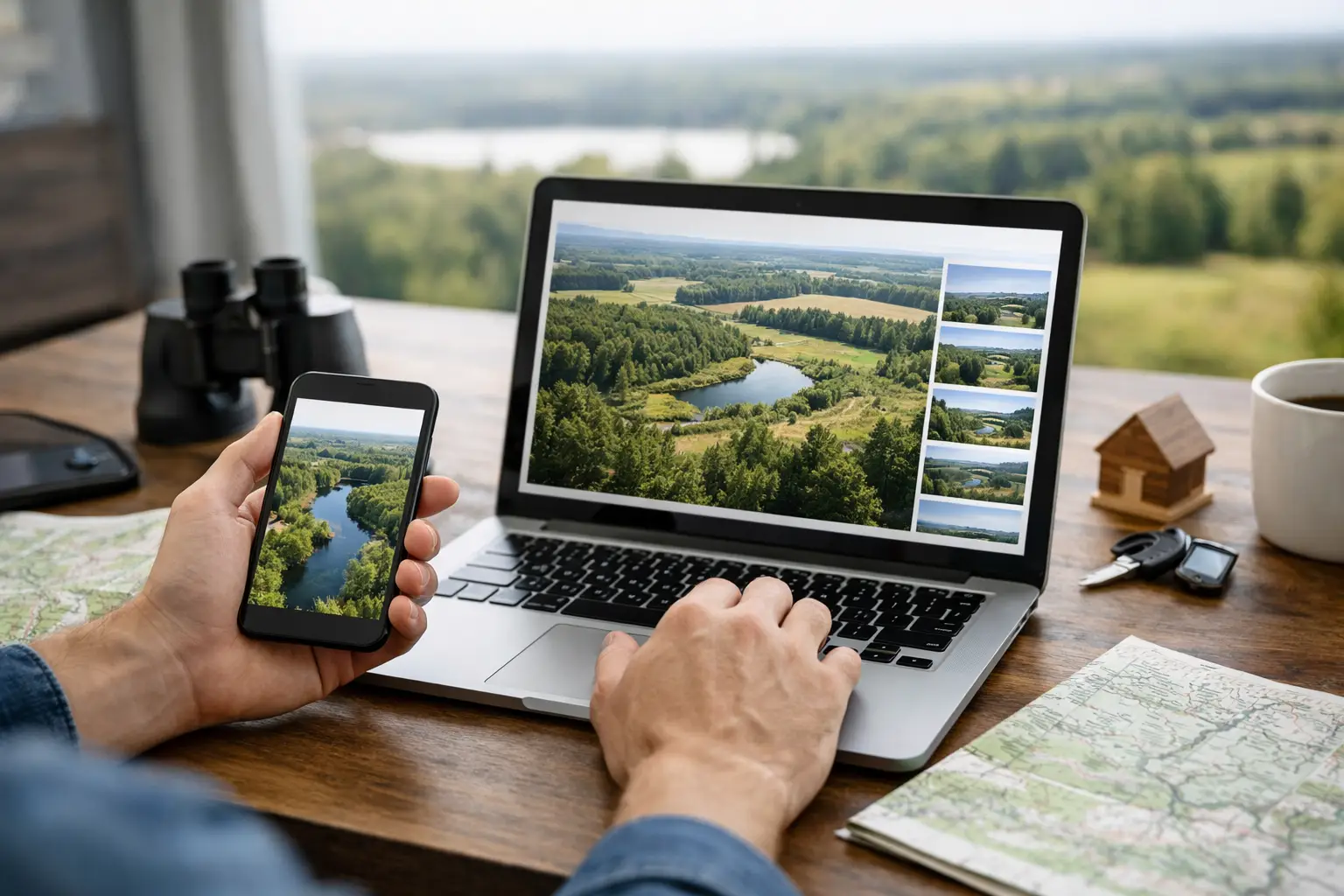
A wooded parcel with a creek, a private camping spot near public land, or acreage where you can hunt, ride ATVs, and unplug can be easier to find from your laptop than from a roadside sign. To buy recreational acreage online successfully, though, you need to look beyond attractive photos and a low price per acre. The best opportunity is land that supports the way you actually plan to use it.
Online land marketplaces make it possible to compare properties across counties and states in a single afternoon. That convenience can help you act quickly, especially when a well-priced recreational parcel gets attention. It also makes careful due diligence nonnegotiable. Recreational land is not a one-size-fits-all purchase. Access, terrain, restrictions, utilities, water, and local rules can change a property’s value dramatically.
Start With the Recreation You Want From the Land
The word recreational covers a lot of ground. A buyer looking for a seasonal campsite may be perfectly happy with rugged, off-grid acreage. A family that wants to park an RV every weekend may need a maintained road, a usable pad, and county rules that allow the intended use. A hunting buyer may care far more about habitat, cover, neighboring land use, and access than whether power is nearby.
Before searching, put your primary use in writing. Decide whether the property is mainly for hunting, camping, fishing, horseback riding, ATV use, a future cabin, timber, or long-term investment. Then identify the features that are essential versus features that would simply be nice to have.
This step protects you from buying acreage that looks exciting online but creates frustration later. Ten steep acres can offer more privacy and wildlife than 40 flat acres near a busy road, but steep ground may limit where you can camp, build, park, or create trails. There is no universally better parcel. There is only a better fit for your plans.
How to Buy Recreational Acreage Online With Confidence
A land-focused marketplace lets you filter inventory by location, acreage, land type, price range, and features such as waterfront, hunting land, off-grid property, or owner financing. Use those filters to narrow your search, but do not treat a listing as a final answer. Treat it as the beginning of your evaluation.
Read the entire property description and study every available map, survey image, aerial photo, and boundary diagram. Pay attention to whether acreage is stated as surveyed or estimated. Check whether the listing identifies legal access, road frontage, an easement, utility availability, water features, terrain, and restrictions. If a detail is not listed, ask about it directly rather than assuming it is favorable.
Aerial imagery is useful for seeing tree cover, neighboring homes, nearby roads, ponds, and possible clearings. Topographic maps help reveal elevation changes, drainages, ridge lines, and the practical shape of the land. County GIS maps can add context about parcel boundaries, flood zones, zoning, and nearby public land, although county records should be verified because online data can be incomplete or outdated.
Confirm Legal and Physical Access
Access is one of the most important items in any rural land purchase. A parcel may appear close to a road on a map but still lack deeded legal access. It may be reached through a neighboring parcel by permission only, which is not the same as a recorded easement. A road can also be technically accessible but difficult to use after heavy rain, snow, or seasonal washouts.
Ask whether access is through public road frontage, a private road, or a recorded easement. If there is an easement, review the document and understand who has maintenance responsibility. For a property you plan to visit regularly, the cost and condition of the route matter as much as the distance from town.
Look Closely at Water, Soil, and Terrain
Water can be a major advantage for recreation, wildlife, and future use, but it deserves verification. A seasonal creek may be dry for much of the year. A pond may be shared, intermittent, or subject to restrictions. If water rights matter in the area, confirm what transfers with the property and what does not.
For future cabin, septic, or RV plans, ask about soil conditions and whether a perc test has been completed. Land that cannot support a septic system may still be a great hunting or camping retreat, but it should be priced and purchased with that limitation in mind. Similarly, floodplain acreage can be beautiful and productive for wildlife, yet it may restrict building locations and affect insurance or financing.
Verify Rules Before You Picture the Weekend
County zoning is only one layer of land-use rules. Recreational acreage can also be affected by deed restrictions, homeowners associations, conservation easements, road agreements, subdivision covenants, and state regulations. Never assume that because a parcel is rural, you can camp indefinitely, live in an RV, hunt, shoot, build a cabin, or place a mobile home.
Call the county planning or zoning office and explain your intended use in plain language. Ask whether short-term camping is allowed, whether RV stays are limited, what permits a structure would require, and whether there are minimum dwelling sizes or setbacks. If hunting or shooting is a priority, ask about local discharge rules and confirm the parcel is large and positioned appropriately for safe use.
Restrictions are not automatically a deal breaker. Some buyers prefer them because they help preserve a quiet setting and prevent incompatible neighboring uses. The key is knowing what you are buying before money changes hands.
Price the Property as Land, Not as a Dream
A low monthly payment or low price per acre can make an online listing feel like an immediate win. But acreage values vary widely based on location, access, road quality, buildability, views, water, timber, improvements, and nearby demand. Compare similar sold and active parcels in the same market whenever possible, while recognizing that land is less uniform than houses.
Include the costs that follow the purchase. You may need a survey, title work, recording fees, insurance, road maintenance contributions, brush clearing, gates, a driveway, septic testing, or a well. Remote properties can be affordable to acquire and expensive to improve. That is not a reason to avoid them. It is a reason to budget honestly.
Owner financing can make recreational acreage more attainable, especially for buyers who do not want to wait for a traditional land loan. Review the down payment, interest rate, term, monthly payment, prepayment policy, default terms, and who holds title during the agreement. A payment that fits your budget is valuable, but clear contract terms matter just as much.
Complete Due Diligence Before Closing
Even when a seller provides detailed information, verify the essentials through the appropriate professionals and local offices. A title company, real estate attorney, surveyor, lender, county staff, and land agent can each answer different parts of the question.
Before you close, make sure you can confidently confirm:
- The legal description, parcel identification number, boundaries, and acreage
- Clear title, recorded easements, mineral rights, and any liens or unpaid taxes
- Legal access and the practical condition of the road in the seasons you expect to visit
- Zoning, restrictions, permits, and whether your planned recreational use is allowed
- Floodplain status, water conditions, septic feasibility, and utility options
If possible, visit the property in person. Walk key areas, follow the access route, look for boundary markers, and listen to the surroundings. An on-site visit often reveals details that maps cannot: road noise, soft ground, standing water, nearby activity, usable clearings, and the actual feel of the land. If travel is not practical, consider hiring a local professional, surveyor, or trusted representative to inspect it on your behalf.
Make the Online Search Work for You
The strongest online buyers are not the ones who rush. They are the ones who search with a clear purpose, recognize a good fit, and have a repeatable process for checking the details. Save searches by state and land type, compare several parcels, and keep notes on the features that affect your decision most.
BuyVacantLand.com gives buyers a practical place to search specialized recreational acreage alongside hunting land, waterfront property, off-grid parcels, farms, ranches, and owner-financed opportunities. That kind of land-first search makes it easier to focus on properties that match your goals instead of sorting through listings built around homes.
The right recreational acreage does more than give you a place to spend a weekend. It gives you room to create the outdoor life you want, on terms that make sense for your budget and future plans. Take the time to verify the details, then move forward when the land truly fits.



Join The Discussion