
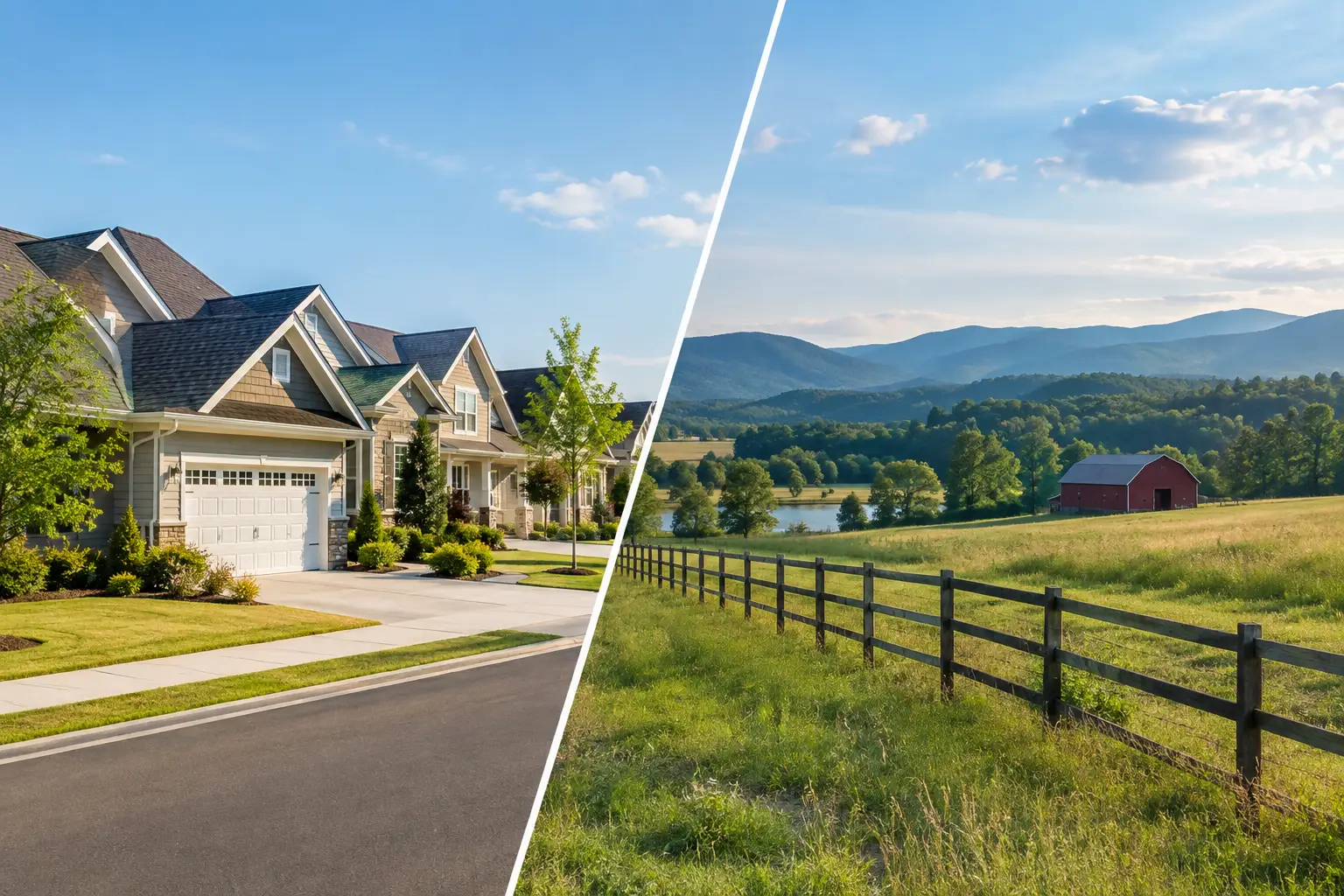
A quarter-acre lot near utilities can be the fastest path to a new home. Twenty wooded acres outside town can offer privacy, recreation, and room to build a different kind of life. When comparing residential lots vs rural acreage, the better purchase is not automatically the larger or cheaper parcel. It is the one whose legal access, utilities, zoning, and carrying costs match what you plan to do with it.
For buyers, the choice often comes down to a simple question: Do you want convenience close to established services, or flexibility and space farther from town? Both can be smart land purchases. The right answer depends on your timeline, budget, and intended use.
Residential Lots vs Rural Acreage: The Core Difference
A residential lot is generally a smaller parcel located in or near a developed community. It may be within city limits, a subdivision, or an unincorporated area with nearby homes. These lots are commonly marketed for a primary residence, a spec home, or a small rental build.
Rural acreage is typically larger land outside established urban and suburban development. It may be wooded, open pasture, desert, mountain property, recreational land, or a mix of terrain. Rural parcels can support a homesite, cabin, farm, hunting use, RV base, long-term hold, or off-grid project, but the land usually requires more investigation before it is ready for construction.
The distinction is not just lot size. A one-acre residential parcel can have public water, sewer, paved roads, and clear building rules. A 20-acre rural tract may have none of those things in place. That difference affects your upfront budget, financing options, timeline, and resale audience.
When a Residential Lot Makes More Sense
Residential lots are often the practical choice for buyers who want to build sooner and reduce unknowns. If the property has road frontage, utility availability, and zoning that clearly allows your intended home, you can spend less time solving infrastructure problems.
This can be especially attractive for first-time land buyers. A lot in a growing community may be easier to understand because comparable sales, nearby construction, and local permitting information are more available. Builders may also be more willing to quote projects when they know the area, soil conditions, and utility setup.
Location can support resale value as well. A smaller lot near jobs, schools, retail, or a desirable town may attract a larger pool of future buyers than a remote tract. That does not guarantee appreciation, but demand is often easier to measure where homebuilding is active.
The trade-off is flexibility. Residential lots may come with minimum home sizes, architectural standards, setback rules, HOA restrictions, or limits on RVs, manufactured homes, livestock, workshops, and short-term rentals. Before buying, make sure the neighborhood rules fit your real plan, not just the plan you have today.
A residential lot may be a strong fit if you want a conventional home, prefer nearby services, have a shorter building timeline, or want a property that appeals to mainstream homebuyers later.
When Rural Acreage Creates More Opportunity
Rural acreage appeals to buyers who value privacy, elbow room, and multiple possible uses. A larger parcel can give you space for a custom homesite, trails, gardens, animals, equipment storage, a hunting camp, or a family retreat. For aspiring homesteaders, recreational buyers, and investors looking for affordable land in emerging areas, that flexibility is a major advantage.
Price per acre is often lower in rural locations, but that number needs context. Land that costs less per acre may require a well, septic system, driveway, clearing, power extension, fencing, and ongoing road maintenance. A property can be a great value and still demand meaningful improvements before it supports a home.
Rural acreage also works well for buyers with a longer horizon. You may buy now, use the land for weekends or recreation, and build later when finances and plans line up. Some buyers prefer this approach because it secures a piece of land without forcing an immediate construction decision.
The trade-off is that rural parcels vary widely. One tract may have county-maintained road access, electric service at the boundary, and favorable zoning. Another may rely on an easement, require solar power, sit in a flood-prone area, or have terrain that makes building expensive. Never assume neighboring homes mean your parcel has the same rights or services.
Compare the True Cost, Not Just the Listing Price
Land buyers often focus on acreage, price, and scenery first. Those matter, but the real cost of ownership comes from what the parcel needs to become useful for your goals.
With a residential lot, ask about tap fees, impact fees, sewer assessments, HOA dues, and required building timelines. A low-priced lot in a planned community can carry expenses that change the numbers quickly. You should also find out whether a builder must be approved and whether there are restrictions on the type of home you can build.
With rural acreage, budget for access and infrastructure. A new driveway, well, septic system, survey, soil work, land clearing, and electric connection can add substantially to the purchase price. If you intend to live off-grid, price the solar, battery, water storage, and waste-water systems realistically rather than treating them as small add-ons.
Property taxes deserve attention in both cases. Taxes may be lower on undeveloped rural land, but exemptions, agricultural classifications, and local assessments can change over time. Ask the county about the current tax amount and whether a future homesite or improvement could alter it.
Due Diligence That Protects Your Purchase
Whether you are considering a city-edge lot or a remote parcel, land due diligence should answer one central question: Can I legally and practically use this property the way I intend to use it?
Before committing, verify these essentials:
- Legal access: Confirm the parcel has recorded access from a public road or a documented easement. A road visible on a map is not proof of legal access.
- Zoning and restrictions: Check county or city rules, deed restrictions, subdivision covenants, and HOA requirements. Ask directly about your planned home, manufactured home, RV, animals, business use, or recreational use.
- Utilities and water: Verify service availability with providers instead of relying only on a listing description. For rural land, investigate well depth estimates, septic suitability, and power extension costs.
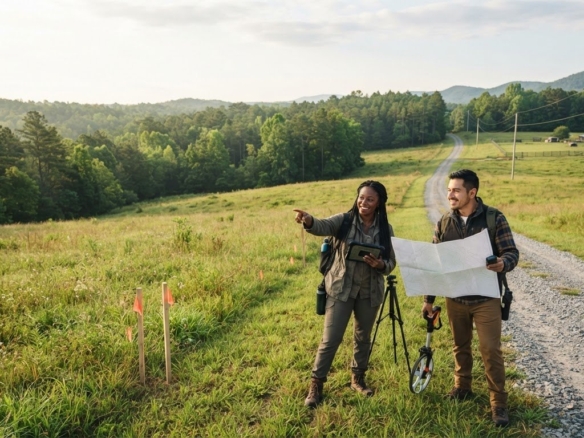
- Physical conditions: Review flood zones, topography, wetlands, soil conditions, drainage, and any environmental concerns. Walk the property when possible and consider a survey when boundaries are uncertain.
For acreage, mineral rights and timber rights can also matter. In some areas, surface ownership does not include everything below or above the ground. If those rights affect your intended use, ask questions before closing, not after.
Investment Potential Depends on the Buyer Pool
Both property types can be strategic investments, but they attract different future buyers. Residential lots generally benefit from nearby population growth, limited buildable inventory, and new construction demand. Their value may be easier to compare because similar lots and homes nearby create more market data.
Rural acreage can offer a wider range of exit strategies. A buyer may hold it for future development, sell it to a recreational buyer, improve access and market it as a homesite, or divide it where local rules allow. Yet rural demand is location-specific. A beautiful tract without reliable access or buildability can be harder to sell than a plain parcel with those fundamentals in place.
The strongest investment case is usually practical, not speculative. Buy land with a clear audience in mind. If you are purchasing a residential lot, understand what local builders and homebuyers want. If you are buying acreage, know whether the likely next buyer is a homesteader, hunter, cabin builder, neighbor, or long-term investor.
Choose Land That Supports Your Next Move
A residential lot can turn your homebuilding plans into a more straightforward project. Rural acreage can create room for recreation, self-reliance, and long-term possibilities that a neighborhood lot cannot match. Neither is universally better.
Start with your intended use, then work backward through location, access, restrictions, utilities, and total cost. Searching a land-focused marketplace such as BuyVacantLand.com can help you compare property types in the areas that interest you, but the final decision should rest on verified facts about the individual parcel. The best piece of land is the one that gives your plans room to grow without adding surprises you cannot afford.


Join The Discussion