
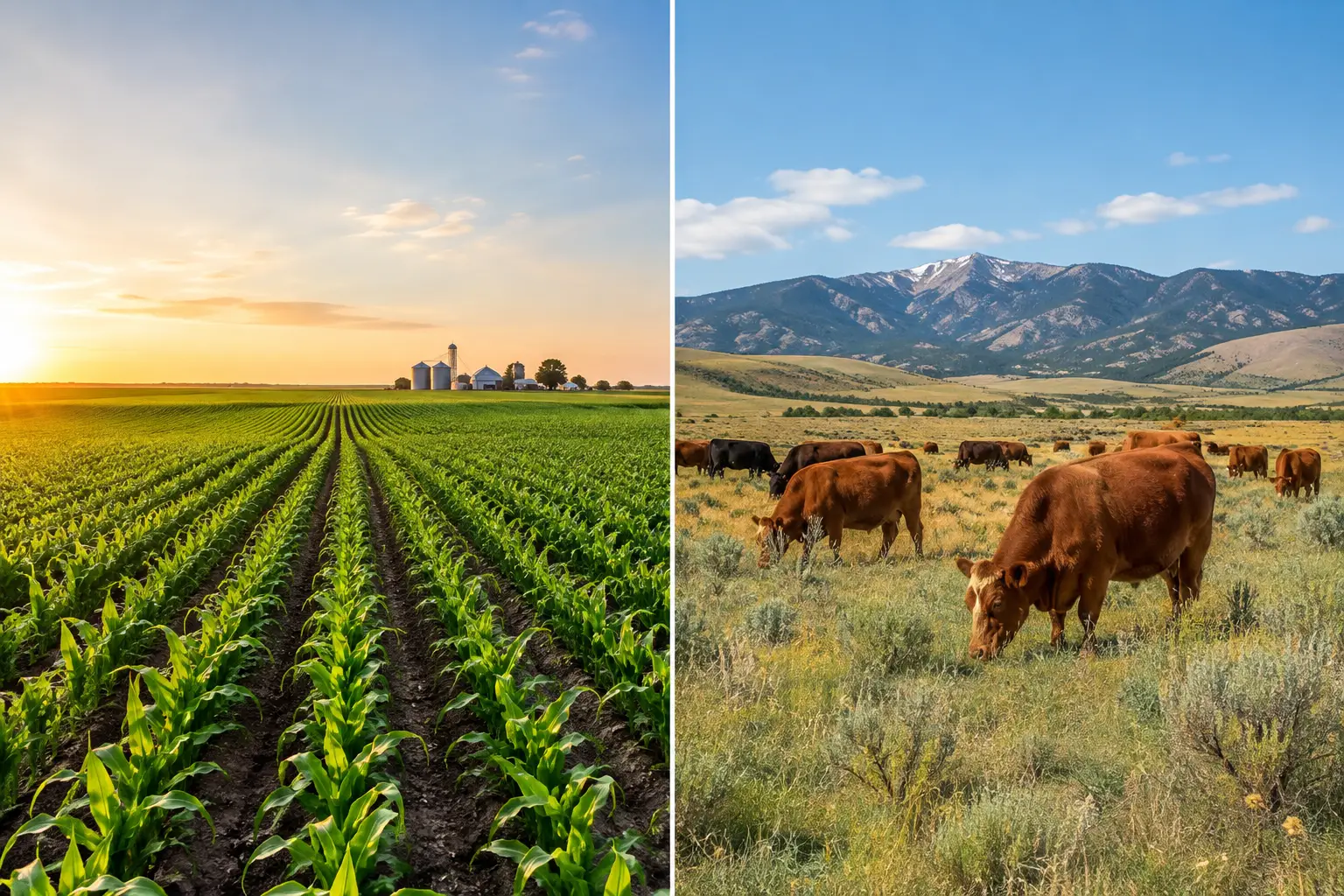
A 40-acre property with rich soil, irrigation access, and a modest equipment shed may be an excellent farm. A 40-acre property with native grass, perimeter fencing, and room for livestock may be a ranch. The distinction matters because farm land versus ranch land is not just a label on a listing. It shapes how you evaluate income potential, financing, infrastructure, daily upkeep, and the kind of life the property can support.
For buyers looking at rural acreage, the best choice comes down to intended use. Some properties can support both crops and livestock, but most have a clear strength. Knowing what to look for helps you avoid paying for land that does not fit your plans.
Farm Land Versus Ranch Land: The Core Difference
Farm land is generally used to grow crops or produce agricultural products. That can include row crops such as corn, soybeans, wheat, or hay, along with orchards, vineyards, vegetable operations, nurseries, and specialty farms. Productive soil, water availability, drainage, field layout, and access for machinery are often the biggest value drivers.
Ranch land is generally used to raise and manage livestock, most commonly cattle, but also horses, sheep, goats, bison, or other animals. A ranch may include open pasture, grazing ground, rangeland, stock ponds, barns, corrals, fencing, and working facilities. The quality and carrying capacity of the forage matter more than whether the soil can produce high-value crops.
The line is not always fixed. A cattle operation that grows hay for feed may be both a farm and a ranch. A smaller acreage with a few horses is often marketed as a horse property or hobby farm rather than a traditional ranch. Focus less on the marketing term and more on what the land can realistically do.
What Makes Good Farm Land?
Farm buyers should start below the surface. Soil type, fertility, depth, slope, erosion history, and drainage all affect what can be grown and how much preparation may be needed. A beautiful green field can still have poor drainage, shallow soil, or limitations that reduce its usefulness.
Water is equally important. Rainfall patterns, irrigation rights, wells, ponds, and access to irrigation districts can change the value of a parcel dramatically. In dry parts of the West, dependable water may be more valuable than additional acreage. In wetter regions, drainage systems and flood history may deserve closer attention.
Field configuration also affects operating costs. Large, level, contiguous fields are easier to plant and harvest than narrow, irregular parcels broken up by wooded draws, steep terrain, or road easements. Road frontage and dependable access matter because farm equipment, seed, fertilizer, and harvested crops all need a way in or out.
Smaller farm properties can still create opportunity. A five- to 20-acre parcel may be well suited for produce, flowers, berries, poultry, beekeeping, or a homestead operation. The goal is not to find the biggest tract. It is to find acreage that matches the crop, market, equipment, and workload you have in mind.
What Makes Good Ranch Land?
Ranch land is evaluated through the lens of animal capacity and management. The first question is often: how many animals can this property support without overgrazing? The answer depends on forage quality, rainfall, soil, elevation, grazing season, and whether supplemental feed will be necessary.
Reliable water for animals is essential. Depending on the property, that might mean ponds, springs, creeks, wells, troughs, or water lines. A seasonal creek may look appealing in a listing, but it should not be treated as a year-round water source without verification.
Fencing can be one of the largest early expenses for a ranch buyer. Check the condition of boundary fences, cross-fencing, gates, cattle guards, and any areas where livestock could escape. Cross-fencing is especially useful when you want rotational grazing, which allows pasture areas to rest and can improve long-term forage health.
Working improvements add practical value. Corrals, chutes, loading areas, barns, shelters, and equipment storage can save significant time and money. On the other hand, older improvements should be inspected carefully. A weathered barn or fence system may be a selling point visually but an expensive repair project in practice.
Acreage Means Different Things
Acreage is one of the most misunderstood parts of rural property shopping. Ten acres of irrigated, productive soil near a strong local market can support a more intensive farm operation than 100 acres of dry ground. Likewise, 100 acres of lush pasture may support far more livestock than 500 acres of arid rangeland.
Do not assume that a certain number of acres makes a property a farm or a ranch. Instead, ask what the land produces, what it costs to operate, and what local conditions allow. County extension offices, area producers, and agricultural professionals can provide useful context on typical yields, stocking rates, weather patterns, and common land uses.
Location changes the equation, too. A smaller farm near a growing metro area may have strong direct-to-consumer sales potential, agritourism possibilities, or future development appeal. A remote ranch may offer privacy, hunting, recreation, and lower land costs per acre, but require more planning for labor, supplies, and veterinary access.
Income Potential and Expenses
Both farm and ranch land can produce income, but neither should be treated as passive simply because it is rural real estate. Crops require planning, inputs, equipment, labor, and marketing. Livestock requires daily or regular management, feed planning, fencing, animal health care, and protection from weather and predators.
Farm income may come from crop sales, farm leases, specialty products, timber, or seasonal uses. Ranch income may come from cattle or livestock sales, grazing leases, horse boarding, hunting leases, or recreational opportunities. The strongest opportunity is usually the one that fits the property naturally rather than forcing an unfamiliar use onto the land.
Before making an offer, build a realistic annual budget. Include property taxes, insurance, loan payments, road maintenance, fuel, equipment, fencing, water systems, seed or feed, repairs, and professional services. If the property has an existing lease, review its terms, renewal dates, tenant responsibilities, and any rights that remain with the tenant.
Zoning, Restrictions, and Due Diligence
Never assume agricultural use is automatically allowed because a parcel is outside town. County zoning, deed restrictions, homeowners associations, conservation easements, and subdivision rules can limit animals, structures, commercial activity, short-term rentals, or the number of homes allowed on the property.
Access and utilities deserve the same attention. Confirm that legal access is recorded, understand whether the road is public or private, and find out who maintains it. If you plan to build, investigate electric service, internet options, septic feasibility, well depth, floodplain status, and permits before closing.
For farm land, review soil maps, water rights, irrigation agreements, and any conservation programs. For ranch land, verify fences, grazing history, water sources, and mineral rights. Mineral rights can be particularly important in areas with oil, gas, or mining activity, since surface use agreements may affect how you use the property.
Which Property Fits Your Goal?
Choose farm land when your vision centers on crops, intensive agricultural production, local food sales, orchards, or a productive homestead. Choose ranch land when you want livestock, horses, grazing income, wider open space, or recreational acreage that can support animals.
If your plans are still flexible, look for a versatile parcel with usable soil, dependable water, manageable terrain, and few restrictive covenants. That combination gives you room to start small and adapt over time. A land-first marketplace such as BuyVacantLand.com can help you narrow the search by property type, location, acreage, and intended use.
The smartest rural purchase is rarely the one with the most acres or the prettiest photos. It is the one whose water, access, improvements, restrictions, and earning potential support the life or investment strategy you want to build. Start with that purpose, ask direct questions, and let the land prove that it can carry your plan.


Join The Discussion