
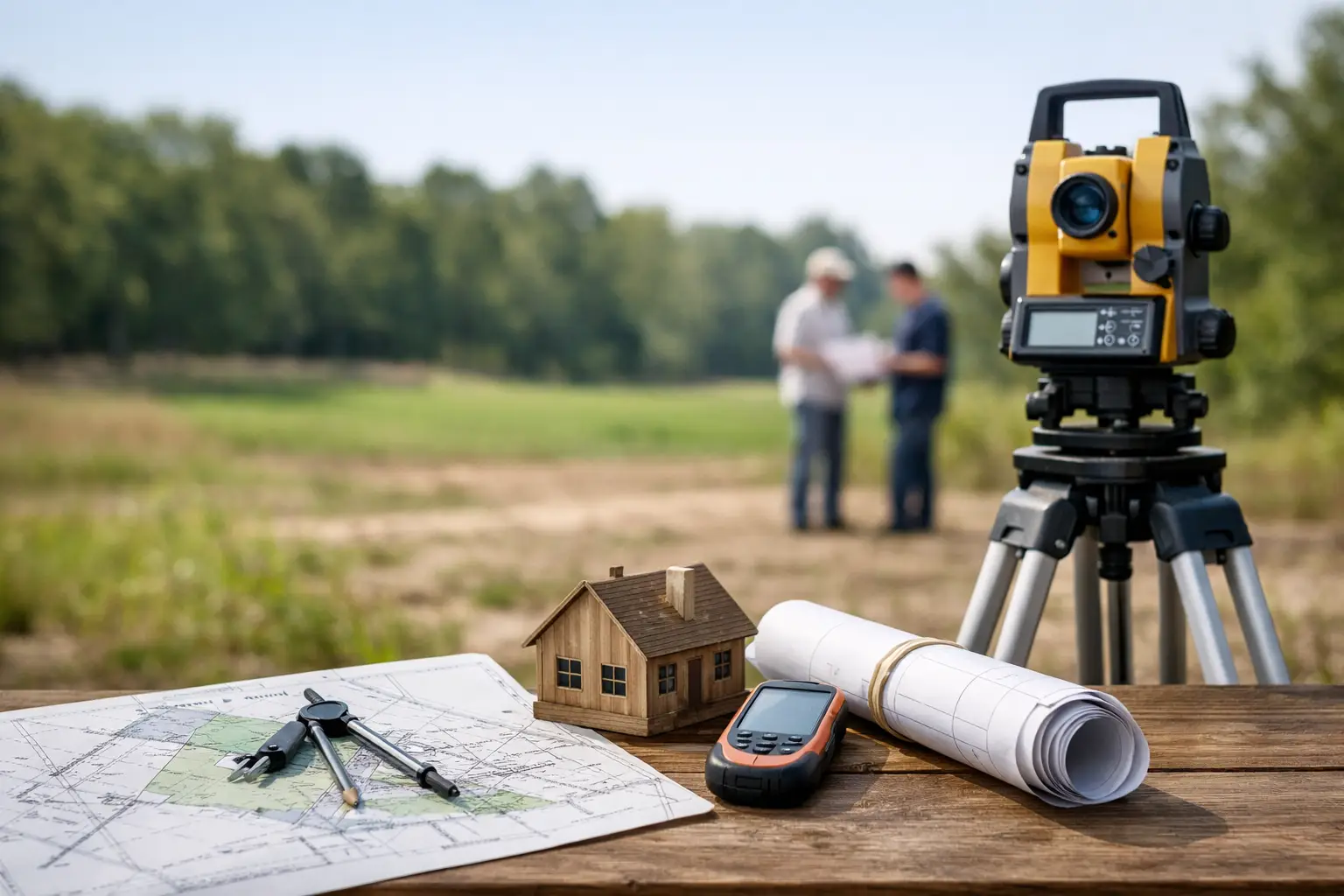
A parcel can look perfect on a listing page, then get a lot more complicated the moment you ask one simple question: where, exactly, are the boundaries? That is why a survey before buying land is often one of the smartest due diligence moves a buyer can make. It can confirm what you are actually purchasing, expose problems that affect value or use, and help you avoid paying for acreage, access, or improvements that are not really yours.
That does not mean every land deal requires a brand-new survey. Some buyers are looking at a small lot in an established subdivision with clear records and recent mapping. Others are buying rural acreage where fence lines, roads, creek beds, and old legal descriptions do not always match what appears on paper. The right answer depends on the property, your plans for it, and how much risk you are willing to accept.
Why a survey before buying land matters
Land is different from a house. With a home purchase, you can usually walk through the structure, inspect the systems, and get a solid sense of what you are buying. Vacant land is less obvious. There may be no visible corners, no marked lines, and no clear sign of whether a driveway, barn, hunting blind, or utility line sits where it should.
A land survey helps establish the legal boundaries of the parcel. It can show dimensions, corners, encroachments, easements, road frontage, and in some cases improvements or topographic features. For a buyer, that matters because the property is only as useful as its legal and physical realities.
If you plan to build, subdivide, fence, finance, or resell, a survey often becomes even more valuable. A parcel that seems large enough for your plans can turn out to have setbacks, access limitations, or boundary disputes that change the picture. A survey does not solve every problem, but it gives you a clearer starting point before you commit your cash.
What a land survey can reveal
The biggest benefit is certainty. A survey can confirm whether the acreage being marketed matches the legal parcel and whether the visible use of the land aligns with the record boundaries. That sounds basic, but it is where many expensive surprises begin.
A survey may reveal that a neighboring fence is over the line, that a shared driveway crosses the property without a recorded easement, or that a shed, well, or gate is not where anyone assumed it was. It can also show whether the parcel has actual legal access to a public road instead of just a path that people have been using informally for years.
For rural and recreational buyers, this is especially important. Hunting land, off-grid property, timberland, and larger acreage often involve old descriptions, partial fencing, and informal use patterns. What you see on a satellite image or during a walkover is helpful, but it is not the same as a professional survey.
When you should strongly consider a survey before buying land
Some situations raise the stakes enough that skipping a survey is hard to justify. One is when the parcel is rural, large, irregularly shaped, or lightly documented. Another is when the seller cannot provide a recent survey and the corners are not obvious on site.
You should also take a close look at surveying when access is a question. If a parcel appears landlocked, relies on an easement, or uses a private road, you want clarity before closing. The same goes for properties with signs of encroachment, shared improvements, or neighboring uses that seem close to the line.
A survey is also a smart move if you plan to build a home, place a manufactured house, install fencing, drill a well, add utilities, or hold the land as a resale investment. Buyers with a specific use case need more than a general sense of the boundaries. They need enough certainty to know the property can support the plan.
Lenders and title companies may influence the decision too. In some financed transactions, a survey is required or strongly recommended. Even when it is not required, title insurance exceptions related to boundary matters can leave you exposed if you choose not to verify the lines.
When an existing survey may be enough
Not every purchase calls for a fresh survey ordered from scratch. If the seller has a recent, professional survey and there have been no changes, disputes, or visible issues since it was completed, that document may be useful. In a platted subdivision with clear lot lines and recorded access, the risk can be lower than it is on remote acreage.
Still, lower risk does not mean no risk. Ask how old the survey is, whether it was recorded, and whether anything has changed on the property or nearby. If you are relying on an older survey, compare it to the title commitment, legal description, county mapping, and what you see on the ground. If those pieces do not line up, that is your signal to slow down.
A survey is not the same as other land due diligence
Buyers sometimes assume a plat map, GIS map, or legal description gives them the same protection as a survey. It does not. County maps are useful research tools, but they are not a substitute for a licensed surveyor marking and measuring the parcel.
The same goes for title work. Title research can uncover ownership history, liens, easements, and recorded restrictions, but it does not physically locate boundaries on the land. You need both legal review and physical verification to get a complete picture.
If the parcel has development potential, you may also need zoning review, floodplain research, perc testing, utility checks, and access confirmation. A survey is one part of due diligence, not the whole checklist. It is a very important part, but buyers make better decisions when they treat it as one piece of the bigger evaluation.
How much does a land survey cost, and is it worth it?
Cost depends on acreage, terrain, location, records, and complexity. A simple lot in a subdivision may cost far less than a large wooded parcel with rough access and an unclear legal description. In some cases, the quote can feel high, especially if you are already paying for inspections, title work, and closing costs.
But the better question is what uncertainty costs you. If a survey prevents you from buying a parcel with no legal access, disputed acreage, or an encroachment that limits your plans, it can save far more than it costs. Even when it does not uncover a major defect, it can give you confidence to move forward and invest in the property with fewer unknowns.
For investors, that confidence matters. A parcel that is easier to understand is usually easier to market and sell later. Clear boundaries and documented access can make your future listing stronger and reduce buyer hesitation.
What to ask before you waive a survey
If you are tempted to skip it, pause and ask a few practical questions. Are the property corners visible and consistent with the legal description? Is access clearly recorded? Are there fences, roads, utility lines, or structures near any boundary? Do the acreage, maps, and seller statements all match up? Are you planning to build or improve the land soon after closing?
If the answers leave room for doubt, that doubt has value. It should factor into your offer, your inspection period, and your willingness to close without more information. Land can still be a great opportunity, but smart buyers know opportunity and due diligence go together.
The bottom line on a survey before buying land
The best land deals are not just affordable. They are usable, clear, and aligned with your goals. A survey before buying land helps you verify that the parcel you want is the parcel you are actually getting, with the access, boundaries, and physical reality you expect.
That does not mean you need one in every scenario, no questions asked. It means you should make the decision intentionally, based on the property and your plan for it. If you are buying vacant land to build, invest, recreate, or hold for the future, clarity is part of the value. The more certain you are on the front end, the easier it is to move forward with confidence and turn the right piece of land into a real opportunity.



Join The Discussion