
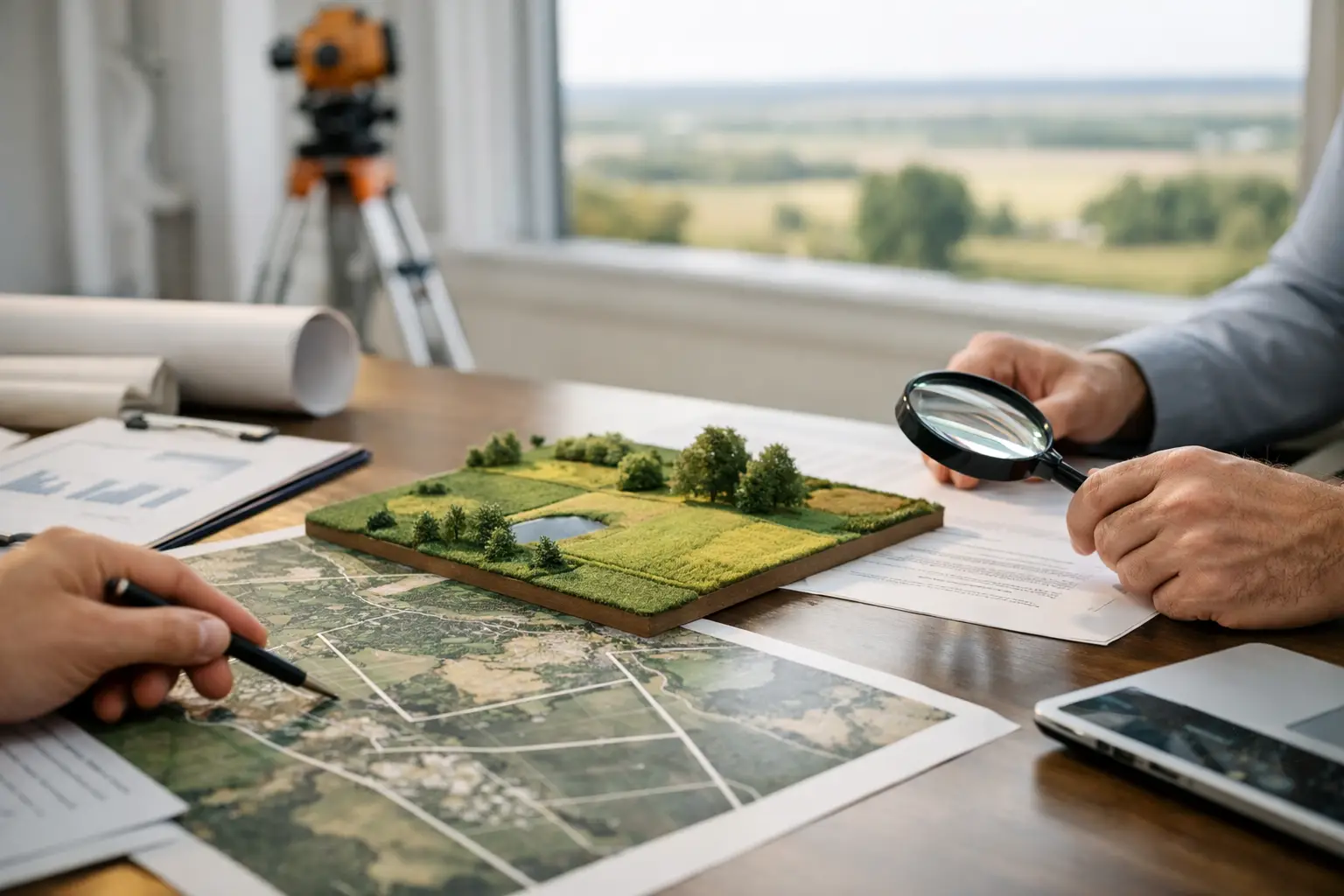
A great-looking parcel can go sideways fast when the details do not match the listing. A road that ends before the property, a homesite that will not perk, or zoning that blocks your plans can turn a smart buy into an expensive lesson. That is why a guide to land due diligence matters so much. When you know what to verify before closing, you buy with more confidence and far fewer surprises.
Land is different from a house. With a home, you can usually see the utility connections, the structure, and the neighborhood pattern. Vacant land requires more digging. You are not just buying dirt. You are buying access, legal rights, build potential, use flexibility, and future options. The smart way to buy land is to confirm those pieces one by one.
What land due diligence really means
Land due diligence is the process of checking whether a property fits your intended use, your budget, and your risk tolerance before money becomes hard to recover. That sounds simple, but every parcel has its own story. A recreational lot may be perfect for camping but useless for a cabin. A cheap rural parcel may look like a bargain until you learn power is miles away and a well will be costly.
The goal is not to find a perfect property. The goal is to understand the trade-offs clearly enough to make a good decision. Some buyers are fine with off-grid land, seasonal access, or limited improvements if the price reflects it. Others need certainty around building, financing, and resale. Due diligence helps you separate a real opportunity from a problem you do not want to inherit.
Start this guide to land due diligence with your use case
Before you call the county or order documents, get clear on what you want the land to do for you. That single step shapes every other question. A parcel for long-term investment is evaluated differently than one for a primary home, RV use, hunting, farming, or a future cabin.
If your plan is to build soon, zoning, setbacks, utilities, septic feasibility, and road access move to the top of the list. If you want a recreational retreat, legal access, terrain, flood risk, and seasonal usability may matter more than nearby water lines. If you are buying for resale, you should care deeply about marketability. Ask yourself whether the next buyer will face the same hurdles you are willing to accept.
This is where many people save or lose money. A parcel can be a strong fit for one buyer and a poor fit for another. Cheap land is not automatically a good deal. Affordable land that matches your goals is.
Title, ownership, and legal access come first
The first major check is ownership. Make sure the seller has the legal right to sell the property and that the parcel being marketed matches county records. You also want to understand whether there are liens, unpaid taxes, easements, or restrictions that affect use.
Title work matters because land problems can stay hidden for years. Boundary disputes, old easements, access rights, and tax issues are much easier to deal with before closing than after. If you are buying through a title company or real estate attorney, they can help surface these issues. If the transaction is private or owner financed, this step becomes even more important.
Access deserves special attention. Do not assume a property is accessible just because it appears near a road on a map. You want to know whether access is legal, physical, and practical. Legal access means there is a recorded right to reach the property. Physical access means a road or path actually exists. Practical access means you can use it in the conditions that matter to you, whether that is year-round, by truck, with equipment, or after rain.
Landlocked property is not always a deal breaker, but it changes value and usability. If access depends on a neighboring owner allowing entry without a recorded easement, that is a risk, not a solution.
Zoning, restrictions, and buildability
A parcel may look open and flexible, but county rules still control what you can do with it. Verify the zoning classification and ask what uses are allowed by right, what uses require permits, and what uses are prohibited. Also ask about minimum lot size, setbacks, height limits, manufactured homes, RV use, livestock rules, and subdivision potential if that matters to you.
Beyond zoning, watch for deed restrictions, HOA rules, conservation easements, and local ordinances. These can limit everything from mobile homes to short-term rentals to hunting activity. Two nearby parcels can look nearly identical and have very different rules attached.
If building is part of your plan, do not stop at zoning. Ask whether the site is actually buildable. Some lots meet zoning but fail because of topography, drainage, floodplain issues, lack of septic approval, or protected environmental features. A county planning office can answer some questions, but not all. In many cases, you will need a survey, soil evaluation, or site-specific advice from local professionals.
Utilities and site costs can change the deal
A low purchase price can be wiped out quickly by improvement costs. That is why experienced buyers look past the asking price and focus on total project cost. Find out whether electricity is nearby, whether water service exists, whether a well is likely, and whether the property will require septic.
Septic is a major issue on rural land. If there is no sewer connection, you may need a perc test or other soil evaluation to confirm that a septic system is possible. Without it, a parcel intended for a home can lose much of its value to you. The same goes for water. A parcel may support a well, but depth, quality, and drilling cost can vary a lot by area.
Internet and cell service also matter more than many buyers expect. If you plan to work remotely, stream, use security systems, or spend extended time on the property, verify service instead of assuming it will be available. Off-grid buyers may be comfortable with solar, generators, water hauling, or satellite internet, but those choices should be intentional and budgeted.
Survey, boundaries, and physical conditions
Never rely only on listing maps or county GIS images to understand boundaries. Those tools are useful, but they are not always precise enough for a final decision. A survey can confirm corners, acreage, encroachments, and access points. On more complex parcels, that clarity can prevent future conflict and help you plan where improvements could go.
Walk the land if possible. If you cannot, get recent photos, topographic information, and as much local detail as possible. Look for steep terrain, washes, wetlands, standing water, dumping, erosion, and signs of neighboring use that crosses onto the property. What looks flat from a distance can become very different once you are on the ground.
Flood risk deserves a separate look. Even if you are not building right away, floodplain location can affect insurance, permitting, financing, and resale. The same is true for wildfire exposure in some regions. Risk does not always kill a deal, but it should shape both price and expectations.
Check market value, taxes, and exit potential
A solid parcel still needs to make sense financially. Compare similar land sales, not houses and not active listing prices alone. Vacant land values can vary widely based on access, utilities, terrain, zoning, and location within the same county. A cheaper parcel may be correctly priced if it has limitations. A more expensive one may still be the better buy if it is easier to use or resell.
Review annual property taxes and ask whether there are any delinquencies or special assessments. Taxes on land are often lower than improved property, but they still affect holding costs. If you are buying for investment, think ahead to resale. Who is the likely next buyer, and what will they care about most? The easier that question is to answer, the stronger your position tends to be.
This is one reason buyers use land-first marketplaces such as BuyVacantLand.com. When inventory is organized by land type, state, and intended use, it becomes easier to compare opportunities in a practical way instead of forcing land into a home-search mindset.
A simple way to make better land decisions
The best due diligence process is not flashy. It is methodical. You define your intended use, verify title and access, confirm zoning and restrictions, estimate utility and site costs, review boundaries and physical conditions, and then test the price against what the property can realistically do for you.
You do not need every parcel to be perfect. You need the facts to line up with your plan. Sometimes due diligence gives you confidence to move quickly. Sometimes it tells you to negotiate harder. Sometimes it saves you from buying the wrong land entirely.
That is a win too. The right parcel can open the door to a home site, a weekend escape, a long-term investment, or a piece of freedom you can actually use. Take the time to verify what matters, and your next land purchase has a much better chance of feeling like opportunity from day one.



Join The Discussion