
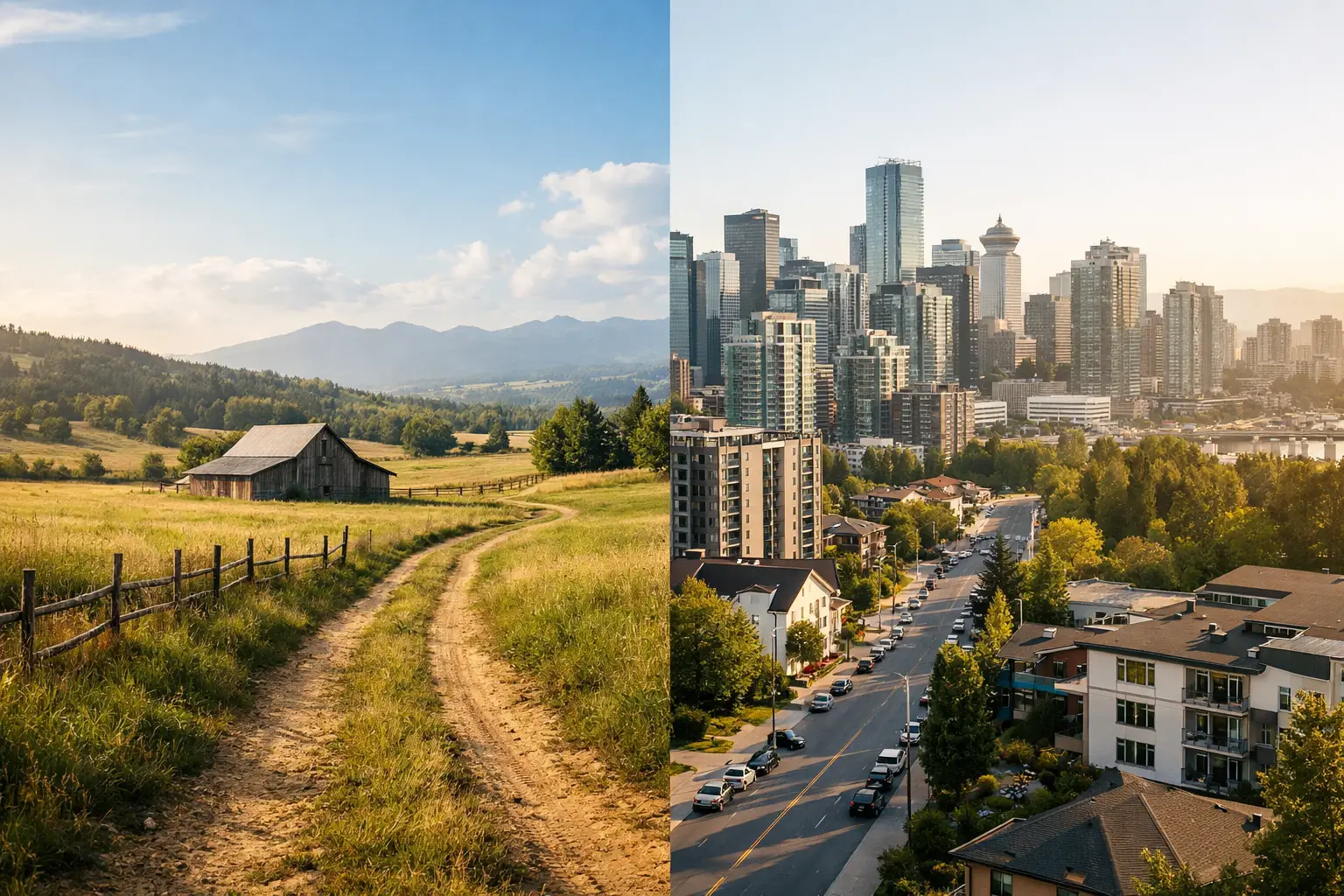
One buyer wants five quiet acres for a cabin, a garden, and room to breathe. Another wants a buildable lot near jobs, schools, and steady demand. That is the real choice behind rural land vs city lots – not just location, but how you want the property to work for your life and your money.
For some buyers, rural land is the affordable entry point that makes ownership possible now instead of someday. For others, a city lot offers a clearer path to construction, rental demand, or resale. Neither option is automatically better. The smart move is matching the land to your intended use, timeline, budget, and tolerance for complexity.
Rural land vs city lots: the biggest difference
The core difference is simple. Rural land usually gives you more space and a lower price per acre, while city lots usually give you better access, stronger infrastructure, and a more defined path to development.
That sounds straightforward, but the details matter. A rural parcel may look like an incredible deal until you price out a well, septic system, driveway, and electric service. A city lot may be ready for a house, but the purchase price, impact fees, and building restrictions can push the total cost much higher than expected.
If you are buying for flexibility, privacy, recreation, or long-term holding, rural land often stands out. If you are buying for immediate building potential, convenience, or a location-driven investment, city lots tend to make more sense.
Price and affordability
For many buyers, price is where the decision starts. Rural land often wins on raw affordability. You can usually get more acreage for less money, especially outside major growth corridors. That lower entry point attracts first-time land buyers, recreational buyers, and investors who want room for appreciation without stretching their budget.
City lots, on the other hand, are priced around access and scarcity. Even a small parcel can carry a premium if it sits near employment centers, schools, shopping, or future development. You are not paying for size as much as you are paying for location and utility access.
But purchase price alone can mislead you. A cheap rural parcel may require major upfront spending before it becomes usable. A more expensive city lot may already have paved road access, water, sewer, and nearby contractors. The better value depends on what you plan to do next.
Utilities, roads, and build readiness
This is where many buyers either gain confidence or hit friction fast. City lots are often easier to evaluate because infrastructure tends to be nearby or already in place. Water, sewer, power, and public roads reduce uncertainty. If your goal is to build a primary home or investment property soon, that can save time and lower the number of moving parts.
Rural land usually requires more due diligence. You may need to confirm legal access, utility availability, well depth, septic suitability, flood risk, and internet options. None of that means rural land is a bad buy. It means you should expect a different kind of planning process.
For buyers who want self-sufficiency or off-grid potential, those rural challenges may actually be part of the appeal. If you want convenience and speed, city lots usually have the edge.
What to verify before buying either one
No matter which direction you lean, confirm zoning, access, utility status, topography, parcel boundaries, and any HOA or local restrictions. With rural land, also check whether the county allows your intended use, including RV living, mobile homes, livestock, short-term stays, or agricultural activity. With city lots, look closely at setbacks, minimum square footage, design standards, and permit costs.
A parcel can look perfect online and still fail your actual use case. The goal is not just to buy land. The goal is to buy land you can actually use the way you expect.
Lifestyle fit matters more than most buyers expect
Land is personal. Buyers are often drawn to one type based on emotion, then justify it with numbers later. That is not always wrong, but it can create blind spots.
Rural land appeals to buyers who want privacy, space, independence, and fewer nearby restrictions. It works well for homesteading, hunting, camping, recreation, long-term holding, and custom plans that do not fit neatly inside dense neighborhoods. If your vision includes wide-open space, equipment storage, animals, or simply being left alone, rural land may feel like the better fit from day one.
City lots attract buyers who value convenience, community, and proximity. If you want to build near amenities, shorten your commute, or stay close to local demand drivers, a city lot can support that goal better. It is often the practical choice for buyers who want a straightforward residential build or a property with stronger day-to-day accessibility.
The right answer depends on how often you will use the property, how far you are willing to travel, and whether your ideal ownership experience is freedom or convenience.
Investment potential: appreciation vs usability
Both property types can be smart investments, but they perform differently. City lots often benefit from stronger demand, especially in growing metros and infill markets where buildable land is limited. That can support resale value and create opportunities for development-oriented buyers.
Rural land can offer compelling upside too, especially when purchased at a low basis in an area with improving demand, recreational appeal, or future path-of-growth potential. It also gives investors more ways to target niche use cases, from hunting land and RV property to owner-financed resale and weekend retreats.
The trade-off is liquidity. City lots may attract a broader pool of buyers because the use case is easier to understand. Rural land can take longer to sell, particularly if the parcel is remote, lacks access, or serves a narrower audience. That does not make it a weak asset. It simply means your exit strategy should match the type of land you buy.
Rural land vs city lots for resale
If resale speed is your top priority, city lots often have an advantage because location-driven demand is easier to market. If your strategy is to buy well, hold patiently, and target a specific buyer profile later, rural land can be a strong play.
This is where a land-focused marketplace matters. Buyers looking for acreage, recreational land, or specialty rural property search differently than buyers looking for suburban infill lots. When the audience is more targeted, the property has a better chance to connect with the right buyer.
Financing can shape the decision
Financing is one of the biggest practical separators between rural land and city lots. Vacant land financing is often different from home financing, and the terms vary based on location, intended use, and lender appetite.
City lots may be easier to finance if they are buildable and located in established neighborhoods. Rural land can be tougher, especially if it is remote, unimproved, or intended for recreational use only. That is why many buyers look for owner financing or plan to buy with cash.
This does not mean rural land is out of reach. In fact, for budget-conscious buyers, the lower price point can make cash purchases or shorter financing terms more realistic. The key is to understand your budget beyond the land price. Include closing costs, due diligence, improvements, and the time horizon before the property starts serving your goal.
Which one makes more sense for your goals?
If your priority is affordability, privacy, recreation, or future flexibility, rural land often opens more doors. You may get more room, more freedom, and a lower barrier to entry. That can be a powerful combination if you are patient and willing to evaluate the property carefully.
If your priority is development readiness, convenience, or stronger location-based demand, city lots usually offer a cleaner path. You may pay more upfront, but the road to building or resale can be more predictable.
The best buyers do not ask which type of land is better in general. They ask which type is better for the next five to ten years of their own plans. That shift in thinking changes everything.
Before you choose, get clear on the property’s job. Is it meant to be a homesite, a hold, a weekend basecamp, a future retirement plan, or a resale opportunity? Once you define that, the rural-versus-city question gets much easier to answer.
Land ownership works best when the parcel fits the purpose. Start there, stay realistic about trade-offs, and you will be in a much better position to buy with confidence.


Join The Discussion