
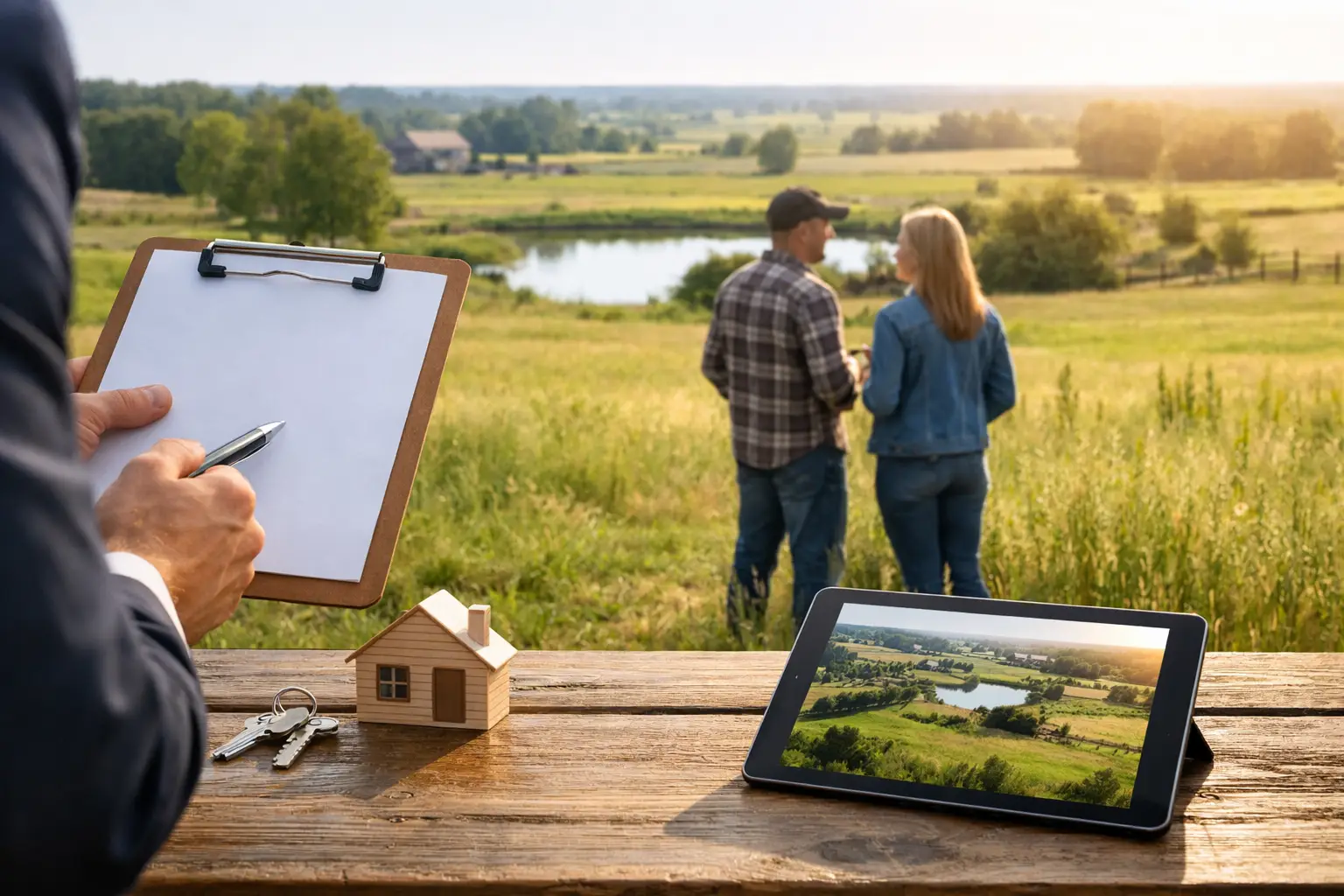
A rural parcel can look like a blank spot on a map to the wrong buyer and a future hunting retreat, homesite, farm, or long-term investment to the right one. This guide to listing rural land helps you give serious buyers the details they need to see that potential quickly and make a confident move.
Land does not sell the same way a house does. A home listing can lean on bedroom count, finishes, and curb appeal. Rural land buyers are evaluating access, terrain, zoning, utilities, water, usability, and the possibilities tied to a particular location. Your listing needs to answer those questions clearly before a buyer ever calls.
Start With the Facts Buyers Cannot Guess
The strongest rural land listings are specific. Before writing a description or choosing photos, gather the property records and practical details that support your sale. Start with the parcel number, legal description, acreage from the deed or survey, annual property taxes, and the county where the land is located.
Buyers also need to understand how they will get to the parcel. State whether access is paved, gravel, dirt road, private road, or a recorded easement. If there is an easement, be direct about its location and terms. Legal access and physical access are not always the same thing, and buyers will want to know whether a standard vehicle can reach the property year-round.
Utilities deserve the same level of clarity. Explain whether power is at the road, on the parcel, nearby, or not available. Note the likely water options, such as a private well, municipal connection, or hauling water. If septic would be needed, say so. Do not promise that a parcel will perc, support a well, or accept a specific building plan unless you have documentation from the appropriate authority.
Other useful facts include flood zone status, mineral or timber rights, HOA or road-maintenance fees, current agricultural use, and any known restrictions. A buyer interested in off-grid acreage may view the absence of utilities as a feature. A buyer planning a primary residence may see it as a cost to solve. Honest details help each person decide whether the property fits.
Price Rural Land From Comparable Reality
A seller’s biggest pricing mistake is comparing their acreage to a nearby property that has a house, public utilities, road frontage, or development approvals. Land value is local and highly dependent on usable features. Ten acres with public road frontage in a growing area can be worth far more than ten acres behind a locked gate several miles from the nearest utility line.
Look for recent sales of vacant land with similar acreage, road access, terrain, zoning, and proximity to towns or recreational destinations. Active listings can reveal your competition, but sold properties reveal what buyers have actually paid. County records, local land professionals, and land-focused marketplace listings can all help form a more realistic price range.
Then account for the property’s individual strengths and limitations. Creek frontage, mature timber, views, buildable ground, fencing, a driveway, and established trails may add value. Steep slopes, wetlands, uncertain access, seasonal roads, or restrictive zoning may narrow the buyer pool. The goal is not to make the parcel sound perfect. It is to set a price that reflects the opportunity and gives buyers a reason to act.
If you are open to owner financing, state the basic terms upfront. A down payment, interest rate, loan length, monthly payment, and any prepayment policy can make an otherwise inaccessible purchase feel attainable. Owner financing can widen your audience, but sellers should use clear written documents and understand the servicing and default responsibilities involved.
Make Your Rural Land Listing Easy to Picture
A buyer should be able to picture standing on the property, entering from the road, and using the land for its best likely purpose. That requires more than one distant aerial image.
Take current photos in good daylight from the road entrance, any cleared areas, trails, water features, views, boundaries where visible, and the strongest usable portions of the property. Include photos that show honest conditions, too. If part of the land is wooded, steep, or brushy, show it. Misleading photos may generate inquiries, but transparency creates better offers and fewer wasted trips.
Aerial maps are especially helpful for acreage. Mark the approximate property boundaries when possible, while clearly labeling them as approximate unless they come directly from a survey. Include nearby roads, recognizable landmarks, and the route to the parcel. A short video driving from the nearest paved road to the property can be valuable when access is a key question.
Your headline should lead with the clearest buyer benefit. Instead of writing “Land for Sale,” use the property’s defining feature: “20 Wooded Acres With County Road Frontage,” “Desert Acreage Near Public Lands,” or “Buildable Country Lot With Power Nearby.” Keep the claim factual and avoid vague phrases such as “great investment” without explaining why.
Write for the Buyer You Want to Reach
Rural land attracts different buyers for different reasons. A recreational buyer may care most about deer sign, timber, trails, and nearby public land. A future homeowner may focus on road access, zoning, school district, utilities, and buildability. An investor may want low carrying costs, growth patterns, and an understandable exit strategy.
You do not need to force the property into every category. Instead, identify the two or three most realistic uses and support them with facts. For example, a level parcel with a county road and residential zoning may be positioned for a country homesite or a manufactured home, subject to county rules. A remote wooded tract might appeal to hunters, campers, or buyers seeking an off-grid getaway.
This is where a dedicated land marketplace can make a difference. Listing on a platform such as BuyVacantLand.com puts your parcel in front of people already searching by state, land type, acreage, and intended use. That focus is valuable when your buyer is not looking for a suburban house with a small backyard.
Prepare for Due Diligence Before the Calls Begin
Interested buyers will eventually ask for documents. Having them ready keeps momentum from fading after the first conversation. Organize the deed, survey if available, tax information, maps, easement details, zoning correspondence, utility information, and any soil, septic, or environmental reports you have.
Be careful with boundaries. Fences, tree lines, and old markers may not match the legal parcel lines. If there is no recent survey, say that plainly. A survey can be a worthwhile investment when boundaries are unclear, acreage is disputed, or a buyer needs confidence before closing.
You should also be ready to explain how showings work. Rural parcels may have gates, rough terrain, livestock, hunting activity, or limited cell service. Give visitors clear directions, identify safe parking, and establish whether they may walk the property alone. A thoughtful showing process protects the land and makes buyers feel welcome rather than uncertain.
Keep the Listing Current and Follow Up Fast
A listing loses credibility when its price, availability, or details are outdated. Review it regularly, especially after a price change, new survey, road improvement, or change in financing terms. If inquiries are coming in but no one is scheduling a visit, revisit your photos, pricing, and access explanation. If few people are viewing the listing, the headline and lead image may not be showing the parcel’s strongest advantage.
Respond quickly and answer questions directly. Buyers often contact several sellers at once, and the seller who provides maps, access details, and clear next steps first has an edge. You do not have to pressure someone into a decision. You do need to make it easy for a qualified buyer to move forward.
A well-listed rural parcel does more than advertise acreage. It gives a buyer enough clarity to imagine a real plan for the land, whether that plan is a cabin, a farm, a weekend camp, or a long-term hold. Put the facts forward, show the property honestly, and let its best opportunity do the selling.


Join The Discussion